

Every fire pit setup on Pinterest looks inviting, but few explain why the seating works or whether it would suit your own backyard. A rocking chair reads cozy; a ring of iron swivel rockers reads formal. Without knowing what drives that difference, it’s easy to copy a look that doesn’t fit your climate, your space, or how you actually use your patio.
This guide breaks down nine distinct fire pit seating setups as nine separate answers to one question: which chair style, material, and arrangement will make your own fire pit feel finished? By the end, you should know exactly which direction is yours.
Quick Overview
| Style | Outdoor Fire Pit Seating |
|---|---|
| Best For | Patios, backyards, cabins, garden retreats |
| Budget | Low–High (style dependent) |
| Difficulty | Easy–Moderate DIY |
| Maintenance Level | Low–Medium |
A Wicker Rocking Chair Warms Up to a Stone Fireplace
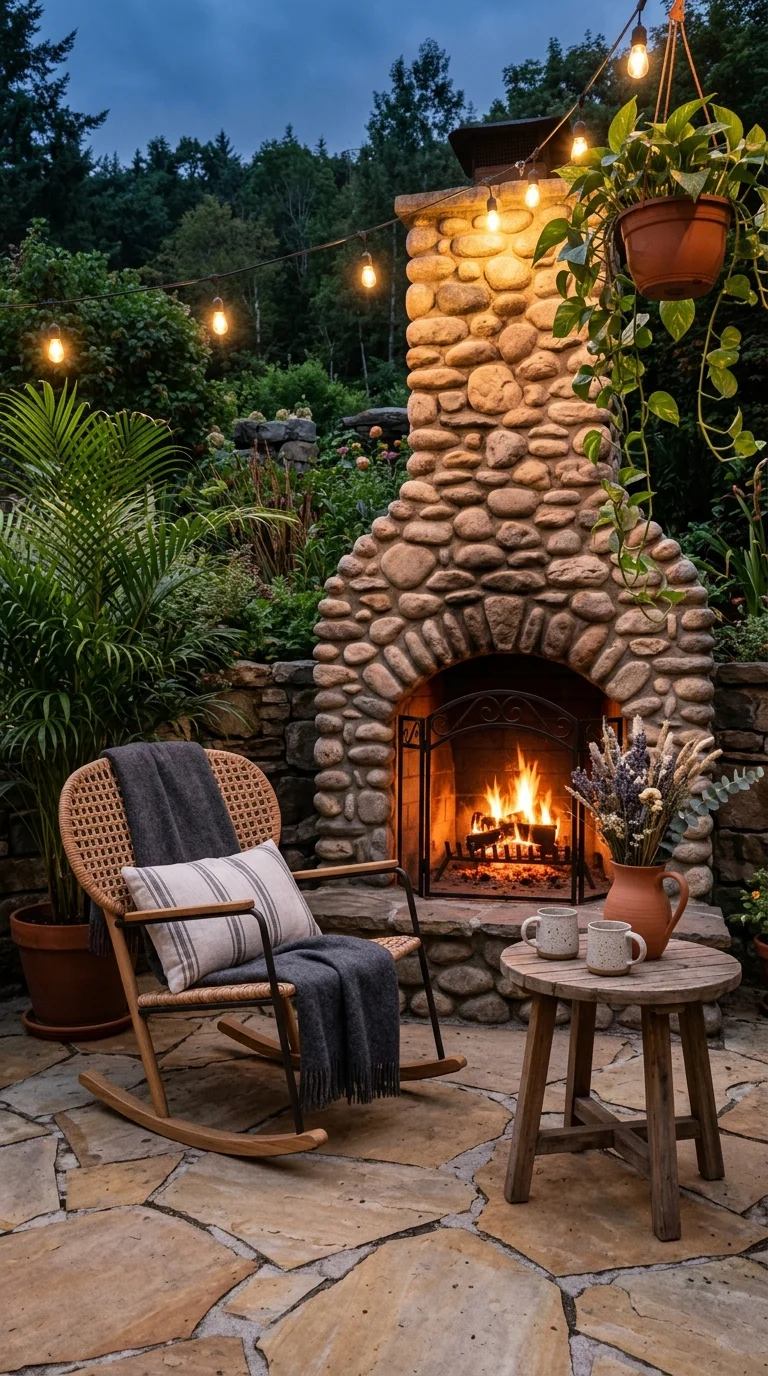
A single rattan-wrapped rocking chair, layered with a wool throw and a striped lumbar pillow, sits beside a river-stone fireplace built tall enough to double as a garden focal point. What makes this idea work is scale contrast: the chair is light and small against a heavy masonry structure, and that imbalance reads as “cozy corner” rather than “matching patio set.” This setup suits a small paved nook rather than a wide-open lawn — a single chair and a low wooden stool are all the footprint it needs.
The rocking motion is the functional heart of this idea, giving the sitter something to do with restless energy while watching the fire — part of why this pairing shows up often in cottagecore garden-style plantings. The trailing potted plant hung above the seat softens the stone’s hard edges without competing with the fire for attention.
Where the Repetition Quietly Holds It Together
The warm terracotta of the pitcher, the honey tone of the rattan weave, and the amber glow of the string lights all sit in the same color family. That repetition is what keeps a visually busy corner — plants, stone, string lights, blankets — from feeling cluttered; swap the terracotta pitcher for a stark white one and the whole vignette would likely read as mismatched rather than curated.
Recommended Materials: river stone, natural rattan, wrought iron frame, wool throw, terracotta pottery, cast iron fireplace insert
Main Colors: Warm Terracotta, Honey Rattan, Charcoal Wrought Iron, Sage Green
Small Mistakes That Undo a Big Fireplace
- Building the fireplace opening too wide for a single-chair seating plan, leaving the fire feeling under-attended
- Skipping a weatherproof cushion cover on rattan, which lets the seat cushion mildew after rain
- Hanging plants directly above the firebox opening, where rising heat stresses the foliage
- Placing the side table too far from the chair, making it awkward to reach a mug mid-conversation
Sculptural Steel Curved Chairs Turn a Forest Clearing Into a Fire Circle
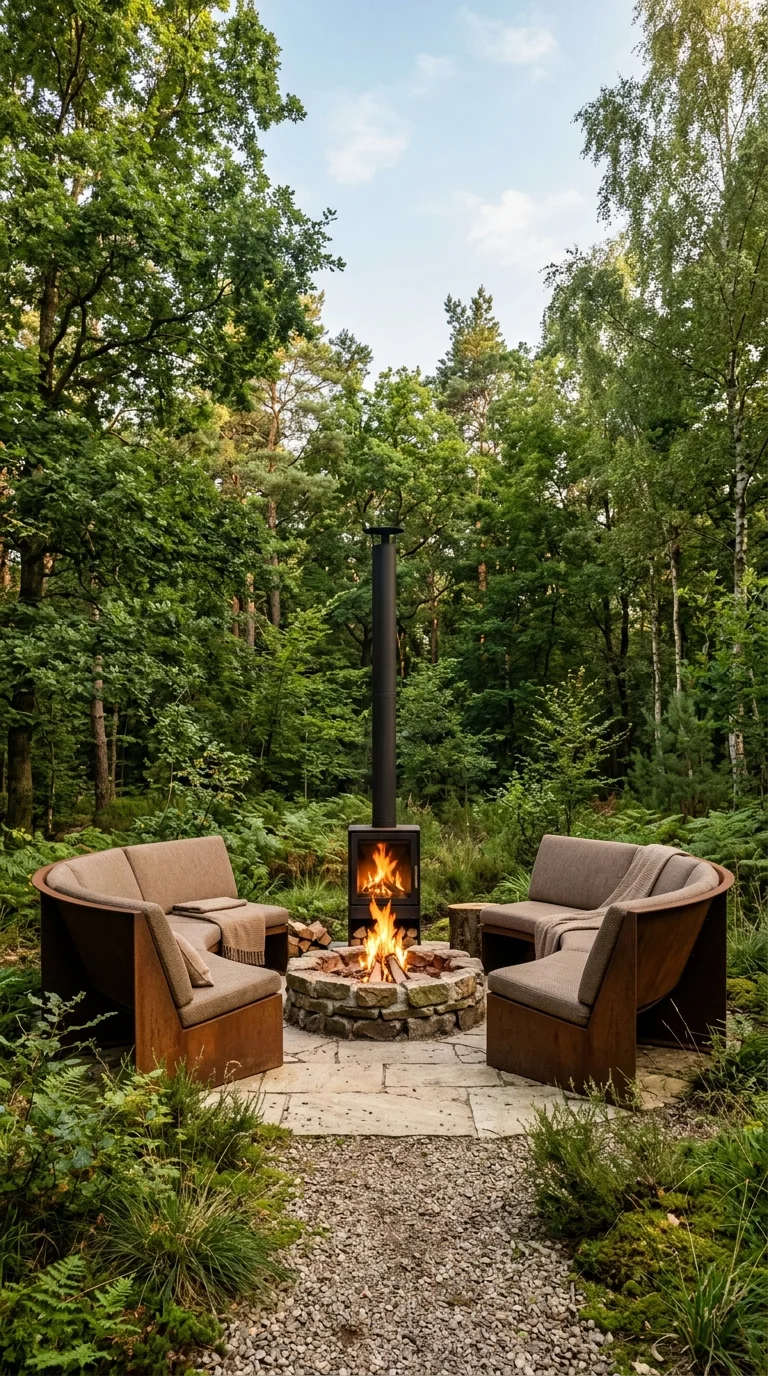
Two corten-steel curved lounge chairs face each other across a low stone fire ring, with a freestanding wood-burning stove rising behind it like a chimney sculpture. This is the boldest departure in the whole roundup: the chairs themselves are architecture, built from bent steel sheet rather than assembled from separate frame-and-cushion parts. Anyone drawn to modern landscape design over cottage charm will recognize this as their lane.
The corten steel used for both chairs and stove will develop a rust patina over time rather than staying raw — that’s intentional, and it’s what lets the furniture blend into a woodland clearing instead of looking industrial. This idea rewards a larger, more private lot, since the curved chairs and open sightline need room to breathe on either side of the fire.
Best Lighting: No fixtures are visible here, and none are needed — the design leans on the fire itself plus whatever daylight filters through the tree canopy, so keep any added lighting minimal and low to the ground rather than overhead.
A Weathering Material, Not a Finished One
Corten steel is chosen specifically because it changes. In the first year the surface will run through orange, then deepen to a browner rust, and that shift happens faster in humid climates than dry ones — a detail worth knowing before committing to it, since the chairs won’t look the way they do on day one.
Teak Armchairs and a Kilim Rug Make a Cabin Patio Feel Finished
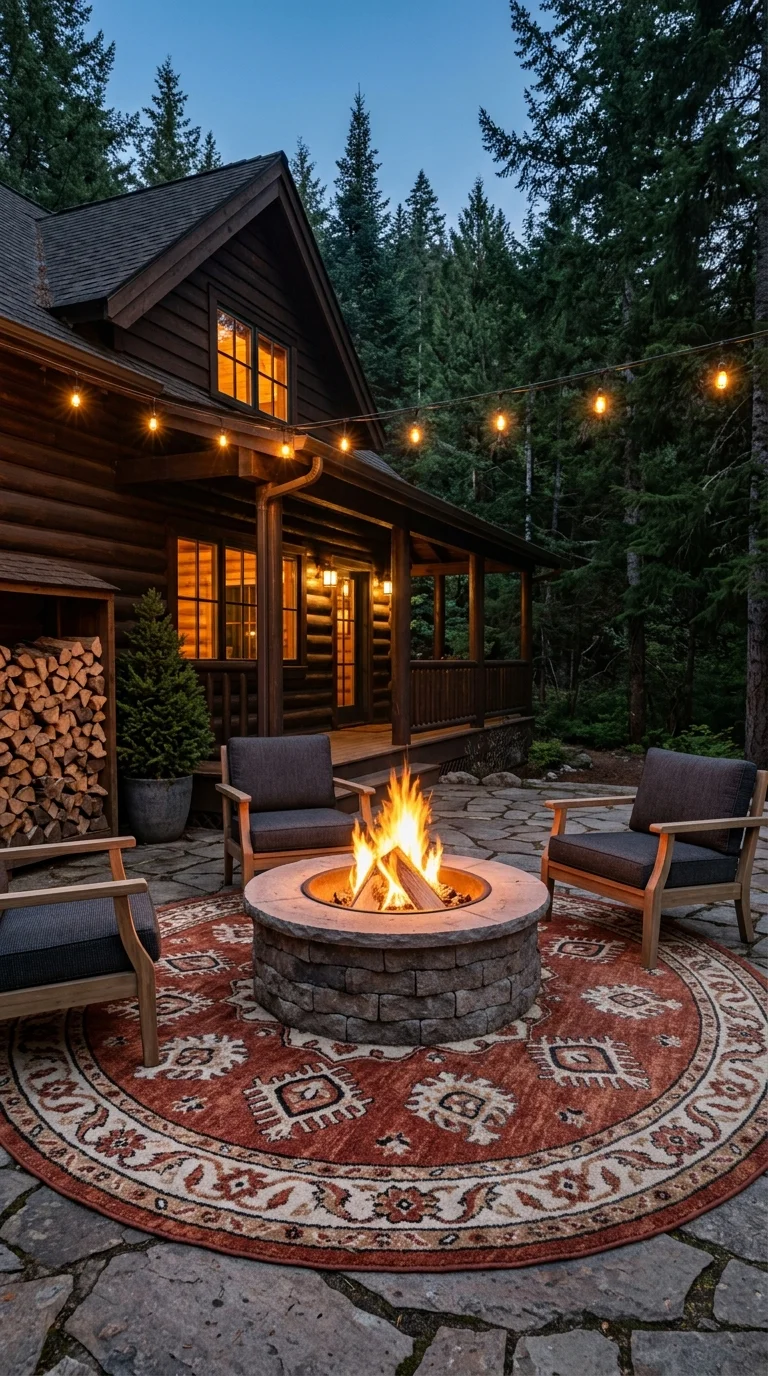
Four cushioned teak armchairs sit around a raised stone fire pit, anchored by an oversized red-and-cream patterned rug on flagstone, in front of a log cabin glowing with interior light. This is the idea for anyone who wants their fire pit area to feel like an extension of the living room rather than a separate outdoor zone — the rug does that work almost single-handedly.
A patterned rug outdoors is a genuine style risk most setups in this guide don’t take, and it pays off because the cottagecore house exterior backdrop already commits to a traditional, layered aesthetic — a stark modern cabin wouldn’t support it as well. Stacked firewood and a potted evergreen round out the sense that this patio gets used year-round, not just staged for photos.
Designer’s Verdict: Worth the Investment?
The rug is worth the investment if the patio sits under a roofline or covered porch — full sun and rain will fade and rot an outdoor rug within a couple of seasons regardless of how it’s marketed. If the fire pit is fully exposed, a smaller, weather-rated flat-weave version gets most of the visual effect for a fraction of the risk.
Recommended Materials: teak wood, flagstone, fieldstone fire pit ring, wool-blend outdoor rug, cedar log siding
What Trips People Up Recreating This
- Using an indoor rug instead of an outdoor-rated weave, which will mold within one wet season
- Choosing a fire pit ring taller than the chair arms, which blocks sightlines across the circle
- Forgetting to rotate the rug seasonally, so one half fades faster than the other under direct sun
- Overcrowding the circle with more than four chairs, which pushes the back row too far from the fire’s warmth
One Charred-Wood Chair Claims a Covered Deck All to Itself
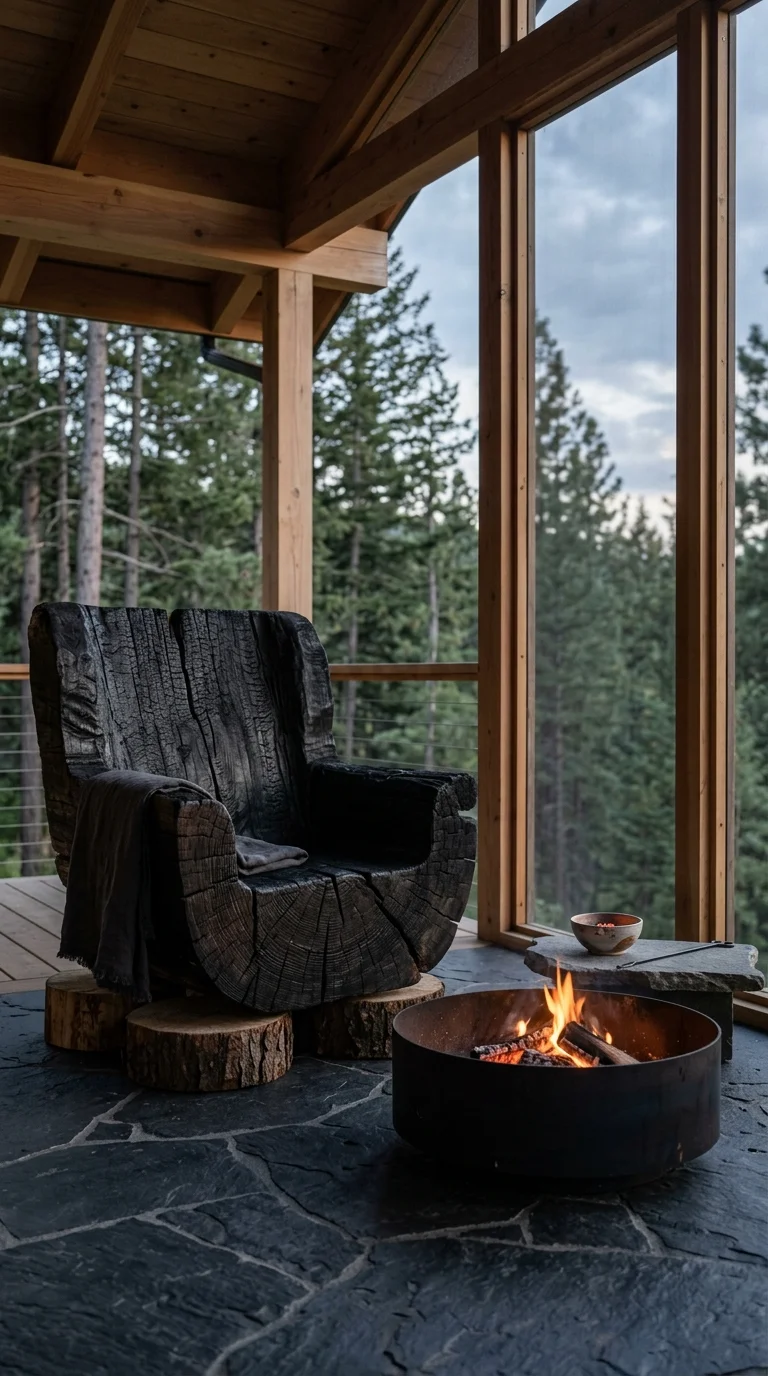
A single sculptural chair, carved from a solid burnt-wood trunk in the shou sugi ban tradition, sits on a slate-black covered deck beside a minimalist steel fire bowl, framed by floor-to-ceiling glass overlooking pine forest. Where every other setup here is about arranging multiple chairs, this one is the opposite — one deliberately oversized, one-of-a-kind seat that doesn’t need company to justify the space around it.
This idea suits a reading nook as much as a fire pit corner: the same instincts behind a good reading nook — one substantial chair, warm low light, a small surface within reach — apply directly here. The charred surface isn’t just decorative; carbonization makes the wood naturally more resistant to rot and insects than untreated timber.
Best Lighting: The glass wall behind the chair means natural light does most of the work during the day; at night, the fire bowl becomes the only light source in frame, which is precisely the point of a chair this dramatic.
Common Mistakes With a Statement Piece Like This
- Pairing a chair this sculptural with a busy patterned cushion, which fights the wood grain instead of framing it
- Placing the fire bowl close enough that heat and ember drift can scorch the chair’s charred finish further than intended
- Skipping a protective oil reapplication on the wood every year or two, letting the char dry out and flake
- Positioning the chair facing away from the best view, wasting the floor-to-ceiling glass it’s built next to
Ten Iron Swivel Rockers Circle a Fire Pit Like a Garden Amphitheater
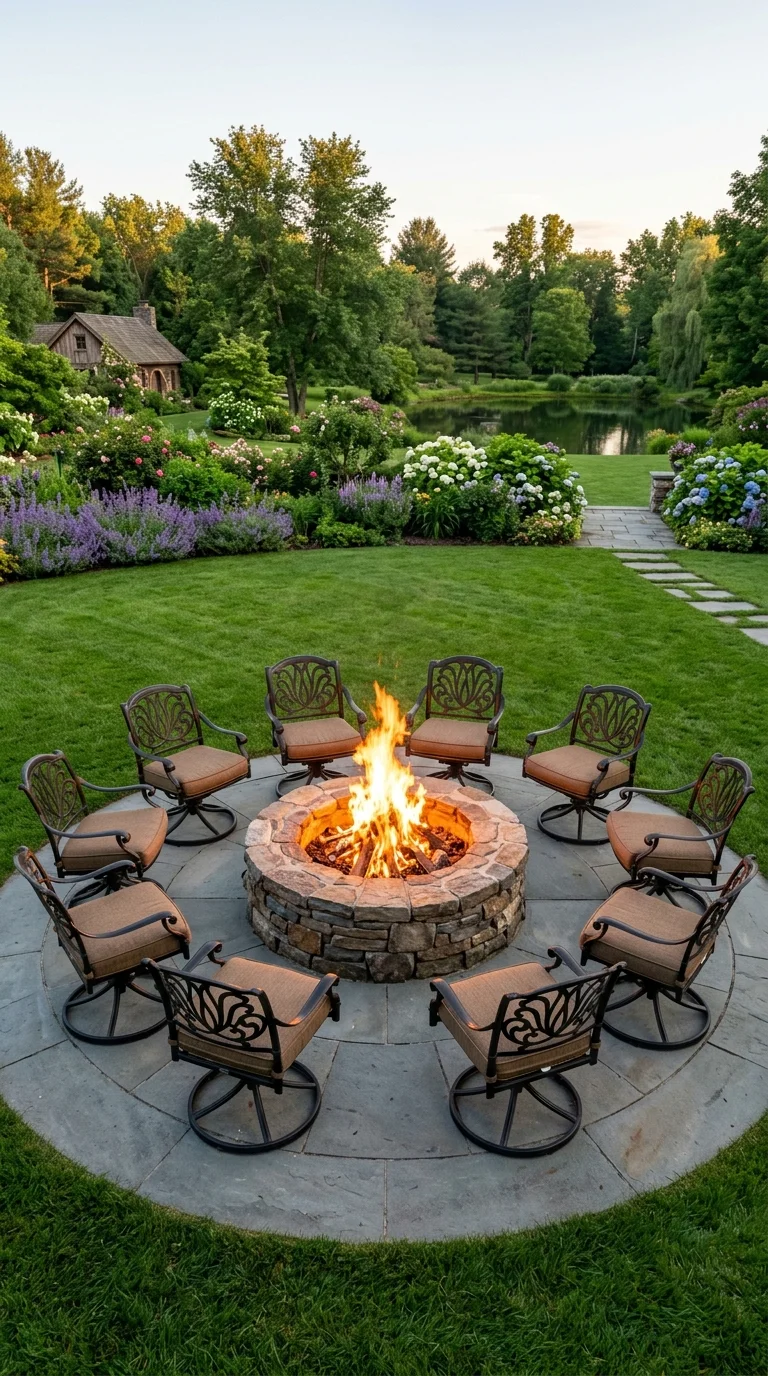
A full ring of ten matching wrought iron swivel rocker chairs surrounds a wide stone fire pit on a manicured lawn, bordered by a working garden, a pond, and a stone cottage in the distance. This is the entertaining-scale answer in the lineup — built for a crowd, not a couple — and the uniform chair style is what keeps ten seats from reading as chaotic: less individual character, far more visual order at scale.
The swivel-rocker mechanism matters more here than in a smaller setup, since it lets guests turn toward whoever’s speaking without dragging a heavy chair across stone paving. Anyone hosting regularly gets more daily value from this idea than someone who mostly sits by the fire alone.
Who Should Choose This Style?
- Best for large lawns and properties with room for a wide, open circle
- Best for hosts who regularly entertain groups of eight or more
- Not ideal for small patios, where ten matching chairs would overwhelm the space
Main Colors: Bronze-Black Iron, Warm Stone Grey, Deep Garden Green
Maintenance Reality Check
Wrought iron in an open lawn setting takes more upkeep than the other materials in this guide — expect to check for surface rust at the joints each season and reapply a protective coating before it takes hold, especially in humid or coastal climates where bare metal corrodes faster than painted or powder-coated iron.
Wicker Swivel Chairs Face Down a Mountain Lake at Dusk
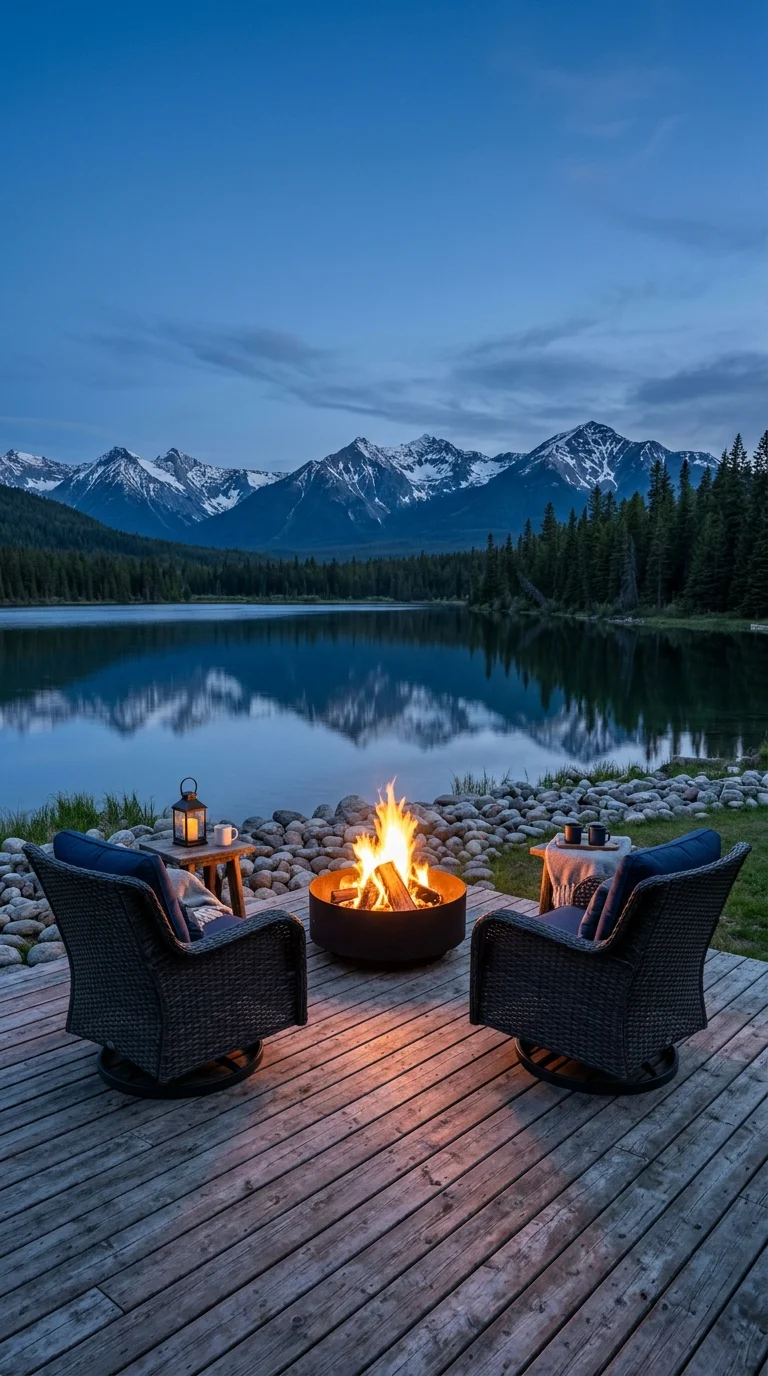
Two dark wicker swivel chairs sit on a weathered wood deck facing a stone-ringed fire bowl, with a still mountain lake and snow-capped peaks filling the background. The seating here is almost secondary to what it’s oriented toward — both chairs point at the water rather than at each other, which only works when the view genuinely earns that framing.
Small lanterns on low side tables replace overhead lighting entirely, keeping every light source close to the ground so it doesn’t compete with the darkening sky. This idea only works on waterfront or elevated lots; on a standard suburban lot facing a fence, the same arrangement would lose its reason for existing. Anyone weighing a deck built near open water already understands how much a view changes seating decisions.
Sightline Logic: What the Eye Finds First
The fire bowl sits low and dark against the deck boards, so the eye actually lands on the lake and mountains first, then travels down to the fire — the seating arrangement is built to support that order, not to compete with it. A taller or brighter fire feature here would pull focus away from the landscape this whole setup exists to showcase.
Recommended Materials: all-weather resin wicker, cedar decking, cast iron fire bowl, river stone edging
Two Cocoon Chairs Disappear Into a Wall of Fairy Lights
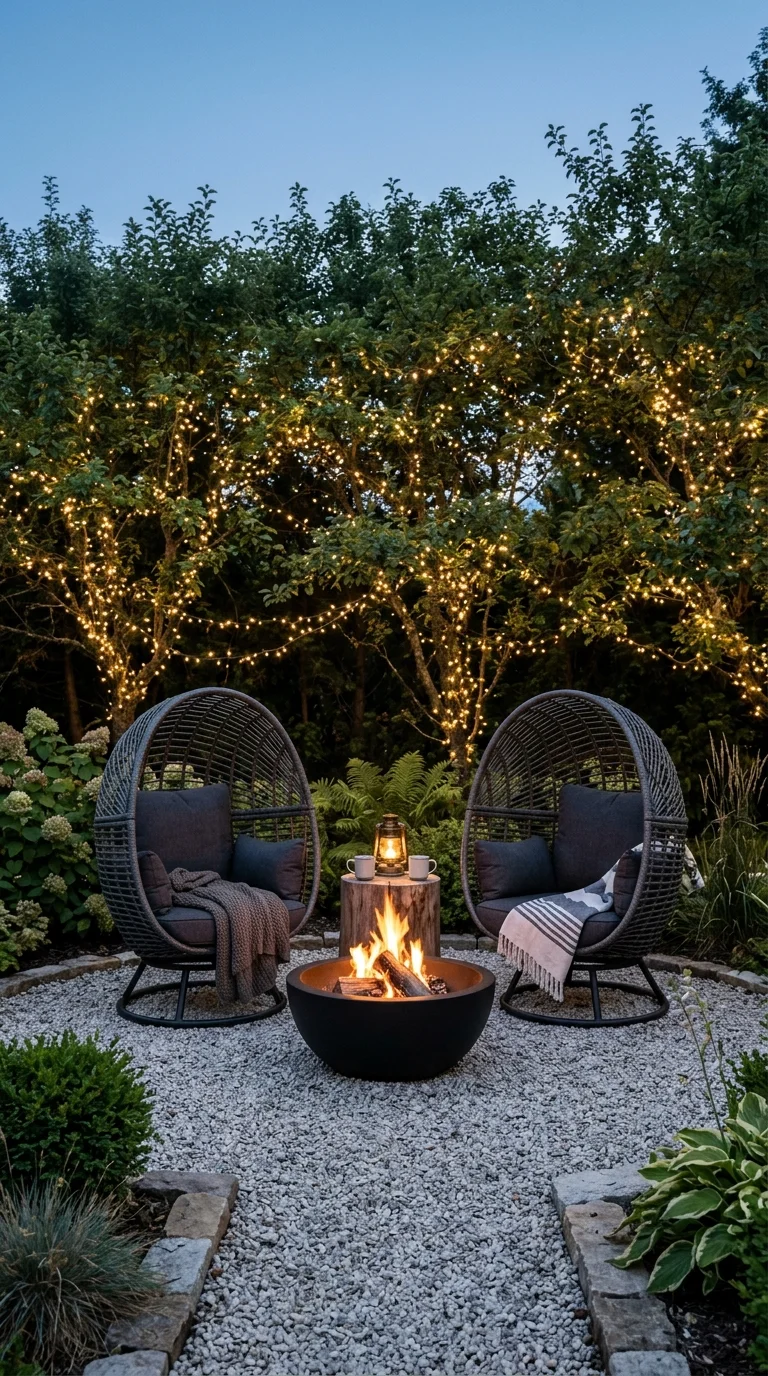
A pair of dark, oversized woven egg chairs sit on pale gravel facing a black steel fire bowl, backed by a dense hedge wrapped floor-to-canopy in warm string lights. The chairs are almost secondary here — the real design decision is the lighting wall behind them, which turns an ordinary garden boundary into the entire backdrop for the seating area.
This is the most romantic, date-night-coded setup in the group, built for a couple rather than a crowd. The deep basket shape of each chair creates a semi-private pocket a flat-cushioned chair couldn’t replicate, and that enclosed feeling is part of why egg chairs have become a fixture in boho garden design lately.
Best Lighting: The hedge lighting does the heavy lifting after dark, so keep any additional lighting minimal — a single lantern on the side table is plenty, since more sources would compete with the string-light wall for attention.
Getting This Look Wrong Is Easy
- Choosing string lights with a cool white tone instead of warm amber, which clashes with the fire’s color temperature
- Placing gravel too loosely under swivel-based egg chairs, so the base shifts and rocks unevenly over time
- Skipping a cushion liner inside the woven basket shape, leaving cushions to sit directly against damp wicker
- Wrapping lights so densely that the hedge can’t get enough light or air, stunting growth over a season
A Ring of Wicker Dining Chairs Turns Fire Into a Table Setting
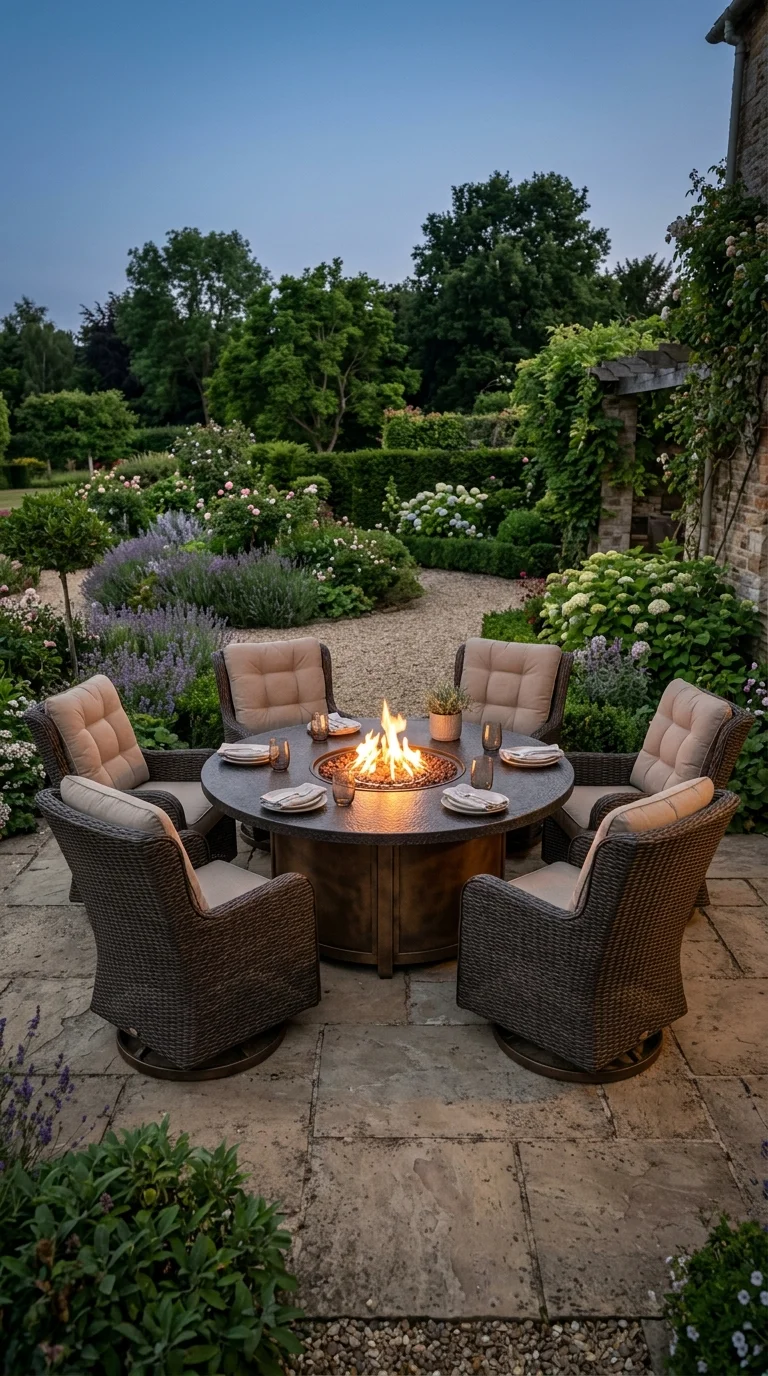
Six tufted wicker dining chairs surround a round fire pit table set with cloth napkins and wine glasses, tucked into a gravel courtyard bordered by lavender and climbing roses. This is the only setup built around eating rather than simply sitting — the fire pit sits directly inside the dining table rather than existing as a separate feature, changing the space’s function from lounge to entertaining.
Formal high-back wicker dining chairs replace the low lounge seating seen elsewhere in this guide, reflecting the purpose: guests need to sit upright to eat, not recline. The boho house exterior framing this courtyard — climbing vines against old stone — signals an established garden room, not a newly installed patio set.
Recommended Materials: synthetic wicker, tempered glass table insert, bronze fire pit burner, gravel paving, lavender and rose plantings
Where This Setup Falls Apart if Rushed
- Choosing a fire pit table without a wind guard, so an evening breeze constantly disturbs the flame during dinner
- Seating six chairs so tightly that no one can push back from the table without bumping a neighbor
- Placing glassware and napkins too close to the flame ring, where radiant heat can warp thin materials
- Underestimating how much gravel shifts under chair legs over a season, requiring periodic leveling
A Pergola-Shaded Lounge Set Looks Out Over Olive Groves
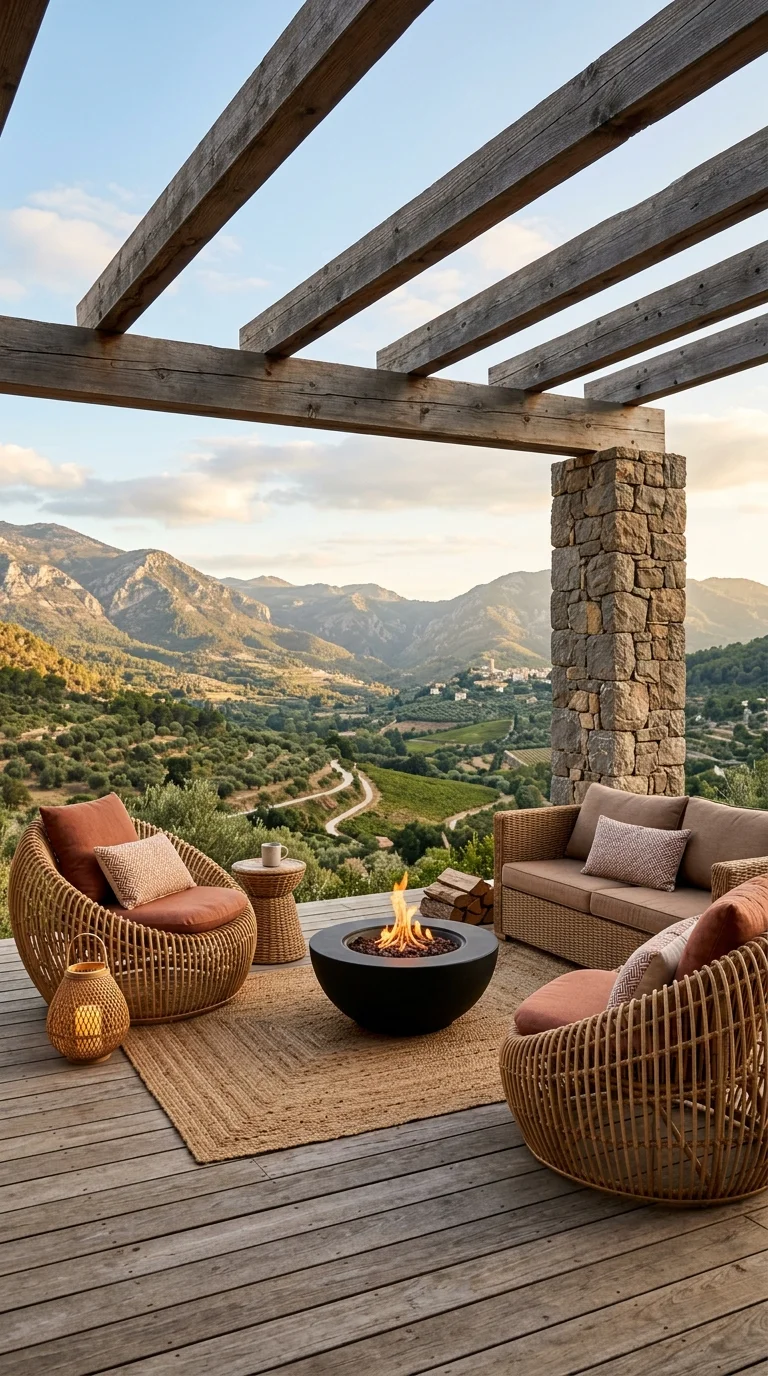
A curved rattan chair, a matching sofa, and a low black fire bowl sit on a weathered wood deck beneath an open timber pergola, overlooking terraced olive groves and distant hills at golden hour. This closing idea pulls together threads from earlier in the guide — natural rattan, a low minimalist fire bowl — but adds an element the others don’t have: the pergola itself.
The pergola’s raw, unfinished beams frame the view without blocking it, giving the seating area shade by day and definition after dark without needing walls. A woven jute rug ties the furniture together, and lanterns hung at uneven heights avoid the formality a matched pair of lamps would introduce. This setup suits a hillside or terraced property — the arrangement is staged to face outward, and it would lose most of its appeal on a flat, enclosed lot.
Best Lighting: Golden-hour sun does the work here; after dark, the low fire bowl and scattered lanterns keep the light warm and close to the ground, letting the pergola’s silhouette stay visible against the sky rather than getting washed out.
Maintenance Guide: Untreated pergola timber needs a re-oil or stain every one to two years depending on sun exposure, and the jute rug should come indoors or under cover during wet seasons, since natural fiber weaves absorb moisture and mildew faster than synthetic ones.
Weatherproofing Tips for Fire Pit Seating
- Choose resin wicker or powder-coated metal over natural rattan or bare iron in climates with heavy rain or humidity
- Store or cover cushions whenever the forecast calls for rain, rather than relying on fabric alone to shed water
- Keep any wood or rattan furniture at least a few feet back from direct ember drift, not just visible flame
- Reapply sealant, oil, or protective coating to natural materials on a seasonal schedule rather than waiting for visible damage
Who Should Choose This Style?
- Best for homeowners who want their patio to feel used year-round, not just staged for warm months
- Best for hosts entertaining anywhere from a couple to a full group, depending on which chair count fits
- Not ideal for renters or short-term spaces, since several of these setups involve built-in stonework or a permanent fire feature
Budget Summary
| Budget | Expectation |
|---|---|
| Low | A single rattan chair, a portable steel fire bowl, budget outdoor cushions |
| Medium | A matched pair of resin wicker or teak chairs, a stone fire pit kit, an outdoor-rated rug |
| Premium | Custom stonework, sculptural steel or charred-wood seating, a built-in fire pit dining table |
Frequently Asked Questions
What’s the most weather-resistant chair material for a fire pit area?
Resin wicker and powder-coated aluminum or steel generally outlast natural rattan, untreated wood, and bare iron outdoors, since they resist moisture and UV fading without seasonal treatment.
How far should chairs sit from a fire pit?
Most fire pit seating sits three to five feet from the flame’s edge, close enough for warmth without ember contact — exact distance depends on the fire feature’s size and output.
Can I mix chair styles around one fire pit?
Yes, though the most intentional setups here usually repeat one material or color at least twice, so an eclectic mix works best when it shares a common thread.
Do egg chairs and swivel chairs work on gravel?
They can, but the base needs a stable, compacted gravel bed rather than loose stone, or the chair will shift and rock unevenly over time.
About the Author
This guide comes from the Aesthetic Life Team, an editorial group focused on real, livable outdoor and interior design — the kind of spaces meant to be used, not just photographed.
Conclusion
Nine fire pits, nine different relationships between seating and setting — a rocking chair beside a stone fireplace, ten matching iron rockers built for a crowd, one charred-wood seat that needs no partner at all. The through-line isn’t a shared style; it’s that each setup picked a chair, material, and arrangement that matched how the space gets used. That’s the real question: not which fire pit looks best in a photo, but which chair earns its place beside yours.
Explore More
You may also enjoy:


2 Responses