
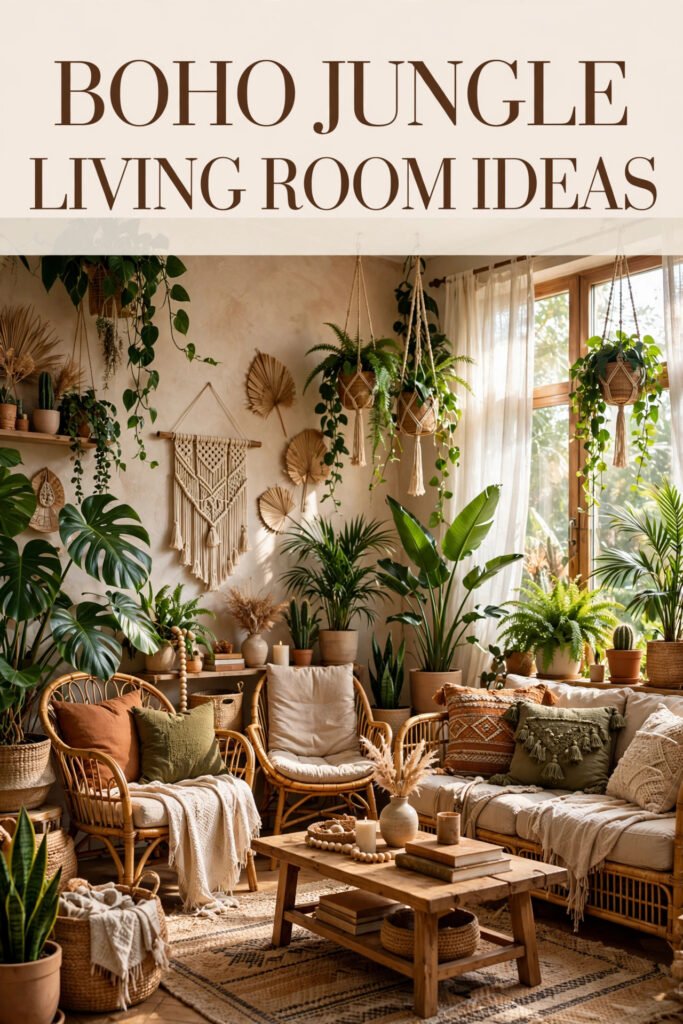
If you’ve been saving jungle-boho living rooms for months and still can’t decide which direction fits your own space, you’re not alone. “Lush and relaxed” can mean a rattan-filled Bali pavilion just as easily as a moody, plant-wrapped home office corner. The nine rooms below each take that idea somewhere different — through material, color, ceiling treatment, or seating style — so you can compare them and land on the one that actually fits your home, your climate, and how much upkeep you’re willing to take on.
Quick Overview
| Style | Boho Jungle |
|---|---|
| Best For | Living rooms, sunrooms, home offices |
| Budget | Low–High (fully scalable) |
| Difficulty | Easy to Advanced, depending on scope |
| Maintenance Level | Medium (live plants involved) |
The Open-Air Pavilion Look: Letting the Jungle Frame the Room
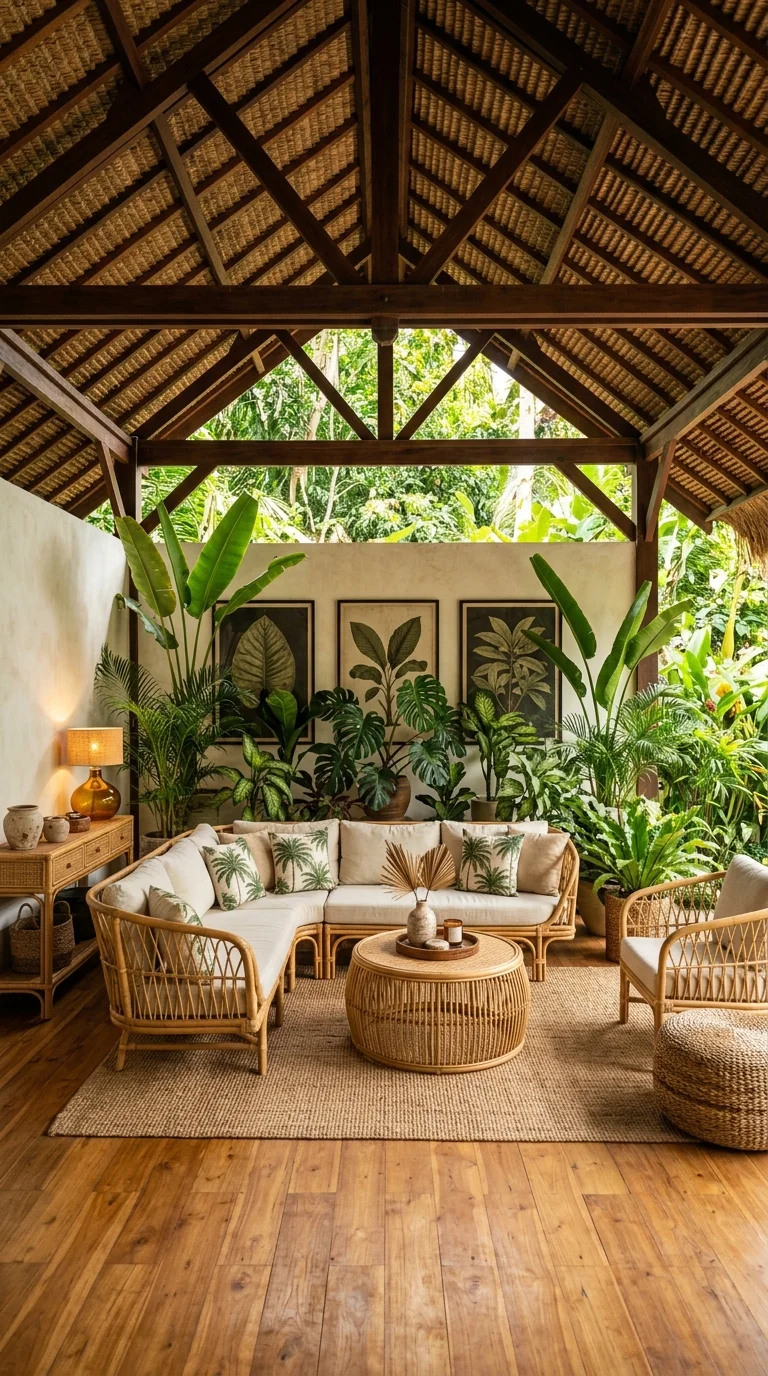
This room barely separates indoors from outdoors — the thatched roof and open wall let the actual jungle outside finish the palette. Nothing here would work in a fully enclosed room, since the “decor” is borrowed scenery. For anyone with a covered patio or a wall of glass doors, this is the most literal way to bring jungle style home.
A Plant Chosen to Match the Roofline’s Angles
The banana-leaf plant on the left repeats the diagonal lines of the thatched roof above it, which is why the ceiling reads as one continuous gesture rather than a separate element. A rounder, bushier plant would likely loosen that connection. This framing works best for covered outdoor space in warm, humid climates, since the open sides assume airflow rather than fighting it — a similar principle runs through this biophilic living room guide.
Materials: rattan, dark-stained hardwood beams, woven abaca roofing, jute rug, linen cushions
Colors: Warm Teak, Woven Straw, Off-White Linen, Deep Forest Green
Lighting: filtered daylight through the open gable; one warm amber lamp for evening
Maintenance: Weekly watering and occasional leaf wiping — dust and pollen settle faster in open-air spaces.
Where This Look Falls Apart
- Furniture that isn’t weather-resistant despite real airflow
- Overcrowding the plant grouping so no single leaf shape stands out
- Skipping a rug, leaving hard flooring feeling unfinished
- Cool-toned lighting that fights the warm wood tones
Leather and Living Walls: A Warmer Way to Do Industrial Boho
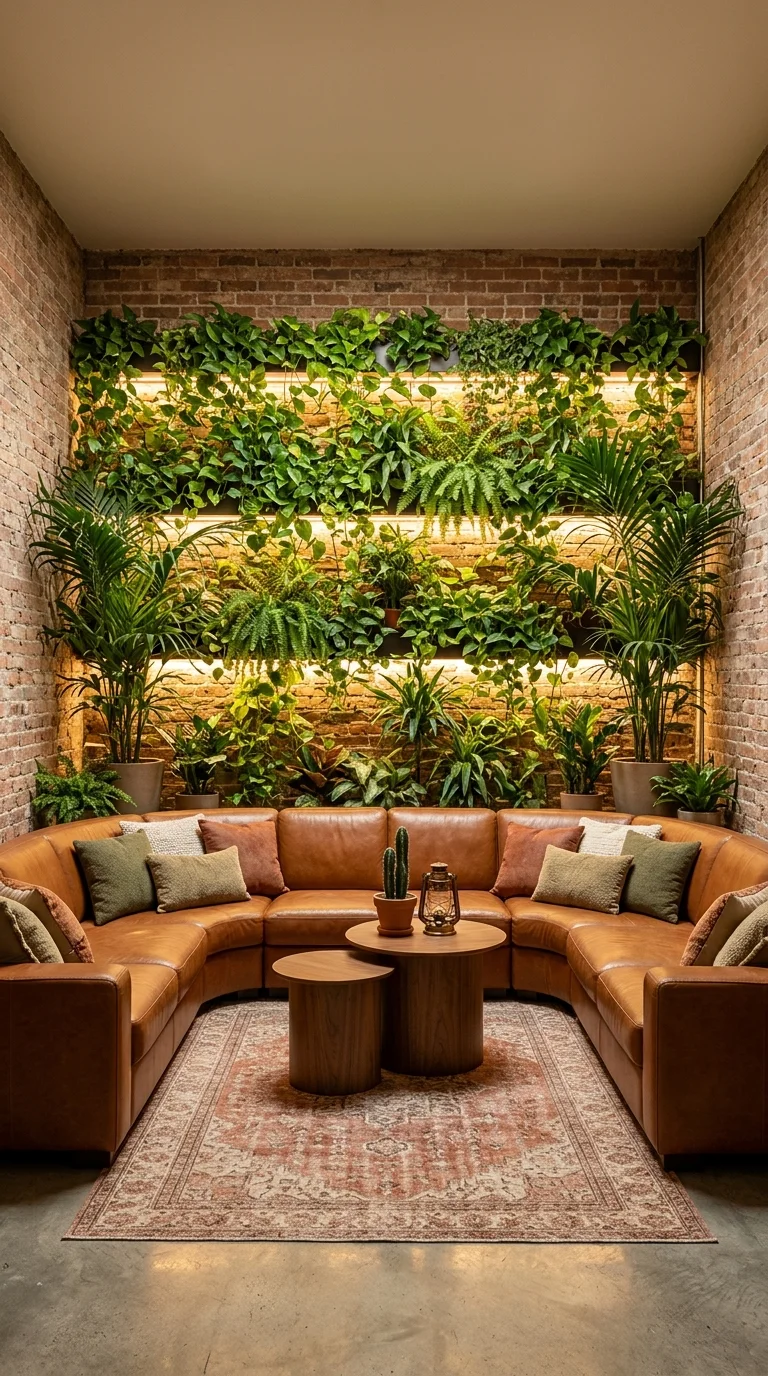
Swap out the plants and you’d have a standard industrial leather lounge — exposed brick, curved sectional, concrete floor. What makes this distinct is that the living wall does the softening work usually assigned to textiles or paint.
What This Leather Will Look Like in Five Years
Tan leather develops a patina rather than simply wearing out — arm rests and seat edges darken with handling while the rest stays lighter, reading as more expensive over time, not less. That’s a very different aging path than fabric would take against this same brick backdrop.
This pairing suits anyone who likes an industrial-loft base but finds it too cold alone; less suited to bright, airy Scandinavian-style homes. For a similarly grounded mood built through color instead of texture, see this boho black living room built around dark tones and earthy character.
Materials: aniline leather, exposed brick, built-in irrigation planters, poured concrete, walnut tables
Colors: Cognac Tan, Brick Red, Deep Fern Green, Warm Gray
Lighting: warm LED strips backlighting the plant shelving, plus one low floor lamp
Maintenance: A wall this dense needs a drip or misting system — hand-watering weekly becomes its own chore.
Easy Ways to Get the Industrial-Boho Mix Wrong
- Artificial brick veneer that reads flat under plant lighting
- Fabric sofa instead of leather, losing the material contrast
- Skipping irrigation, leading to dying upper-tier plants
- Adding too much extra decor that competes with the wall
The Vaulted Plant Wall: When One Wall Does All the Work
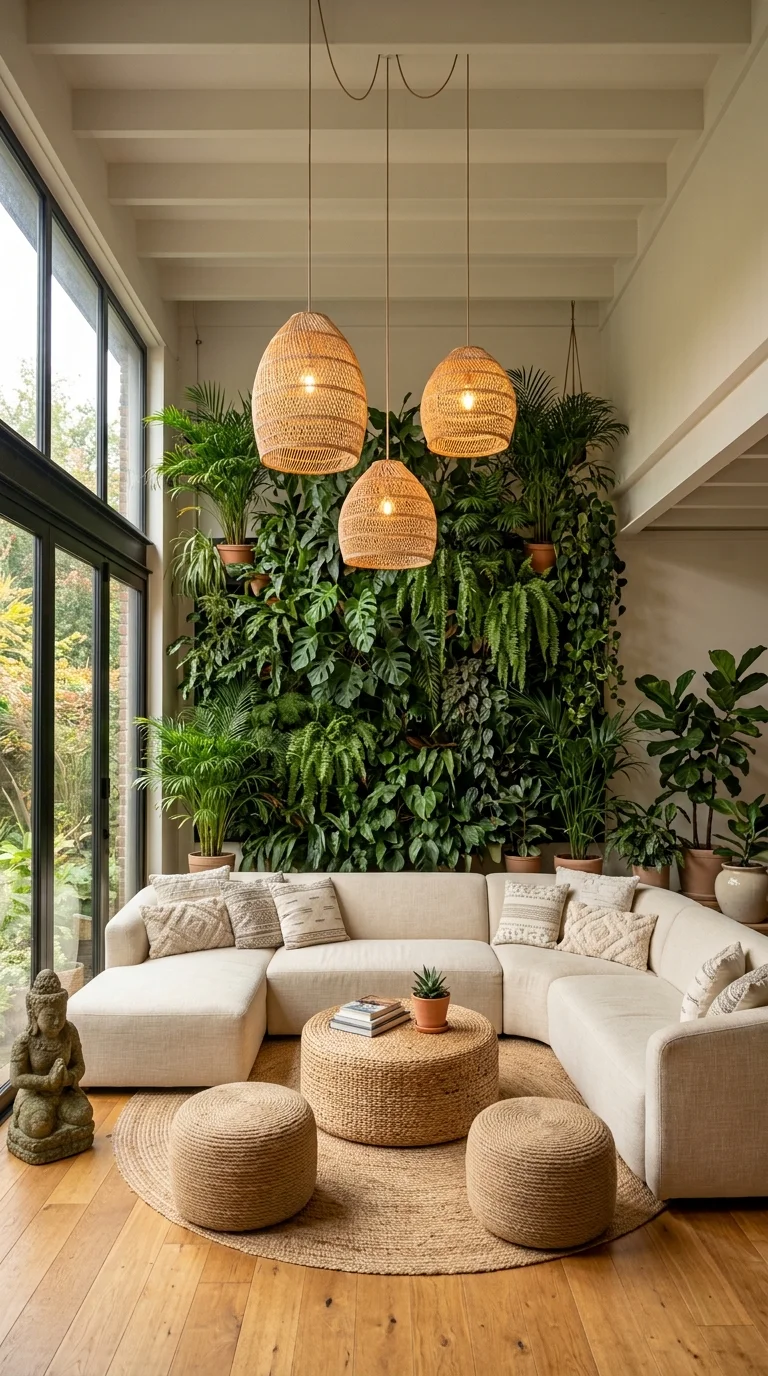
Nearly everything here — the linen sectional, jute rug, poufs — is neutral, which is exactly what lets one wall of layered greenery carry the whole jungle theme, instead of spreading plants and pattern throughout the room.
Where Three Pendants Send Your Eye First
The three staggered rattan pendants pull the eye upward, which only works because the ceiling is unusually tall — a lower ceiling would make the same fixtures feel crowded instead of dramatic.
Worth the Investment? The Rattan Pendant Cluster
Three oversized pendants aren’t cheap, but in a double-height room like this, they earn their keep: a single fixture would look lost against that much vertical space, while the trio gives the eye something to track. In a standard eight-foot living room, this same choice would likely overwhelm the space — so it’s a call worth basing on ceiling height first, budget second.
This layout suits a bright, tall living room that wants jungle style without visual noise; the wrong call for a small or dim room, since the neutral palette needs real daylight to read as lush rather than dusty.
Materials: woven rattan pendant shades, linen upholstery, jute poufs, drained plant trays, light oak flooring
Colors: Bone White, Natural Rattan, Layered Green, Warm Oak
Lighting: full-height windows by day; warmer-toned pendant bulbs by night
Floor-Level Majlis Seating Wrapped in Kilim Pattern
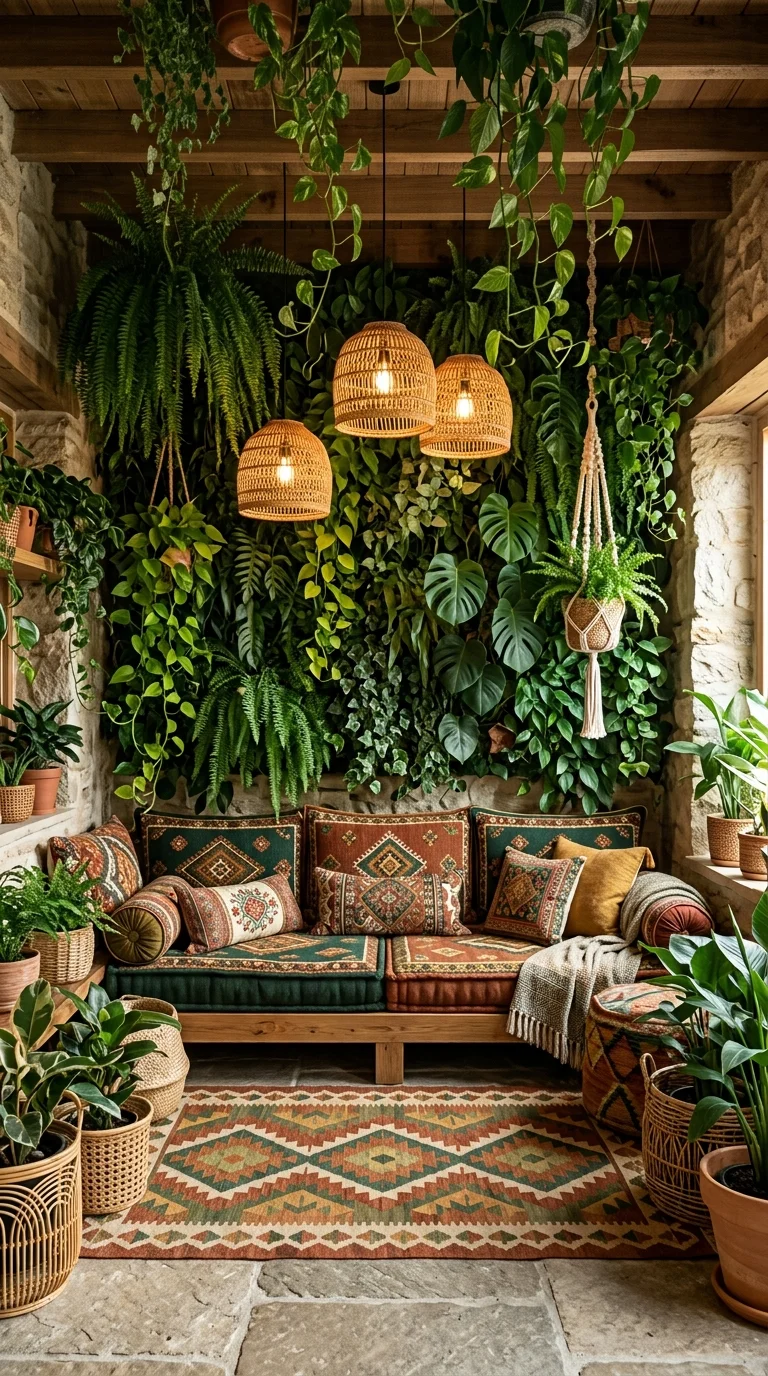
This room drops the sofa entirely for low, cushion-based seating along a stone wall — a genuinely different furniture decision, closer to Turkish and Moroccan majlis style than typical Western boho, and reinforced by a diamond kilim pattern repeated across cushions and rug.
Why the Diamond Motif Shows Up Four Times
The same diamond shape appears on the floor cushions, the back cushions, and the rug — one motif, three textiles — which keeps a pattern-dense room from feeling chaotic. A fourth, unrelated pattern would likely be the addition that tips it toward cluttered.
Floor seating like this suits reading nooks, meditation corners, or covered patios built for long conversations; a poor fit for formal guest seating or households managing mobility concerns. If low platform seating appeals, these rattan bed frame designs that blend boho charm with modern style apply the same idea on a smaller scale.
Materials: solid wood platform base, wool kilim textiles, macrame hangers, natural stone cladding, rattan pendants
Colors: Terracotta, Forest Green, Mustard Gold, Warm Stone Gray
Lighting: warm pendant lighting kept low, close to seating height
Maintenance: Ferns and vines hung this densely need consistent humidity, or expect browning tips.
Common Slip-Ups With Floor Seating
- Mixing more than two pattern scales
- Placing cushions too far from a wall, losing back support
- Dry-climate lighting fixtures in a humidity-dependent space
- Forgetting a low table alternative for drinks and books
The Hanging Canopy Living Room: Jungle Overhead, Not Underfoot
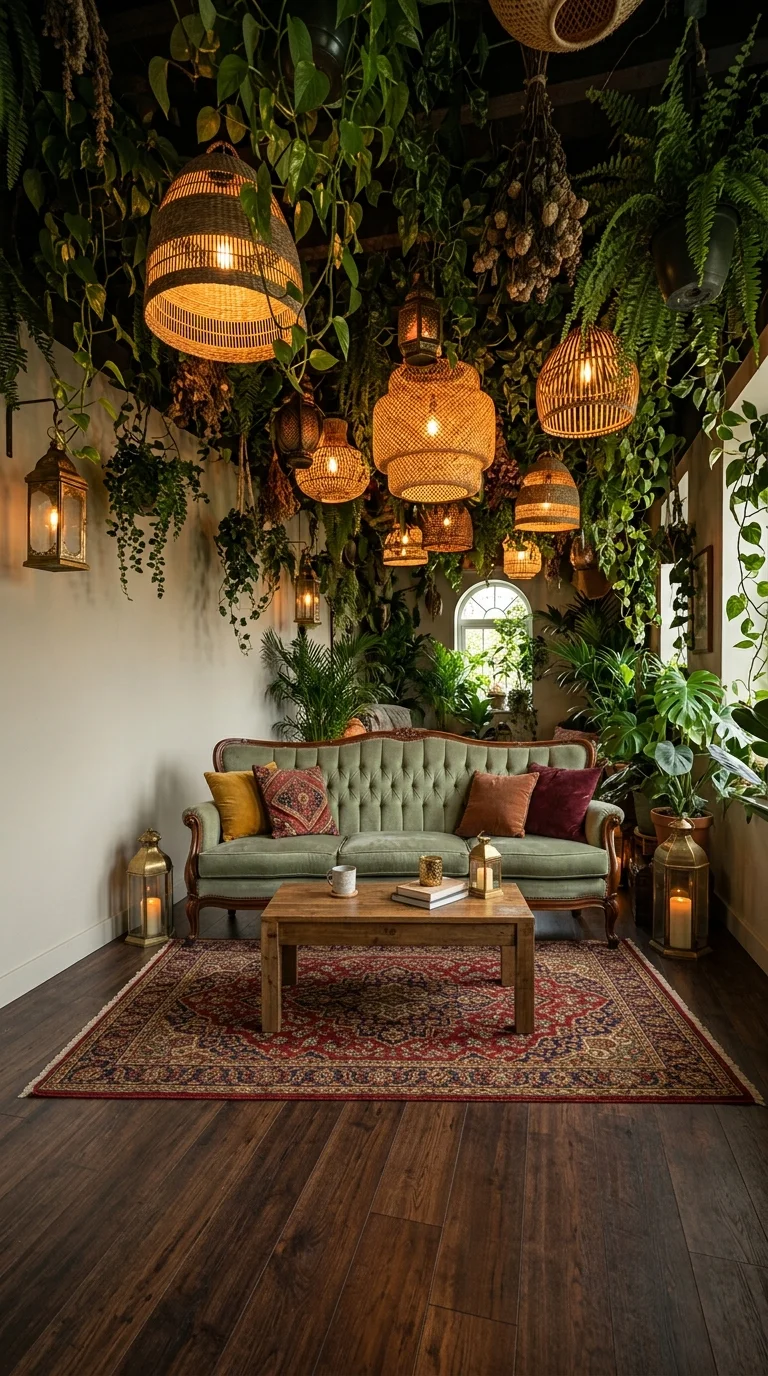
Most jungle-boho rooms put greenery at floor or eye level; this one moves almost everything overhead — vines, dried botanicals, and a cluster of woven pendants hang from the same beams, while the vintage tufted sofa below stays comparatively simple.
A Ceiling Doing the Job of a Second Sofa
The hanging canopy carries roughly as much visual weight as a second seating piece would — a deliberate risk, since that much density overhead can tip into feeling oppressive if the floor level isn’t kept this restrained.
This look rewards people who already love maximalist, layered spaces and have the ceiling height for it; a poor match for low ceilings or households with young kids reaching into trailing vines and lit lanterns.
Materials: vintage velvet upholstery, dried botanical bundles, woven rattan lantern shades, brass lanterns, oriental-pattern rug
Colors: Sage Velvet, Aged Brass, Deep Mahogany, Burgundy Accent
Lighting: warm lantern candles at floor level, low-wattage bulbs inside the pendants — bright overhead light would flatten the mood
The Risks of Going This Dense Overhead
- Live plants hung too close to light fixtures, risking scorched leaves
- A busy rug pattern competing with an already-busy ceiling
- Skipping dust maintenance on dried botanicals
- Under-lighting the seating since every fixture is decorative
Rustic Plaster and Tribal Accents: A Textural, Grounded Jungle
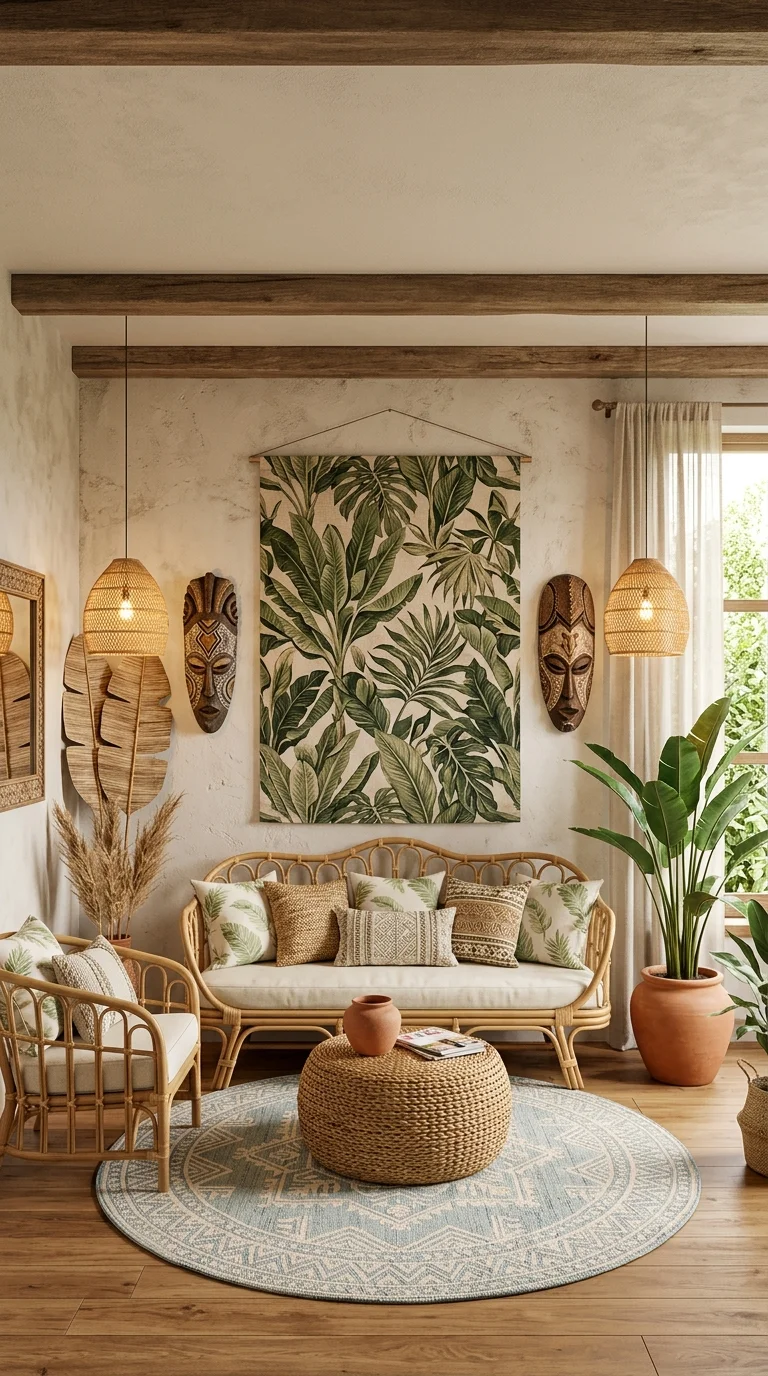
Unlike the plant-heavy rooms elsewhere here, this one leans on texture and pattern — a woven leaf tapestry, carved masks, rough lime-washed walls — with just one potted plant and a pampas arrangement as actual greenery. It’s proof this style doesn’t require a plant collection.
How Lime-Washed Plaster Ages Differently Than Paint
Lime plaster develops subtle tonal variation and a soft matte texture flat paint can’t replicate, picking up faint shading from light and humidity rather than showing wear the way painted drywall does.
Good for drier climates where humidity-loving plants struggle, and for anyone drawn to global or tribal decor over a strictly tropical palette; less suited to renters, since plaster and wall-mounted decor this scale usually mean permanent changes. The same materials-first thinking shows up in these boho kitchen designs that turn simple materials into stunning spaces.
Materials: lime-washed plaster, carved wood wall art, woven leaf-print tapestry, rattan furniture, dried pampas grass
Colors: Warm Plaster White, Olive Green, Aged Wood Brown, Sand
Lighting: soft, warm sconces flanking the tapestry to bring out the plaster’s texture
Mistakes That Flatten the Rustic Effect
- Smooth drywall instead of a textured plaster finish
- Overcrowding the wall art with no breathing room
- Glossy furniture finishes clashing with matte plaster and rattan
- Too many bright colors pulling focus from the textural palette
Retro Palm Wallpaper: Pattern-on-Pattern Done with Restraint
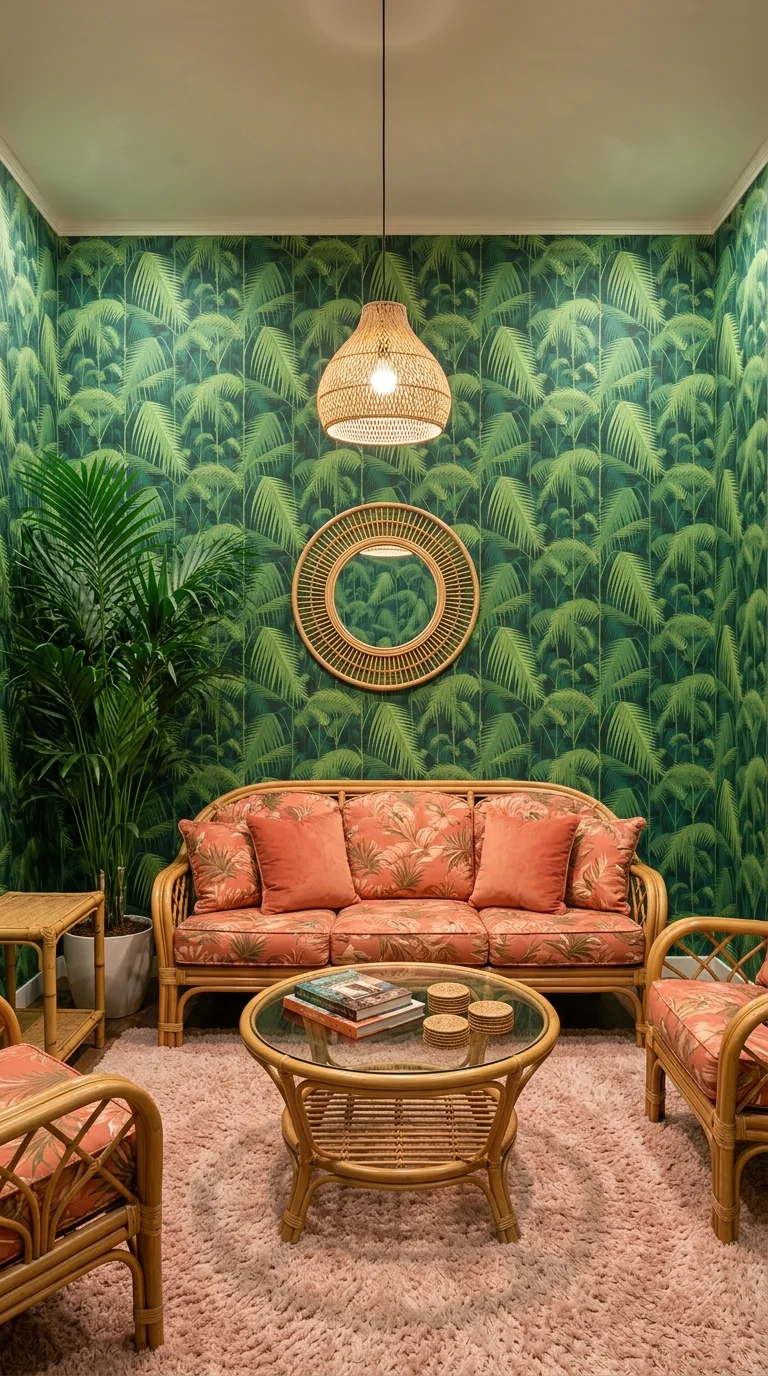
The most maximalist room here in terms of pattern — bold green palm-leaf wallpaper, coral floral cushions, a plush pink rug, three distinct colorways in one small space — held together by a single connecting thread.
One Pattern, Worn on Every Surface in the Room
Palm-leaf silhouettes appear on the wallpaper and, recolored, on the sofa cushions — the same organic shape letting two aggressively patterned textiles sit together without conflict. A third, unrelated pattern would likely be the one addition that tips this from curated to cluttered.
Suits a small den or single accent room rather than an entire open-concept space, since this much pattern is easiest to enjoy in a contained footprint; a poor fit for anyone wanting a calm, muted palette to unwind in.
Materials: palm-print wallpaper, rattan-framed seating, plush shag rug, glass-top rattan coffee table, printed cotton cushions
Colors: Jungle Green, Soft Coral, Blush Pink, Natural Rattan
Lighting: one simple warm rattan pendant, keeping the textiles as the focus
Where Pattern-Heavy Rooms Usually Go Wrong
- A third unrelated pattern instead of repeating the same motif in a new color
- Cool-toned lighting that mutes the coral and pink
- A busy rug pattern instead of a plush solid
- Skipping a neutral piece to give the eye a rest point
The Moody Green Jungle Office-Lounge Hybrid
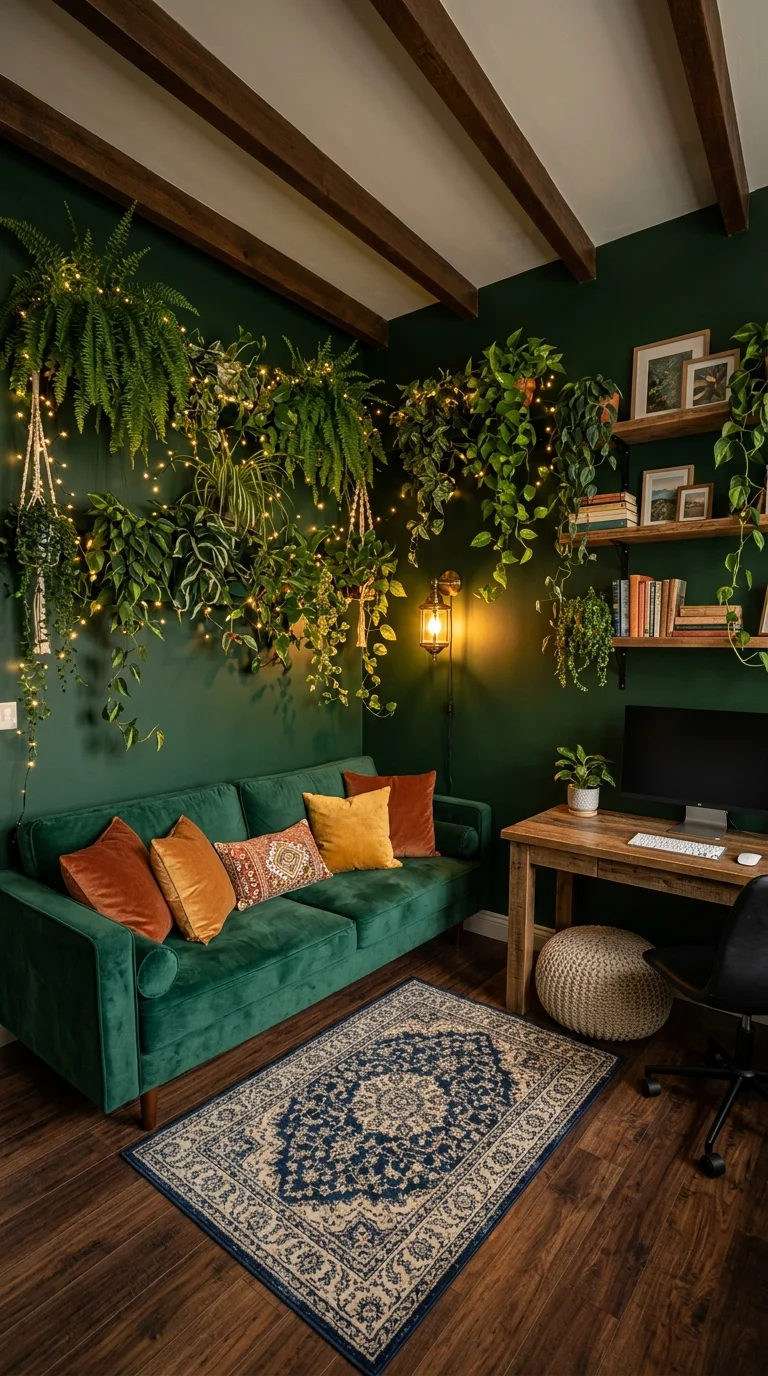
Painted a deep forest green and split between a velvet sofa and a desk, this room proves jungle-boho isn’t limited to pure lounge spaces. Plants trail from macrame hangers and shelving rather than floor pots, keeping the desk usable.
The String Lights Are the Real Focal Point
Warm fairy lights woven through the plants catch the eye before the desk or sofa do, especially against dark green — a reminder that in a moody palette, small point-source lighting often does more work than one overhead fixture.
Strong for anyone working from home who wants the office to feel part of the living space, and for smaller apartments without room for a dedicated study; a poor match for anyone needing a distraction-free workspace.
Materials: dark-painted drywall or millwork, velvet upholstery, macrame hangers, open wood shelving, warm string lighting
Colors: Hunter Green, Rust Orange, Mustard Gold, Warm Walnut
Lighting: warm fairy lights through the plants, plus one wall sconce for task lighting near the desk
Maintenance: Rotate hanging pothos and ferns every few weeks so they grow evenly rather than leaning toward the light.
What Undermines a Moody Green Room
- A cooler, blue-toned green instead of this warmer hunter shade
- Under-lighting the desk since every fixture is decorative
- Skipping plant rotation, leading to lopsided growth
- Bright white shelving instead of warm wood, breaking the palette
Orange Walls, Botanical Gallery: Color as the Jungle Substitute
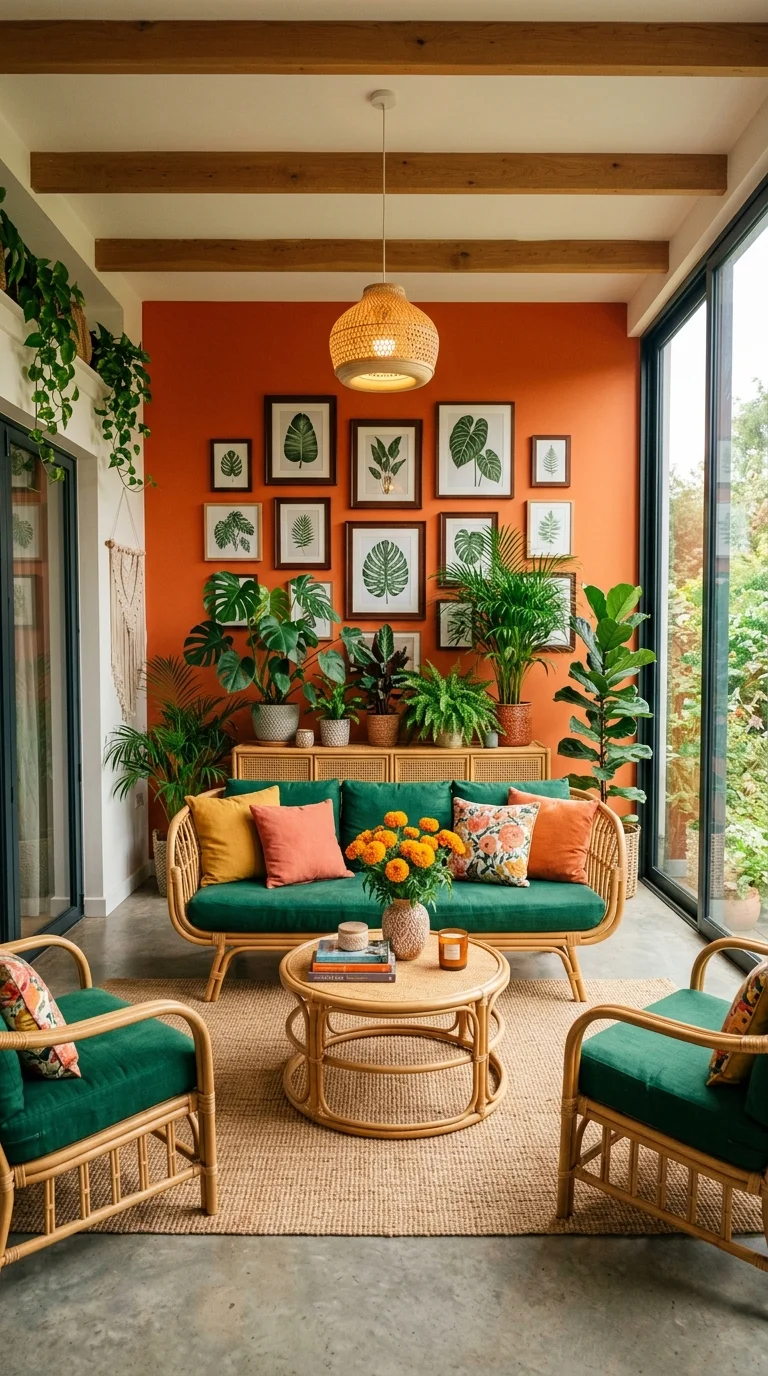
The boldest color choice here, this room uses a saturated orange accent wall instead of layered greenery — a nine-frame botanical print gallery and a handful of potted plants do the rest, making it the room best suited to loving the look without managing a plant collection.
Nine Small Frames Against One Loud Wall
A tight grid of nine modestly sized prints, kept a consistent size, is able to hold its own against a wall this saturated — scattering them at different scales would likely get lost against that much orange.
Suits renters and smaller households especially well, since the prints and modest planters need far less upkeep than a living wall or hanging canopy while still delivering real visual impact — a similar spirit to this boho fireplace living room built around the hearth as a focal point, where one strong element anchors the space. A poor fit for anyone renting where accent walls aren’t allowed.
Materials: matte orange paint, framed botanical prints, green velvet upholstery, rattan furniture frames, woven jute rug
Colors: Burnt Orange, Forest Green, Mustard Yellow, Natural Rattan
Lighting: one warm-toned rattan pendant — cool lighting would push the orange toward red
How Bold Color Walls Get Misused
- A more orange-red paint that clashes with green upholstery
- Gallery frames at inconsistent sizes, breaking the grid
- Cool-white lighting instead of warm bulbs
- Leaving the opposite wall bare, making the room feel lopsided
Furniture Layout Tips for a Jungle-Boho Living Room
- Pull at least one seating piece slightly away from the wall so plant groupings have room behind it
- Anchor tall plants in corners first, then arrange furniture around them
- Leave a clear walking path of at least two feet around any floor-level seating
- Group hanging fixtures over a single zone rather than spacing them evenly across the ceiling
Who Should Choose This Style?
- Best for renters and homeowners wanting a warm, textural living room without a strict color-matching system
- Best for households that already enjoy houseplants and won’t mind occasional watering
- Best for open, high-ceilinged rooms or covered outdoor-adjacent spaces where hanging plants have room to work
- Not ideal for minimalists who prefer clean surfaces, or anyone unwilling to commit to at least light plant maintenance
Budget Summary
| Budget | Expectation |
|---|---|
| Low | Faux rattan furniture, artificial trailing plants, printed cushions, a synthetic jute-look rug |
| Medium | Real rattan seating, low-maintenance live plants like pothos and snake plant, a wool-blend kilim rug |
| Premium | Custom living plant walls with irrigation, genuine leather seating, lime-washed plaster, oversized rattan pendants |
Frequently Asked Questions
Do I need real plants for a boho jungle living room to work?
No — several of these rooms lean more on wallpaper, tapestry, and gallery art than live greenery. A handful of low-maintenance plants paired with a leaf-print textile or botanical prints gets you most of the way there.
How much natural light does this style need?
It depends on the room. The vaulted plant-wall and open-air pavilion looks both depend on strong daylight for their greenery, while the moody green office and hanging-canopy rooms are built around warm artificial lighting and work in dimmer spaces.
Is this style renter-friendly?
Some versions are, some aren’t. Rattan furniture, hanging plants, and gallery art remove without damage; lime-washed plaster and painted accent walls usually need landlord approval or a repaint before move-out.
How do I keep a jungle-boho room from feeling cluttered instead of curated?
Repeat the same pattern or plant shape throughout instead of introducing new ones in every corner, and keep at least one surface — a rug, a wall, the upholstery — solid enough to give the eye a place to rest.
Conclusion
Jungle-boho living rooms can lean tropical and open, moody and maximalist, or quietly textural depending on which of these nine directions fits your climate, ceiling height, and appetite for plant care. The through-line is repetition — one motif, material, or color doing the work consistently rather than every element competing for attention. Pick the room whose upkeep and mood matches your daily life, not just the one that photographed best, and the rest of the styling tends to fall into place.
Explore More
You may also enjoy:
- Boho Home Office Ideas That Bring Organic Style to Your Workday
- Boho Bathroom Ideas That Make Everyday Spaces Feel Like a Retreat
- Boho House Exterior Ideas That Blend Natural Materials With Modern Curb Appeal
Aesthetic Life Team covers home décor, room-by-room styling, and design trends worth trying, with a focus on ideas readers can actually recreate in their own space.


3 Responses