
Victorian bathrooms have a way of feeling designed rather than assembled — heavy florals, gilded frames, deep jewel tones, and a clawfoot tub doing most of the emotional work in the room. The tricky part is that “Victorian” isn’t one look. It can mean soft and botanical, dark and dramatic, or fully gilded and formal, and each direction asks for a different budget, a different maintenance level, and a different kind of home. The ten rooms below each take the style somewhere different, so instead of admiring all ten, use them to figure out which specific version actually fits your space, your upkeep tolerance, and the feeling you’re trying to create.
Quick Overview
| Style | Victorian / Romantic Revival |
|---|---|
| Best For | Period homes, primary baths, powder rooms |
| Budget | Medium–High |
| Difficulty | Moderate to advanced (millwork, plumbing) |
| Maintenance Level | Medium–High |
A Canopy-Draped Tub Turns Floral Wallpaper Into a Full Room Statement
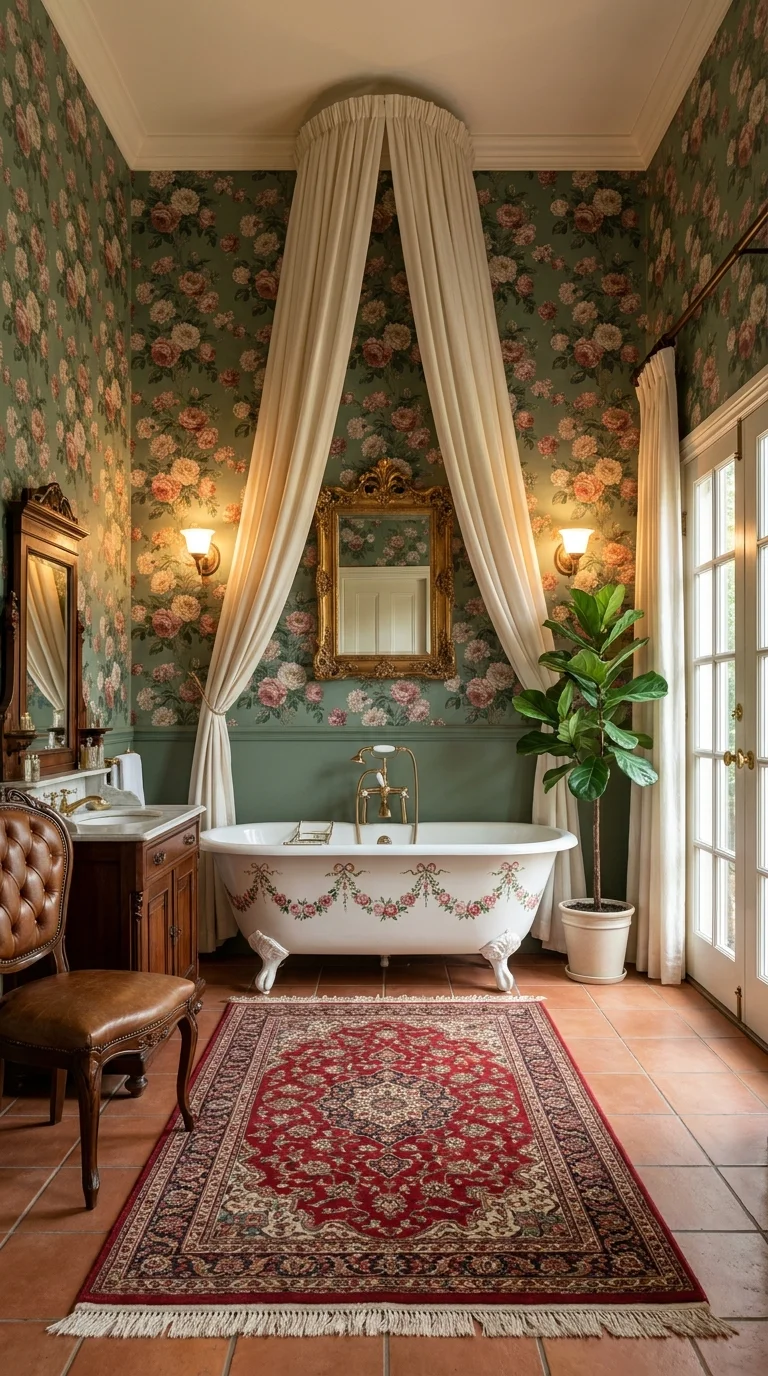
The defining move in this room isn’t the wallpaper itself — it’s the way the cream canopy curtain pulls the eye straight up to the ceiling, turning a fairly ordinary tub alcove into something closer to a four-poster bed. That vertical pull is what keeps a heavily patterned room from feeling flat: the drape gives the wallpaper a frame instead of letting it read as one continuous surface. This suits a reader who already loves maximalist pattern but wants a single architectural gesture to organize it, rather than pattern fighting pattern across every surface.
It works best in a primary bathroom with real ceiling height; in a low-ceilinged room, the canopy effect collapses and just looks like a shower curtain gone rogue. The floral wallpaper here does need moisture-tolerant material or a good exhaust fan nearby — a topic worth checking against dark green bathroom ideas if a deeper, less floral version of this same botanical mood feels safer for a smaller budget. To simplify the look, a single fabric panel hung from a ceiling hook over a standard tub gets most of the romance without a full custom rod.
Why Brass and Coral Read as Warm Instead of Loud
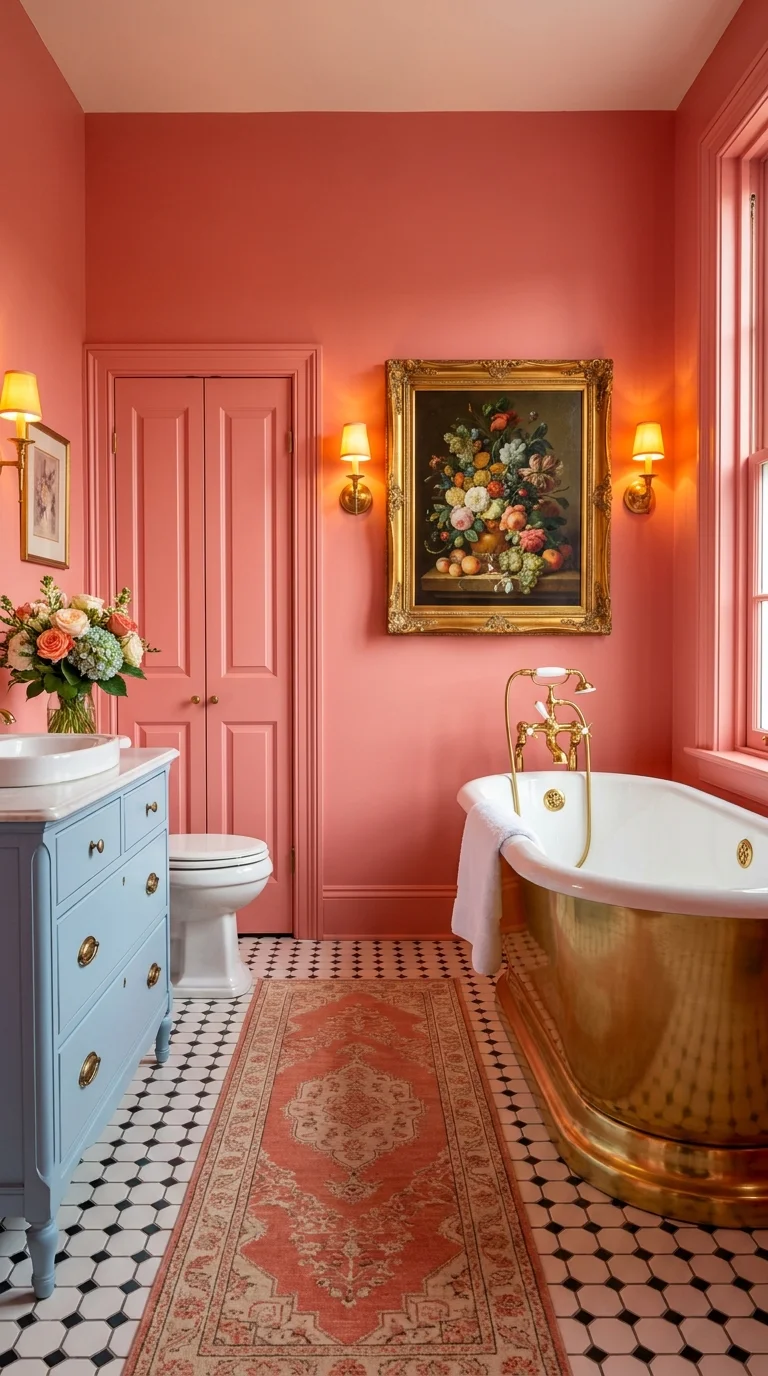
Main Colors: Coral Pink · Brass · Powder Blue · Antique White Best Lighting: Warm brass sconces flanking artwork, softened by daylight from the window
The color decision here is the whole story. Coral walls and a brass tub could easily tip into a candy-shop look, but the powder-blue vanity acts as a cooling counterweight, and the black-and-white checkerboard floor keeps the palette grounded instead of feeling like a themed room. This is a strong reference point for anyone drawn to bold color who’s worried it will read as juvenile — the trick isn’t restraint, it’s giving one bold color a complementary opposite to lean against.
Someone renovating a guest bath or powder room where a little drama is welcome, rather than a primary bath used daily, will get the most mileage from this. The compromise is real: a fully brass tub is expensive to source and needs regular polishing to avoid water-spotting, so anyone comparing options should look at 10 ways to upgrade your bathroom with the right vanity before committing, since the vanity color is doing nearly as much work as the tub. A budget version swaps the brass tub for a white one with brass feet and keeps the coral-and-blue pairing, which captures most of the effect for a fraction of the cost.
The Brass-and-Terrazzo Pairing That Feels Both Old and Current
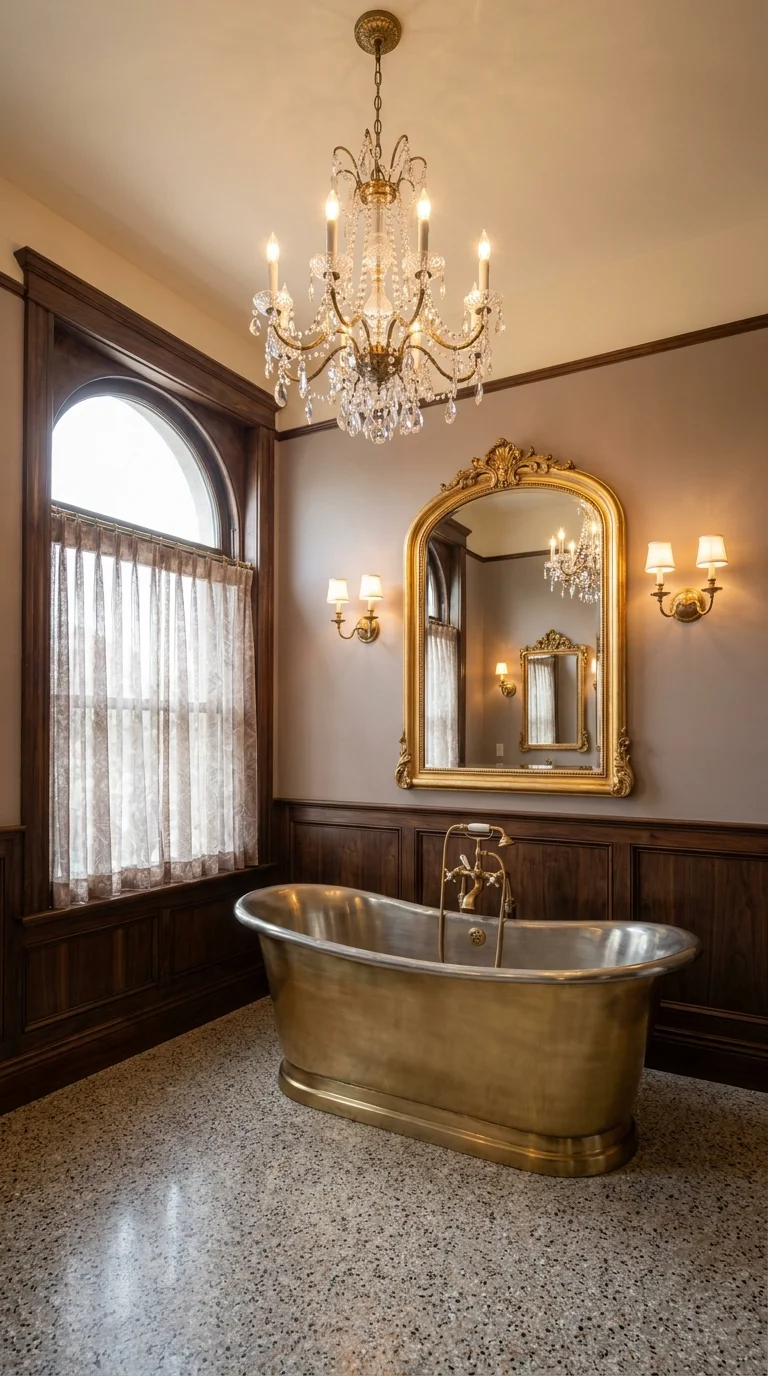
One reason this room feels resolved rather than staged is that the brass in the tub, the mirror frame, and the sconces all repeats at a consistent warmth — nothing here is a slightly different “gold” fighting the others. Against that, the terrazzo floor is the one genuinely modern material in an otherwise period-leaning room, and that contrast is what keeps the space from feeling like a museum reproduction. It’s a useful model for a reader who wants Victorian detailing without a Victorian-era house underneath it.
The dark wood wainscoting and arched window suit an older home with real architectural bones, but the terrazzo floor is the one element that also works cleanly in a newer build. Terrazzo is genuinely low-maintenance once sealed, which is a practical advantage over the patterned tile seen elsewhere in this list — worth weighing against 9 sconce placements that change how a bathroom feels if the lighting is the part you’re most unsure how to plan. The chandelier is a nice touch but not essential; two well-placed sconces at mirror height get most of the same warmth for less cost and less ceiling work.
Is a Fully Gilded Bathroom Worth the Investment?
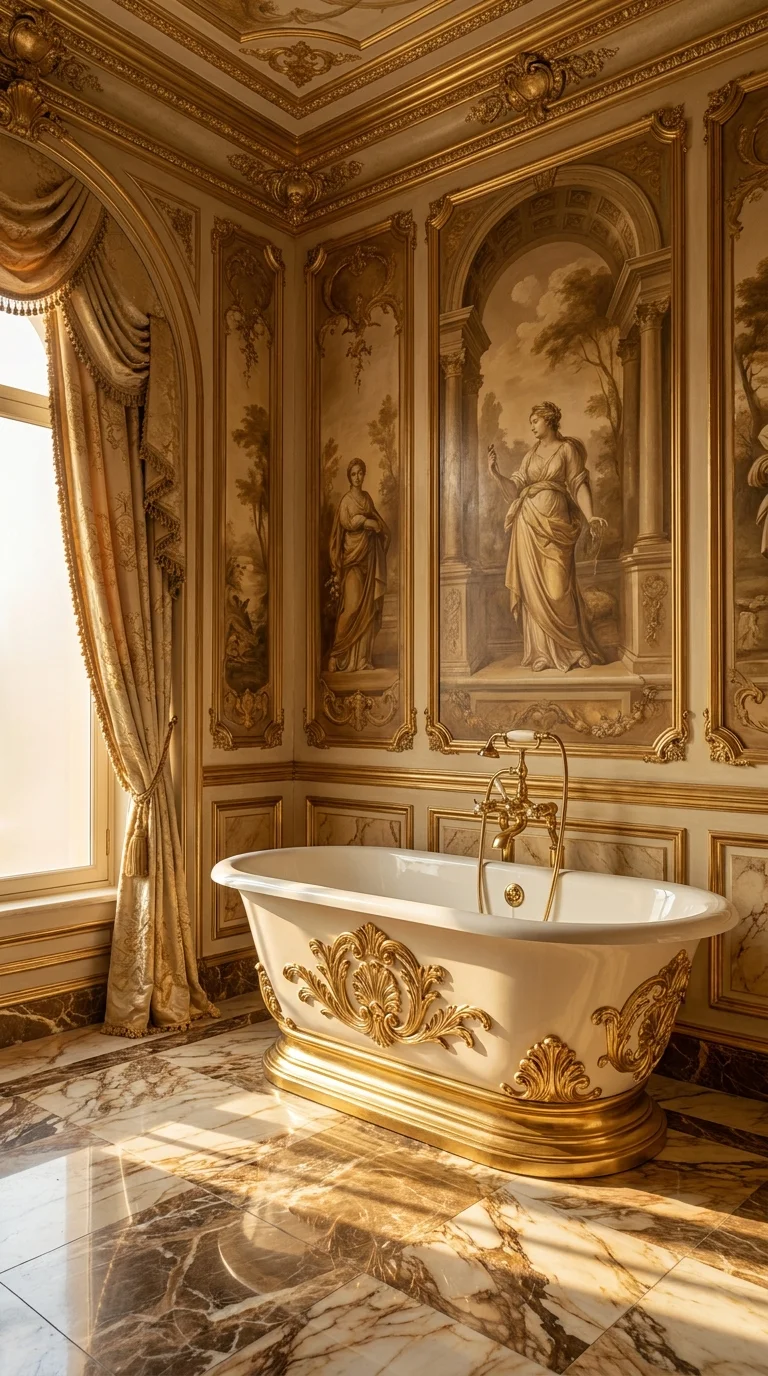
Worth the Investment?
This is the most expensive-looking room in the group, and it’s worth being honest about it: hand-painted panels, gold-leaf trim, and a carved marble-and-gold tub base are not a weekend project or a modest line item. If the goal is resale value or everyday livability, this level of ornament rarely pays back what it costs, and it can actively narrow a home’s buyer pool. Where it does make sense is a primary suite in a larger, already-formal home, where the bathroom is meant to match a house that’s already making a grand statement elsewhere. For most readers, borrowing the idea — one gilded mirror, one ornate tub apron, marble-look tile instead of slab marble — delivers 70% of the feeling at a fraction of the price, and that’s usually the smarter call.
The single biggest risk with a room this rich is that every other decision has to be quieter to let it breathe; add patterned textiles or a busy rug here and the room stops reading as elegant and starts reading as cluttered. Keep the rest of the space restrained if this level of detail is the goal.
Where a Dark Palette Can Start to Feel Heavy Instead of Moody
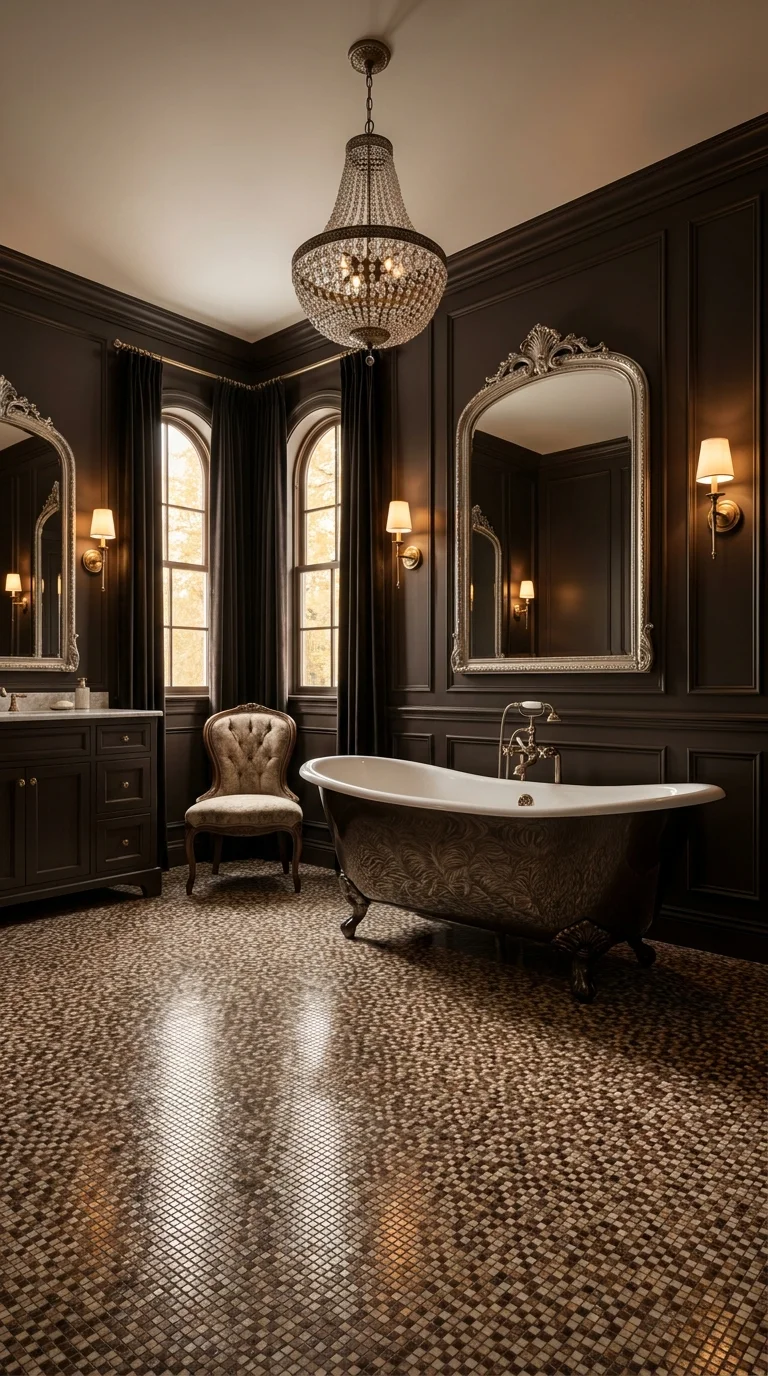
- Painting the ceiling dark along with the walls, which removes the sense of height a crystal chandelier is meant to create
- Skipping layered lighting and relying on one overhead fixture, which leaves a dark room genuinely gloomy rather than moody
- Choosing a matte, light-absorbing tub finish instead of one with sheen, so the room’s one bright object goes flat
- Pairing dark walls with heavy dark furniture throughout, leaving nothing for the eye to land on first
What saves this room from those mistakes is the crystal chandelier and silver mirror frame, which give the dark walls something reflective to bounce light off of — dark paint without a reflective counterpoint nearby tends to feel like a hallway rather than a retreat. This suits a reader who wants real drama and doesn’t mind a bathroom that photographs better at night than at noon. It’s a poor fit for a small, window-less powder room, where the same palette would feel closed-in rather than luxurious; that version is better explored through dark academia bathroom ideas, which leans on warmer wood tones instead of cool charcoal to soften the darkness.
How a Small Powder Room Earns a Chandelier Without Feeling Crowded
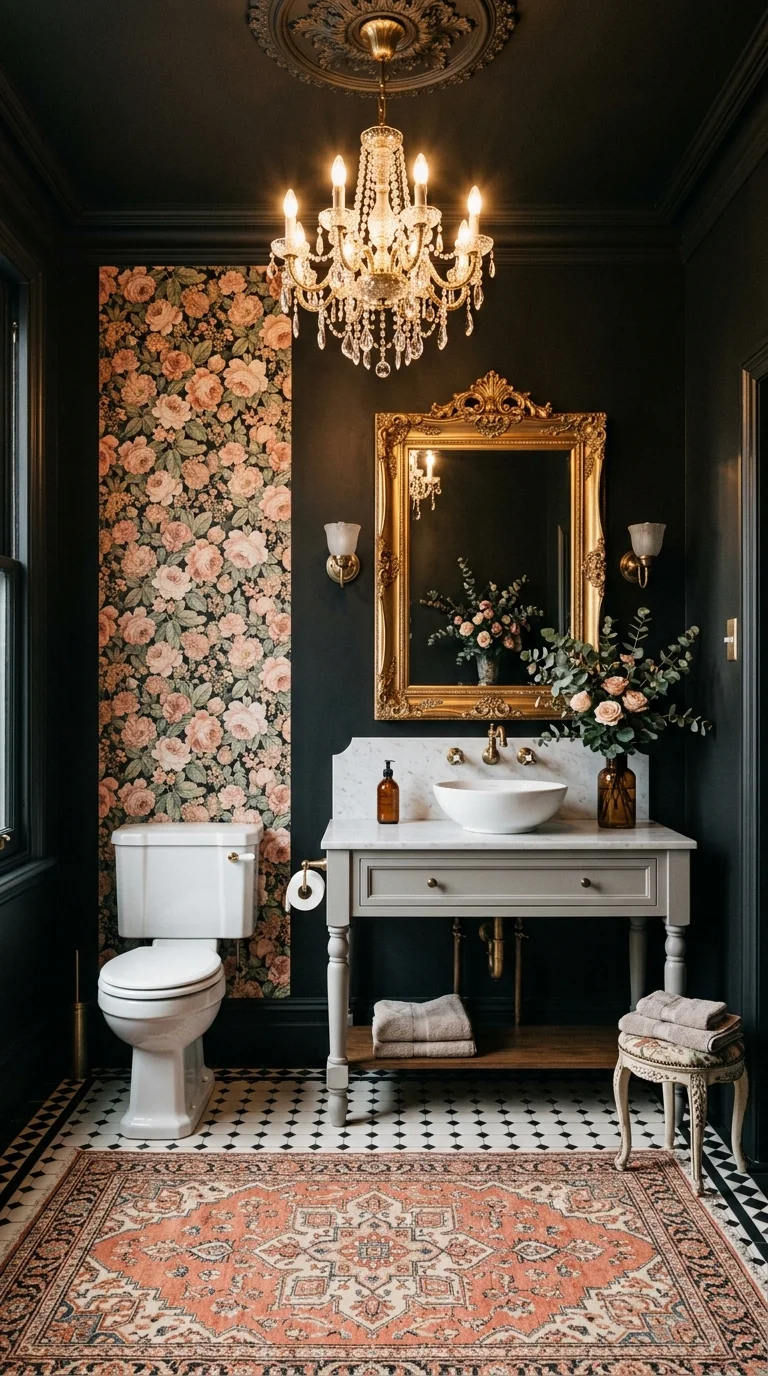
This is a genuinely small footprint, and the choices here are a good template for recreating the look in a real powder room rather than a primary bath. Start with black walls as the base — they recede rather than close in a small space, which is counterintuitive but reliable. Add one vertical wallpaper panel instead of covering every wall, which gives the pattern impact without overwhelming a tight room. Choose a vessel sink on a slim console rather than a full vanity to keep floor space visible, and finish with a single statement mirror and a small chandelier scaled to the ceiling height, not the room’s square footage.
The floral wallpaper strip is doing the job a full accent wall would in a larger room, and that restraint is the actual lesson here, more than the chandelier itself. For a lower-cost version, a large framed botanical print stands in for the wallpaper panel and can be swapped out later; for the mirror, powder room mirror ideas that make a small bathroom feel more stylish covers scale and shape options specific to tight layouts like this one.
The Cottage Details That Keep a Small Bathroom From Feeling Cold
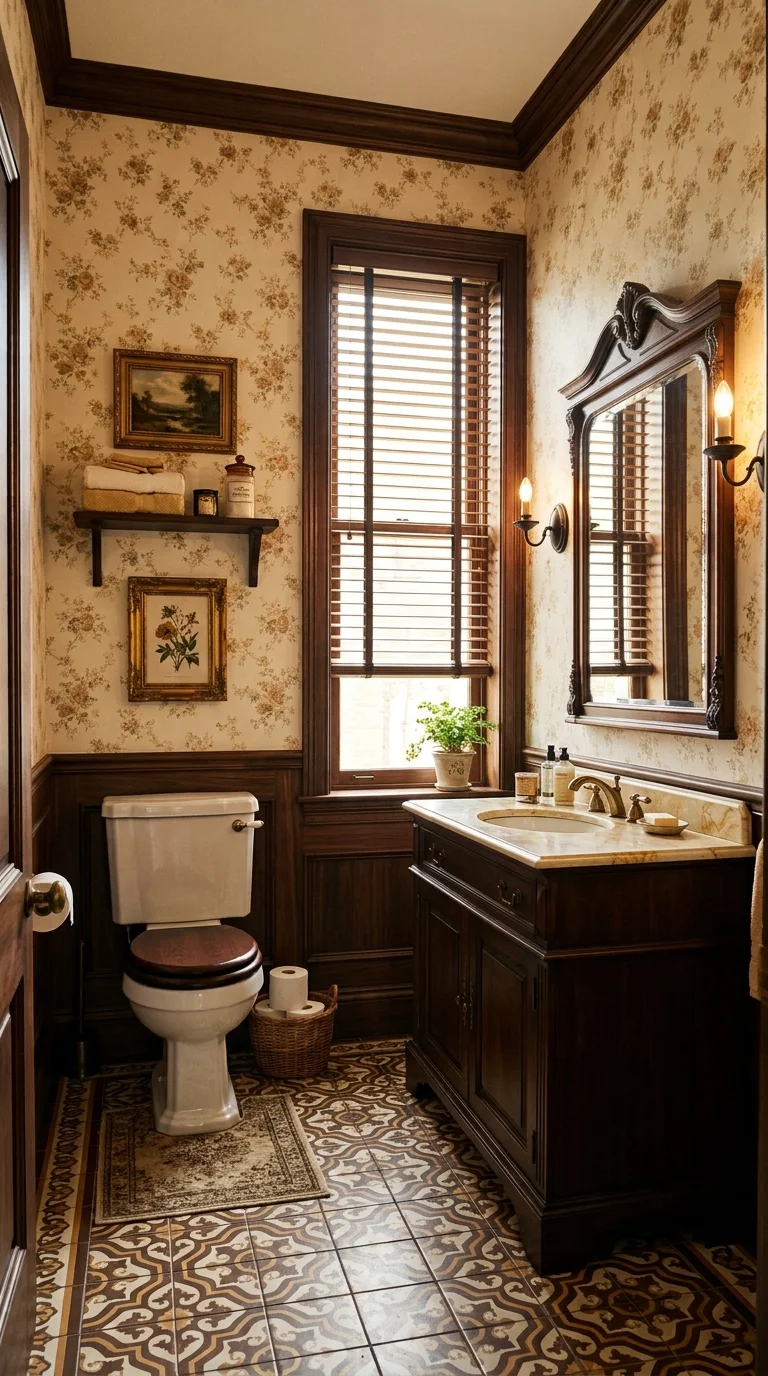
Unlike the more formal rooms in this list, this one leans on warmth over polish — small floral wallpaper, a dark wood vanity with a marble top, and an open shelf holding folded towels and a small plant. Nothing here is precious, and that’s the point: it suits a reader decorating an actual family or guest bathroom that needs to look inviting without demanding careful upkeep. The patterned tile floor and wood-look blinds add texture without asking for anything more delicate than a regular wipe-down.
This direction fits an older home with a small existing bathroom footprint better than a full gut renovation, since most of the character here comes from wallpaper and a vanity swap rather than structural changes. The one thing worth watching is the wood toilet seat and dark wood tones near a shower or tub — without adequate ventilation, wood finishes in a humid bathroom will dull and eventually crack faster than a sealed laminate would.
Columns and Marble: Borrowing Architecture From a Grander Room
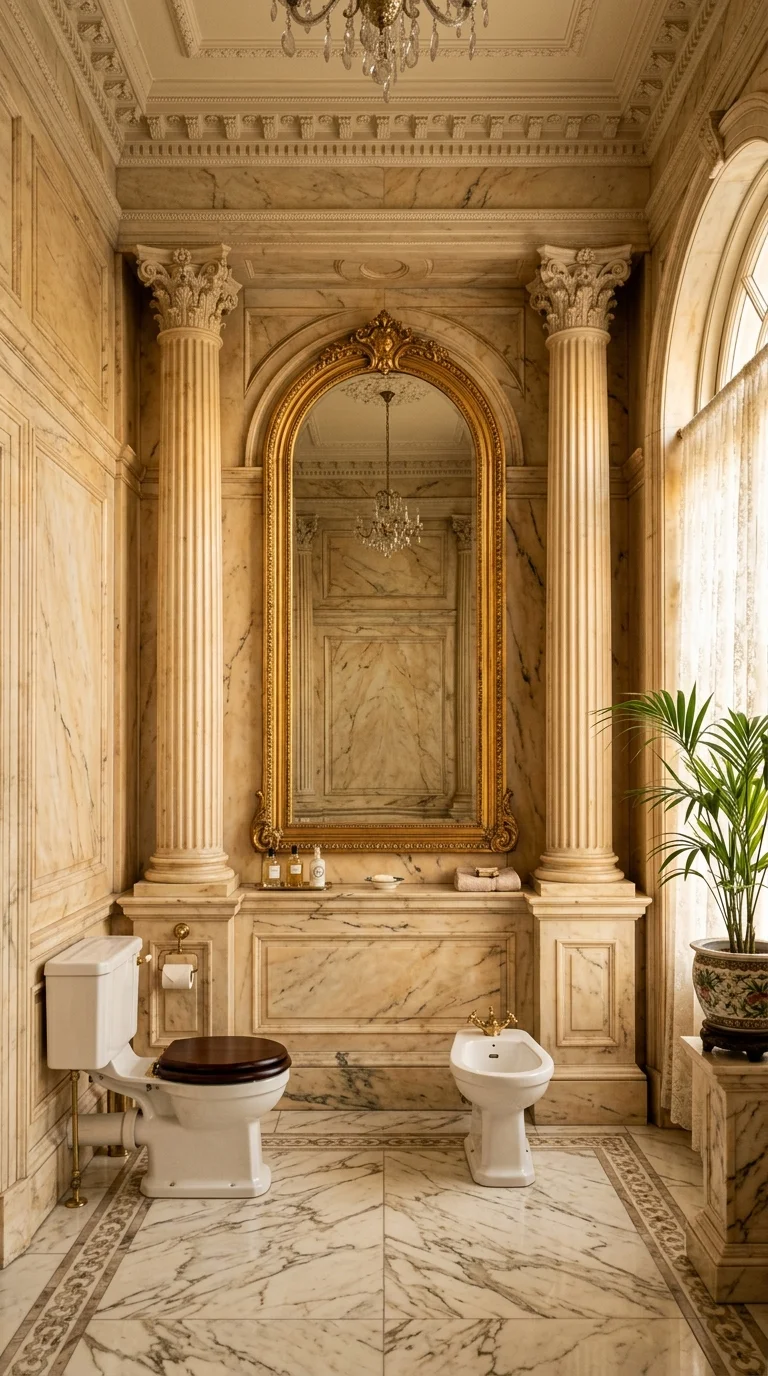
Corinthian columns flanking a gold-framed mirror push this room past “Victorian” into a more neoclassical direction, and the reason it doesn’t feel like a stage set is proportion: the columns are tall enough, and spaced far enough apart, that they read as structural rather than decorative. That’s a harder trick to pull off than it looks — undersized or too-close-together columns in a bathroom almost always look like props. This is best suited to a home with genuinely high ceilings and an already-formal architectural style; dropping columns into a standard 8-foot builder-grade bathroom will look like a costume rather than a room.
The bidet alongside the toilet and the inlaid marble floor border both signal a full renovation budget rather than a cosmetic refresh, so this is more of a “someday” inspiration image for most readers than a near-term project — a useful contrast to the powder-room ideas above, where the same romantic mood is achievable on a fraction of the budget.
What Happens When a Bathroom Borrows From a Winter Garden
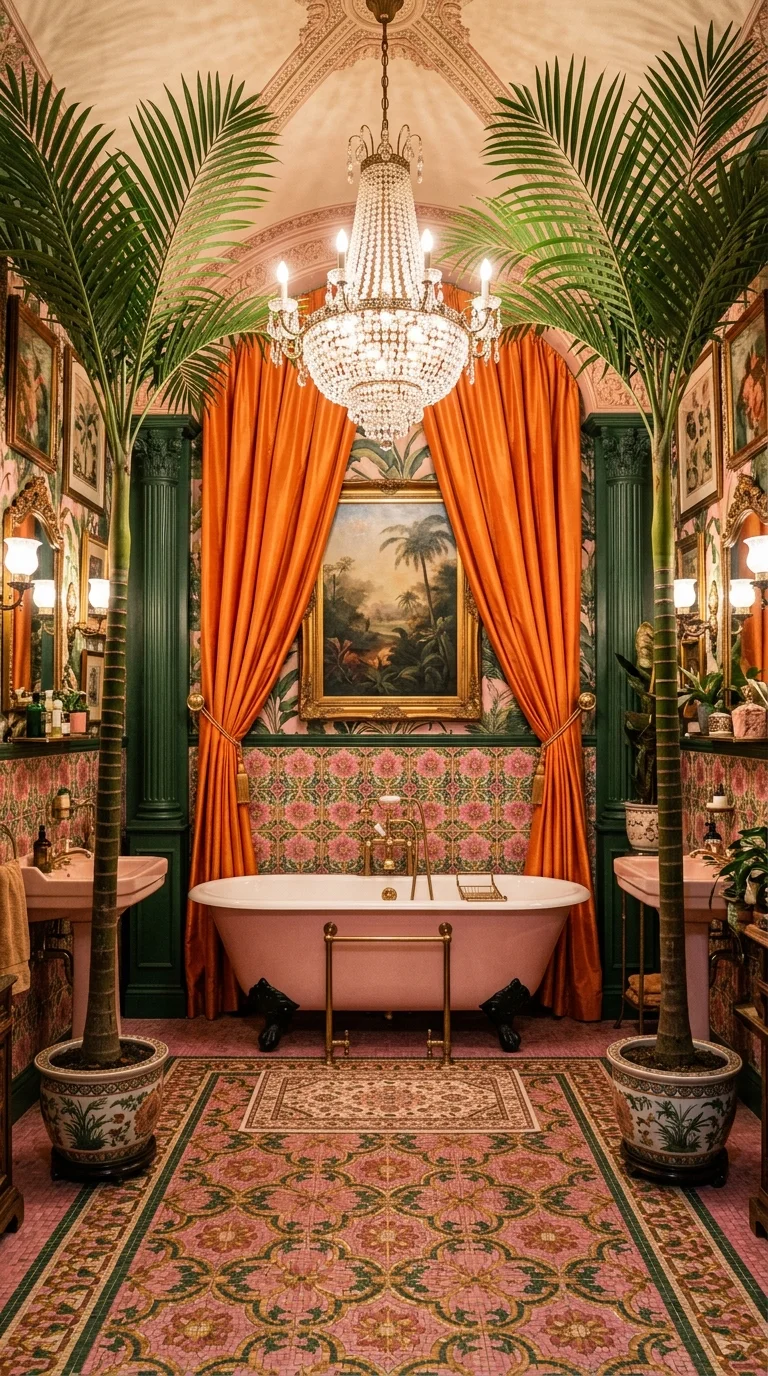
Recommended Materials: Mosaic Floor Tile · Silk or Silk-Look Drapery · Patterned Wall Tile · Cast Iron Tub · Live Palms
This room borrows more from a Victorian conservatory than a bathroom, and the orange silk curtains against dark green pillars are the reason it reads as intentional rather than accidental jungle. Orange and green sit opposite each other on the color wheel, so the curtains don’t just add color — they make the surrounding greenery look more saturated by contrast. This suits a reader who already collects plants and wants a bathroom that functions almost like a garden room, not someone looking for a low-fuss finish.
Maintenance: Live palms this size need real light, which most bathrooms don’t get without a skylight or a large window, so a faux version is a legitimate substitute here rather than a compromise. Anyone drawn to the plant-forward, materials-heavy feel of this room but wanting something more grounded in daily upkeep should look at earthy bathroom design ideas, which pulls the same organic warmth from wood and stone instead of a full indoor-garden setup.
A Green Door and a Trailing Vine Do More Work Than the Tile
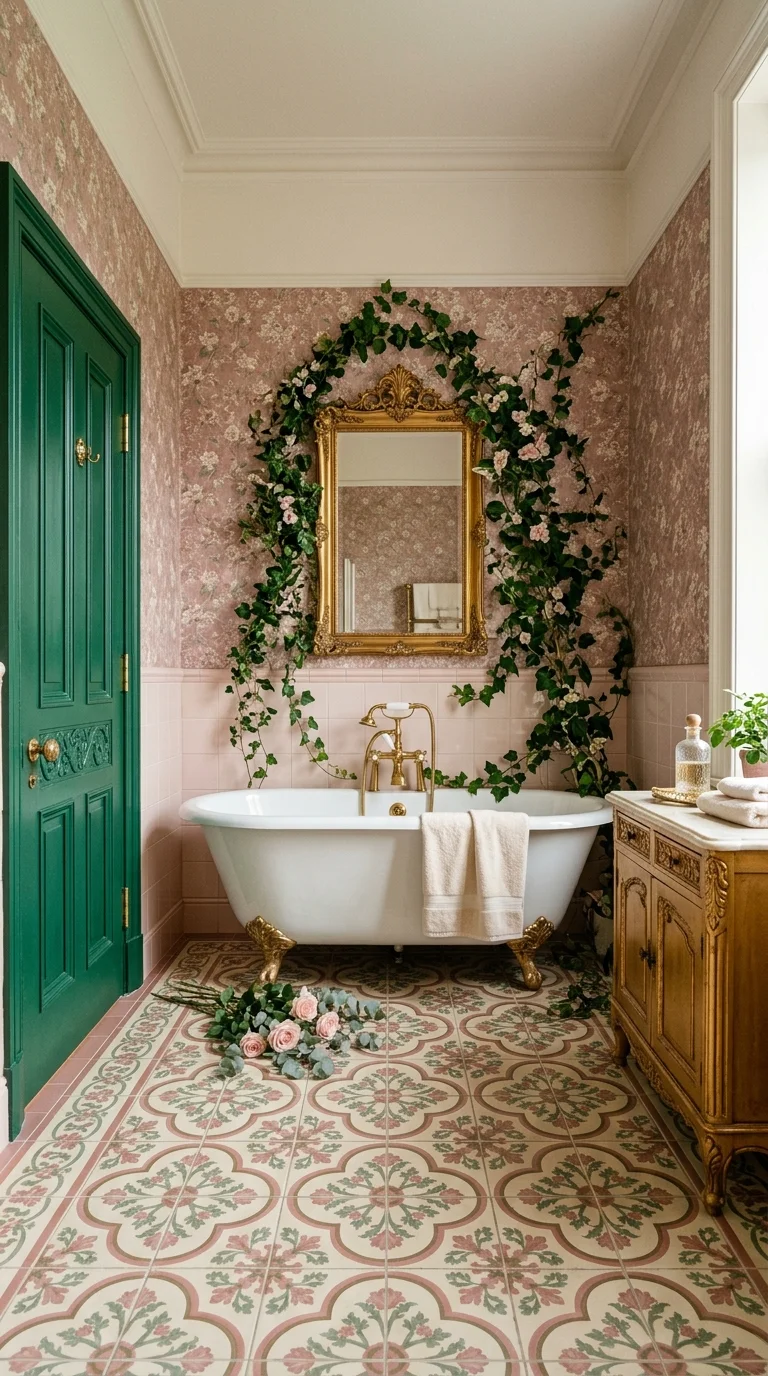
It would be easy to assume the patterned tile floor is the star of this room, but the more instructive detail is the emerald green door against soft pink walls — one saturated, unexpected color choice does more to make the room feel designed than the tile pattern itself. The trailing vine around the mirror reinforces that same idea: a single unexpected element, placed with intention, reads as more sophisticated than pattern layered on pattern. This is a genuinely approachable look for a reader on a modest budget, since the door and a faux vine garland are both inexpensive relative to retiling a floor.
It suits a soft, romantic primary bathroom or guest bath better than a high-traffic family bathroom, since the pale palette will show scuffs and water spots faster than a darker room would. For a similar effect built around color contrast rather than florals, pink bathroom ideas that feel stylish, playful, and surprisingly timeless covers several pairings besides green that keep a pink room from reading as saccharine.
Bathroom Cleaning & Moisture Tips
- Choose vinyl-coated or paintable wallpaper in any wet zone, and confirm ventilation is adequate before installing florals near a tub or shower — the EPA’s guide to mold and moisture control is a useful baseline for what “adequate” actually means in a small, humid room
- Wipe brass and gold fixtures with a soft, dry cloth rather than an abrasive cleaner, which will dull the finish faster than water spots would
- Reseal terrazzo, marble, and mosaic tile floors on a yearly schedule if the bathroom sees daily use, since grout and stone are where moisture problems usually start
- Run an exhaust fan for at least 20 minutes after every shower or bath in a room with wood millwork, wallpaper, or a wood toilet seat, all of which absorb humidity faster than tile or paint
Who Should Choose This Style?
- Best for owners of older or period-style homes who want the bathroom to match existing architectural character
- Best for anyone who wants a primary bath or powder room to feel like a distinct, personal retreat rather than a purely functional space
- Best for readers comfortable with some upkeep — polished metals, wallpaper, and natural stone all ask for regular care
- Not ideal for a busy family bathroom used by young kids, where pale palettes and delicate wallpaper will show wear quickly
Budget Summary
| Budget | Expectation |
|---|---|
| Low | Wallpaper accent wall, framed mirror, brass-look hardware, faux greenery |
| Medium | Full wallpaper room, brass-footed white tub, new vanity, statement lighting |
| Premium | Full brass or copper tub, marble flooring, custom millwork, hand-painted panels |
Frequently Asked Questions
Is Victorian bathroom style hard to maintain? It depends on which version you choose. A wallpaper-and-brass-hardware approach is fairly low-maintenance, while a room built around natural stone, unsealed wood, or a fully polished metal tub needs more regular upkeep than a standard modern bathroom.
Can this style work in a small bathroom or powder room? Yes — several of the rooms above are genuinely small spaces. Dark walls, a single wallpaper panel, and one statement mirror or light fixture tend to work better in tight footprints than trying to fit in every element at once.
Does a Victorian bathroom have to include floral wallpaper? No. Some of the strongest examples here lean on color, metal finishes, or architectural detail like columns and marble instead of pattern, which shows the style is really about romance and formality rather than any one specific print.
What’s the easiest way to try this style without a full renovation? A wallpaper accent, a new mirror, and swapping fixture hardware to brass or gold usually deliver the most visible change for the least cost and disruption.
Conclusion
The rooms that work best here aren’t necessarily the most expensive ones — they’re the ones where a single decision, a canopy curtain, a green door, a repeated brass tone, does most of the emotional work, while everything else stays quiet enough to let it register. That’s the real takeaway for anyone planning their own version: pick the one moment your bathroom is going to be built around, commit the budget there, and keep the rest of the room simple enough to support it rather than compete with it.
Explore More
You may also enjoy:
- Retro bathroom trends making a stylish comeback
- The Japandi bathroom trend explained: a room-by-room look
- 10 bathroom colors that turn a plain room into a statement space
Written by the Aesthetic Life Team, focused on helping readers translate real design inspiration into rooms they can actually plan, budget, and build.

