A bathroom’s overhead light does the heavy lifting for brightness, but it’s rarely what makes the room feel finished. Sconces are what soften the harsh shadows an overhead fixture throws across a face in the mirror, and they’re one of the few lighting choices that double as visible decor every time the light switches on.
The examples below cover a wide range of sconce styles—from sculptural single fixtures to matched pairs framing a mirror—each showing a different way that light placement changes the mood of the room around it.
1. Wood Torch-Shaped Sconces That Warm Up a Zellige Tile Wall
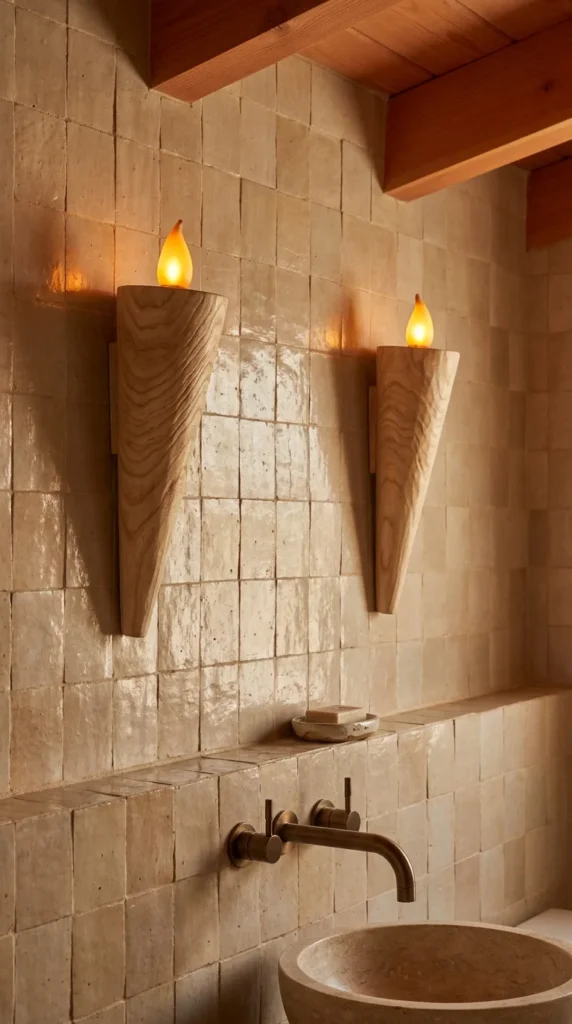
Carved into tapered wood cones, these sconces mimic the shape of a torch, with a flame-toned bulb sitting at the tip of each one. Mounted directly onto handmade zellige tile, the warm wood grain and amber glow give the whole wall a glow closer to candlelight than standard bathroom lighting.
💡 Pro Tip
Choosing a bulb with a visibly warm, amber-toned filament—rather than a standard warm-white LED—makes a bigger difference in a design like this than the sconce shape itself. The flame-style bulb is what actually sells the torch effect; a flat white bulb in the same wood fixture would look far less intentional.
The stone vessel sink and brass wall-mounted faucet below keep the material palette consistent, so the sconces read as part of a considered scheme rather than a standalone lighting choice.
2. Symmetrical Linen-Shade Sconces Framing a Classic Vanity Mirror
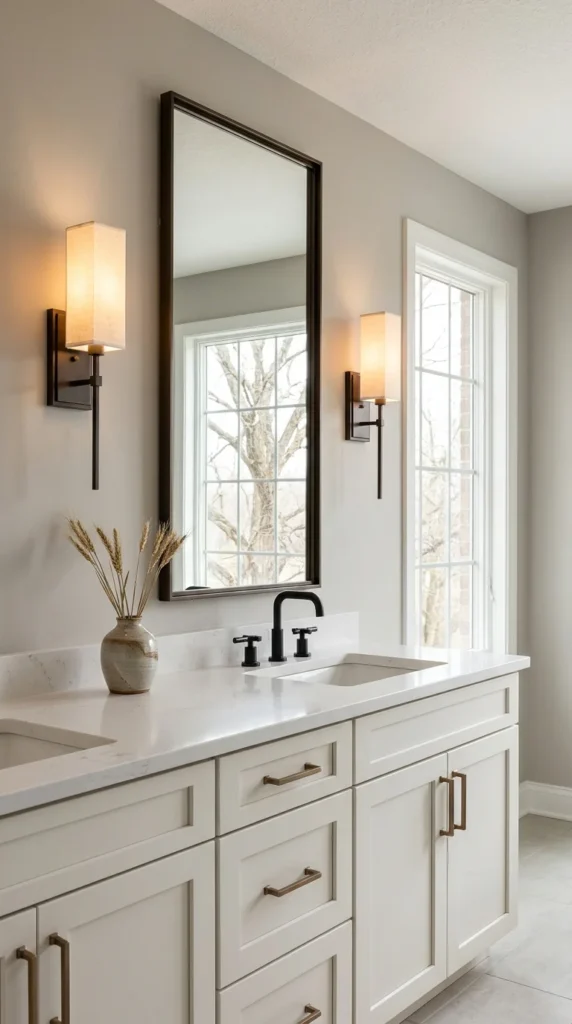
A pair of rectangular linen-shade sconces flank a tall black-framed mirror in this vanity, their soft fabric diffusing the light into an even glow rather than a direct beam. The bronze-toned metal arms match the mirror frame, keeping the whole wall grouping visually connected.
📌 Important Note
For a symmetrical pairing like this to actually flatter the face in the mirror, both sconces need to sit at roughly eye level — generally around 60 to 65 inches from the floor — rather than being centered purely on the mirror’s height. Mounting them too high throws shadows downward across the face, which defeats the purpose of having two fixtures instead of one overhead light.
Cream tile and brass hardware throughout keep the palette warm, letting the linen shades blend into the room rather than standing out as a bold statement.
3. Butterfly-Shaped Sconces That Turn Light Into Shadow Art
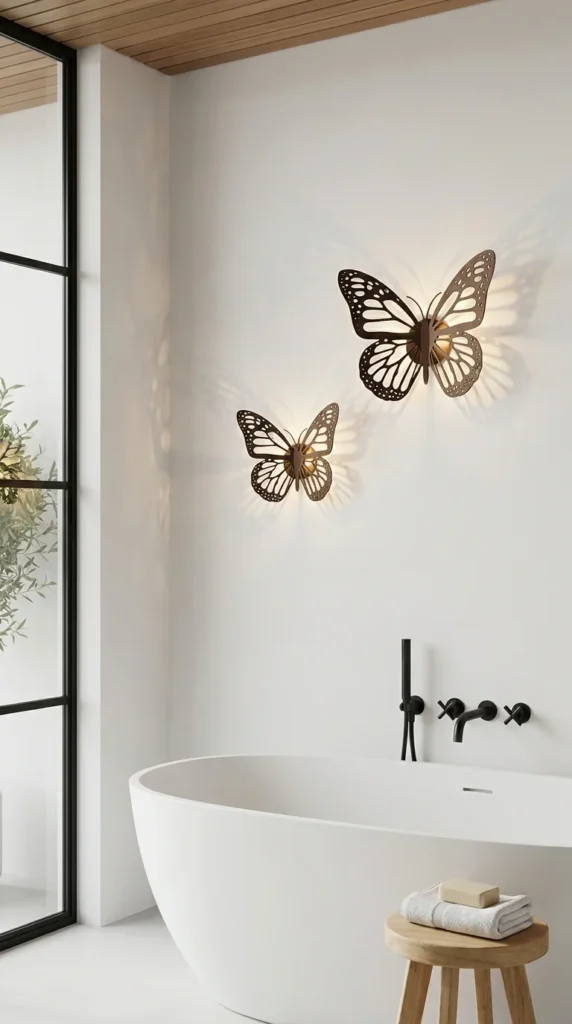
Cut from metal into the shape of monarch butterflies, these two sconces throw dramatic wing-shaped shadows across the wall behind them, turning the light fixture itself into the room’s main decorative feature. Mounted at slightly different heights, the pair suggests movement rather than strict symmetry.
⚠️ Warning
Sculptural novelty sconces like these work best as the room’s only major decorative element—pairing them with additional bold wallpaper, patterned tile, or a second statement fixture nearby usually competes for attention rather than complementing it. This bathroom keeps everything else deliberately plain and white specifically so the butterfly shadows have room to be the focal point.
A freestanding tub positioned just below the sconces means the shadow pattern is visible from the bath itself, extending the effect beyond simply lighting the mirror.
4. Crystal-Cut Sconces Adding Sparkle to a Dark Marble Bathroom
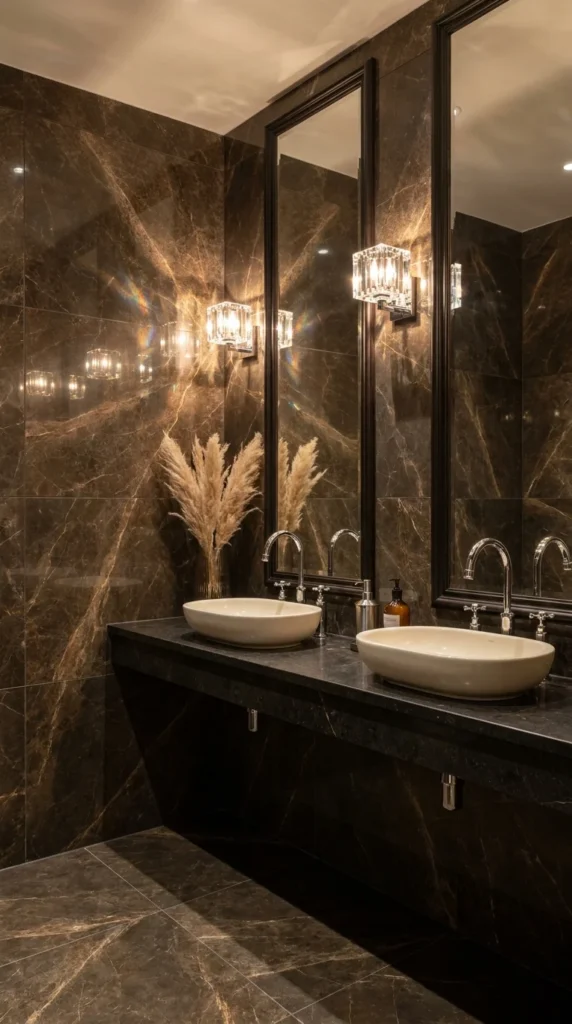
Faceted crystal shades catch and scatter light across dark, richly veined marble walls in this bathroom, creating small rainbow reflections that move depending on the angle. Mounted beside tall black-framed mirrors, the sconces add sparkle to a room that otherwise leans moody and dramatic.
Recreating This Look: Budget Tiers
💚 Affordable: A single crystal-accented sconce paired with darker paint, rather than full ma fulle slab, can borrow the swhite,parkle-against-dark-backdrop effect. 💛 Mid-Range: Semi-custom crystal sconces paired with large-format dark porcelain tile get close to the marble look without the cost of natural stone. 💎 Investment: Full slab marble walls paired with genuine crystal fixtures, as shown here, deliver the deepest veining and the most refined sparkle, at a considerably higher material and installation cost.
Pampas grass in a glass vase softens the room’s hard reflective surfaces, adding one organic, matte texture into an otherwise glossy, light-catching space.
5. Fluted Glass and Polished Nickel for a Traditional Glow
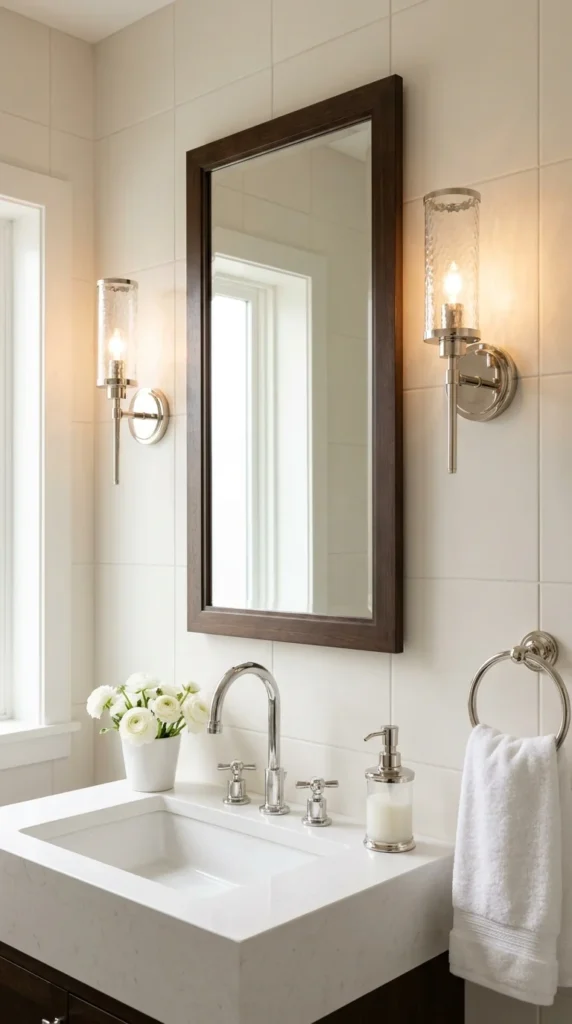
Ribbed glass cylinders sit atop polished nickel arms in this pairing, their fluted texture breaking up the light into soft vertical streaks rather than a single bright point. A dark wood-framed mirror between them keeps theFull-slabnish from feeling too cold against the cream tile background.
What a Traditional Sconce Pairing Needs
☐ Matching metal finish between the sconces and the faucet or hardware ☐ A warm-toned bulb, generally under 3000K, for a classic glow ☐ Equal spacing from the mirror on both sides ☐ A glass or fabric shade to diffuse rather than expose the bulb directly
This style suits a more traditional bathroom particularly well, since the fluted glass reads as a classic material choice without tipping into anything overtly modern or minimal.
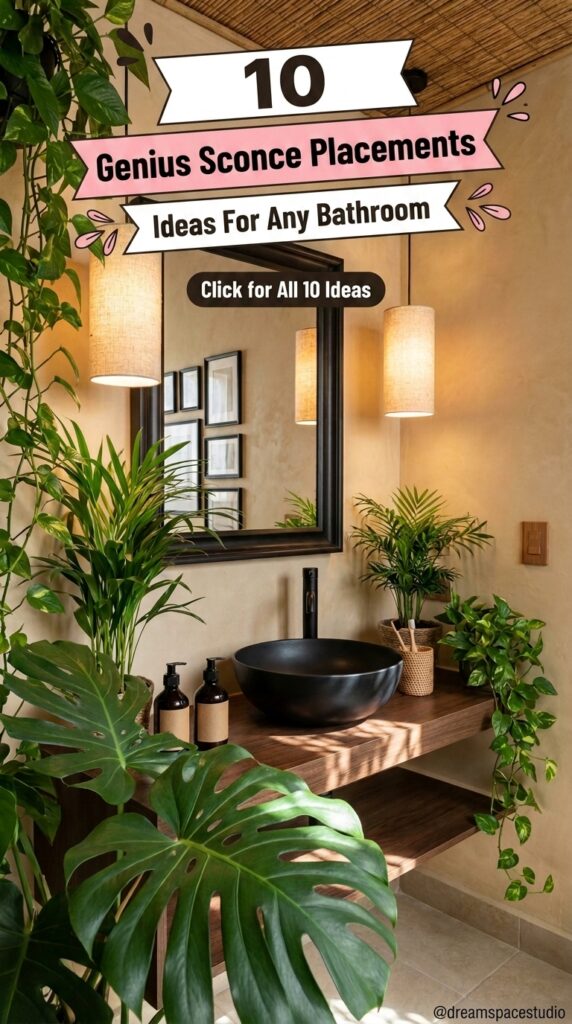
6. Hanging Fabric Pendants Doing a Sconce’s Job in a Jungle Bathroom
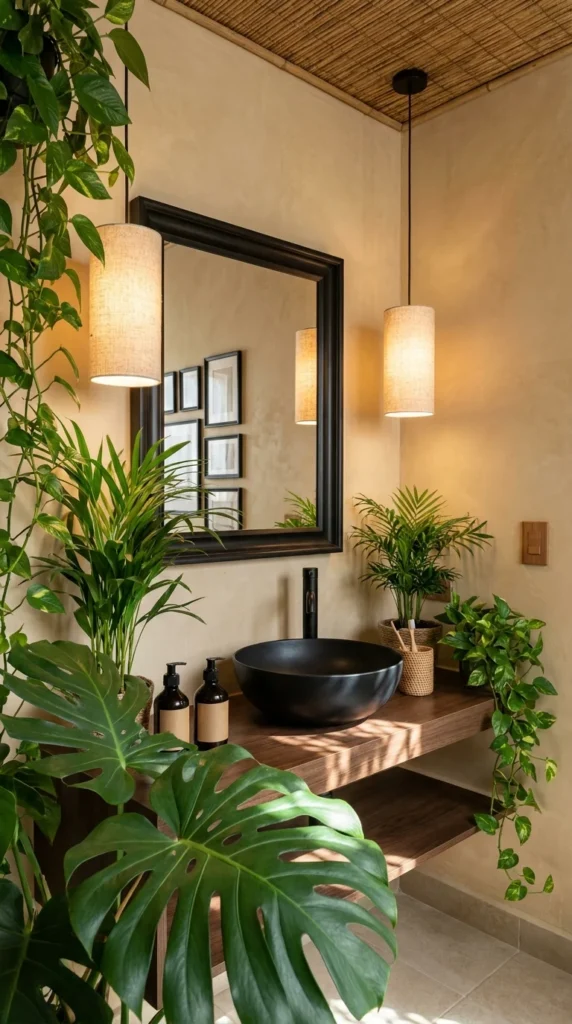
Rather than wall-mounted fixtures, this bathroom uses two hanging fabric drum pendants positioned where sconces would typically go, their cords dropping from a bamboo ceiling down to flank a black-framed mirror. Surrounded by dense greenery, the warm linen shades add a soft, diffused light that suits the room’s tropical, plant-filled mood.
⚠️ Warning
Hanging pendants used in place of sconces need enough clearance from surrounding plant growth to avoid leaves brushing against a hot bulb or fabric shade over time. In a jungle-style bathroom like this one, it’s worth periodically trimming nearby foliage back rather than letting it grow into direct contact with the fixtures.
A matte black vessel sink and wood floating vanity ground the space, keeping the abundance of greenery and warm pendant light from feeling untethered from the rest of the room’s material choices.
7. Ribbed Glass Drums Set Against a Soft Plaster Wall
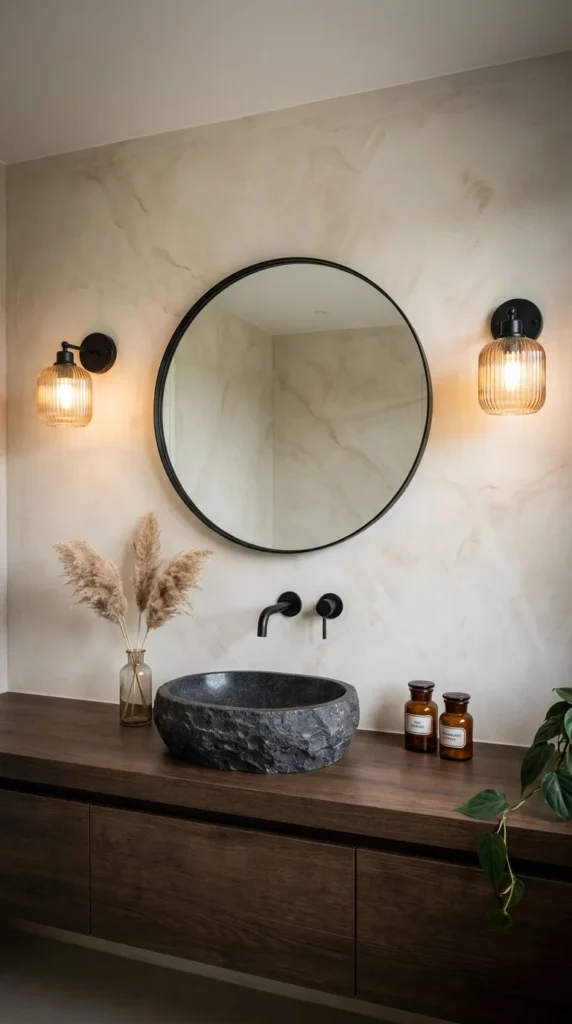
Cylindrical ribbed glass shades sit on black metal arms in this pairing, mounted against a lightly textured plaster wall that catches subtle shadows from the fixtures’ warm glow. A round black-framed mirror between them keeps the geometry consistent — circles echoing circles across the whole wall grouping.
The stone vessel sink and dark wood vanity below lean earthy and textured, and the sconces’ warm light plays well against that palette, avoiding the colder look a bare bulb or clear glass fixture might have introduced in the same setting. Dried pampas grass on the counter picks up the saconsistent—circlestones running through the room.
8. One Sculptural Brass Fixture Instead of a Symmetrical Pair
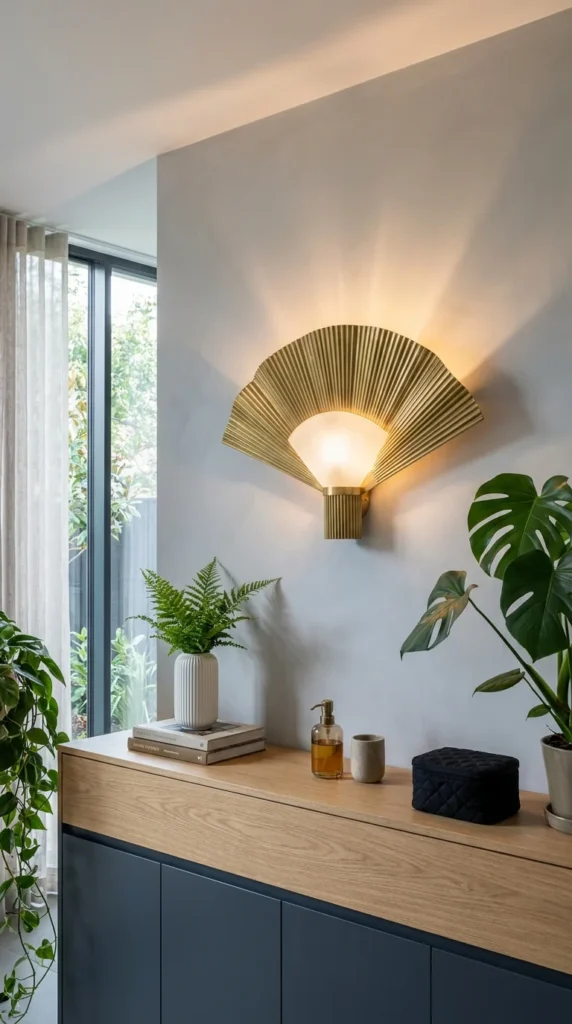
Rather than a matched set, this bathroom uses a single fan-shaped brass sconce as its main light source, its ridged shade throwing a dramatic sunburst pattern across the wall behind it. Positioned above a console rather than a mirror, the fixture works more as an art piece than a strictly functional grooming light.
💡 Pro Tip
Statement single-sconce fixtures like this one generally need their own dedicated switch or dimmer, separate from any recessed overhead lighting, so the dramatic wall-shadow effect stays visible even when brighter task lighting is needed elsewhere in the room. Wiring both to the same switch usually means choosing between ambiance and practicality rather than getting both.
Placed above a console rather than directly over a sink, this single-fixture approach suits a powder room or secondary bathroom where the primary task is atmosphere rather than close-up grooming.
9. Stacked Bronze Cylinders Framing a Warm Wood Mirror
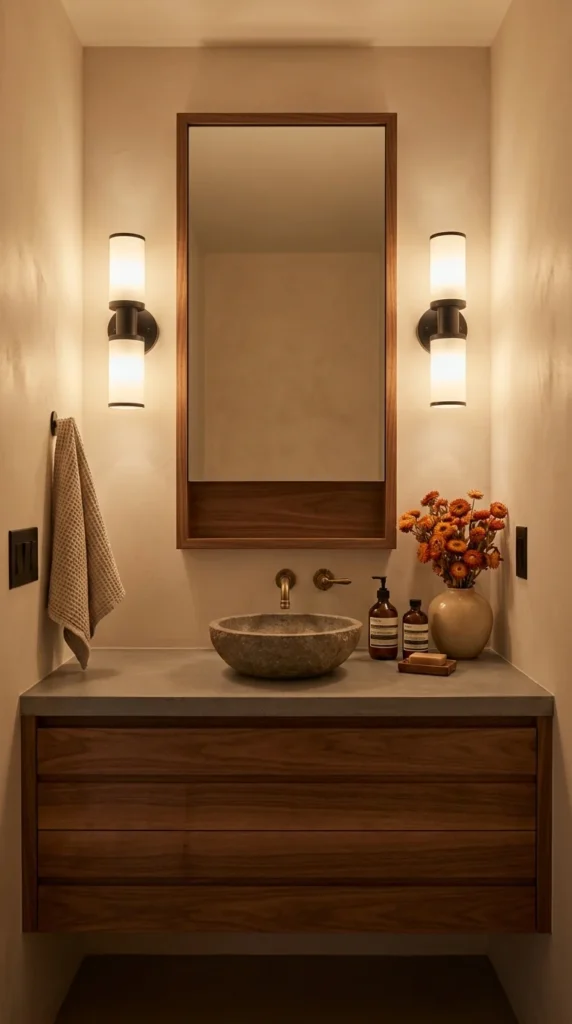
Two-tiered bronze cylinder sconces flank a wood-framed mirror in this small vanity, each fixture stacking a pair of frosted glass tubes for a taller, more substantial silhouette than a single-bulb sconce would provide. The extra height helps balance a narrower mirror, keeping the wall grouping from feeling top-heavy or sparse.
Single-Tier vs. Double-Tier Sconces
| Factor | Single-Tier Sconce | Double-Tier Sconce |
|---|---|---|
| Best for | Wide mirrors, minimal walls | Narrow mirrors, taller wall space |
| Light output | Moderate | Higher, more even coverage |
| Visual weight | Lighter | More substantial |
| Best paired with | Simple, understated frames | Warmer, more traditional frames |
The wood vanity and stone vessel sink continue the same warm, earthy material story as the bronze fixtures, keeping the whole corner feeling cohesive despite mixing several different materials.
Final Thoughts
None of these nine sconce placements rely purely on brightness to make an impact—each one uses shape, material, or positioning to change how the room around it feels, whether that means candlelit warmth, sculptural drama, or the quiet symmetry of a classic pair. Choosing the right sconce style ultimately comes down to what a bathroom needs most: a flattering task light at the mirror, a statement piece for a secondary powder room, or something in between.
Frequently Asked Questions
How high should bathroom sconces be mounted? Sconces are generally mounted around 60 to 65 inches from the floor, positioning the light source close to eye level so it illuminates the face evenly rather than casting shadows from above. When flanking a mirror, they’re typically placed at the mirror’s vertical midpoint rather than at its very top.
What bulb type works best for bathroom sconces? Warm white bulbs in the 2700K to 3000K range are the most flattering for grooming tasks, since cooler or bluer light tends to make skin tones look harsher. Dimmable bulbs add flexibility for switching between bright task lighting and a softer evening glow.
Do bathroom sconces need to be rated for wet locations? Sconces positioned away from direct water contact, like beside a mirror or vanity, generally only need a damp-rated fixture, while anything mounted inside or directly beside a shower requires a wet-rated fixture. Checking the fixture’s rating against its exact placement is worth doing before installation, since the requirement depends on proximity to water rather than simply being in a bathroom.
Should sconces always come in matching pairs? Not necessarily — a matched pair flanking a mirror is the more traditional approach and tends tonecessarily—aced, symmetrical look, but a single statement sconce can work well in powder rooms or secondary bathrooms where dramatic effect matters more than even, functional lighting. The right choice generally depends on whether the sconce is doing task work at a mirror or serving as ambient, decorative light elsewhere in the room.
Can sconces replace overhead lighting in a small bathroom? In a smaller bathroom, well-placed sconces can provide enough ambient and task light to reduce reliance on a single overhead fixture, especially when paired with natural light from a window. Most bathrooms still benefit from at least one overhead or recessed light for general visibility, but sconces can comfortably handle the bulk of the lighting in a compact space.
One Response