
Buying another plant is the easy part. Working out how to display it so the room reads as finished, not just green, is the part most people skip. The ten setups below aren’t ten species to shop for — they’re ten different ways to put a plant into a room, from a raised stand to a ceiling full of macrame, so you can pick the one that actually fits your space instead of copying a room that doesn’t.
Quick Overview
| Style | Indoor Plant Styling |
|---|---|
| Best For | Renters, plant collectors, small living rooms |
| Budget | Low–Medium |
| Difficulty | Mostly beginner-friendly |
| Maintenance Level | Varies by setup, low for most picks here |
Raise the Pot Off the Floor
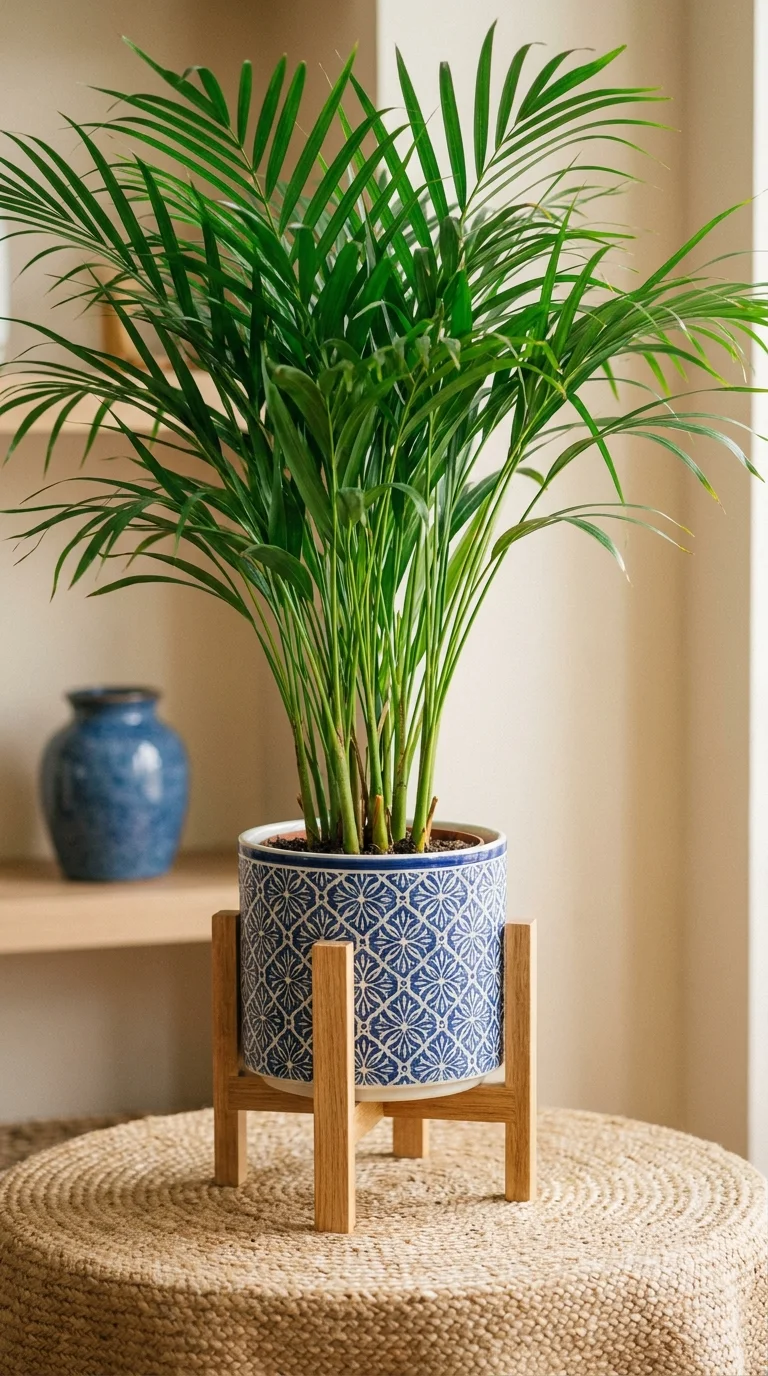
An areca palm sits in a patterned ceramic pot with a repeating geometric motif, and the pot itself sits inside a slim, four-legged teak stand. The stand does more for this arrangement than the plant does. Six to eight inches of clearance under the pot gives the fronds somewhere to arc downward instead of dragging on the rug, and it means the eye meets the plant at a different height than it would meet a coffee table or a sofa arm.
This is worth trying if your plants currently sit right on the floor, where they tend to read as leftover greenery rather than a real decision. It works in living rooms and reading corners where floor space is already busy, and it’s a reasonable next step for anyone building out the kind of layered, plant-forward room covered in this site’s biophilic living room guide.
A patterned pot on a plain stand looks unfinished, so pick a stand with real substance — thin metal legs tend to look flimsy under a mature palm. Measure the plant’s spread before buying anything narrower than the pot itself, or the whole thing will look top-heavy within a year of growth.
- Materials that make this work: teak or oak stand, glazed ceramic pot, jute or woven pouf nearby, a plastic liner inside the ceramic pot
- Where the mistake happens: skipping a drip tray, which stains a wood stand after a handful of waterings, or choosing a stand finish that doesn’t match any other wood in the room
Build a Ceiling Plant Wall
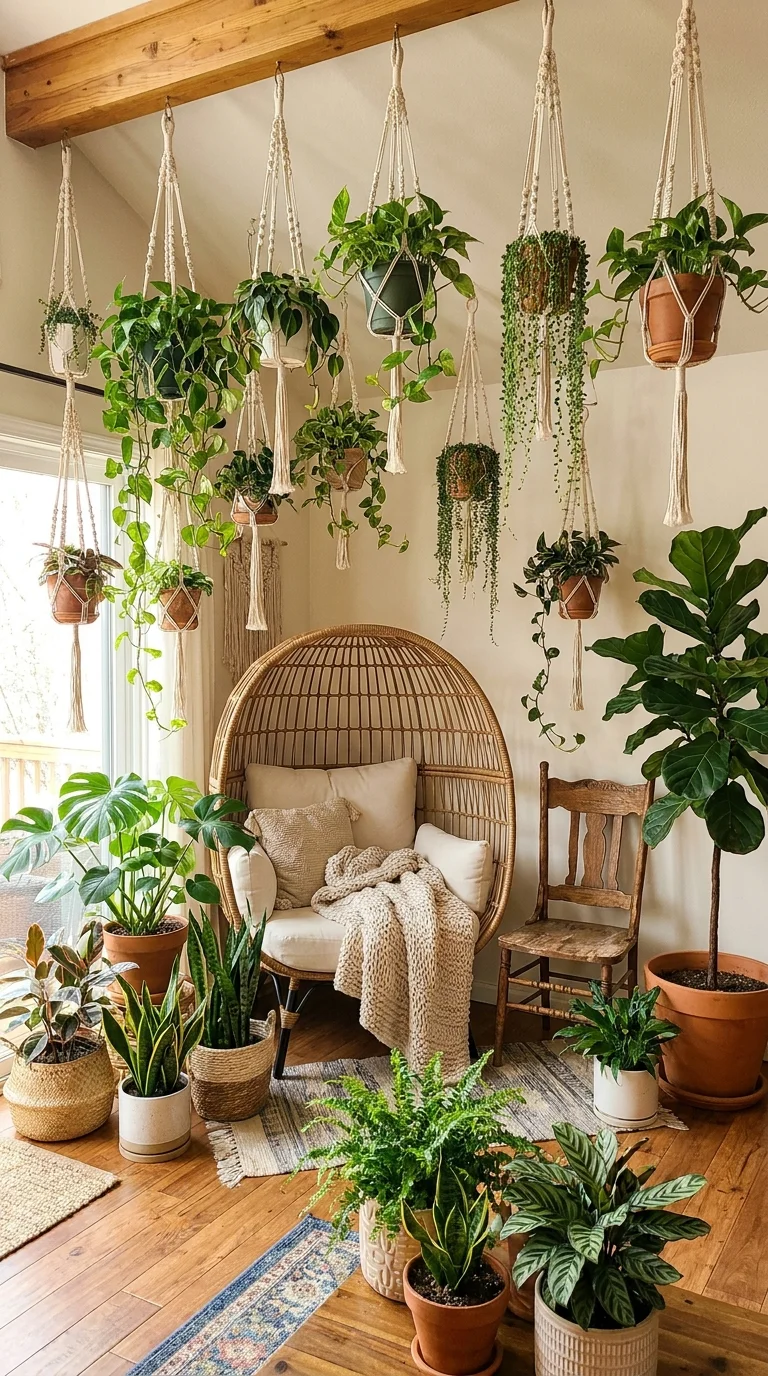
A dozen macrame hangers, hung at staggered heights, let pothos and string-of-pearls trail down at different lengths above a rattan egg chair. That staggering is the actual technique here — a single row of hangers at identical height reads as a display case, while a four- to six-inch difference in drop length makes the whole ceiling feel grown-in instead of installed.
To recreate it: start with the ceiling structure, not the plants. A wooden beam or exposed joist can usually take several hooks; drywall alone generally needs anchors rated for the combined weight of pot, soil, and water. Space the hangers unevenly rather than in a grid, and mix trailing plants like pothos with something more compact, like a small fern, so the display has variation in shape as well as height.
This suits a plant collector who has genuinely run out of floor and shelf space more than a first-time plant owner. Vaulted or beamed ceilings handle it far better than a standard eight-foot flat ceiling, where the lowest hangers become a head-height hazard fast.
- Rental units without permission to drill into a ceiling beam should skip this one entirely
- Keep the heaviest terracotta pots at floor level; save the ceiling for lightweight plastic nursery pots instead
- Watering a dozen hanging plants without a step stool gets old within a month — plan for that before installing anything
The Anthurium Is Doing the Color Work Here
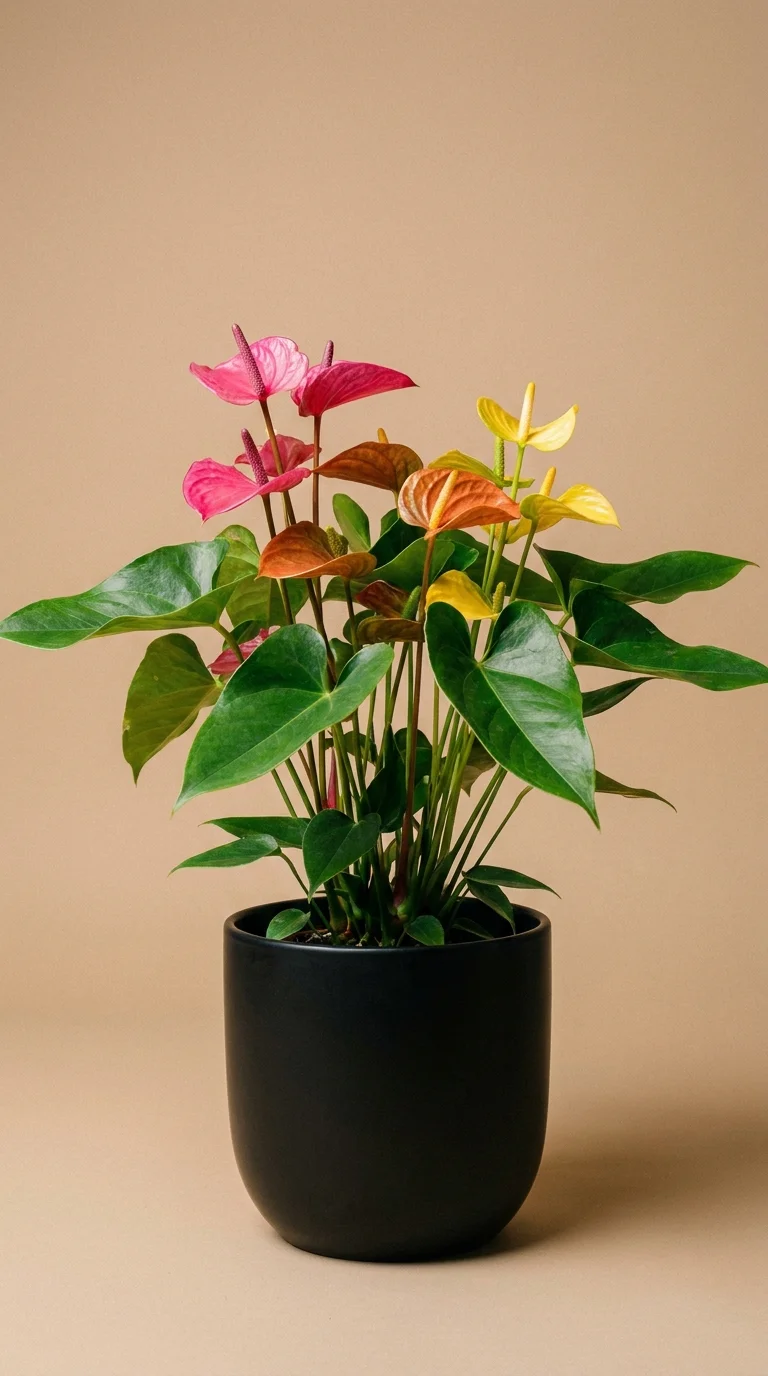
Every other plant in this guide leans on green. This one doesn’t. A single anthurium in a matte black pot carries pink, orange, and yellow blooms into a room without a single throw pillow or piece of wall art doing any of the work. The same waxy, heart-shaped flower repeats across a dozen stems in three separate tones, which is why the color reads as a chosen palette rather than a random bouquet — repetition, not variety, is what makes it look deliberate.
Main colors, dominant to least: Coral Pink, Golden Yellow, Rust Orange, Matte Black, Deep Green.
If you’re hesitant about bold paint but still want color in an otherwise neutral room, a single flowering plant like this is a lower-commitment way to get it. It suits a console table, a desk corner, or a dining table arrangement, and the matte black pot keeps the look modern rather than florist-shop sweet. Bloom color does depend on light — an anthurium kept too far from a window tends to produce fewer, paler flowers over a few months, so this isn’t a plant for a dim interior corner. Overwatering is the most common way people lose one; the roots rot faster than most houseplants tolerate, so let the top inch of soil dry out between waterings.
One Large, Dark-Leafed Plant Against a Dark Kitchen
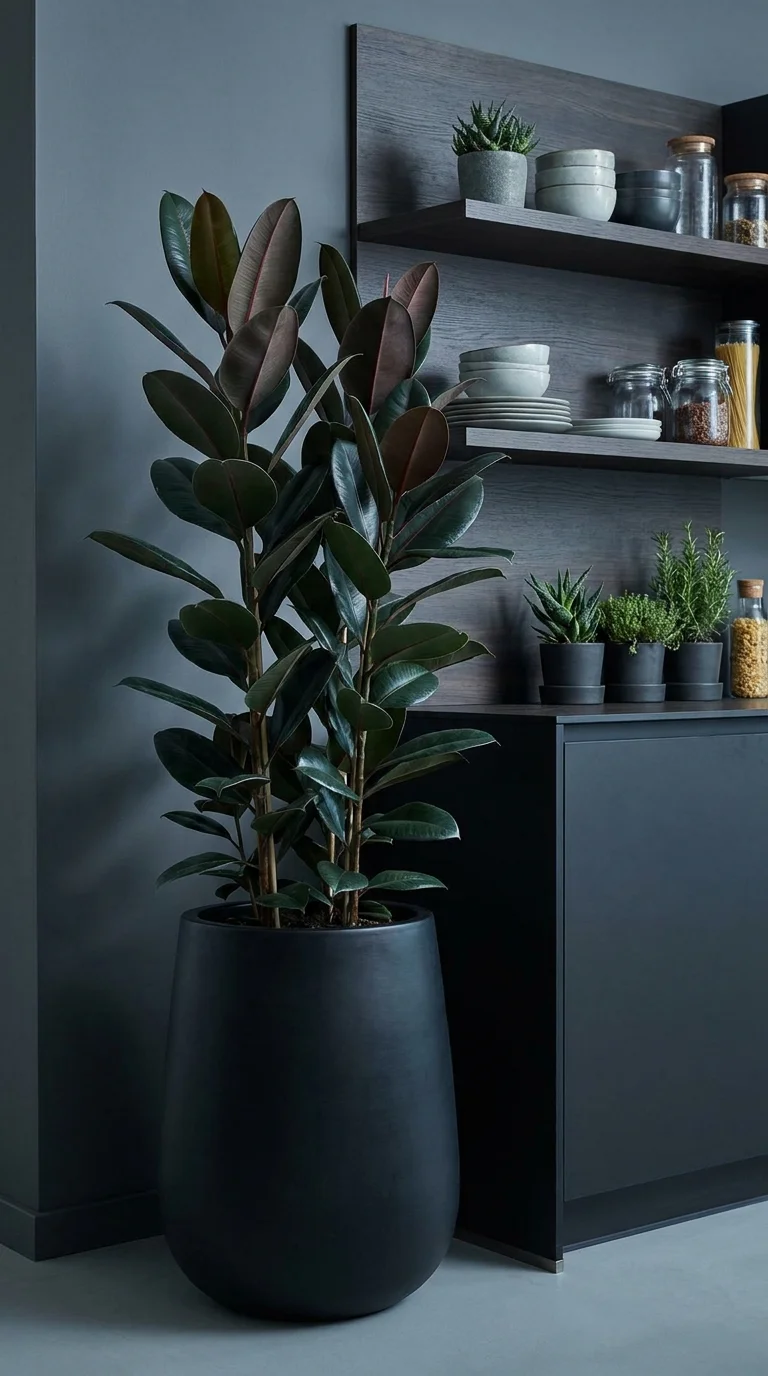
Charcoal cabinets, slate walls, black hardware — most houseplants would disappear into a room built this dark. This rubber plant doesn’t, because its leaves run nearly black with a burgundy tint, close enough to the room’s own palette that it reads as part of the scheme instead of an interruption. The tall, gently tapered black planter matters almost as much as the plant itself; a lighter terracotta pot in the same spot would break the room’s monochrome logic.
Is a Plant This Size Worth the Cost?
A rubber plant grown tall enough to reach near-ceiling height is a genuine expense, and it only pays off in a room this committed to a dark, minimal palette — in a lighter or more colorful space, the same plant just reads as an ordinary houseplant. One is usually the right number per room; a second plant this scale tends to compete with the first rather than support it. A young, smaller rubber plant costs a fraction as much and will reach this size in a few years if the room can wait.
Anyone leaning into the kind of dark, earthy living room look this pairs with should plan for real vertical clearance — a plant this scale needs an open kitchen or a tall dining nook, not a low-ceilinged room where it has nowhere to grow.
- A common misstep is placing this plant against a light wall by accident, which erases the exact contrast that makes the pairing work
- Dust on the wide leaves shows more against a dark backdrop than it would in a bright room, so wipe them monthly
A Snake Plant Wearing a Decorative Stand
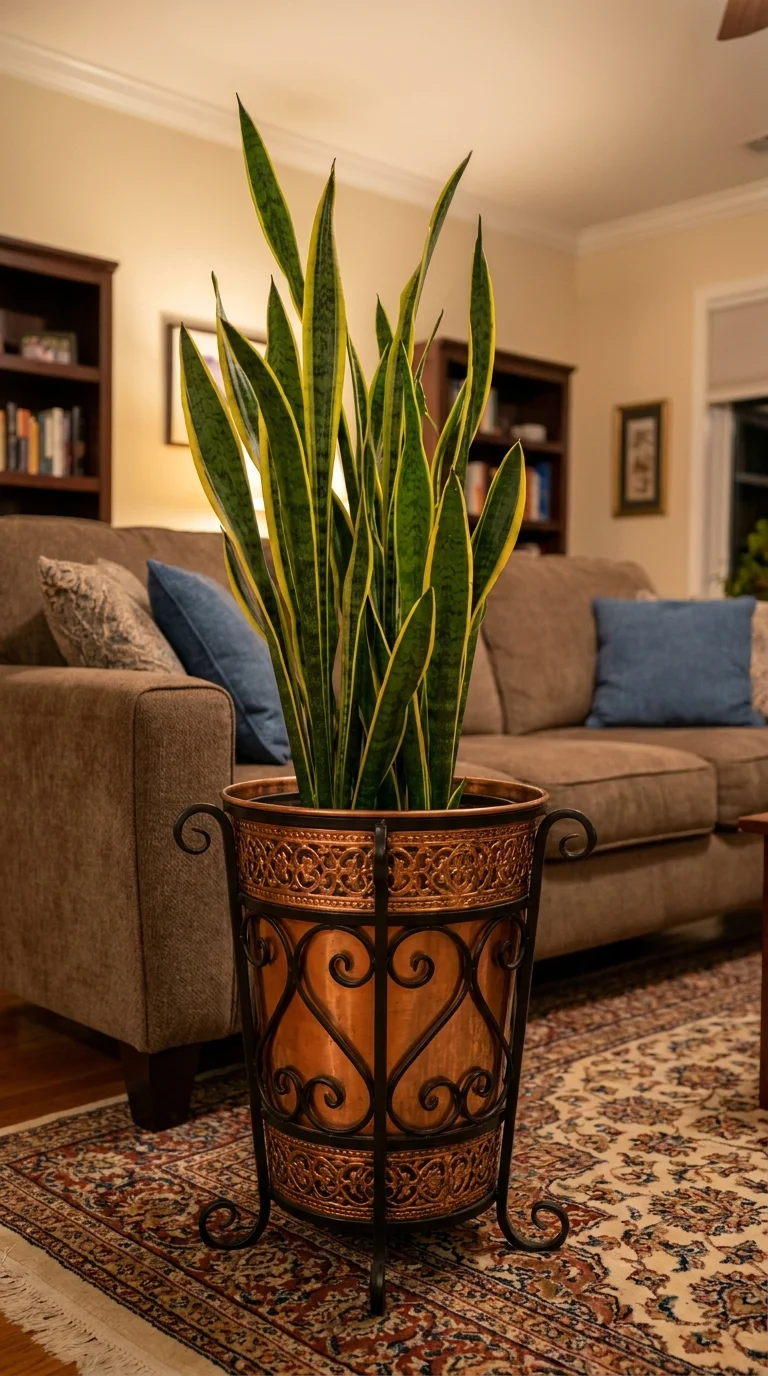
A snake plant is about the least demanding houseplant available, which is exactly why the hammered copper and wrought-iron stand around it gets to be the interesting part. Scrollwork, curled feet, and a warm copper finish turn what would otherwise be a forgettable plant stand into a piece that sits comfortably next to a traditional room’s existing brass lamps and patterned rug.
This pairing suits a home already built around warm metals, jewel-toned upholstery, and layered textiles — a plain nursery pot would look out of place next to almost anything else in a room like that. It’s a strong choice for an empty corner near a chair, since the stand’s height fills vertical space a low pot on the floor never could.
- Materials: wrought iron, hammered copper, low-maintenance snake plant, decorative liner pot
- Light: tolerates low to medium light well, which makes it one of the safer choices for a corner away from windows
- Upkeep: snake plants generally need watering only every two to three weeks, and they tolerate a missed watering far better than an extra one
An Old Terracotta Jar Doing Double Duty
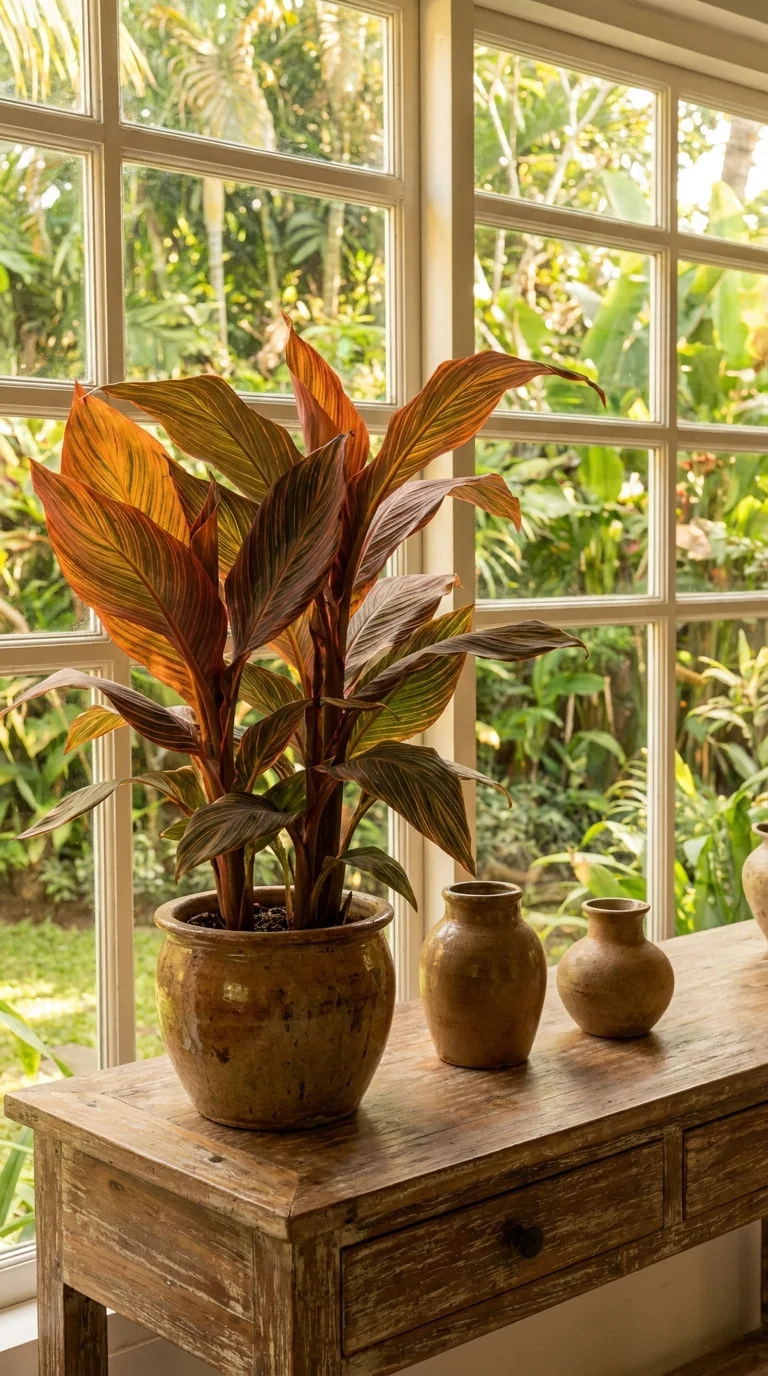
Most plant photography favors a clean, new pot. This one goes the other way on purpose: a weathered, sun-bleached terracotta jar with visible mineral staining sits beside two smaller aged vessels, and the striped orange-and-green cordyline picks up nearly the same warm tones as the clay around it. Plant and pot end up reading as one continuous color story instead of two separate purchases.
This belongs in a room with an actual garden view or a lot of weathered wood already in it — the aged terracotta only makes sense as an extension of what’s happening outside the window. Anyone drawing on cottagecore garden references for an outdoor space can borrow the same logic for an adjoining sunroom or entry table.
Cordyline prefers soil that stays consistently moist and appreciates occasional misting when indoor air runs dry, and it holds its leaf color best near a south- or west-facing window with direct light for part of the day. Pairing this rustic pot with sleek, modern furniture undercuts the weathered look this idea depends on — it reads as mismatched rather than eclectic.
Let the Lamp Do Half the Work
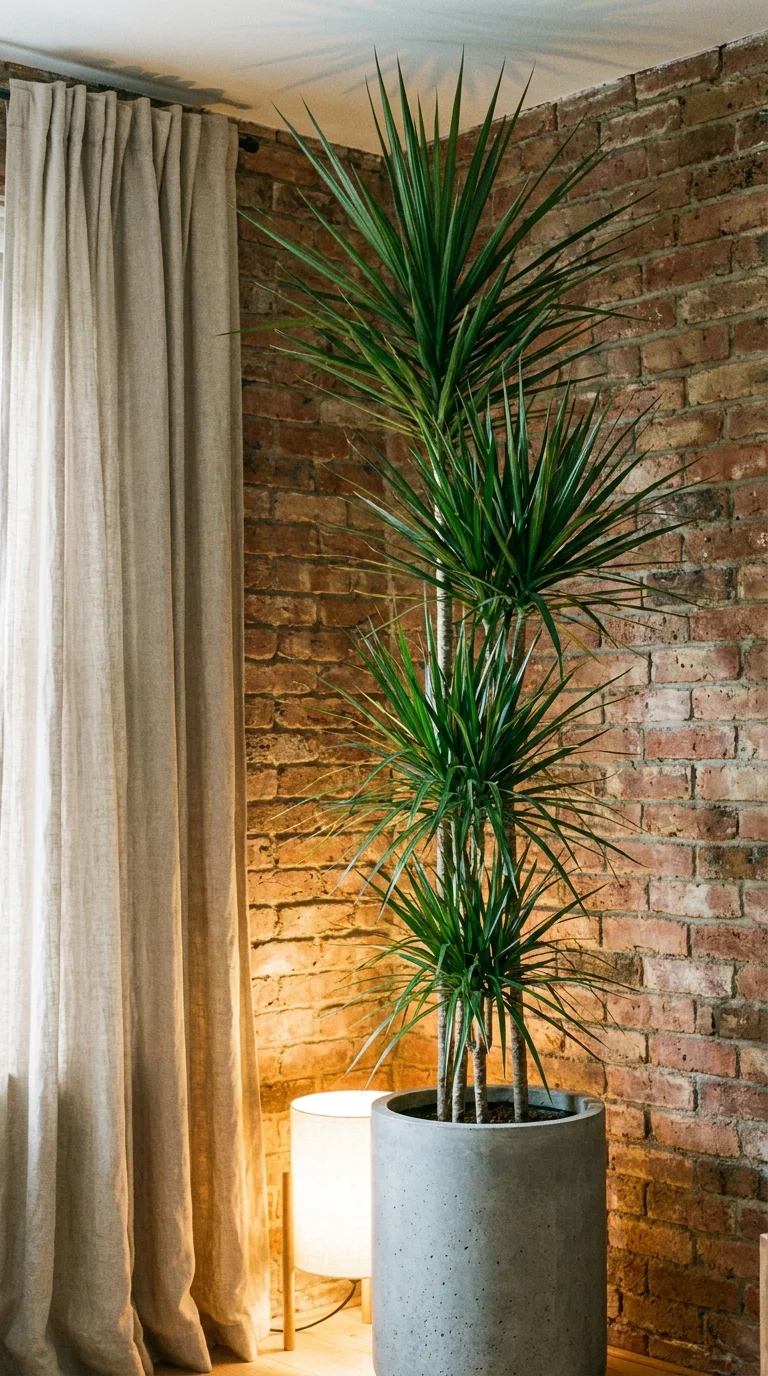
A dracaena’s spiky, fountain-shaped silhouette carries most of the visual interest in this corner, but the lighting decides whether the whole thing reads as intentional or just dim. A warm-toned floor lamp, placed low near the concrete planter’s base, throws light upward through the leaves and casts shadow patterns across the exposed brick behind it — a noticeably different effect than a ceiling fixture would produce from the same spot.
Industrial lofts, exposed-brick apartments, and rooms with linen curtains rather than blackout drapes are a natural fit. It’s a solid option for anyone who wants a plant-filled corner without softening an otherwise raw, textural room into something too soft.
- Aim a warm-white floor lamp upward through the foliage rather than relying on overhead lighting alone
- Raw or sealed concrete planter, exposed or veneer brick, linen drapery, and a warm-bulb floor lamp are the four materials doing the actual work
- This setup falls flat in a room with no warm accent lighting nearby — the effect depends entirely on that upward glow, not on the plant alone
Swap the Pot for a Basket Instead
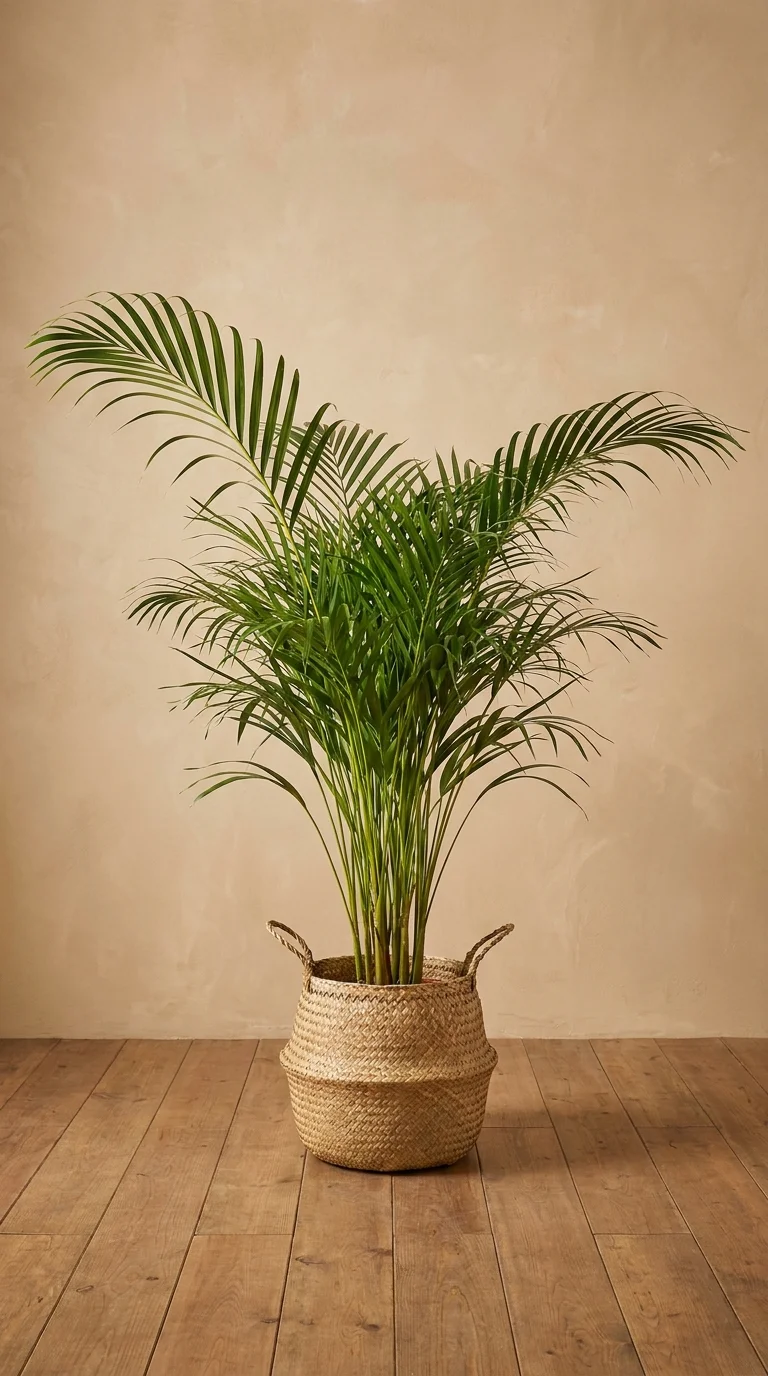
Trading a hard ceramic pot for a woven seagrass basket changes the entire texture of a plant display without touching the plant. The visible weave and handles add softness a smooth pot can’t, and because baskets like this cost less than most decorative ceramic pots, this is one of the cheaper ideas in this guide to copy. It also leaves zero marks on a rental, since a basket moves rooms in minutes and requires nothing mounted or drilled.
This fits a relaxed, coastal garden sensibility where natural fiber texture matters more than polish, and it suits a smaller apartment or a first-time plant owner who wants a finished look without a stand or a custom planter.
- Low budget: seagrass basket, a nursery snake plant, no additional liner needed for a short-term setup
- What people skip by mistake: the plastic liner — without it, water damages the woven fibers from the inside out within a season
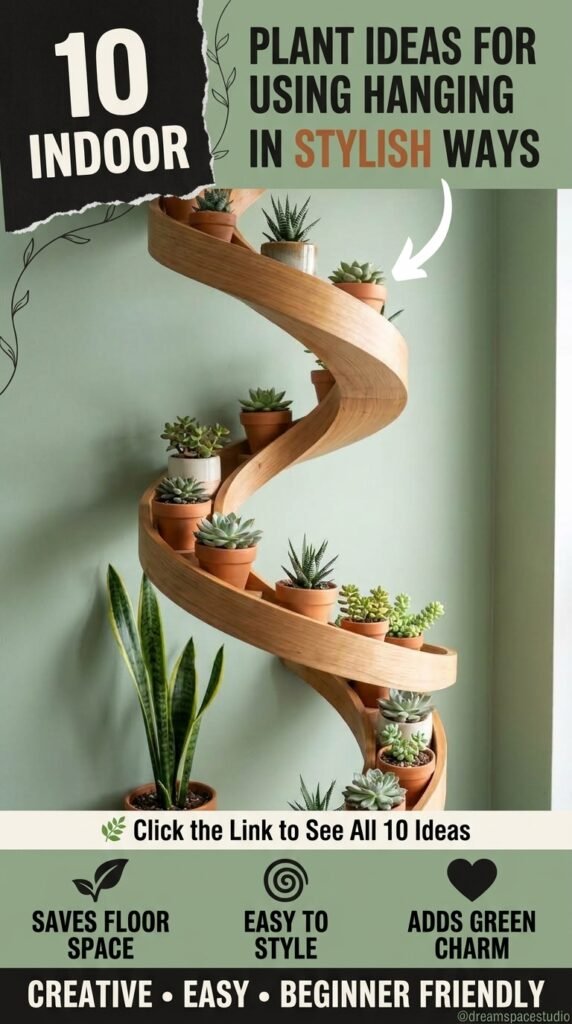
Turn a Wall Into a Succulent Display
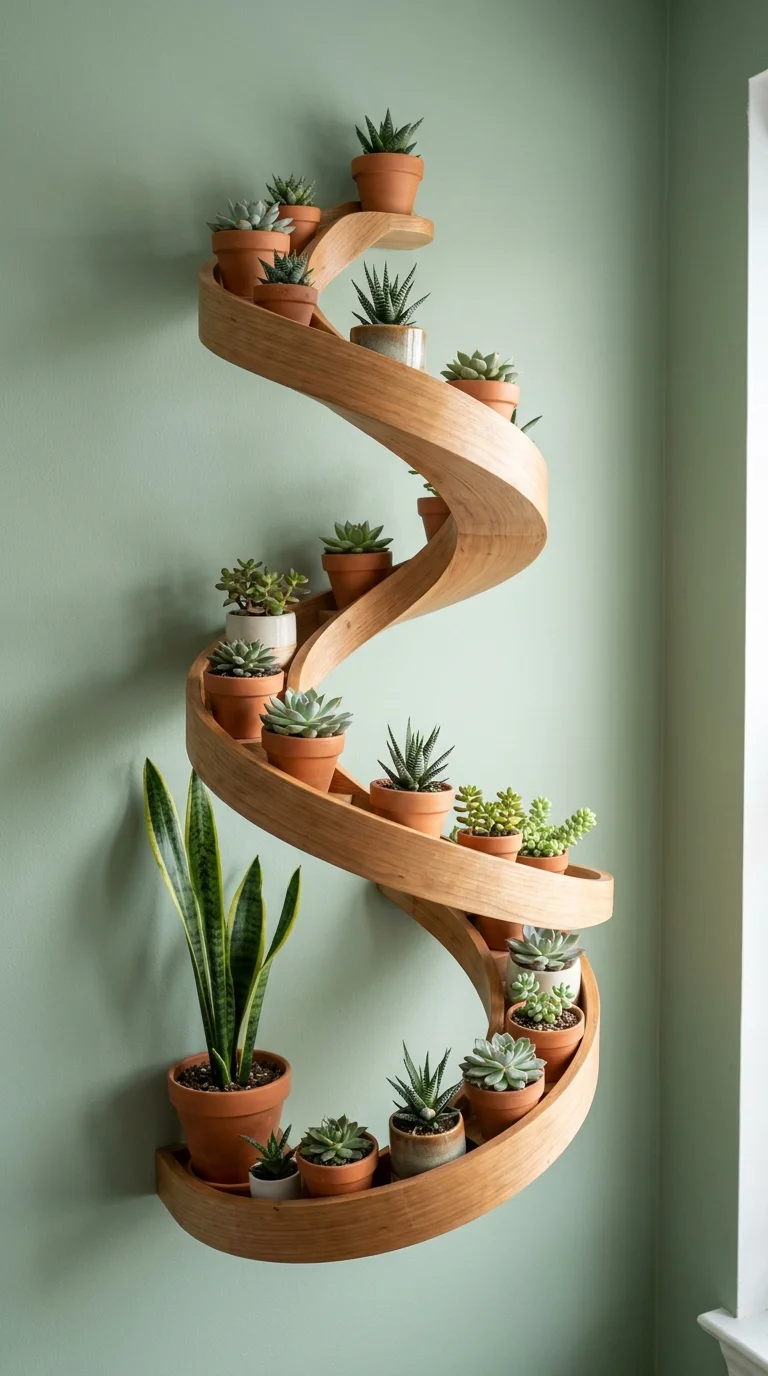
Most plant shelves run straight and horizontal. This one curves through three full turns down a sage-green wall, and that single choice turns a dozen small terracotta pots into one connected piece rather than a cluttered collection of individual plants. Each succulent and mini snake plant sits in its own carved niche, so the arrangement reads as organized even with this many pots on one wall-mounted piece.
A curved shelf like this is a bigger commitment to source or build than a standard floating shelf — but the payoff is a genuine talking point rather than another rectangular ledge, and it suits sage, olive, or other muted green walls particularly well, since the wood tone reads warmer against that backdrop than it would against plain white.
- Not a good fit for anyone who likes to rearrange their plants often, since each niche is sized for one specific pot
- Watering a dozen small pots on a vertical shelf without spilling onto the tier below takes a narrow-spouted watering can and a little practice
- Bent or laminated wood, terracotta and ceramic mini pots, and a mix of succulents and haworthia make up the whole material list
Layer Plants by Height, Not by Species
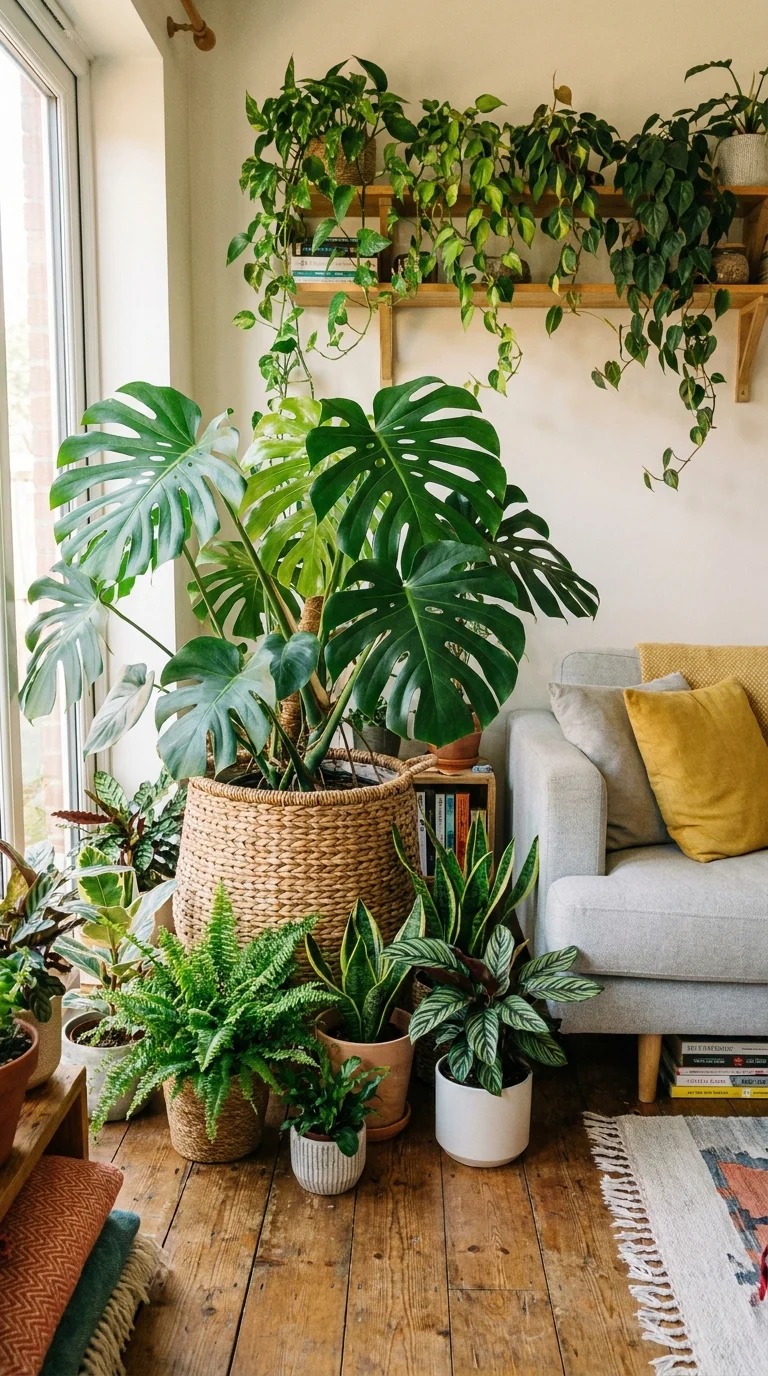
This corner is the maximalist version of everything already covered — a floor-level monstera in a woven basket, a shelf dripping with pothos above the sofa, and a cluster of smaller pots filling the remaining gaps near the baseboard. What keeps it from looking chaotic is height layering: tall plants anchor the floor, trailing vines fill the upper wall, and low pots handle the middle band, so the eye has a clear path from bottom to top instead of bouncing between competing plants.
This works best in a corner that already gets strong, consistent light throughout the day — a jungle-style setup with weak light will thin out within a season regardless of how it’s arranged. It’s a reasonable place to land if the rattan and texture-driven entryway look at the start of this guide is where your collection started, since this is roughly where an entryway collection tends to go once it outgrows one corner.
A mixed collection this size needs a rotating watering schedule, since different species dry out at different rates — treating them all the same way is the fastest way to overwater half of them. Rotate pots a quarter turn every week or two if they’re not directly under a skylight, and resist the urge to put every new plant at eye level; that’s what flattens the layering effect this whole look depends on.
What Keeps a Plant Corner Looking Good Between Waterings
- Group plants with similar watering needs together, rather than mixing a snake plant and a fern on the same schedule
- Wipe dust from broad leaves — monstera and rubber plant especially — about once a month, since dust buildup blocks light absorption
- Keep a saucer under every pot on wood furniture or flooring, even for the plants you’re confident you’ll water carefully
- Check for a bound root ball every spring; a plant that dries out unusually fast has often outgrown its pot
Who Should Choose This Style?
- Best for renters who want a layered, personal look without any permanent changes to a rented space
- Best for anyone furnishing a home office or reading nook, where a tall plant or hanging display can do real work as a boho home office focal element
- Not ideal for a household with pets that chew on foliage — dracaena and cordyline, both covered above, are toxic if eaten
Budget Summary
| Budget | What to Expect |
|---|---|
| Low | Seagrass basket, an inexpensive snake plant, a plastic pot liner |
| Medium | Glazed ceramic pot, a mid-size wood plant stand, a set of macrame hangers |
| Premium | Custom curved wood shelf, a hammered copper stand, a mature rubber plant grown to full height |
Frequently Asked Questions
How many houseplants should someone new to this start with?
Two or three low-maintenance options — a snake plant or a pothos are common starting points — are usually enough to learn watering timing before adding more.
Do all of these setups need bright, direct sunlight?
No. Snake plant and dracaena both tolerate medium or lower light reasonably well, while anthurium and cordyline need brighter, more consistent light to keep their color.
Can ceramic pots, baskets, and metal stands be mixed in the same room?
Yes, as long as one material — wood, metal, or natural fiber — shows up at least twice, so the mix reads as a choice rather than a mismatch.
How often does a display like the jungle corner need rearranging?
Every few months is plenty. Rearranging too often stresses plants that have already adjusted their growth toward a specific light source.
Is a ceiling plant wall practical in a low-ceiling apartment?
It’s possible but tighter than in a vaulted room — keep the lowest hangers well above head height and use shorter drop lengths than a taller ceiling would allow.
Conclusion
The plant isn’t usually the thing standing between a room and a finished look — the display method is. A basket costs less and commits to nothing; a curved shelf costs more and asks for a permanent decision. Before buying the next plant, it’s worth deciding which of these ten methods actually matches the light, space, and time you already have, rather than reaching for whichever one photographed the best.
Explore More
You may also enjoy:
- 10 Balcony Fragrant Plant Ideas That Fill Your Outdoor Space With Beautiful Scents
- Boho Garden Ideas for Creating an Outdoor Space Full of Soul
- Scandinavian Entryway Ideas That Blend Simplicity With Everyday Function
Written by the Aesthetic Life Team, covering practical, livable approaches to home styling — from small-space fixes to full-room plant collections.


3 Responses