
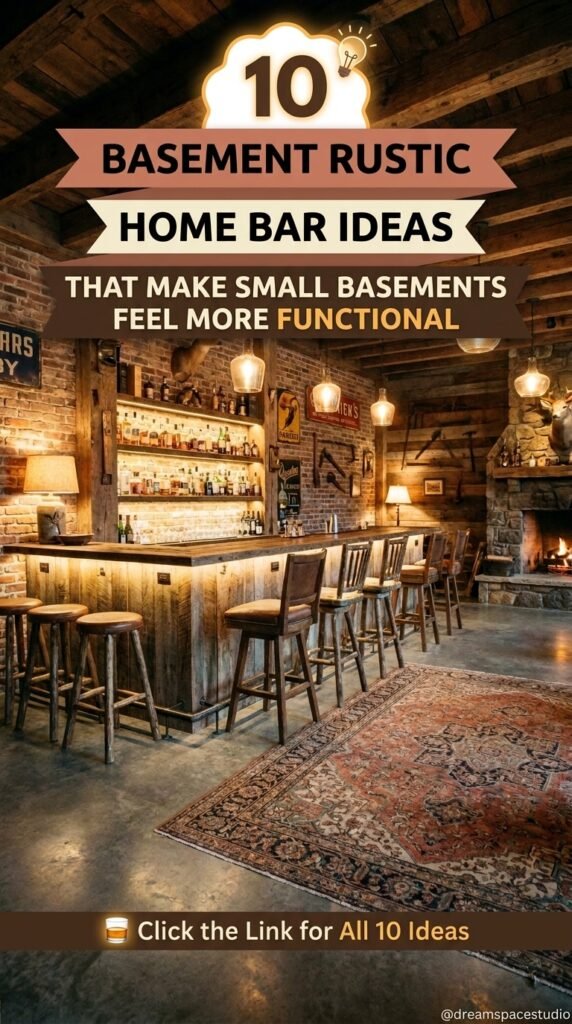
Nine basements, nine completely different answers to the same question: how do you turn an underused lower level into a bar people actually want to sit in? Each space here solves that problem in its own way — one leans on reclaimed brick and glowing pendants, another skips the bar counter entirely in favor of a long communal table, another builds the entire room around a single bottle wall. None of them are interchangeable, and by the end you should be able to say exactly which one matches your basement, your budget, and how you actually entertain. Anyone still deciding on the basic layout before committing to a rustic finish might start with our home bar ideas for turning an empty corner into a stylish entertaining space.
Quick Overview
| Style | Rustic / Reclaimed |
|---|---|
| Best For | Basements, finished cellars, converted garages |
| Budget | Low–High (scales easily) |
| Difficulty | Moderate — DIY-friendly with a few pro touches |
| Maintenance Level | Low–Medium |
Why the Amber Glow Ties This Tavern Bar Together
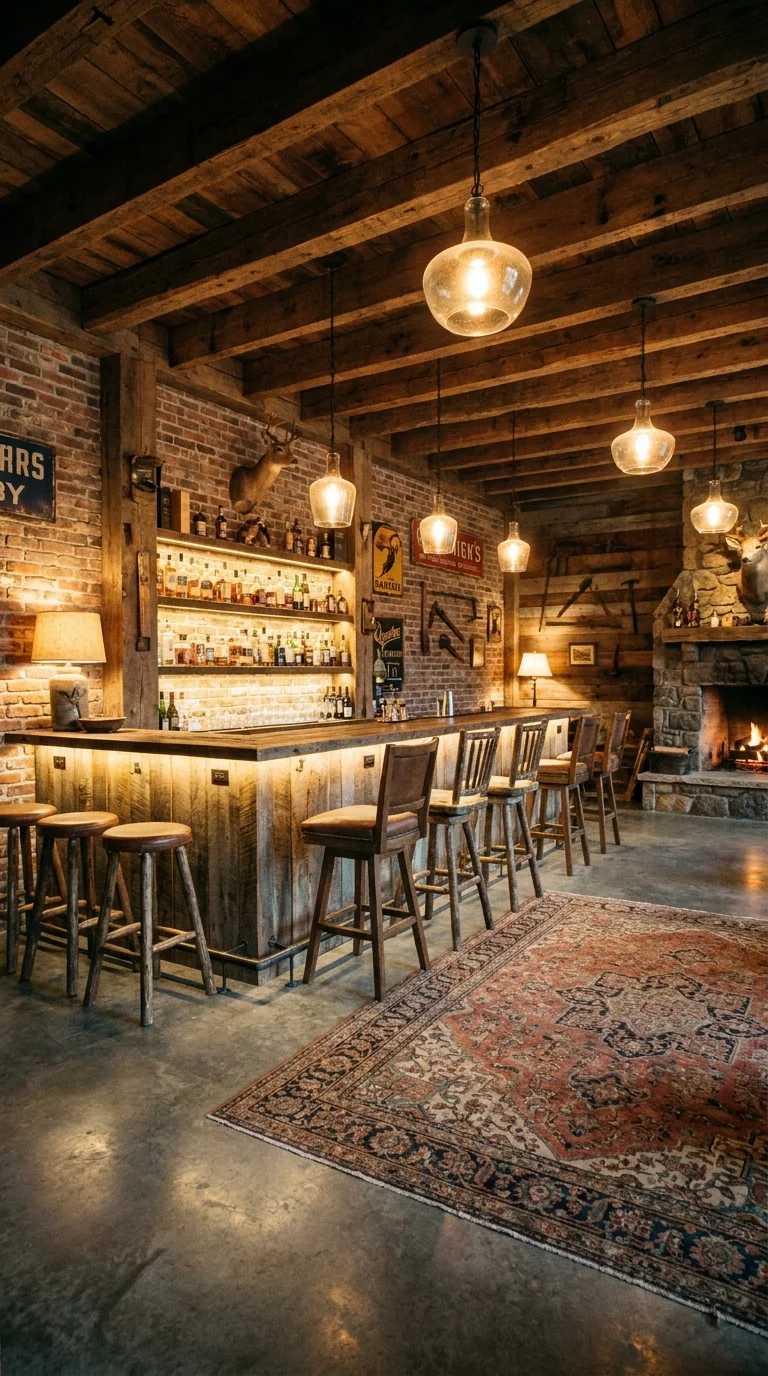
This bar answers a scale question first: go big, or keep it small? Here, the answer is a full tavern — an L-shaped counter, floor-to-ceiling back-bar shelving, and a stone fireplace anchoring the far wall. What actually holds all of that together is color repetition, not size. The honey-toned wood, the exposed brick, and the glow from four mercury-glass pendants all sit in nearly the same warm color temperature, which is why a room this busy — rug, fireplace, mounted antlers, full bar — still reads as one cohesive space instead of a cluttered one.
One reason the room feels finished rather than assembled is that almost every light source shares that same warm cast; swapping in a single cool-white bulb would likely break that continuity faster than any other change available here. This look suits homeowners with a genuinely larger basement footprint and a taste for a real pub feel — in anything under roughly 150 square feet, this much visual weight can start to feel heavy rather than cozy.
Where this can go wrong:
- Mixing bright white LED strips into a warm-toned pendant scheme, which breaks the color continuity holding the room together
- Choosing a rug too small for the seating run, leaving stools stranded on bare concrete
- Skipping under-shelf lighting, which leaves a bottle display looking flat instead of styled
- Mounting decor at a height that competes with the pendants’ sightline instead of sitting below it
Building Mood with Layered String Light Instead of a Single Fixture
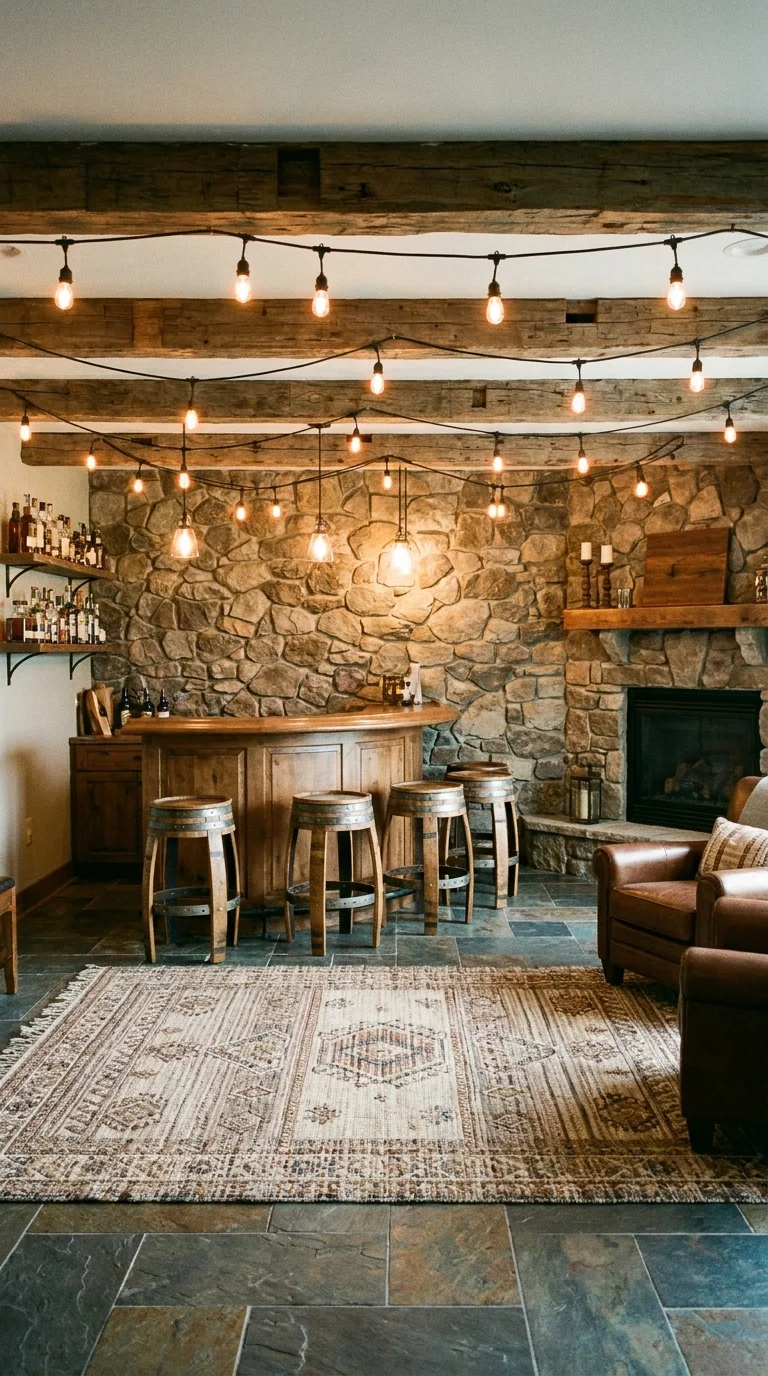
This space isn’t the biggest or busiest bar on this list, but it may be the most atmospheric, because it treats lighting as the actual design feature rather than an afterthought. Three tiers of string lights run directly off the reclaimed beams, catching the texture of the stone wall behind the bar in a way a single overhead fixture never could. It’s a useful reminder that a small, curved bar can still carry an entire basement’s mood if the lighting plan is layered rather than flat — and layering lighting well is worth studying further in our industrial lighting ideas for adding bold style and warmth to any room.
This approach suits renters and first-time basement finishers particularly well, since string lights and a compact curved bar demand far less structural work than a full built-in. It’s a weaker fit for anyone hoping to display a serious whiskey or wine collection, since this layout prioritizes glow over storage. To recreate it on a budget, start with the stone accent wall — a veneer panel does most of the same visual job as real stone — and add light at two or three heights before spending anything on the bar itself; that layering is what’s actually doing the work here, not the counter.
What Happens When Daylight Replaces Lanterns in a Rustic Bar
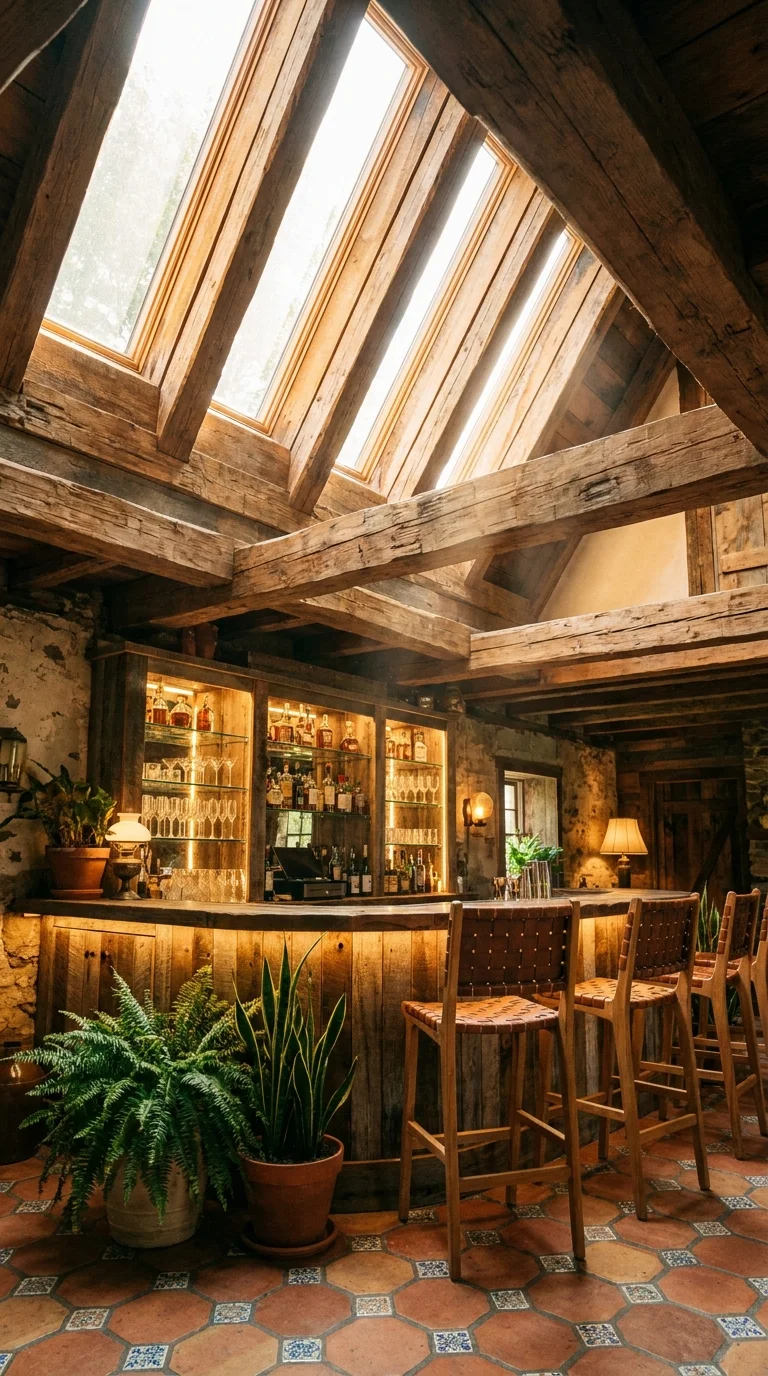
Most basement bars lean dark by necessity — this one doesn’t, because it borrows the rustic-bar formula for a daylight-fed lower level or walk-out space rather than a fully below-grade room. The vaulted skylight and terracotta tile replace lanterns and pendants with actual daylight, while potted ferns and a snake plant soften what would otherwise be a hard-surfaced room of tile, glass, and stone.
Recommended Materials
- Reclaimed barn wood (bar front and shelving)
- Terracotta or Saltillo tile flooring
- Wrought iron light fixtures
- Woven leather or rush-seat bar stools
Best Lighting
Daylight leads here. The roofline glazing does most of the work during daytime hours, with warm sconces taking over after dark rather than competing with the skylight for attention.
Unsealed terracotta and live plants both come with real upkeep — resealing the tile every year or two and keeping greenery clear of bar traffic are both worth planning for before this look goes in, not after.
Skipping the Counter Altogether for a Long Communal Table
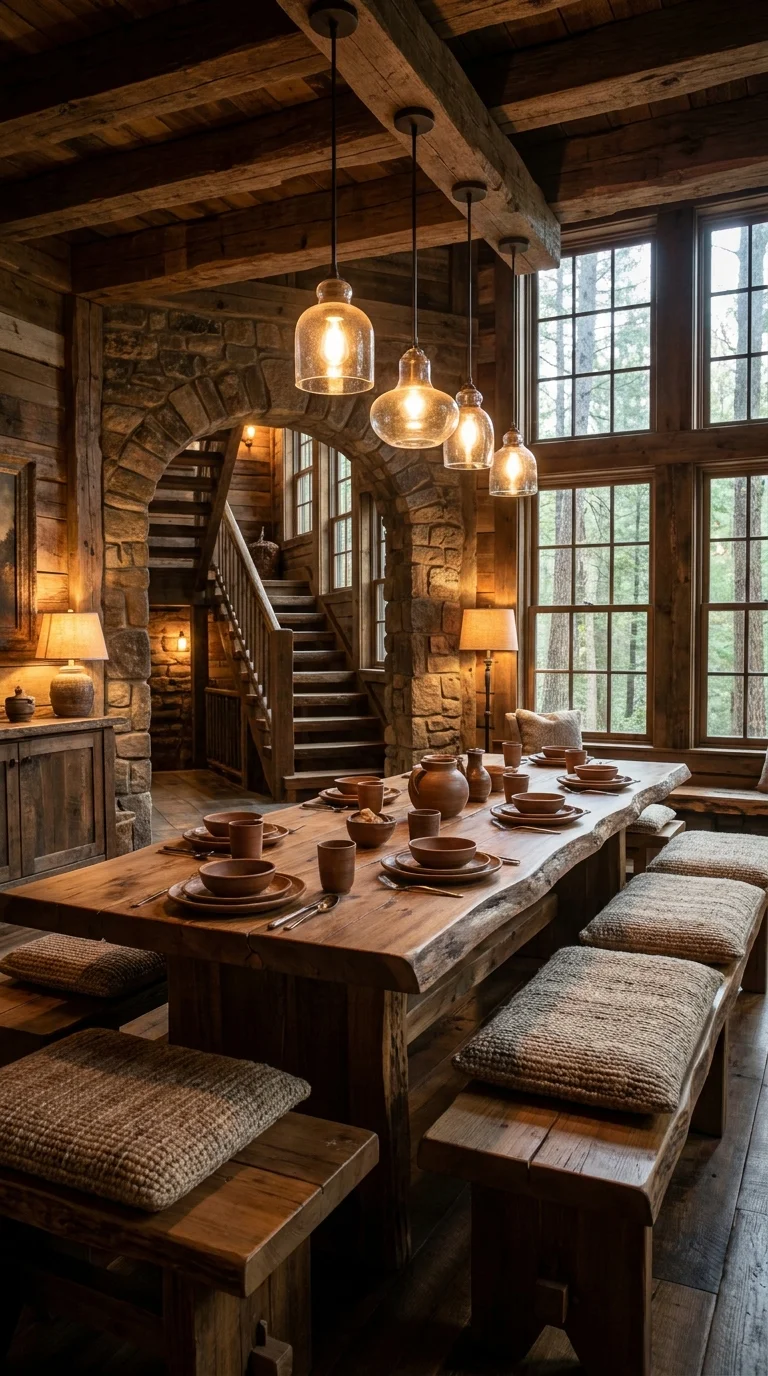
This is the one genuinely structural decision on the entire list: do you need a bar counter at all, or would a long communal table actually serve the space better? This room skips the counter entirely for a live-edge table with woven bench cushions, seating far more people at once than a row of stools ever could. The stone archway leading to the staircase adds real architectural weight without a single extra object competing for attention, which is a restraint most of the busier bars on this list don’t attempt.
This layout suits families who use the basement for game nights or holiday gatherings as often as cocktails, and it’s a poor fit for anyone who actually wants a dedicated pour station, since there’s no fixed bar here at all. The same family-first, long-table philosophy shows up above ground in our country living room ideas that feel warm, cozy, and timeless. A reclaimed door laid across two trestle bases approximates the live-edge look for a fraction of the cost, and simple woven cushions stand in fine for the custom bench pads shown here.
Is a Floor-to-Ceiling Bottle Wall Worth Building?
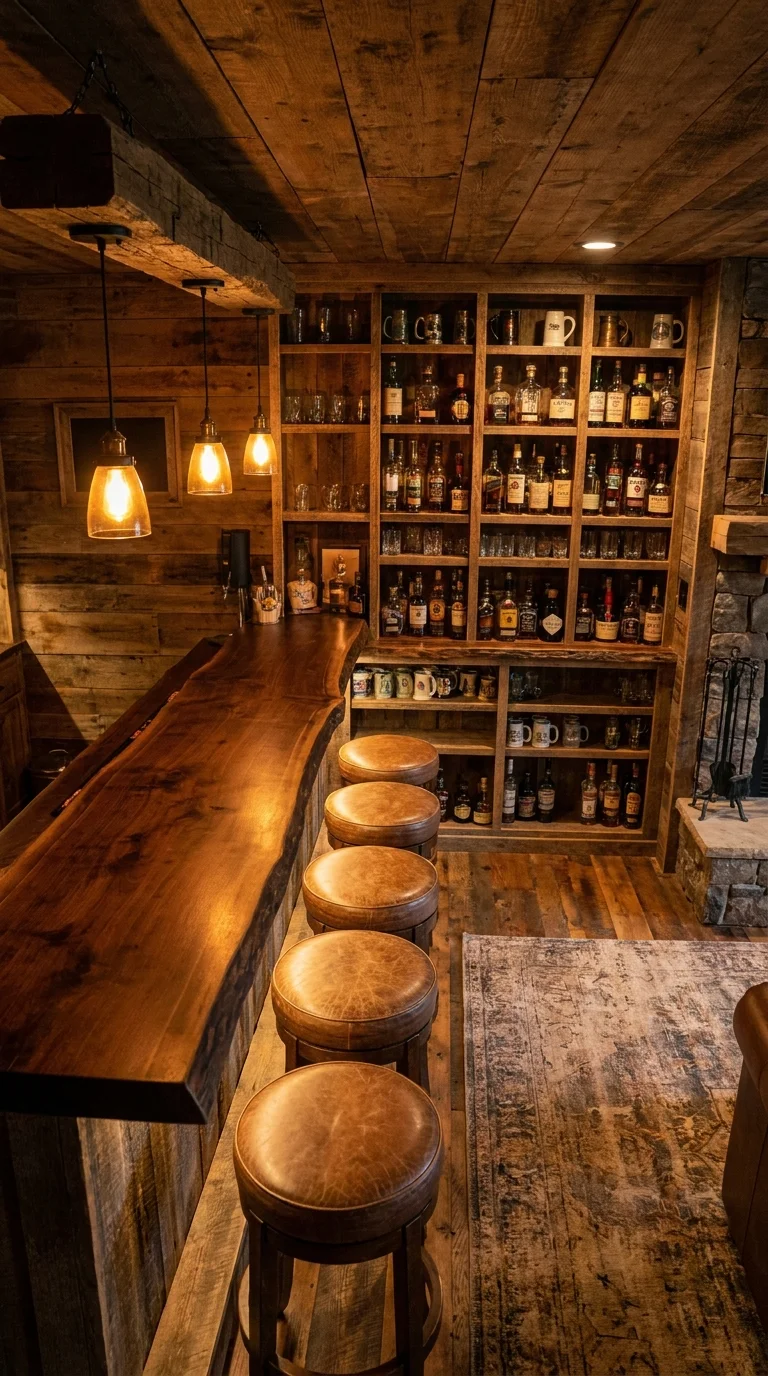
This section settles a specific question: build a full bottle wall, or stick with open shelving? The floor-to-ceiling glass-front cabinetry answers with a confident yes — nine lit cubbies hold everything from mugs to premium bottles, turning a collection into the room’s actual centerpiece. The live-edge counter is the second hero here, its uneven natural grain reading as deliberate against the otherwise grid-like shelving behind it.
Worth the Investment? If you already own a growing bottle or mug collection, this kind of built-in lit shelving elevates a basement bar more than almost any other single upgrade on this list, and it scales down easily to two or three cubbies in a smaller room. If your collection is modest, though, this much dedicated storage reads as half-empty rather than curated, so it’s worth counting what you actually own before committing to the build. A live-edge slab also needs the same kind of material research most people put into a kitchen countertop choice — both surfaces live under daily wear, spills, and glassware.
Main Colors: Warm Walnut, Aged Brass, Charcoal Grout, Amber Glass.
Treating the Bar as Background, Not the Main Event
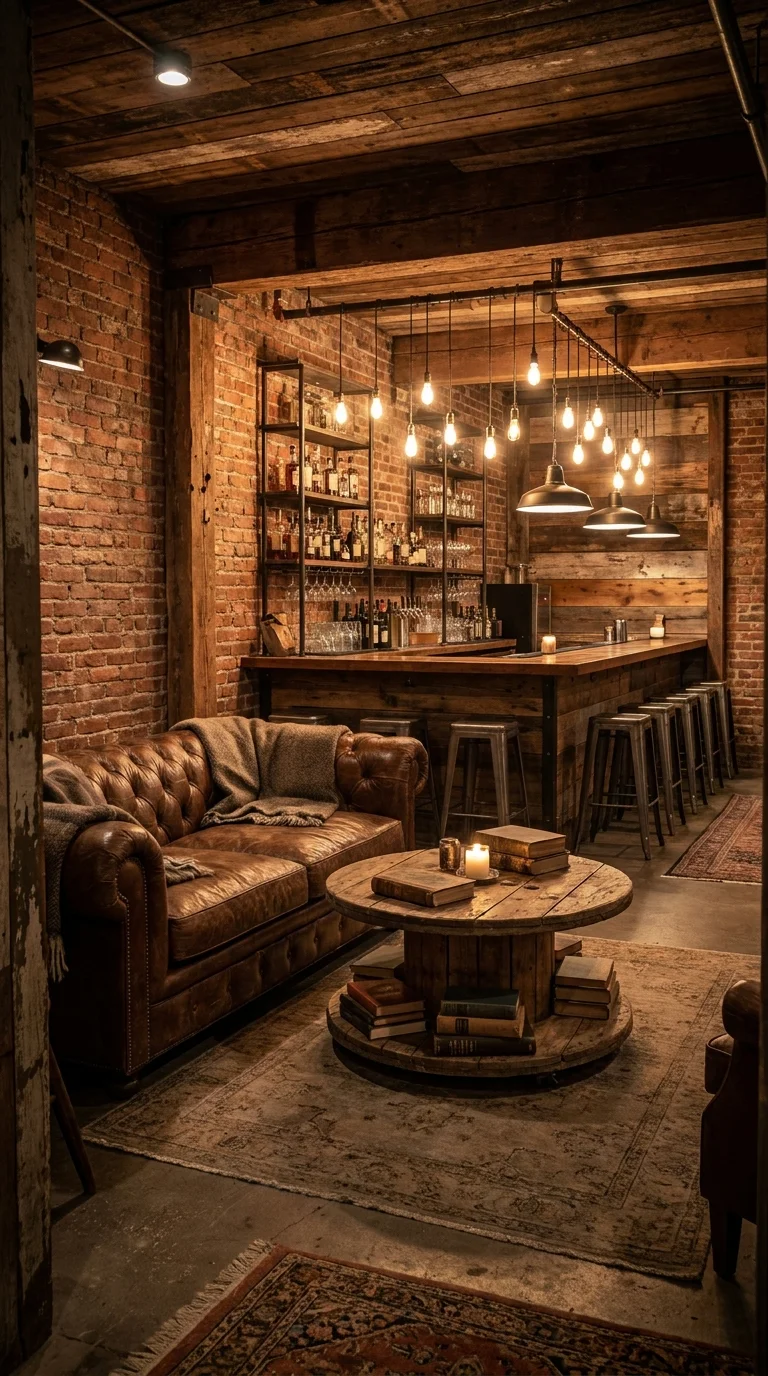
Every other bar on this list puts the counter front and center. This one doesn’t. A tufted leather sofa and a cable-spool coffee table sit in the foreground, while the actual bar and its cluster of exposed bulbs get pushed to the background as a secondary zone. It’s a rare layout that treats drinking and lounging as two separate activities instead of one, and it suits basements doing double duty as a media room or reading nook as much as a bar. Readers drawn to raw, structural materials will find the same language explored further in concrete, steel, and wood inside ten industrial bedrooms.
Where this can go wrong:
- Choosing a sofa too soft or overstuffed, which clashes with the room’s harder industrial edges
- Skipping a rug, leaving bare concrete feel unfinished rather than intentionally raw
- Overcrowding the pendant cluster so it reads as messy instead of sculptural
- Relying on the lounge lighting alone and forgetting task lighting at the bar itself
Going All-In on One Theme Instead of Blending Two
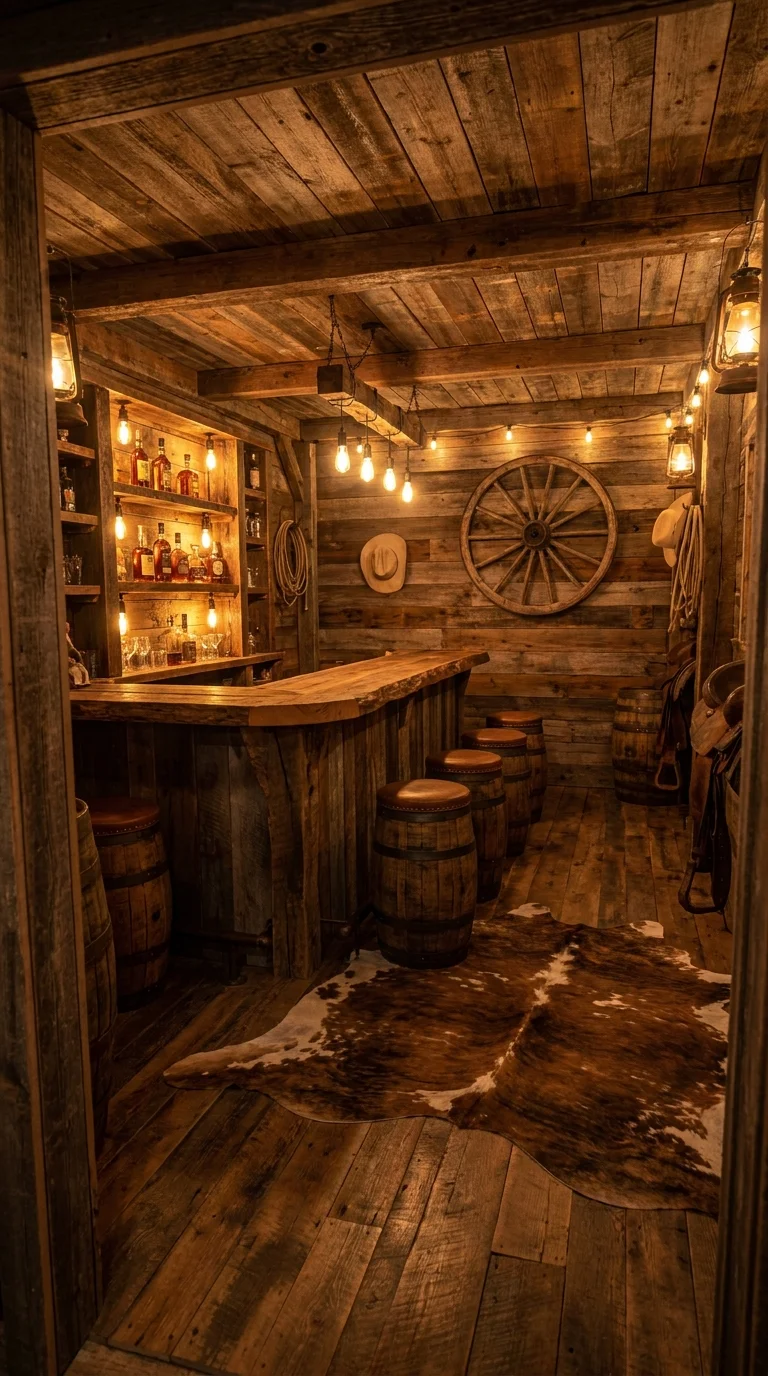
Most spaces here blend rustic with a second influence — stone, industrial, cabin. This one doesn’t blend anything; it commits fully to a western narrative with a wagon wheel, saddle, cowhide rug, and hanging lanterns, and that full commitment is exactly what keeps it from feeling like a costume. A cowhide rug on its own could easily read as gimmicky, but layered with barrel stools and rope detailing, it becomes a fully realized room instead of a single novelty item.
This works best in ranch-style homes, converted barns, or for anyone who genuinely wants a themed retreat rather than a subtle nod to rustic style — it’s a weaker fit in an open-concept basement shared with a home office or playroom, where a fully committed theme can start to feel overwhelming outside its own footprint. The same full-commitment styling shows up in our rustic bedroom designs for a cozy cabin feel. A simplified version keeps just two anchor pieces — the wagon wheel and the cowhide rug — and still reads as western without tipping into costume territory.
Designing a Bar Around One Drink Instead of Every Drink
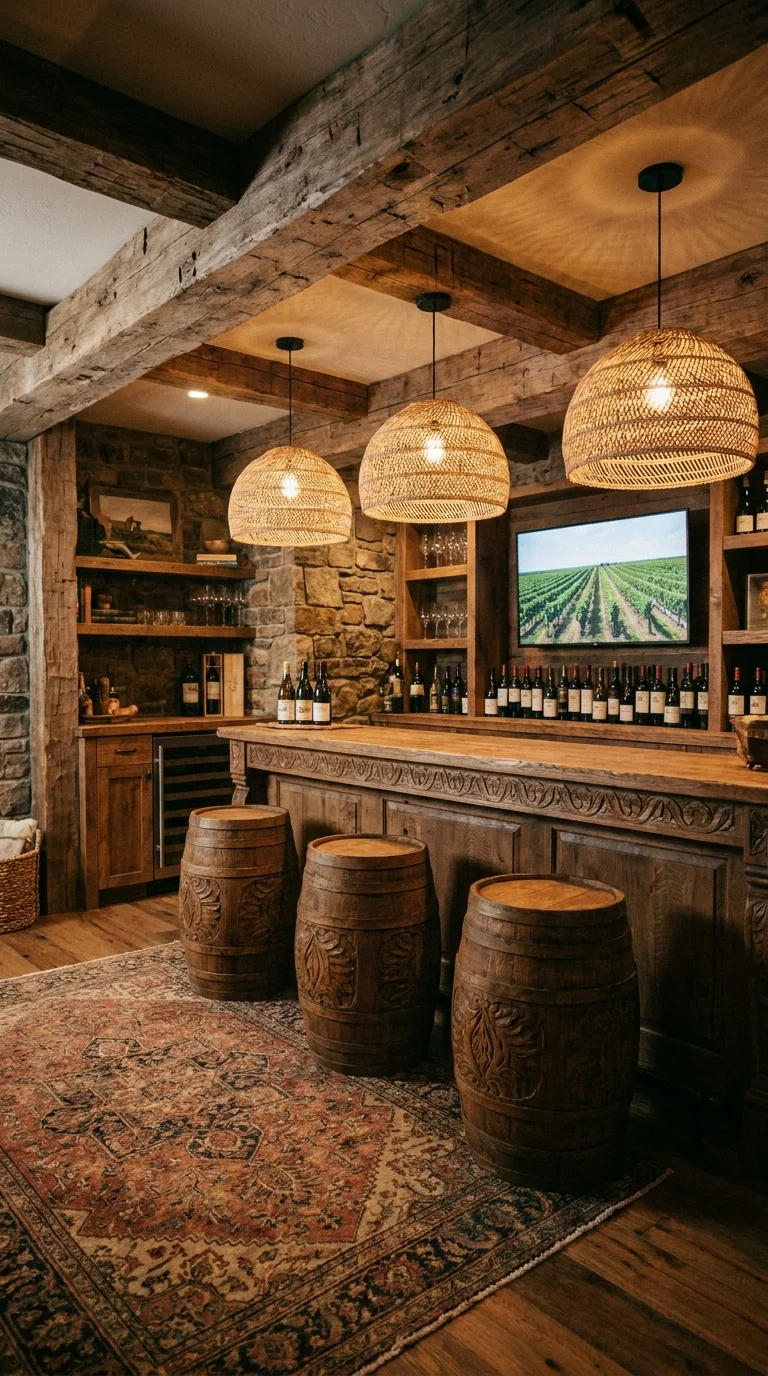
This room answers a specialization question: build a general bar, or design the whole space around one specific drink category? Here, everything — the carved bar front, the wall-mounted bottle racks, the barrel-shaped stools — is built around wine specifically, down to the mounted screen playing a vineyard scene for atmosphere. Woven rattan pendant shades soften what would otherwise be a very hard, stone-heavy room.
This suits wine collectors with a genuine bottle count worth displaying, and it’s a poor fit for a basement that also needs to work as a general entertaining space, since this level of specialization works best as its own dedicated room. Real wine barrels used as stools need occasional oiling to keep the wood from drying and cracking in a basement’s fluctuating humidity, and any stone wall this size is worth checking yearly for moisture staining — neither task is difficult, but both are easy to forget until a problem shows up. Anyone weighing a smaller dedicated beverage nook over a full room like this might prefer the scaled-down approach in our small-space coffee bar ideas that actually fit.
The Repetition Risk Behind Four Identical Lanterns
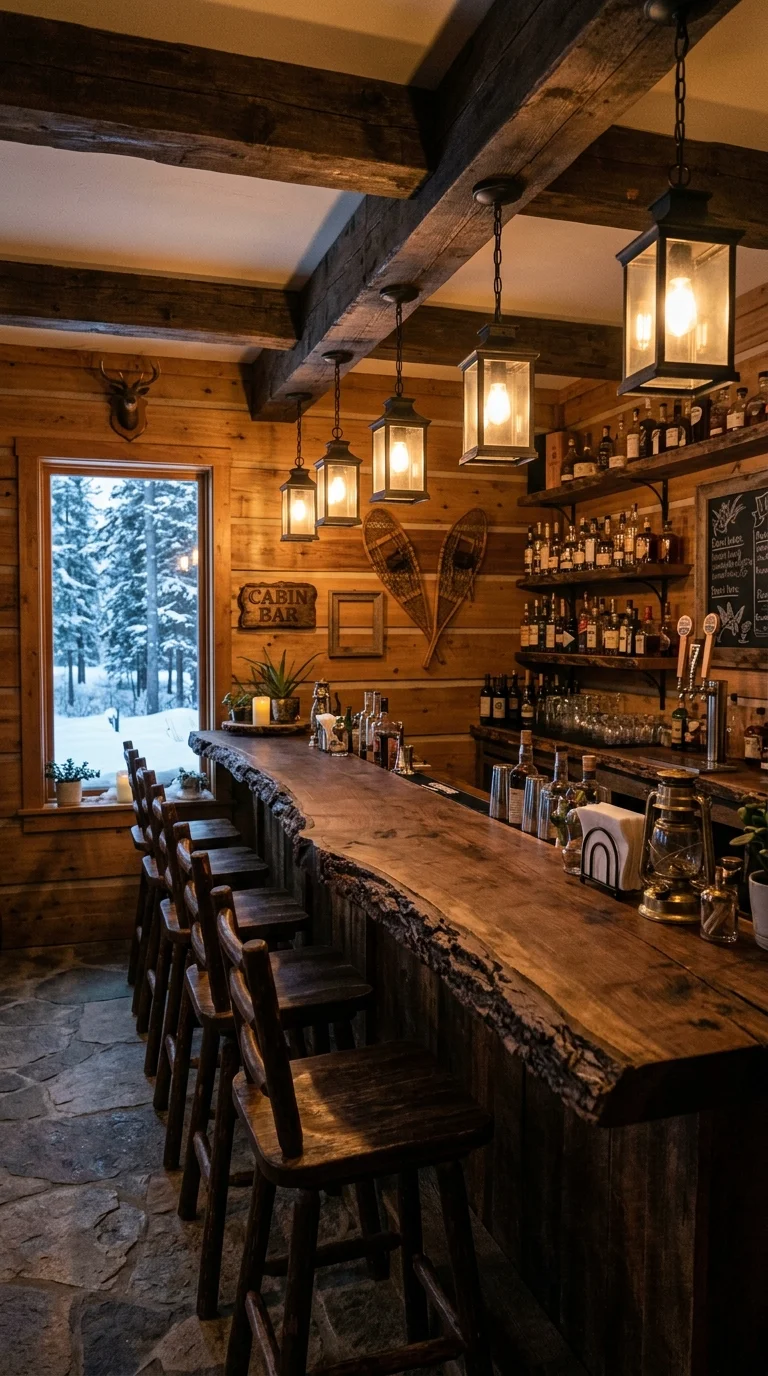
The last decision on this list is whether a basement bar should acknowledge the outdoors at all. This one does, using an actual window and a “Cabin Bar” sign to blur the line between a lower-level room and a proper mountain lodge. Lantern-style pendants over the raw-edge counter reference outdoor camp lighting rather than a standard indoor fixture, and mounted snowshoes carry the theme without adding clutter to the bar itself.
Hanging four lanterns of nearly identical size in a straight row is a repetition risk — done poorly, it can look mass-produced rather than curated. It works here because the counter’s uneven, organic edge breaks up that uniformity below the lights, giving the eye something less rigid to land on. For basements without a real window, a printed forest scene or a simple backlit frosted panel can approximate the effect reasonably well. Anyone building a full basement workspace alongside a bar corner may also want the matching material palette in how to design a rustic home office room by room.
Basement Bar Tips
- Run a dehumidifier if the space isn’t fully waterproofed — reclaimed wood and rattan pendants both suffer in damp air
- Add at least one warm-toned light source that doesn’t rely on daylight, since basements lose it completely after dark
- Choose flooring that tolerates spills and temperature swings — sealed concrete, tile, or engineered wood over solid hardwood
- Position seating close enough to a TV or fireplace zone that the bar still functions as a gathering spot on nights no one’s drinking
Who Should Choose This Style?
- Best for homeowners with an unfinished or underused basement looking for genuine entertaining value
- Best for anyone who already owns reclaimed materials, vintage signage, or a growing bottle collection worth displaying
- Best for households that host regularly and want a dedicated space separate from the main living areas
- Not ideal for renters in a basement without permission to alter walls, flooring, or built-ins
Budget Summary
| Budget | Expectation |
|---|---|
| Low | Painted veneer paneling, string lights, secondhand barrel stools |
| Medium | Reclaimed wood shelving, mid-range pendant lighting, a sealed concrete or laminate floor |
| Premium | Live-edge slab counters, custom glass-front cabinetry, real stone veneer, terracotta tile |
Frequently Asked Questions
Does a basement bar need a sink or plumbing? No — most of the bars shown here rely on a mini-fridge and simple storage rather than running water, which keeps the build far more affordable and avoids the permitting that plumbing work usually requires.
What flooring holds up best in a basement bar? Sealed concrete, tile, and engineered wood tolerate basement humidity and occasional spills far better than solid hardwood, which can warp below grade over time.
How do I stop reclaimed wood from warping in a damp basement? Keep humidity under control with a dehumidifier, seal exposed wood surfaces, and avoid placing raw wood directly against an exterior wall where moisture is more likely to collect.
Can I build a rustic basement bar on a tight budget? Yes — a painted or veneer-paneled bar front, secondhand stools, and layered string lighting can recreate the mood of several bars on this list for a fraction of a custom build’s cost.
What’s the biggest mistake people make with basement bar lighting? Relying on a single overhead fixture. Every standout bar here layers at least two light sources — pendants, under-shelf lighting, or lanterns — rather than depending on one ceiling light to do everything.
Written by the Aesthetic Life Team, who cover home design and renovation trends with a focus on ideas readers can realistically recreate in their own space.
Final Thoughts
A rustic basement bar isn’t one look — it’s at least nine different ones, and the right choice depends more on how you actually use the space than on which photo caught your eye first. Hosting large groups points toward the long communal table or the full tavern layout; a modest footprint or a rental favors string lights and a simple counter that borrow the same warmth without the structural commitment. Whichever direction fits, the real test isn’t how the room photographs — it’s whether people actually want to stay in it once the picture’s been taken.
Explore More
You may also enjoy:

