
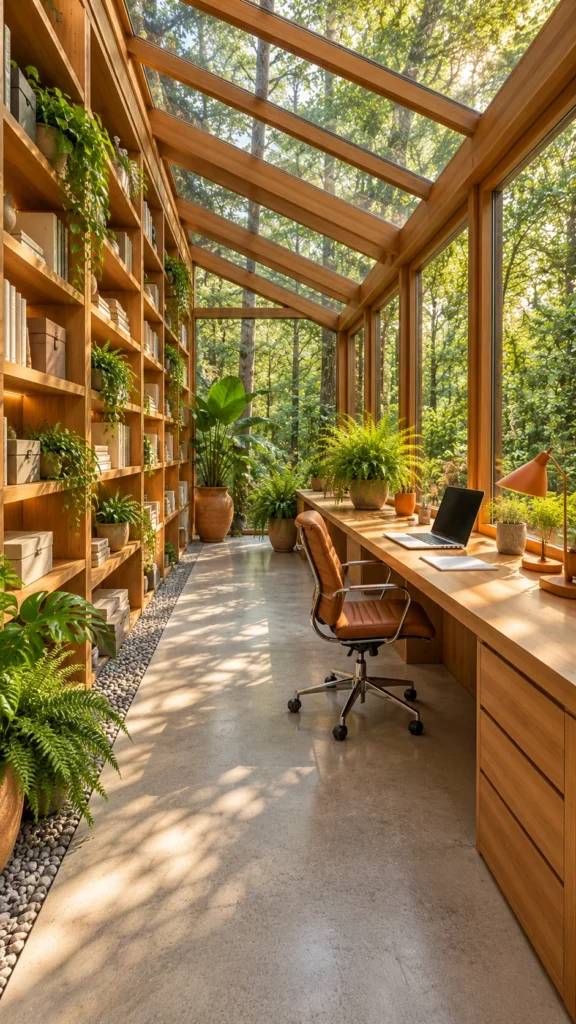
Introduction
A sunroom promises the easiest version of a home office: daylight, a garden view, and no dark corner. The catch shows up around ten in the morning, when the sun hits the screen, the room warms up, and the desk has nowhere to hide a cable or a stack of paper. A glass room is a lovely place to sit. It becomes a workable office when a few decisions go right.
Sunroom offices share one advantage and one problem. The advantage is light from more than one direction. The problem is the same light, plus heat, plus the feeling that every wall is a window and nothing is a wall. The ten rooms below come at those decisions from different sides. One lets a bookshelf wall carry the storage. One splits the room into a work half and a rest half. One hands the whole job to blinds and a daybed. None of them needs a rebuild to learn from. Read each one for the decision that makes it work, and the sunroom stops being a pretty backdrop and starts being a room you can work in all day.
A Bookshelf Wall Holding Up One End of the Workday
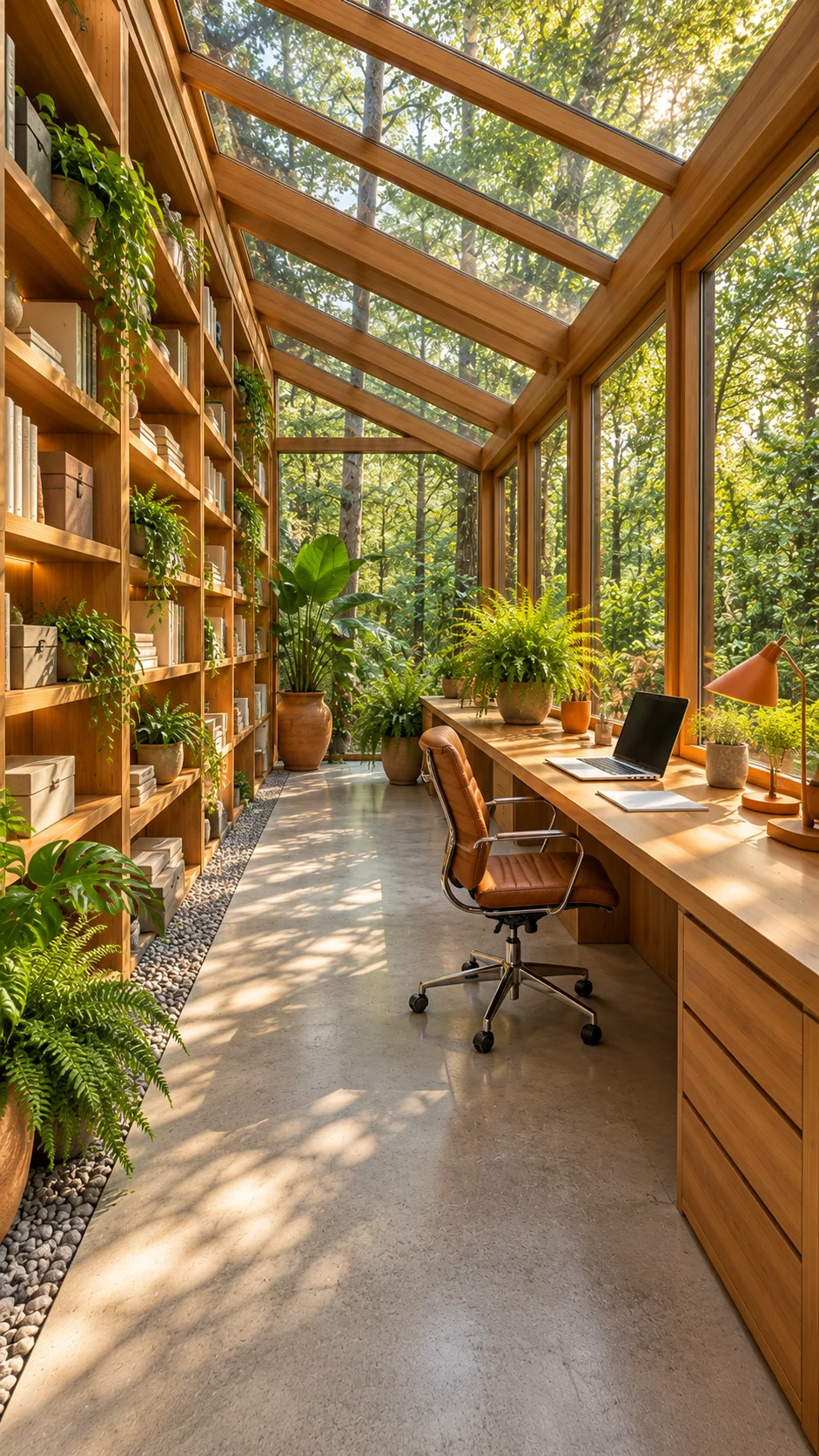
A glass roof covers this sunroom, and one long wall is all bookshelves: wood shelves from floor to nearly the ceiling, holding books and boxes, plus trailing plants. A long wood desk runs along the glass on the other side, with a tan leather chair tucked under it. Concrete covers the floor, and a strip of pebbles runs along the base of the shelves. The room has two long sides, and each one has a job. Shelves hold the storage. The desk holds the work.
That split is the lesson. A sunroom has little solid wall, so storage has to live somewhere deliberate. A full bookshelf wall answers it in one move: books and files, plus supplies, sit within arm’s reach of the desk without eating floor space. The pebble strip at the base looks like a garden detail, and it works as one too — it marks the line where the room’s indoor floor meets its planted edge.
- Paper spread out beside the laptop without stacking
- Books open next to the keyboard while you type
- Two people sharing the desk without elbowing each other
The planting helps too. Pots on the shelves and on the desk leave the room feeling like a garden room rather than an office that happens to have windows. Rooms that borrow their planting from boho home office ideas get that same soft edge without turning the desk into a greenhouse.
Work on One Side, Rest on the Other
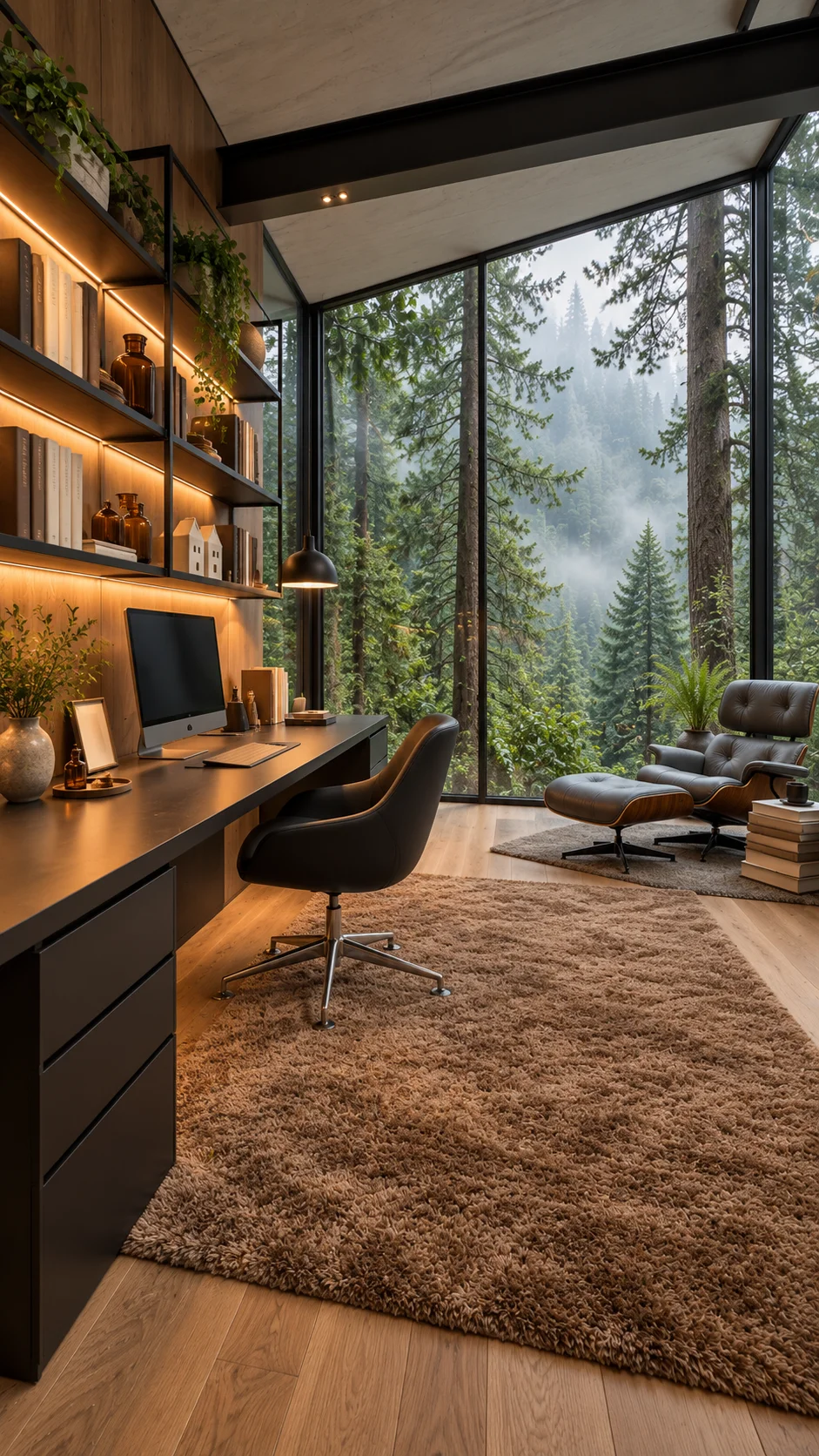
Black frames outline the glass corner of this room, and misty forest fills the view. A long black desk runs along one wall under backlit shelves, with a desktop computer, a lamp, and books. On the other side of a shaggy brown rug, a dark lounge chair and ottoman face the trees. The room holds two moods at once: a desk for working hours and a chair for the hour after.
The split matters because a sunroom office can feel like it stays open all evening. When the desk is all the room holds, the room stays in work mode all evening. A lounge chair gives the room an off switch. You leave the desk, sit in the chair, and the workday ends without leaving the room. The rug draws the line between the two halves without a wall or a screen.
The dark frames help the split too. Black frames around glass make the forest look like a picture, and they leave the desk side feeling contained. Black sunroom ideas use that same dark frame to hold a bright view together, and here the frame leaves the work side feeling like a room instead of a greenhouse.
One caution: a lounge chair this close to a desk can become a second desk, with papers and a laptop migrating over. Keep a book or a mug on it, not a charger, and it stays a rest chair.
A Desk With Branches for Legs, Facing the Lake
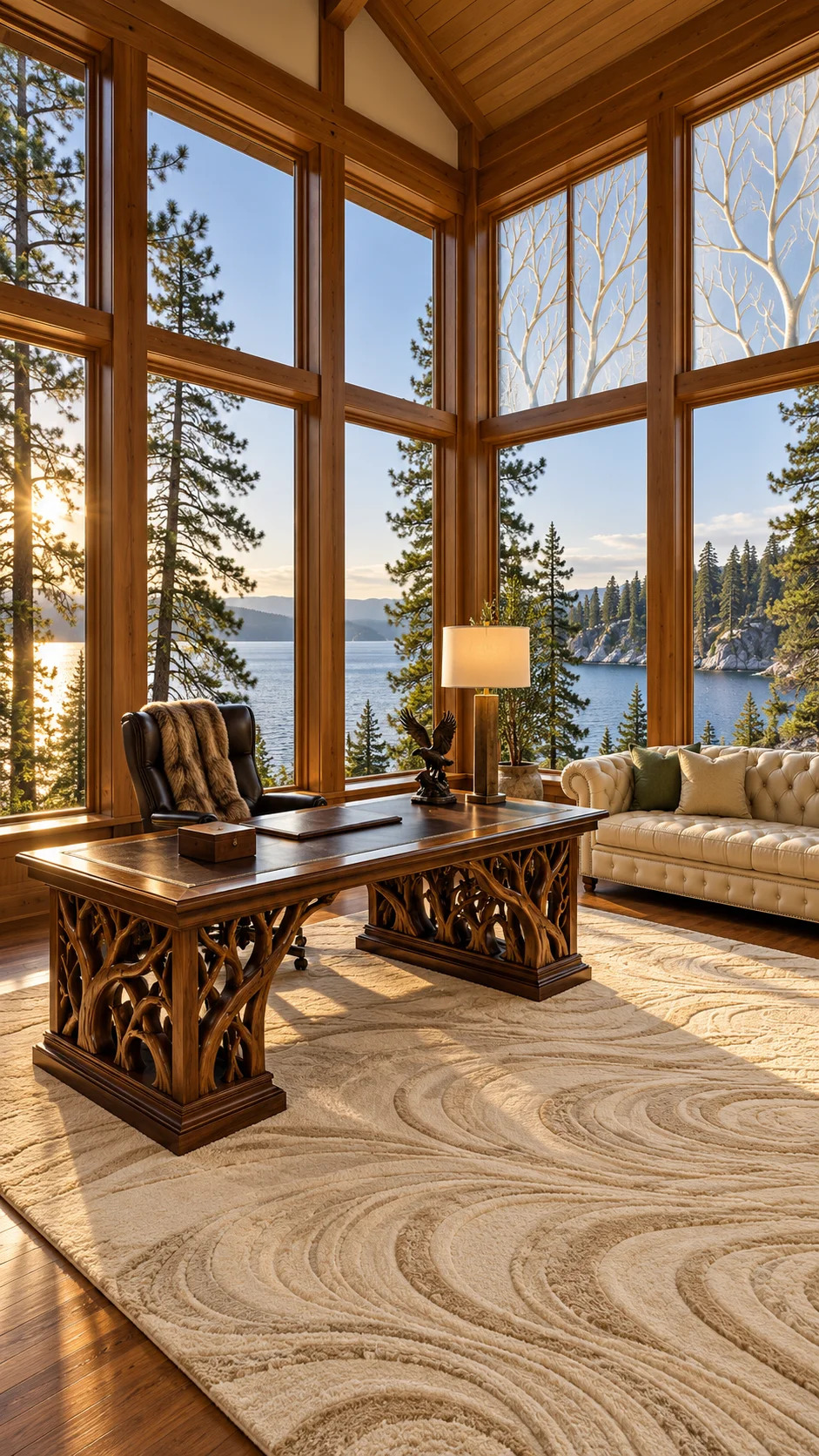
Wood frames outline corner windows in this room, and a lake with pine trees fills the view. The desk is the room’s main event: a dark wood top on legs shaped like tree branches, with a leather chair tucked behind it and a tufted cream sofa along the side wall. A patterned rug covers the floor, and a table lamp and a small sculpture sit on the desk. The desk is furniture and sculpture at once, and the room is arranged so you see it against the lake.
Why the Desk’s Legs Matter More Than Its Top
A plain desk in this room would disappear against the view. The branch legs give it a shape the eye can hold onto, and they tie the desk to the trees outside without a single matching accessory. The lesson is portable: in a room with a view that strong, the desk needs one quality that competes with the window — weight, shape, or color — or the view wins and the desk feels like an afterthought.
The sofa earns its place too. A sunroom office with nowhere to sit but the desk chair gets tiring by afternoon. A sofa along the side wall gives the room a second seat for reading, calls, or a break, and it spares the desk from having to do every job. The lamp matters as well: by late afternoon, the lake light drops, and a desk lamp leaves the work surface usable after the view goes dark.
Dark Walls, a Daybed, and Blinds That Earn Their Keep
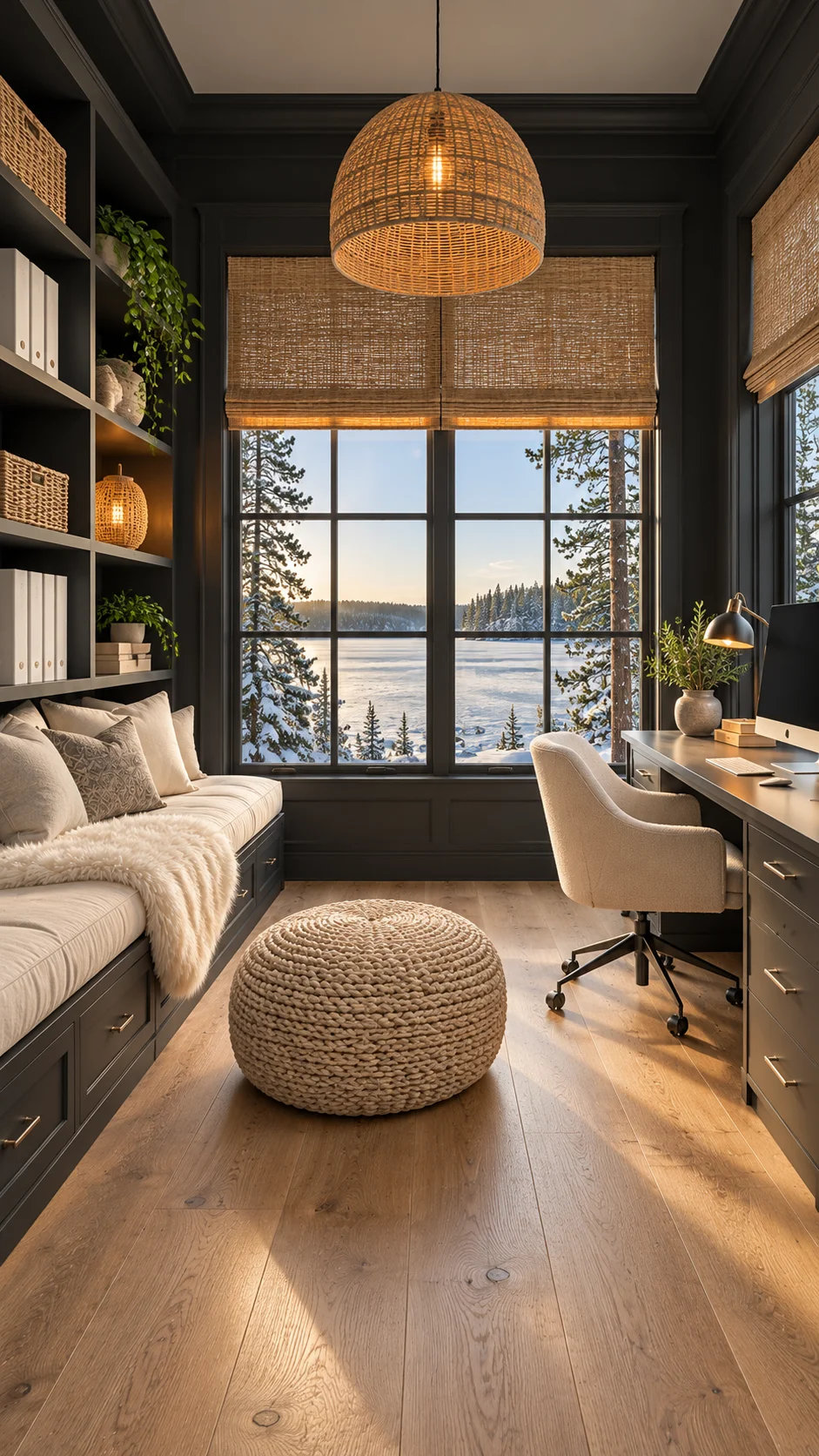
Charcoal walls wrap this sunroom office, and a wide window looks onto a snowy lake. A window seat with cushions runs under the glass, a woven dome pendant hangs overhead, and woven blinds half-cover the panes. A desk sits on the right with a computer, a lamp, and a plant. The room is dark and warm, built for winter light — the kind of light that is bright and low, and hard on the eyes.
The blinds are the working part. A sunroom with a snow view gets glare that a summer garden rarely produces, because snow throws light back up. Woven blinds cut that glare while letting the room stay bright, and they roll up when the sun drops. The daybed does the second job: it turns the window into a seat, so the room has somewhere to sit that is not the desk chair.
- They cut the contrast between the bright window and the room around it
- They let the pendant and the desk lamp feel like warm pools instead of bare bulbs
- They make the snowy view look brighter by comparison
Rooms that treat a small office as a cozy, functional workspace make the same trade: a daybed or a bench beside the desk, and light handled with shades instead of a single overhead fixture.
Plants on Every Shelf, a Desk in the Green
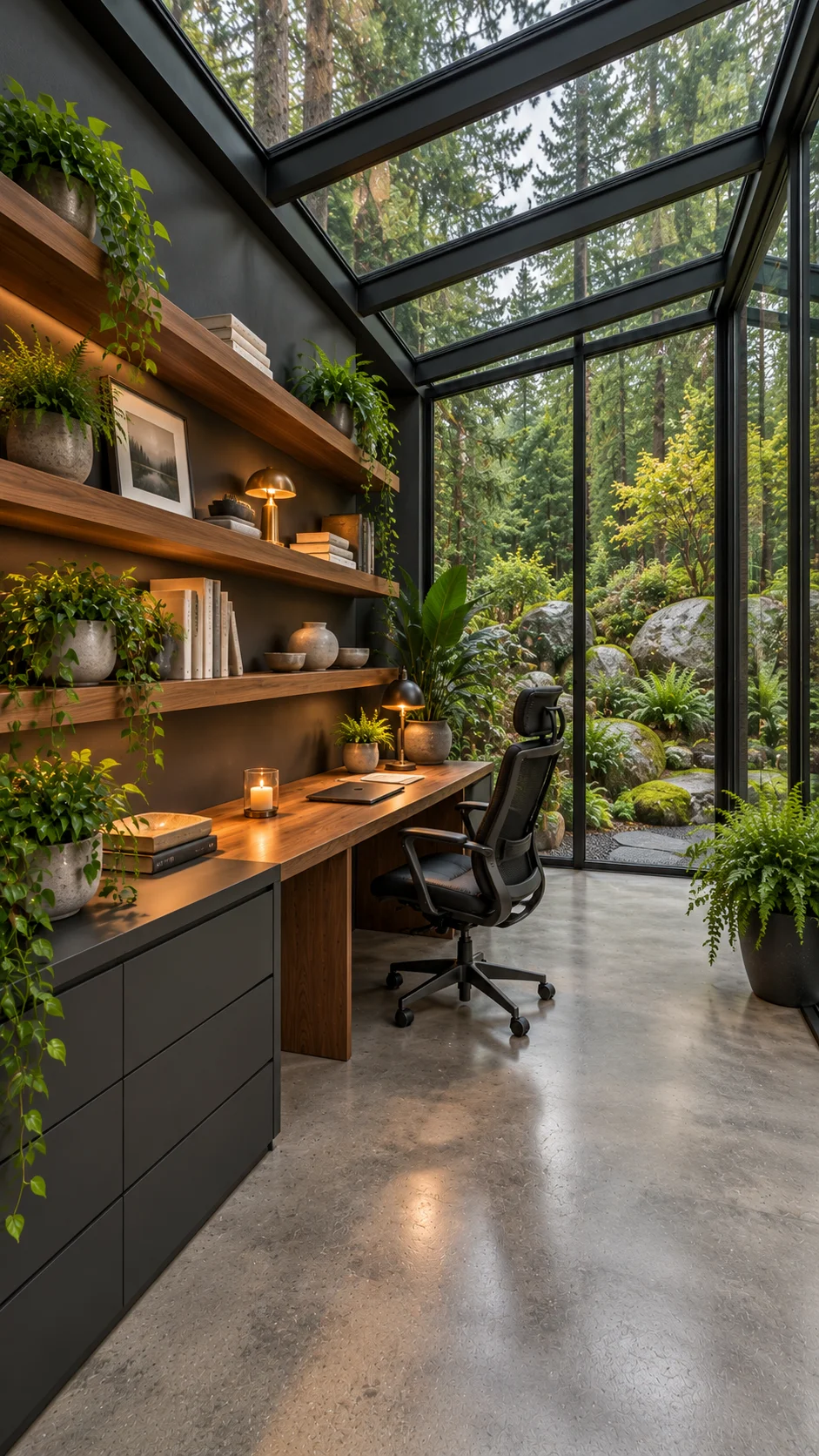
A black-framed glass roof covers this office, and walnut shelves line the dark wall, holding books and pots, plus trailing plants. A wood desk sits under the shelves with a black ergonomic chair, and a large fern fills the corner by the glass. Concrete covers the floor. The plants are not decoration added at the end. They are the wall.
That density works because the room has light to spare. A glass roof feeds plants all day, and the shelves put them at eye level instead of on the floor. The desk sits in the middle of the green, which makes the work surface feel calm without a single decorative object on it. The tradeoff is upkeep: trailing plants need trimming, pots need water, and a shelf this full needs dusting. A glass roof means the plants grow fast, and fast growth means regular cutting back.
The desk itself stays plain — a wood top, a laptop, a candle, a few books — and that plainness is the point. Against a wall this alive, a quiet desk leaves the room usable. If the desk competed with the shelves, the room would feel crowded. As it stands, the shelves do the showing and the desk does the working.
A Live-Edge Desk Under a Vaulted Wood Ceiling
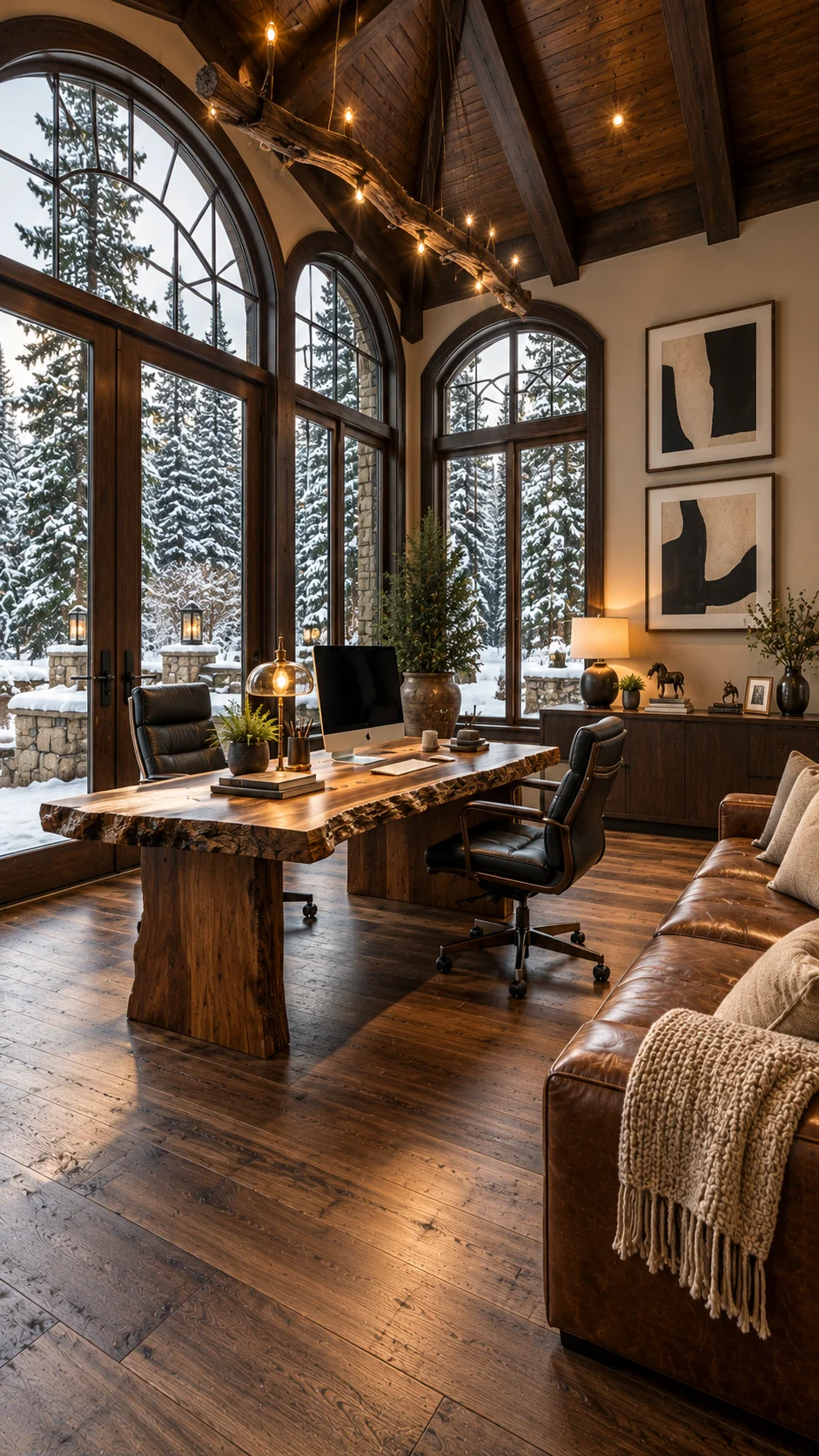
A vaulted wood ceiling rises over this office, and tall arched windows look onto a snowy forest. A live-edge wood desk with natural wavy edges stands in the middle of the room, with a black office chair behind it and a brown leather sofa along the side. A chandelier made from a branch with small lights hangs from the peak. The room is all wood and snow, with warm light.
Winter Light Through Arched Glass
Arched windows change how winter light enters. The curve throws light higher into the room than a square window would, and the vaulted ceiling gives that light somewhere to go. The result is a room that stays bright on a short winter day without a wall of glass. The branch chandelier repeats the trees outside in a quieter form, and the leather sofa gives the room a seat for the hour when the light goes.
The wood-on-wood palette could turn heavy, but the snow view holds it open. Rooms that follow rustic home office ideas room by room make the same move: let one natural material lead, and let the view do the rest.
One practical note: a live-edge desk has an uneven front edge, so a keyboard tray or a flat writing pad helps for long typing sessions. The edge looks good; it just does not hold a wrist rest the way a straight edge does.
A Glasshouse Desk With Plants for Walls
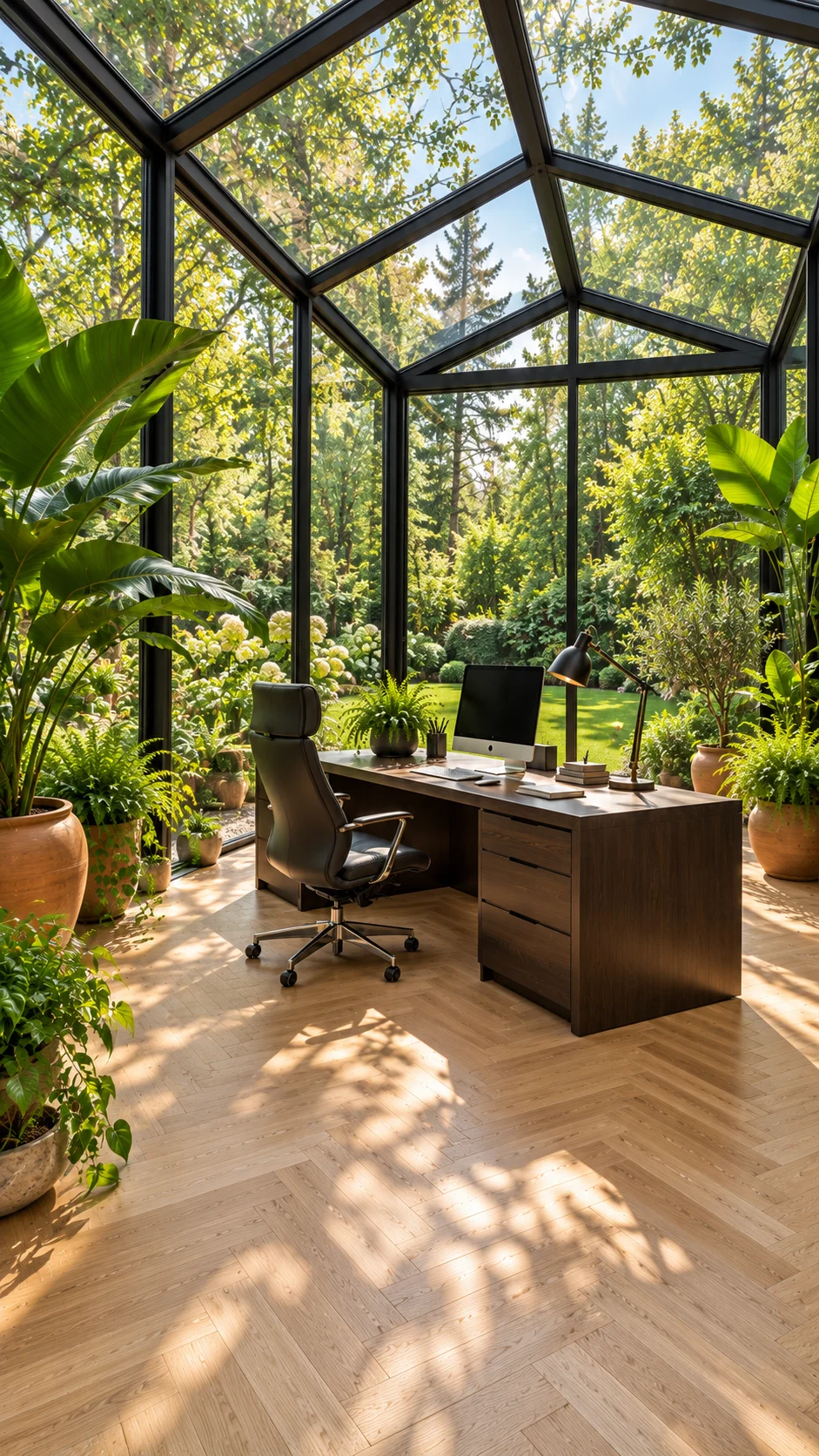
Black frames shape a glass gabled sunroom here, and the desk sits in the middle of it: a dark wood desk with drawers, a black leather chair, a computer, and a task lamp. Large tropical plants in terracotta pots stand around the desk on every side, and a garden fills the view beyond the glass. Herringbone wood covers the floor. The plants are the walls. The glass is the roof. The desk is the one piece of furniture that had to be chosen.
This room has more glass around the desk than any other room here, and it works because the desk is plain and the plants are big. A fussy desk would fight the greenery. A dark, simple desk lets the plants carry the room, and the chair and lamp stay in the background. The herringbone floor adds pattern without adding color, which leaves the green in charge.
Heat and glare are the real problems in a room like this. A glass gable catches sun all day, so a shade on the roof glass and a desk placed out of the direct sun matter more than any accessory. The desk here sits where the roof frames it without putting the screen in the sun’s path, and that placement is the decision to copy.
A Corner Desk Sitting in Two Directions of Light
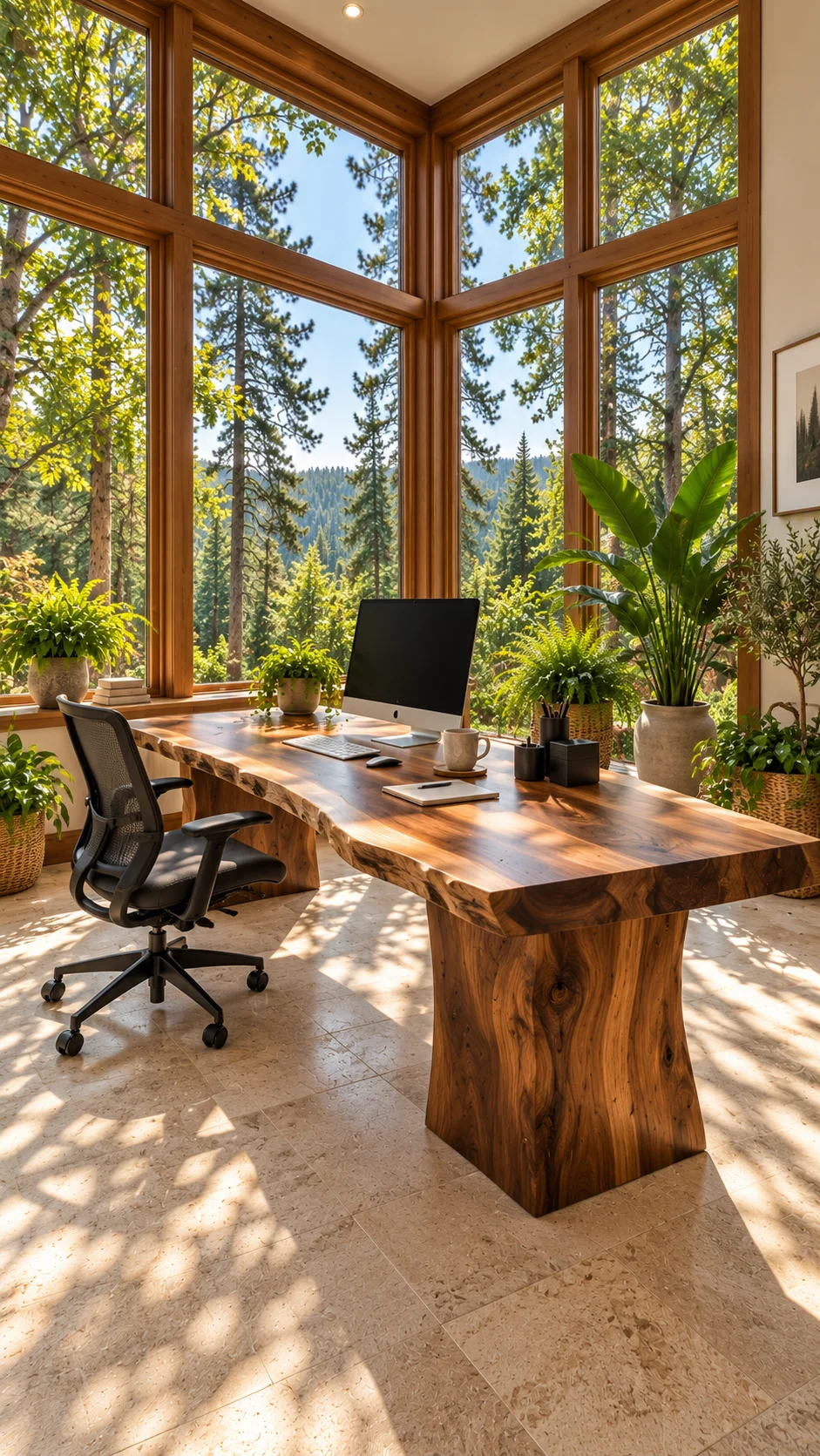
Corner windows with wood frames wrap this office, and pine trees fill both panes. A live-edge slab desk sits in the corner with a black mesh chair, a computer, a mug, and a notebook. Potted plants stand on the floor and the sill, and stone tile covers the floor. The desk takes the corner, and the corner gives back light from two sides.
Two Windows, One Desk
Light from two directions is the corner desk’s advantage and its problem. Two windows mean fewer shadows on the work surface, and they also mean glare can arrive from either side. The fix is placement: the monitor sits angled to the corner, not flat against either window, so neither pane shines straight onto the screen. A mesh chair lets air move in a corner that could otherwise feel still.
The desk stays clear — computer, mug, notebook, nothing else — and that spareness suits a corner this bright. Rooms that follow white office setup ideas for a clean, bright workspace make the same call: a clear desk lets the light do the decorating.
Stone tile underfoot is a practical pick for a room with this many plants. Water spills dry without marking, and the tile stays cool in summer.
One Wall Doing Three Jobs
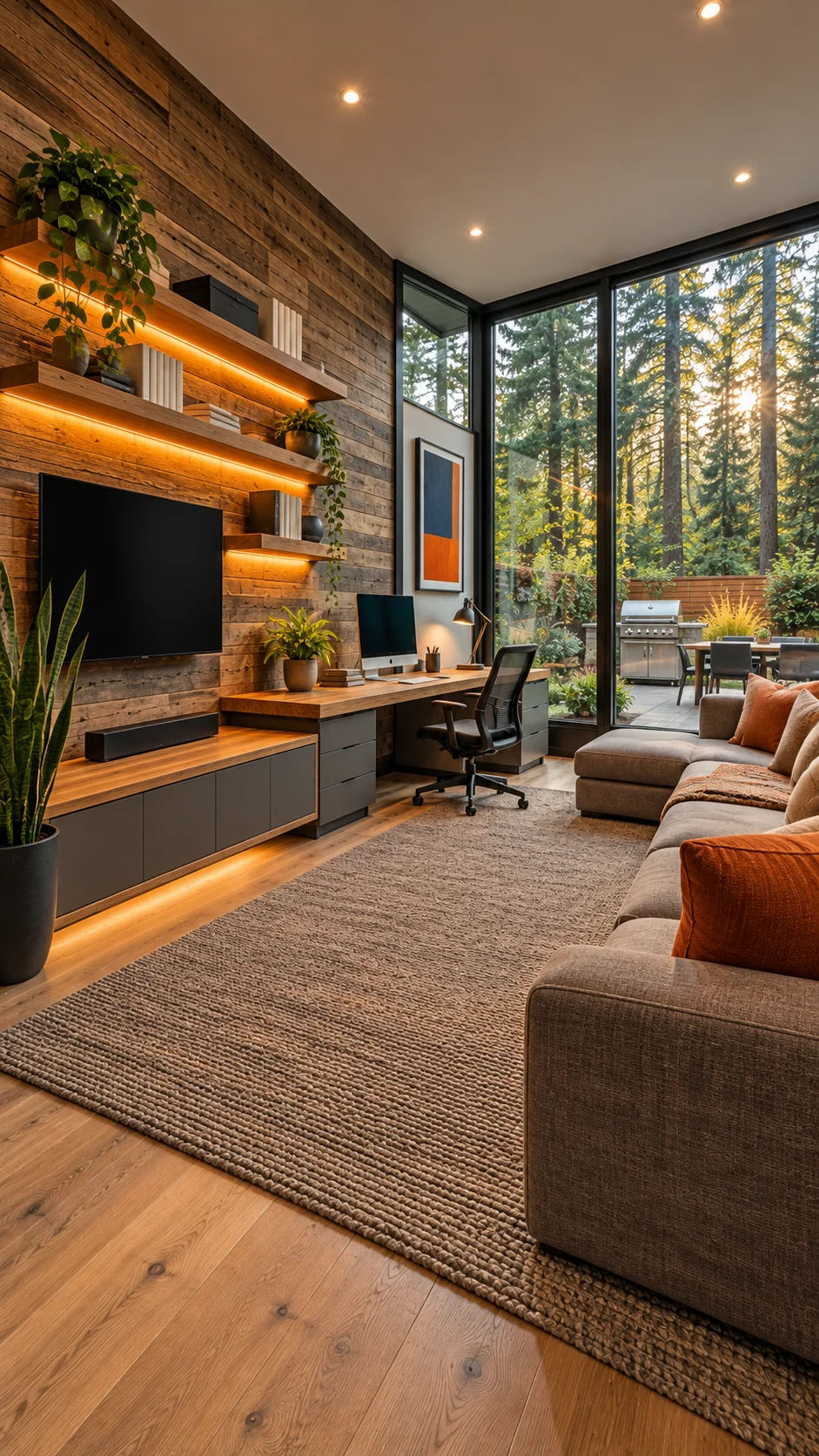
A reclaimed wood wall holds this room together. Backlit floating shelves run above a low cabinet, a TV hangs on the left, and a desk with a computer sits on the right. A sectional sofa faces the TV across a textured rug, and glass sliding doors open to a patio with a grill. The room is a living room and an office at once, and one wall does the work for both.
Shared rooms fail when the office half and the living half fight. Here they share a wall, a wood finish, and a light scheme, so the desk looks like part of the living room rather than an intruder. The backlit shelves give the wall a warm glow after dark, which stops the TV wall from going black when the screen is off.
- Shelves for books and plants, plus objects
- A cabinet for cables and papers, plus everything that would clutter the desk
- A desk that folds into the room’s evening use once work ends
The sofa matters as much as the desk. A room that works as an office by day and a living room by night needs seating that invites a full evening, and living room looks built around a sectional show how that seating can carry the room.
Concrete, Color-Block Art, and Two Task Lamps
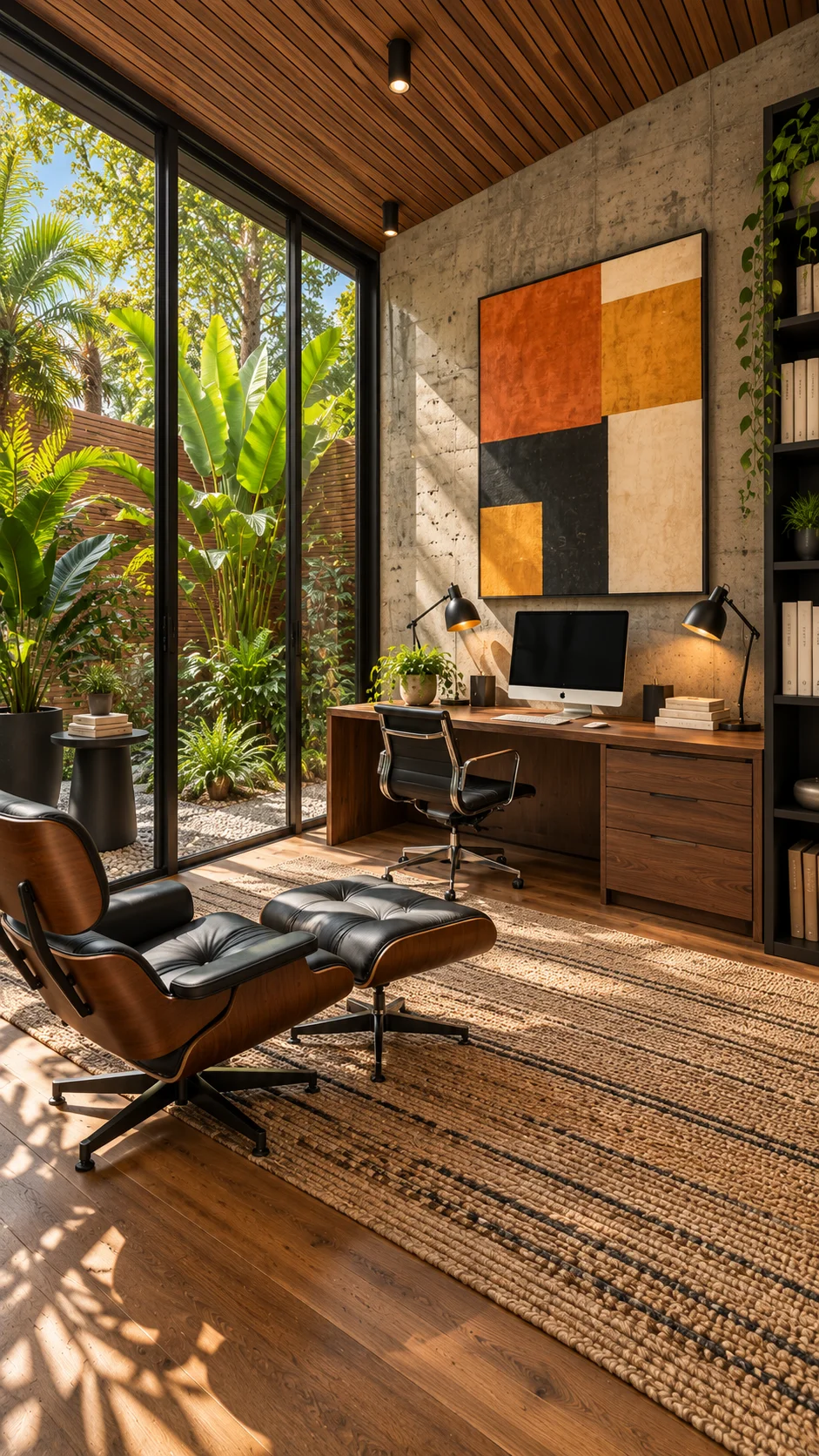
A bare concrete wall fills one side of this office, with a large color-block artwork in orange, yellow, black, and cream hanging above a wood desk. Two black task lamps stand on the desk, one on each side of the computer, with a plant and a stack of books nearby. A black leather lounge chair and ottoman sit in front, and sliding glass doors open to a tropical garden. Wood slats cover the ceiling. The room is concrete and wood, plus color, and nothing else.
Two lamps instead of one is the decision here. A single lamp leaves one side of the desk dim. Two lamps, one on each side, spread light across the whole work surface and kill the shadow a single lamp throws. The artwork does the color work, so the desk can stay plain. The lounge chair gives the room a second seat for reading or calls.
The concrete wall is the risk and the reward. Bare concrete can feel cold, but the warm wood ceiling and the orange in the artwork balance it. The sliding doors leave the garden close, and the rug softens the floor. If the concrete felt too bare, a single textile — a throw on the lounge chair — would warm it without adding clutter.
Frequently Asked Questions
Will a glass-roof sunroom get too hot to work in by summer?
It can, and heat is a common reason sunroom offices get abandoned by July. Roof shades, a reflective film on the roof glass, or a portable cooler all help, and the cheapest fix is timing: do focused work in the morning and move calls to a cooler room in the afternoon. A desk placed out of the direct sun matters more than any gadget. If the room still cooks by midday, a mini-split unit is the long-term answer, and it heats winter mornings too.
How do I keep glare off my screen in a room made of windows?
Angle the monitor so no window sits directly behind you or directly behind the screen. A matte screen filter helps, and so does a desk lamp for cloudy hours, when the room goes grey and the screen looks harsh by comparison. Blinds on the brightest pane — not every pane — cut the worst glare while leaving the view.
Do I need a separate heater or cooler for a sunroom office?
Many sunrooms need help in one season. A small electric heater covers winter mornings in a mild climate, and a portable cooler covers summer afternoons. In a cold climate, check the room’s insulation before committing to daily use — a glass room with thin frames loses heat fast, and a heater will run all day without fixing the draft.
Conclusion
The ten rooms agree on one thing: a sunroom office works when one decision does the heavy lifting. A bookshelf wall for storage. A lounge chair for the off switch. Blinds for the glare. A desk plain enough to let the plants carry the room. Pick the decision that fixes your room’s weakest spot, and let the rest stay simple.
Start with the problem you feel first. Glare means blinds and monitor placement. Heat means shade and a desk out of the sun. Clutter means one wall of storage. A room that solves its worst problem feels workable even if the rest is plain, and a room that ignores it feels unfinished no matter how pretty the view is. The view is the bonus, not the plan. The plan is the decision underneath it.
About the Author
The Aesthetic Life Team covers home decor and interior design, with a focus on rooms that look considered and live comfortably.

