
The mudroom is usually the smallest room in the house, yet it absorbs the biggest daily mess: wet boots, school bags, dog leashes, gym kits, umbrellas, and the jacket everyone swears they hung up. When this space works, the whole house feels calmer. When it doesn’t, clutter migrates to the kitchen counter, the stairs, and every chair in sight.
The difference is rarely square footage — it’s storage matched to real life: a hook at the right height, a drawer deep enough for gloves, a basket that fits its cubby. The ten rooms below each solve storage differently. Study the one closest to your home, steal its best move, and your entryway will start pulling its weight.
Start With a Bright Built-In Wall That Does the Heavy Lifting
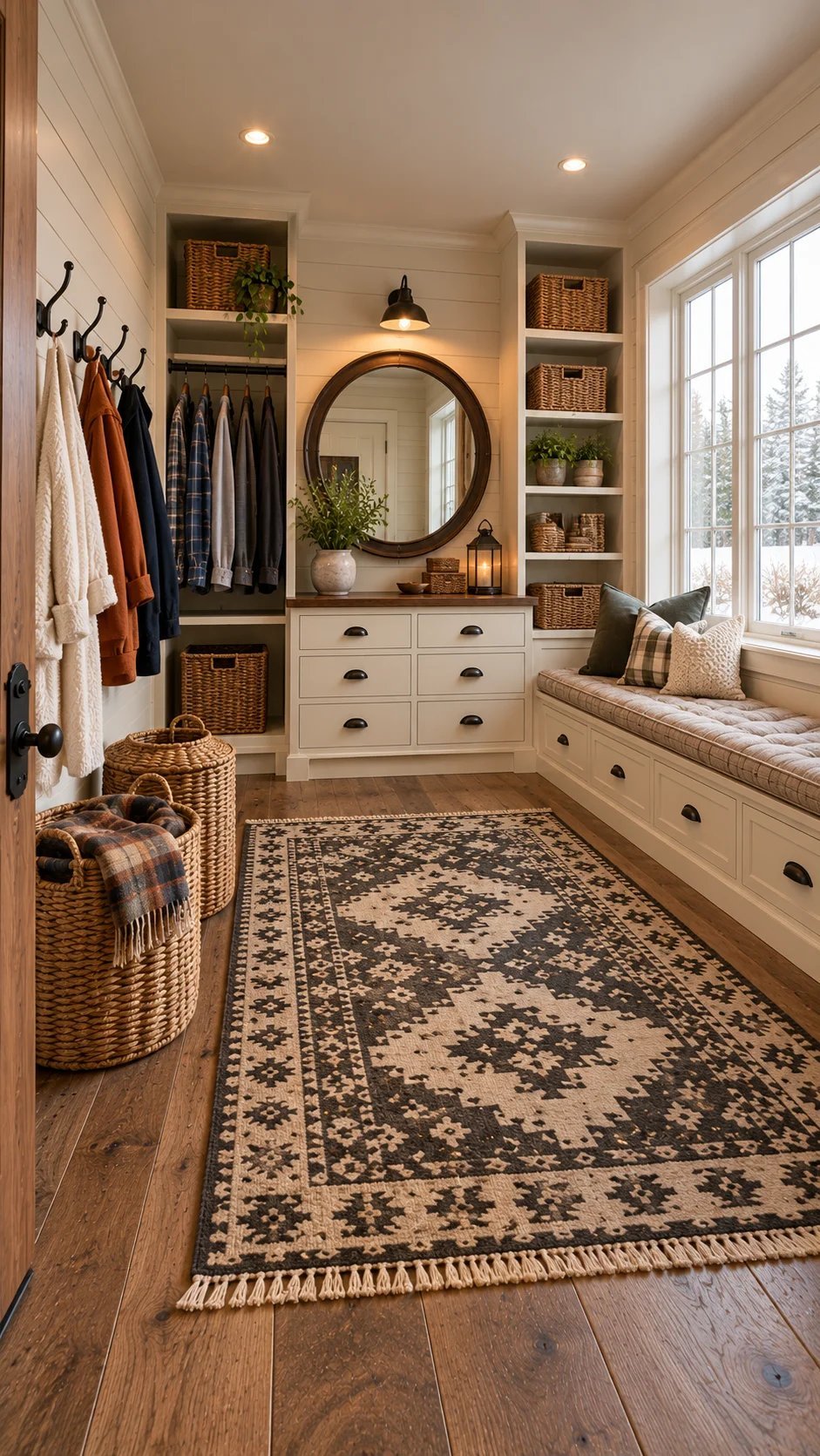
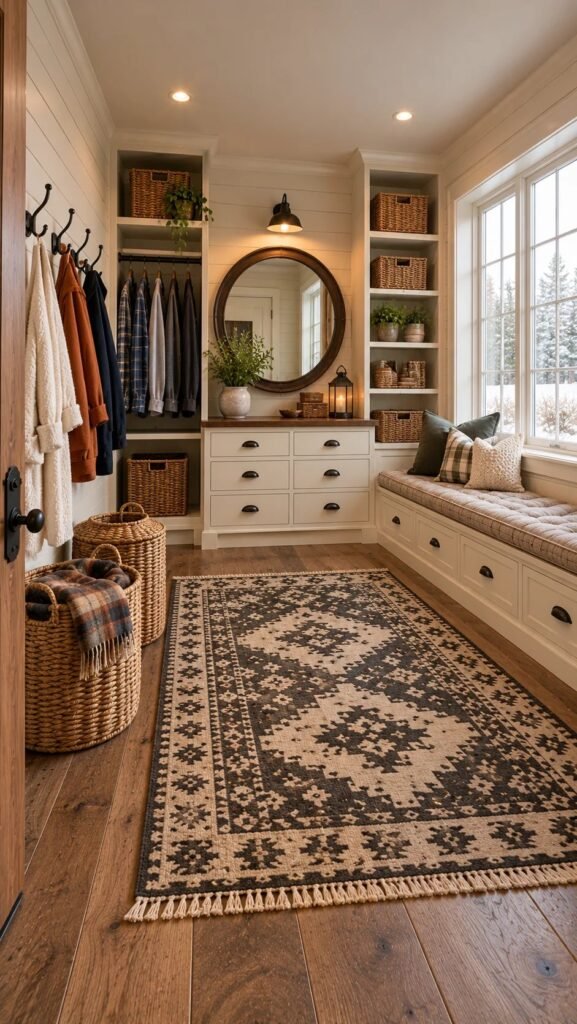
Some mudrooms try to do everything with a single bench and a row of hooks, and they fail by February. This white shiplap setup succeeds because it treats the wall as a full storage system, with a dedicated home for every category of clutter. The centerpiece is a proper dresser — six deep drawers that swallow hats, gloves, scarves, sunscreen, and all the small things that normally end up in a junk pile by the door. Flanking it on both sides, open shelves hold wicker baskets for bulkier overflow like tote bags and sports gear, while a hanging rod keeps everyday coats off the floor.
The round wood-framed mirror above the dresser is doing quiet double duty. It bounces daylight from the big window across the room, which makes a narrow space feel twice as wide, and it gives everyone a last glance before heading out. If your entryway feels dark or tight, a mirror is the cheapest renovation you will ever do — these wall mirror ideas show how much bigger a small room can look with the right placement. Below the window, the built-in seat hides four more drawers deep enough for shoes, so footwear never lives on the rug — and the dark flatweave rug hides winter salt and mud far better than a pale shag.
Steal this: Count your household’s daily items first — coats, bags, shoe pairs — then assign one drawer, hook, or basket per category before you buy a single piece of furniture.
Go Bold With a Two-Tone Palette That Hides Everyday Mess
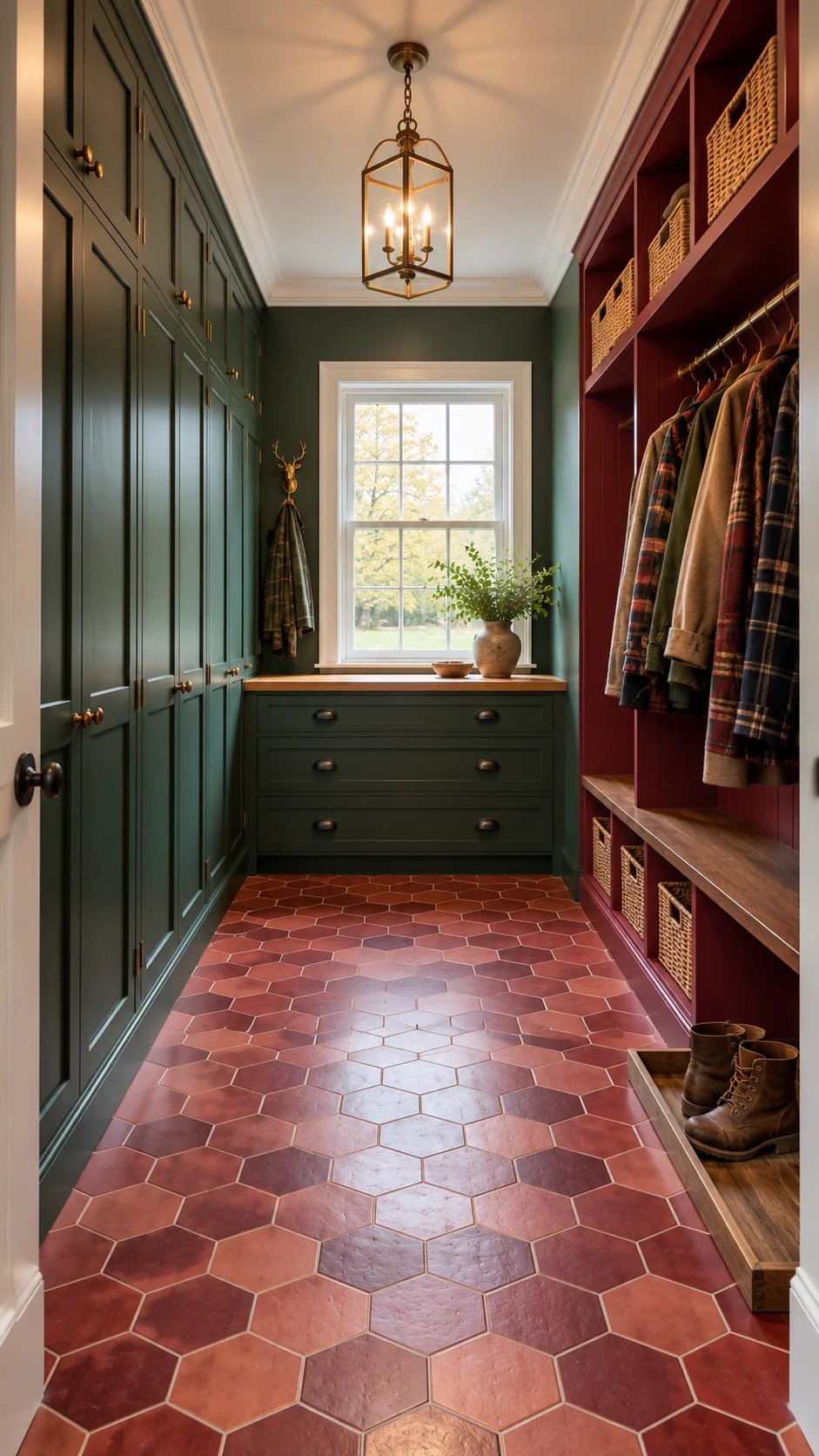
If your mudroom always looks messy no matter how often you tidy it, the problem might be that everything is visible. This narrow room solves that with a confident two-tone scheme: floor-to-ceiling forest green cabinets on one side swallow the visual chaos behind closed doors, while deep burgundy open shelving on the other keeps only the pretty, daily-use items in sight. The lesson is simple — closed storage for the ugly stuff, open storage for the things you actually want to see.
The color does more than look dramatic. Dark green cabinetry hides scuffs and fingerprints that would show on white within a week, which matters in a room where muddy hands touch everything. The open side is zoned just as carefully: a brass rod for the current week’s jackets, woven baskets up top for off-season accessories, and a low bench with a boot tray for wet footwear. Underfoot, terracotta hexagon tiles are the unsung hero — their warm, varied tones camouflage dirt between cleanings, and unlike wood, they don’t care about puddles. A brass lantern pendant and a stag-head hook add personality without taking up a single inch of storage space.
Steal this: Paint it dark. In a hardworking entry, deep cabinet colors hide wear and make the room feel intentional instead of utilitarian.
Float Your Storage to Keep a Small Entry Feeling Open
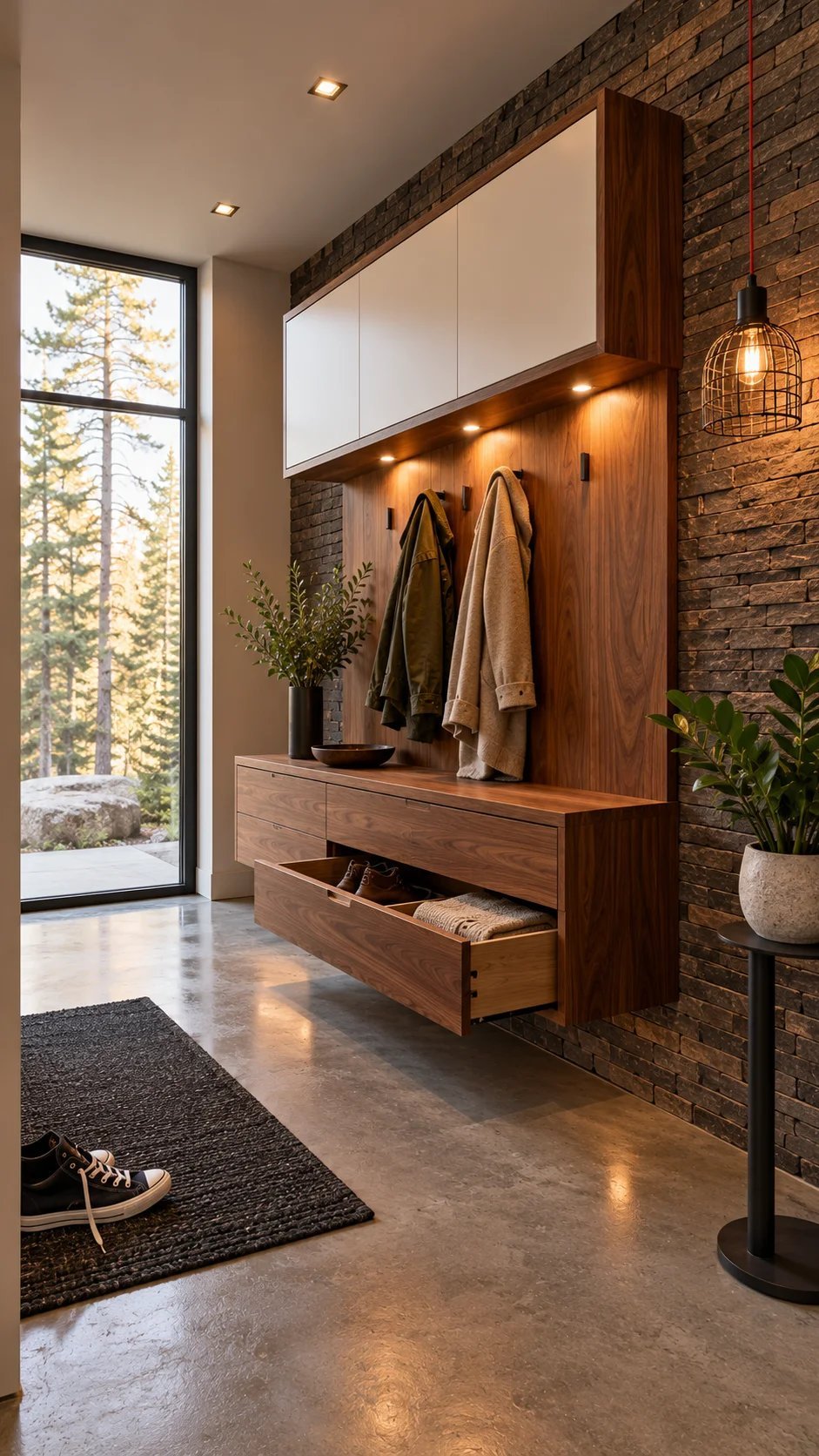
Small entryways suffocate when furniture sits on the floor and chops up the little square footage you have. This modern setup takes the opposite approach: a walnut console floats off the ground, wall-mounted, with a deep pull-out drawer for shoes and folded scarves. Because you can see the concrete floor running underneath it, the whole room reads as larger — and a robot vacuum glides straight under, a real plus in a gritty room.
Above the hooks, a run of white overhead cabinets captures the storage most entries waste: the dead air near the ceiling. That is where off-season gear belongs — beach towels in July, heavy scarves in January — in labeled bins you only touch twice a year. Under-cabinet LED strips wash the walnut hook panel in warm light, so the unit looks like custom millwork rather than a storage box, and the stone veneer accent wall behind it adds texture that flat drywall never could. The approach borrows heavily from pared-back Nordic design, where every piece earns its footprint; if that aesthetic speaks to you, these Scandinavian entryway ideas break down how simplicity and function share the same square feet.
Steal this: In a tight entry, mount at least one storage piece on the wall. Visible floor space is what makes a small room feel generous.
Hide an Entire Drop Zone Inside a Lighted Armoire
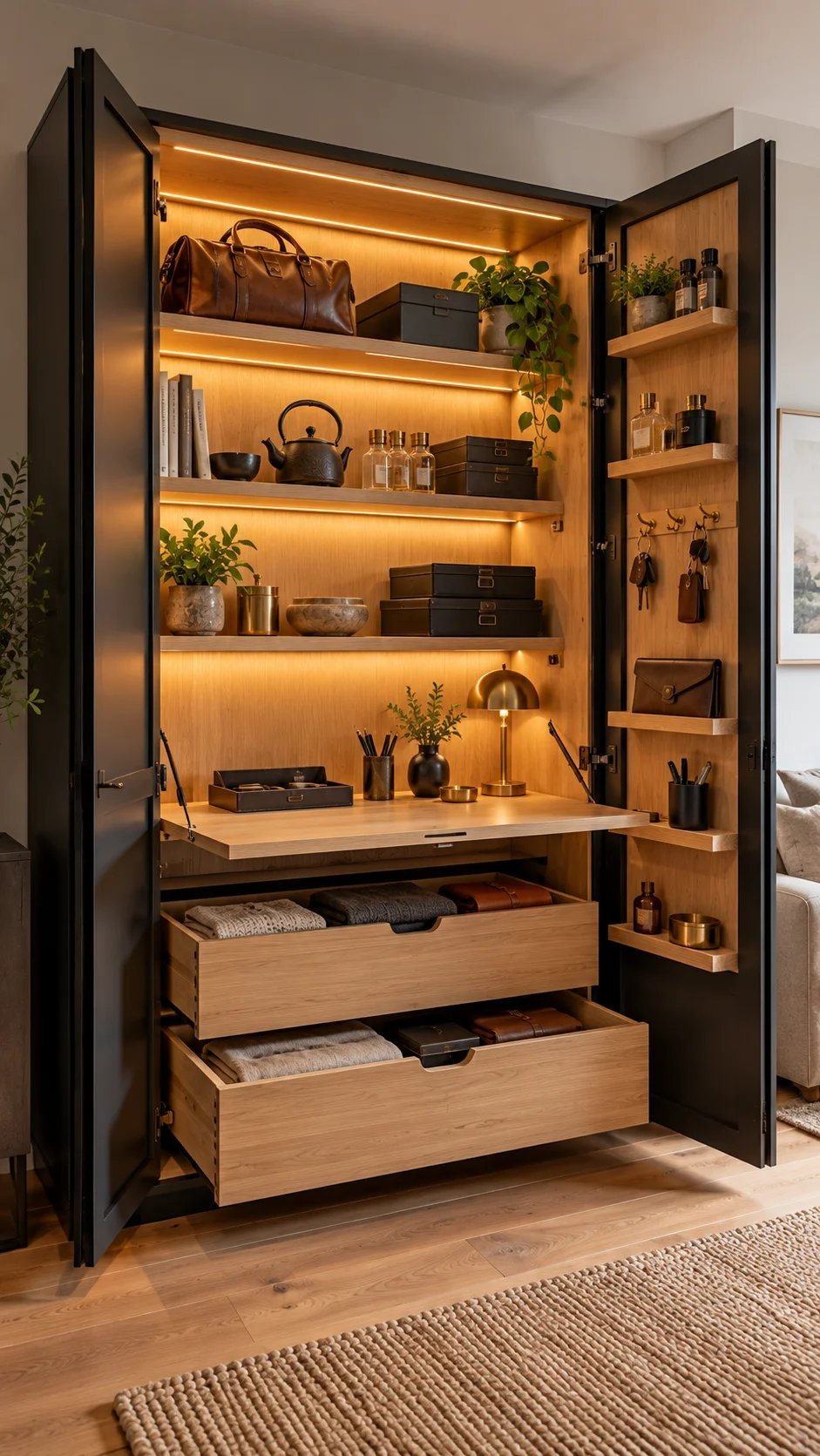
Not everyone can build custom cabinetry — renters, apartment dwellers, and anyone without a renovation budget need storage that arrives in one piece. This black armoire is the best argument for buying one great piece instead of five mediocre ones. Open the doors and LED strips light up a full command center: a fold-down desk for sorting mail and charging devices, shelves for bags and storage boxes, and two deep drawers for folded layers and accessories. Close the doors and the whole operation vanishes behind a handsome cabinet.
The inside of the doors works just as hard as the interior. Slim shelves hold sunglasses, small bottles, and a potted plant, while brass hooks keep keys, lanyards, and a slim wallet exactly where your hand expects them. That is the detail most drop zones miss: keys need a home at hand height, not in a bowl you have to dig through. Because the armoire is freestanding, it works in a hallway corner, a living room nook, or anywhere within a few steps of the front door.
Steal this: If you can’t build in, buy tall. One floor-to-ceiling armoire holds more than a bench, a shelf, and three baskets combined.
Build a Rustic Locker Wall Around a Timber Beam
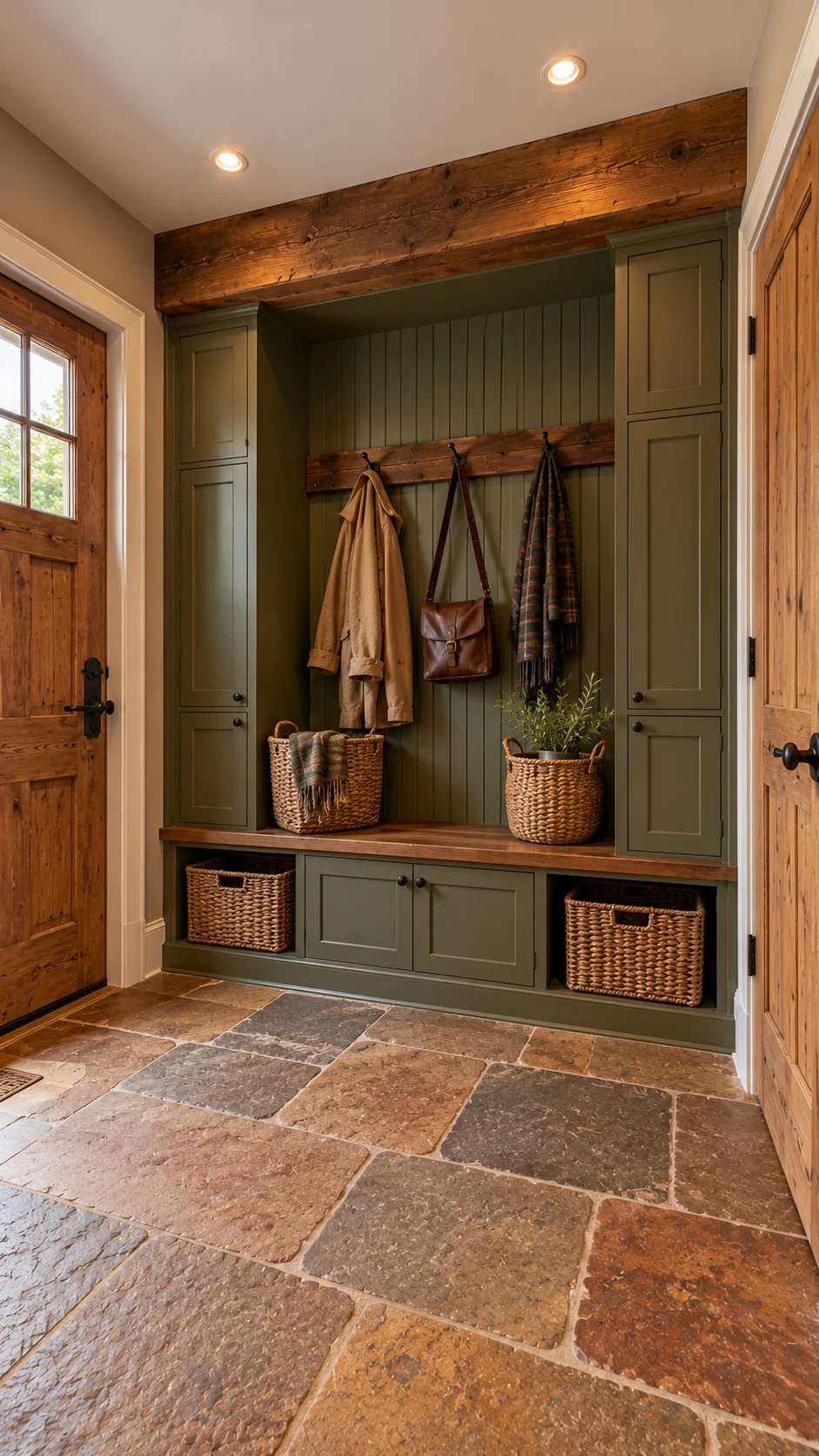
Farmhouse style gets dismissed as purely decorative, but this olive green locker wall is pure function dressed in work clothes. The backbone is a simple wooden peg rail with black iron hooks — the cheapest, toughest hanging system ever invented. Coats, a leather satchel, and a quilted jacket each get a hook, and because the rail is one continuous board, you can add or move hooks in minutes as kids grow and seasons change.
Flanking the hooks, tall cabinets hide the things guests shouldn’t see, while the bench below does triple duty: seating for pulling on boots, a surface for the baskets that hold throws and gloves, and open cubbies underneath for wicker baskets and tall rain boots. The rough timber beam overhead visually caps the unit, so the tall green cabinetry feels built-in rather than plopped against the wall. Stone-look floor tiles handle wet boots without complaint, their earthy rust-and-gray mix tying the green cabinetry to the wood tones. Woven baskets do the heavy lifting for texture here; layering natural fibers against painted wood is a trick worth borrowing, and these boho entryway ideas show how rattan and plants warm up even the most practical storage wall.
Steal this: A peg rail beats individual hooks. One board, evenly spaced pegs, and you have flexible hanging that adapts for years.
Master the Classic Hook-and-Cubby Formula
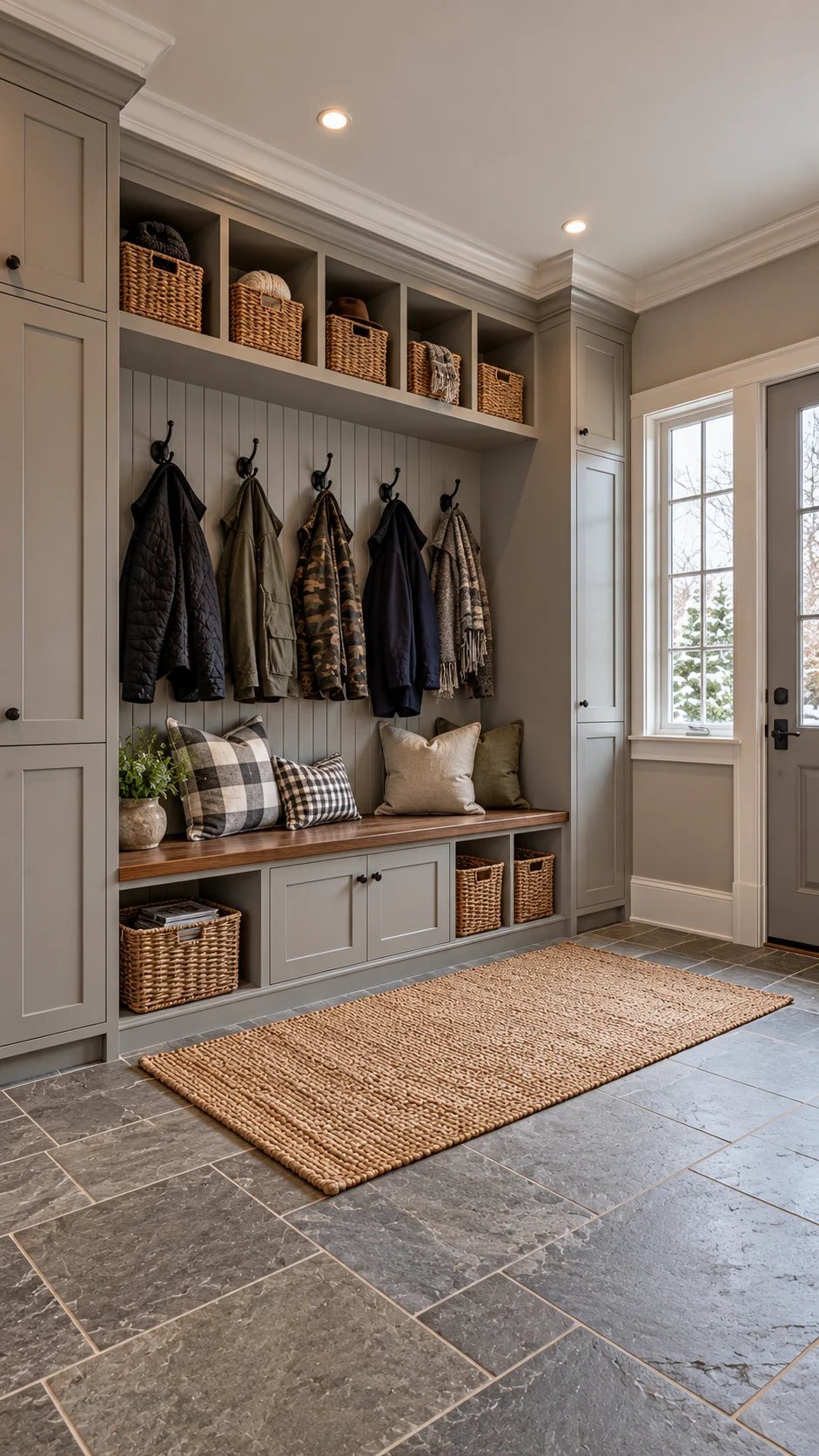
There is a reason the hook-and-cubby mudroom became a classic: when every slot is sized for real belongings, nothing beats it for a busy family. This gray built-in shows the formula executed properly. Five black hooks on a beadboard panel give each family member — plus one guest — a dedicated spot, which ends the daily argument about whose coat is on the floor. Above, five open cubbies hold wicker baskets that corral hats, mittens, and the random gear kids produce.
Below the bench, the storage splits smartly: closed cabinets in the middle hide cleaning supplies and the stuff you don’t want to look at, while open cubbies on the sides hold baskets for shoes. Tall cabinets flank the whole unit for brooms, mops, and the vacuum — the cleaning tools that serve this room should live in it, not three rooms away. The jute runner down the middle is a practical choice, not just a pretty one: natural fiber rugs shake out easily and don’t show every footprint the way a dark solid rug does. This is the setup to copy if you want proven, not experimental — measure your tallest boots and widest baskets, and size the cubbies around those numbers, not a catalog photo.
Steal this: One hook and one basket per person is the minimum. Guests and growth need a spare, so always build for one more than you have.
Pair Moody Cabinets With a Warm Wood Backdrop
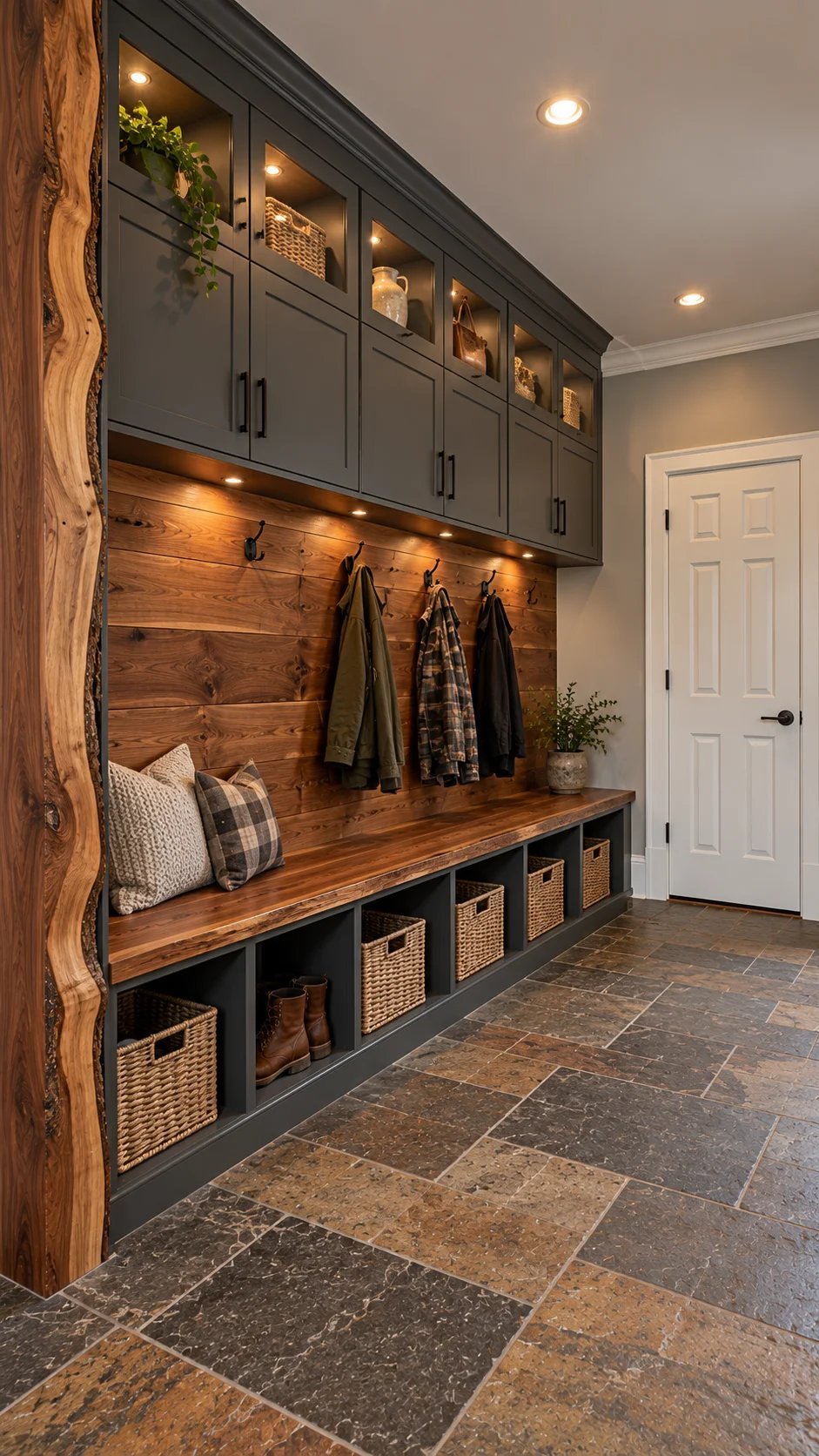
Dark cabinetry in a mudroom sounds risky until you see it balanced this well. Charcoal uppers run the length of the wall, but instead of feeling heavy, they are broken up by glass-front display cubbies with interior lighting — a place for woven baskets, a ceramic jug, and a leather bag to catch the eye. That lit display strip is the difference between storage that feels like a cave and storage that feels like a boutique. Below, a warm wood shiplap wall and a long matching bench keep the whole composition grounded and inviting.
The hooks on the wood panel hold the current rotation of jackets, while the bench’s open cubbies underneath take wicker baskets and a pair of boots. Notice how the baskets repeat: same material, same tone, all the way down the bench. That repetition is what keeps open storage from looking chaotic — when the containers match, the contents can be as messy as real life requires. Slate-look floor tiles in mixed earthy tones continue the warm-dark palette underfoot and shrug off wet shoes. Lighting carries a lot of weight in a moody room like this; layered fixtures that mix task light with warm accent glow change how the whole space feels after dark, as these industrial lighting ideas demonstrate across different rooms.
Steal this: If you go dark, light the inside. Interior cabinet lighting turns moody storage from gloomy to gallery-like.
Turn a Spare Hallway Into a Walk-In Dressing Room
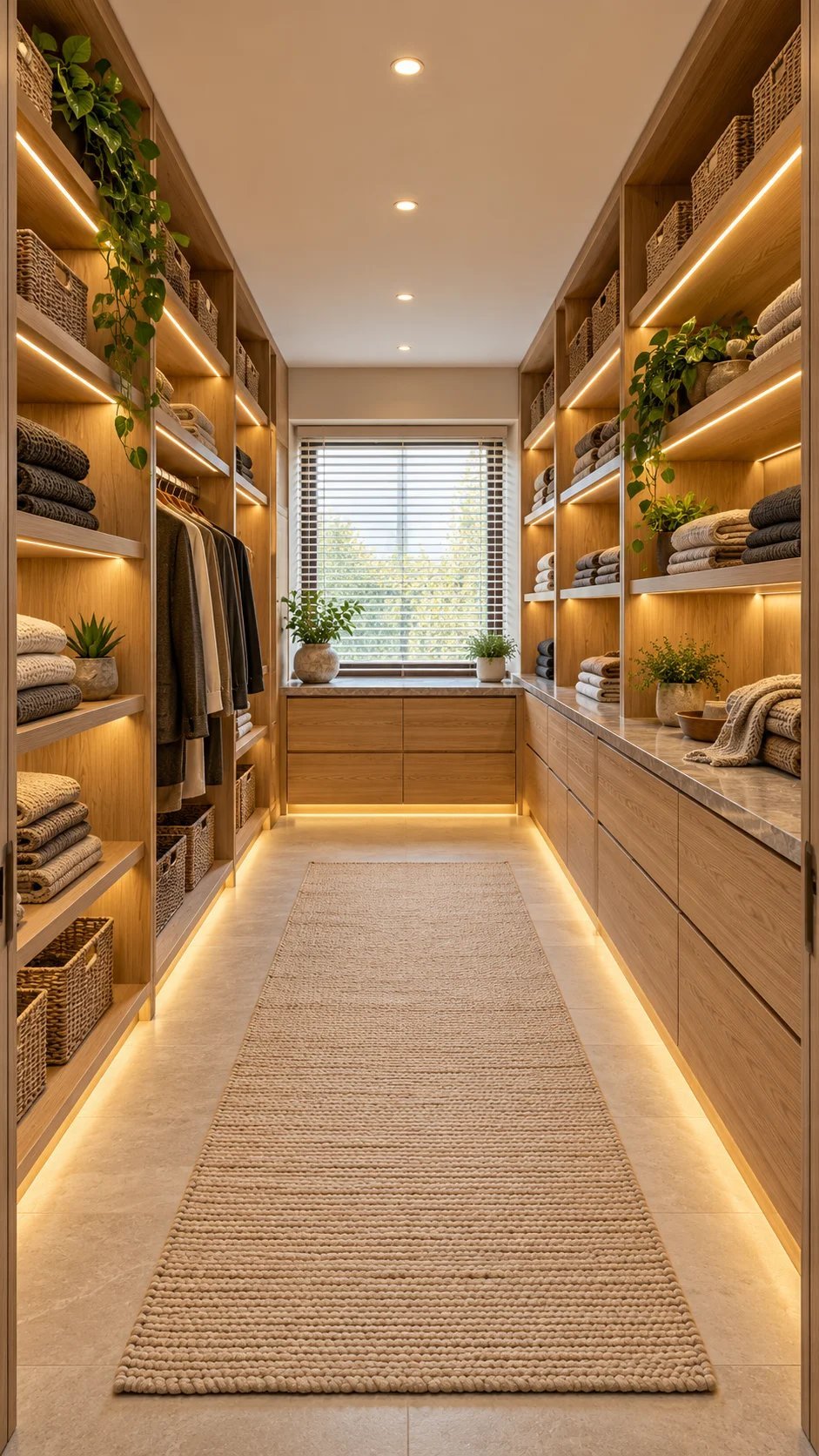
No mudroom? No problem — if you have a hallway, a wide landing, or the dead space outside a laundry room, you have a mudroom waiting to happen. This walk-in dressing hall lines both walls with floor-to-ceiling open shelving in warm wood, lit by LED strips tucked under every shelf. The lighting isn’t decoration; in a windowless hallway it is what makes the storage usable, so you can actually see the folded sweaters, stacked towels, and baskets instead of guessing in the gloom.
The layout borrows its logic from proper closets: hanging rods for coats and jackets on one side, folded storage on the other, drawers under the window for the small stuff, and baskets up high for the rarely touched. A long jute runner softens the tile underfoot and visually stretches the narrow space. Because everything is open, matching baskets and folded stacks keep it calm, while plants stop it feeling like a stockroom. This is the highest-capacity idea on this list, and it works precisely because hallways are usually wasted space. If the closet logic appeals to you, this breakdown of walk-in closet layouts shows what each arrangement gets right, and most of those lessons transfer directly to a hallway conversion.
Steal this: Audit your hallways. A 3-foot-wide passage with shelving on both sides stores more than most reach-in closets.
Keep It Effortless With a Sage Hall Tree and Baskets
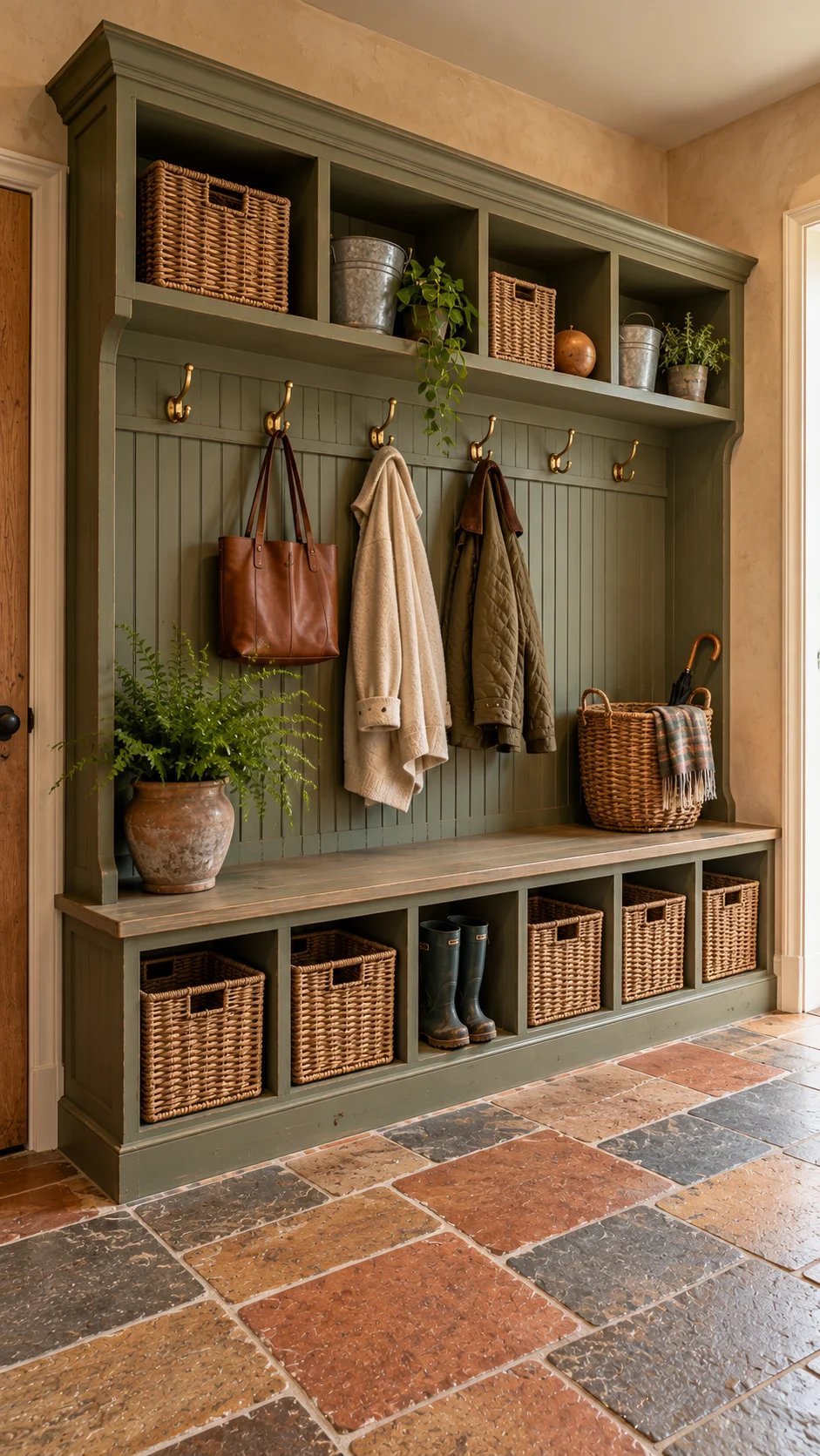
Sometimes the best storage is the kind you can buy on a Saturday and use by Sunday. This sage green hall tree is a single freestanding unit, no contractor required, and it covers every mudroom job: an open top shelf with baskets and plants for the pretty stuff, brass hooks for bags and coats at grab height, and a bench with five deep cubbies below. Two cubbies hold wicker baskets for accessories, one swallows a pair of tall rain boots upright, and the rest take everyday shoes.
The details are what elevate it past basic. Brass hooks against sage green look custom rather than flat-pack, the beadboard back panel adds cottage character, and the stone-look tile floor means wet boots can drip without a second thought. A big fern in a weathered pot softens the whole unit — greenery is the fastest way to make storage feel like decor. Because it’s freestanding, you can take it with you when you move, which makes it the smartest money on this list for renters. Shoe storage deserves its own strategy within the unit: boots need tall cubbies, sneakers need shallow ones, and a dedicated tray by the door catches the truly filthy pairs. For more ways to make footwear look intentional, these stylish shoe racks double as entryway decor instead of hiding in a closet.
Steal this: Measure your tallest boots before buying any hall tree. One cubby that fits them upright is worth more than three that don’t.
Treat the Mudroom Like a Boutique Dressing Lounge
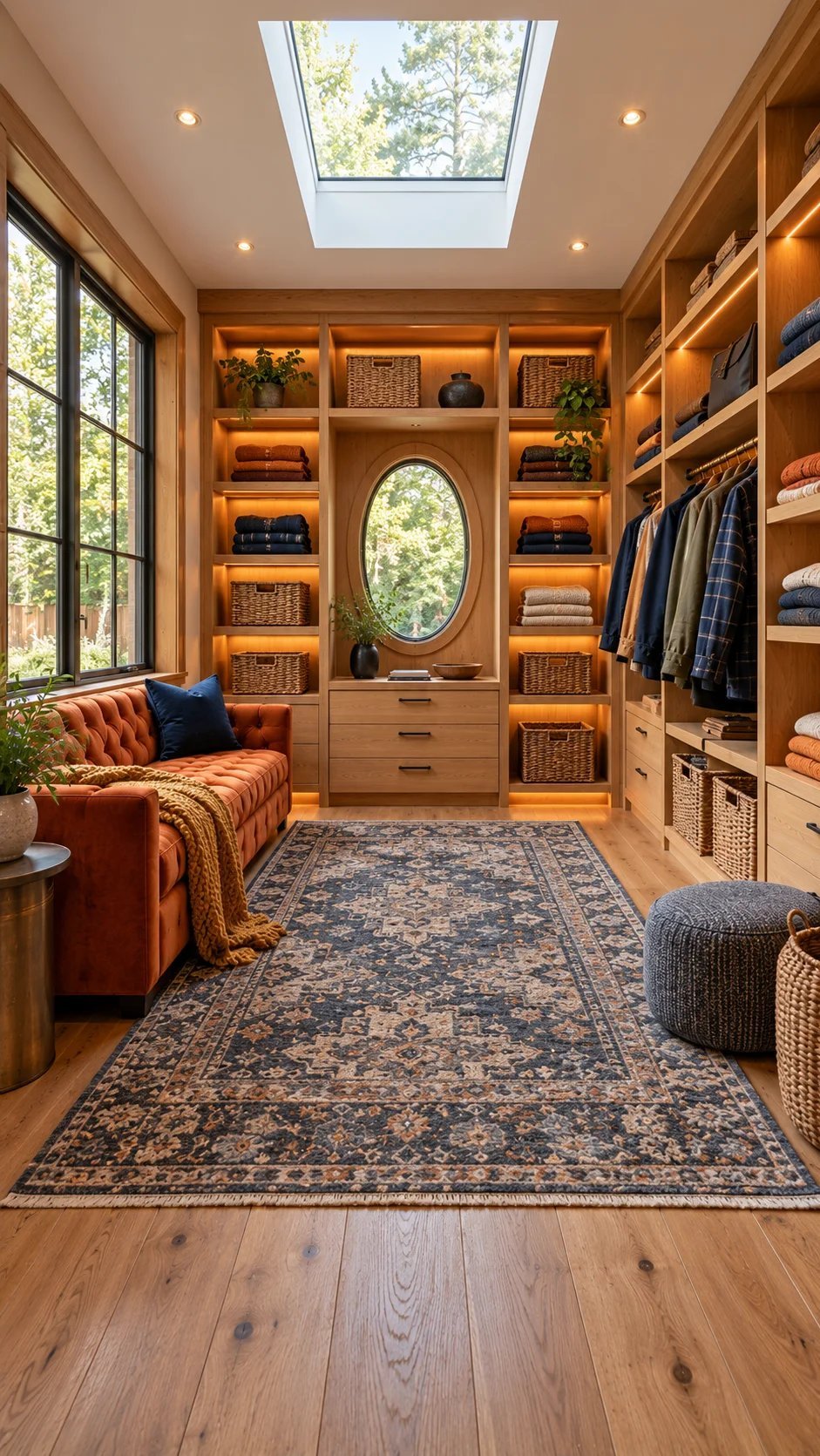
If you have the square footage, stop thinking of the mudroom as a utility closet and start thinking of it as the best-dressed room in the house. This walk-in wardrobe lounge commits fully: a skylight and an oval window flood the room with daylight, floor-to-ceiling built-ins with LED-lit shelves hold folded clothes and baskets, drawers handle the small things, and a hanging rail keeps jackets wrinkle-free. It stores everything a mudroom should — and then it adds the thing most mudrooms lack, which is a reason to linger.
That reason is the rust-orange tufted velvet sofa, and it is not frivolous. A real seat at proper height means actually sitting to pull on boots instead of hopping on one foot. The Persian-style rug warms up the wood floor and defines a sitting zone, while a chunky knit pouf and a woven basket keep the lounge feeling relaxed rather than retail. Plants on the shelves do the same job they do everywhere: they make a storage-heavy room feel alive. Smaller homes can borrow the transferable moves: daylight (even a sun tunnel helps), one comfortable seat, and lit storage interiors.
Steal this: Give the room one comfortable seat and real light. People maintain rooms they enjoy being in.
Frequently Asked Questions
How much mudroom storage does a family of four actually need?
Plan for one hook and one basket or cubby per person as the absolute minimum, then add one spare for guests and one for growth. Add a single shared drawer for the small communal stuff — sunscreen, spare masks, the dog’s leash — and a boot tray or washable rug by the door for wet days.
What is the best flooring for a mudroom?
Tile, slate, or quality luxury vinyl — anything that doesn’t care about water. Patterned or multitone floors hide dirt between cleanings far better than pale solids. Skip wall-to-wall carpet and untreated hardwood near the door.
How deep should a mudroom bench and cabinets be?
A comfortable bench seat is 16 to 18 inches deep. Shoe cubbies need at least 12 to 14 inches of depth; measure your largest shoes and add an inch. Tall cabinets for coats need a full 24 inches so hangers don’t jam the doors. When in doubt, build around your actual belongings, not standard dimensions.
Can I add mudroom storage without built-ins or a renovation?
Yes — a hall tree, a tall armoire, or a sturdy freestanding bench with baskets covers most of it. Wall-mounted hooks on a single board take an afternoon to install and hold the daily coats. The lighted armoire idea above proves one good furniture piece can replace an entire built-in wall.
How do I keep a small mudroom from feeling cramped?
Use light colors, add a mirror to bounce daylight, and float at least one storage piece off the floor so you see continuous flooring. Favor closed storage for visual calm, keep the floor clear of shoe piles with a boot tray, and don’t block the door swing — circulation space matters more than one extra cubby.
Conclusion
The mudroom earns its keep quietly: every hook that catches a coat, every drawer that swallows the small stuff, every basket that keeps shoes off the floor is one less mess in the rest of your house. You don’t need the biggest version of these ideas — you need the one that matches your home. A renter can start with a hall tree this weekend; a homeowner can plan the built-in wall over a season. Pick the setup that looks most like your life, steal its best move, and build from there. Your future self, arriving home with arms full of groceries on a rainy evening, will thank you.
About the Aesthetic Life Team
The Aesthetic Life Team is a group of home decor writers and stylists who test real layouts, materials, and storage ideas so you don’t have to learn the hard way. We photograph what actually works in lived-in homes and turn it into practical guides for yours.

