
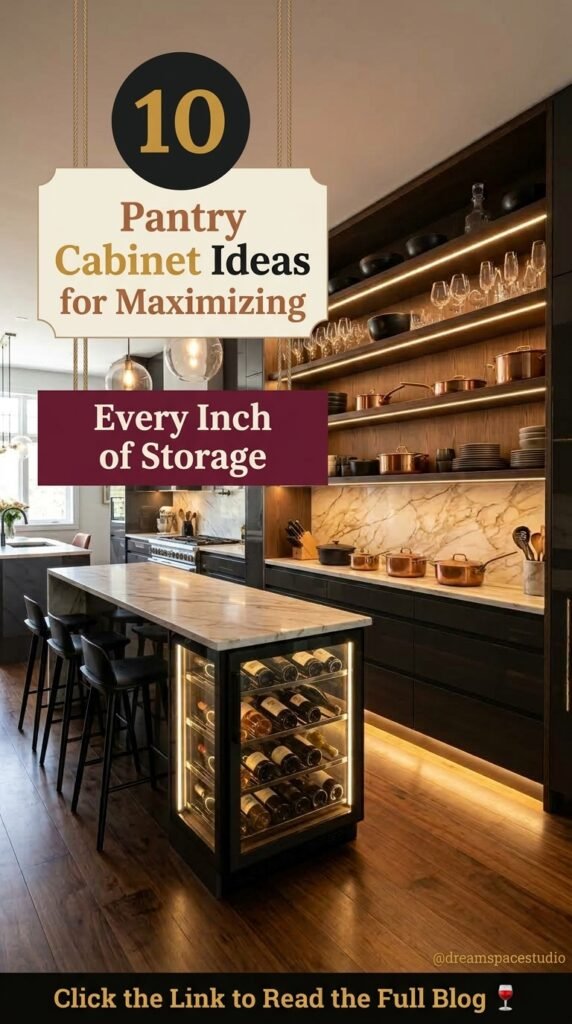
Ten pantries, ten different answers to the same question: where does everything actually go? Some hide behind flush cabinet fronts, some slide open on a barn-door track, and one used to be a piece of antique furniture with no kitchen ambitions at all. Walk through each one and you’ll come away knowing which storage approach fits your kitchen, your budget, and how you cook — not just which one photographs well.
Quick Overview
| Style | Mixed: Modern, Rustic, Traditional |
|---|---|
| Best For | Kitchens needing dedicated dry-goods and small-appliance storage |
| Budget | Low–High (varies by cabinet type) |
| Difficulty | DIY-friendly to full-renovation |
| Maintenance Level | Low–Medium |
A Cabinet That Runs Warm Wood Against Cool Gray Doors
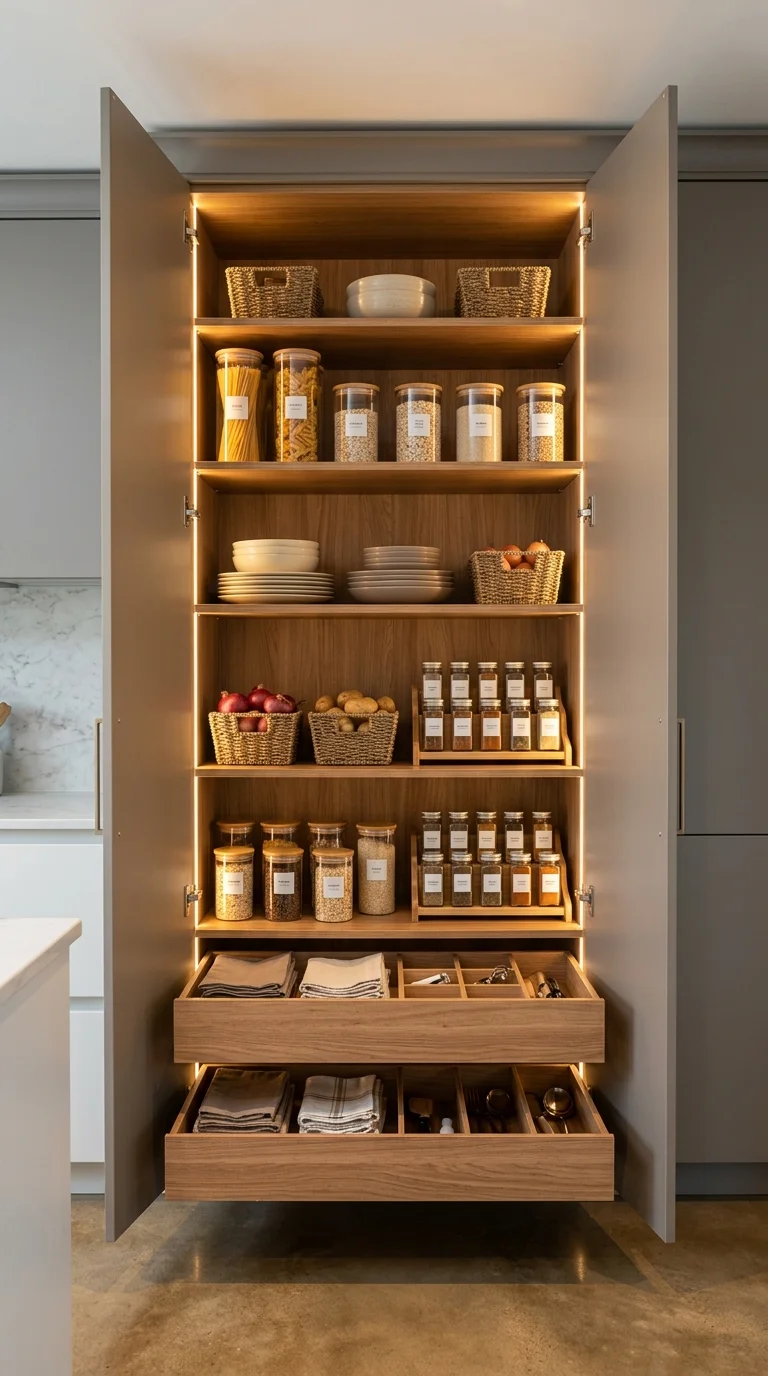
The single detail that separates this cabinet from every other one in this roundup is the temperature contrast: matte gray doors on the outside, warm walnut-toned shelving on the inside, lit edge-to-edge with a continuous LED strip. That contrast is what makes opening the doors feel like a small reveal rather than just access to storage.
This idea suits anyone renovating a kitchen where the main cabinetry is already a cool, neutral tone and needs one warmer, tactile moment. It works especially well in open-plan kitchens, where pantry doors close flush with the rest of the run until someone opens them. The strongest advantage is that uniform glass-jar labeling system — pasta, grains, and legumes all sit in matching canisters, which does more for the sense of order than the shelf layout itself. The compromise is upkeep: glass jars need refilling and relabeling as package sizes change, and that only stays tidy with real discipline. For a deeper look at what actually earns a pantry its keep, this practical look at what separates a genuinely functional pantry from one that just gets cluttered is worth a read. To simplify on a smaller budget, skip custom millwork and add a plug-in LED puck light plus matching jars from any home store.
Where This Cabinet Loses Its Polish
- Mismatched jar sizes creeping in over time
- Labels left blank “for now” and never finished
- Baskets on upper shelves that are too deep to see into
- Drawer dividers sized for cutlery but used for loose utensils instead
A Symmetrical Split That Turns One Cabinet Into Two
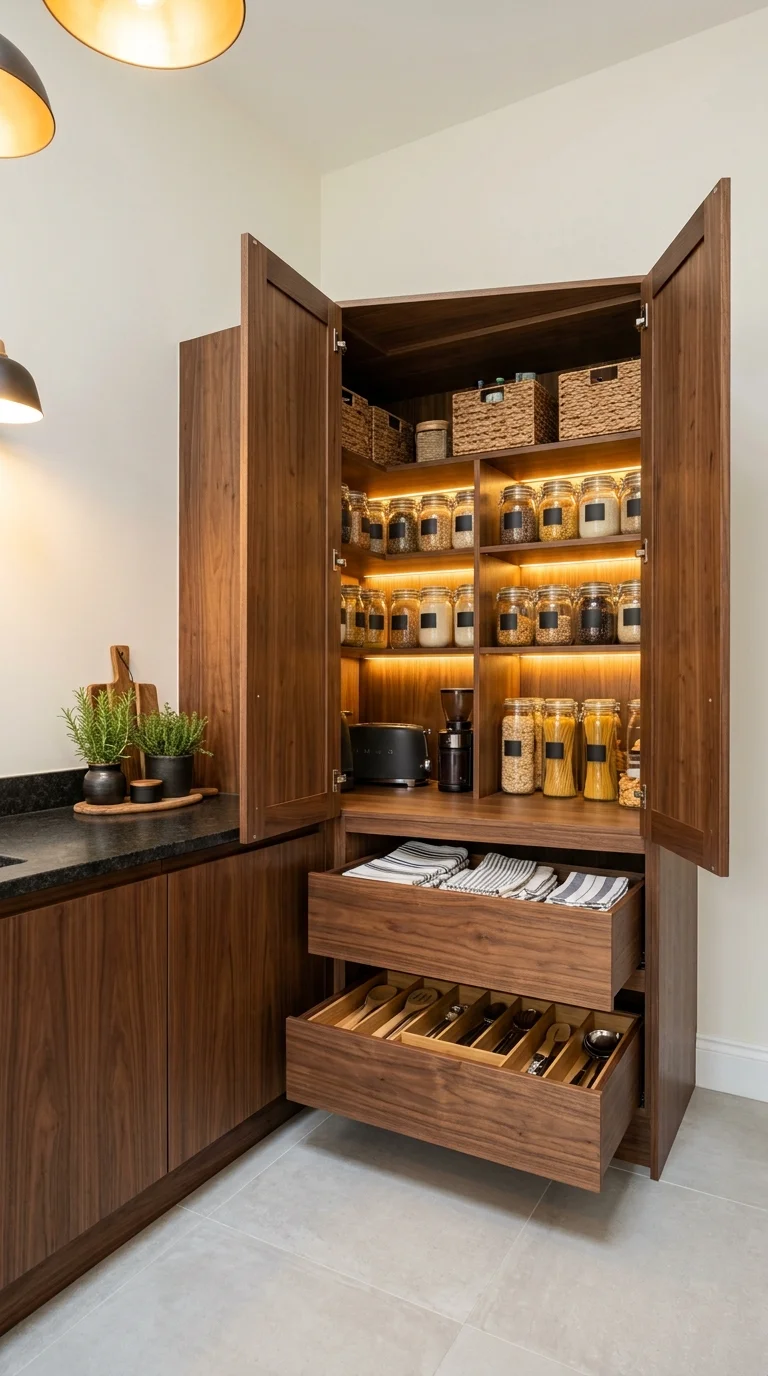
Here the defining move is structural, not decorative: a center divider splits the cabinet into two mirrored columns, each shelved and lit independently. That symmetry is doing more work than the dark walnut finish or the black label tags — it’s the reason the whole thing reads as “designed” rather than “installed.”
This layout rewards households that divide food storage by category — baking on one side, everyday staples on the other — rather than one continuous run of shelving. It suits a kitchen with a strong, moody material palette already in play, since the deep wood tone and black hardware need a room that can hold that weight. One reason the black label tags feel intentional is that they repeat at a consistent size on every jar; a few mismatched labels would likely loosen that resolved feeling. The compromise is flexibility — a hard center divider means you can’t borrow width from one side when a category outgrows its space. Recreating this on a budget means staining an existing cabinet interior in the same dark tone and adding a simple center shelf divider rather than commissioning built-in millwork.
Recommended Materials: Dark walnut veneer, blackened brass jar clips, woven baskets, warm LED tape
Main Colors: Espresso Walnut, Matte Black, Warm Amber (lighting)
Open Shelving Built Around a Wine Cooler Instead of a Door
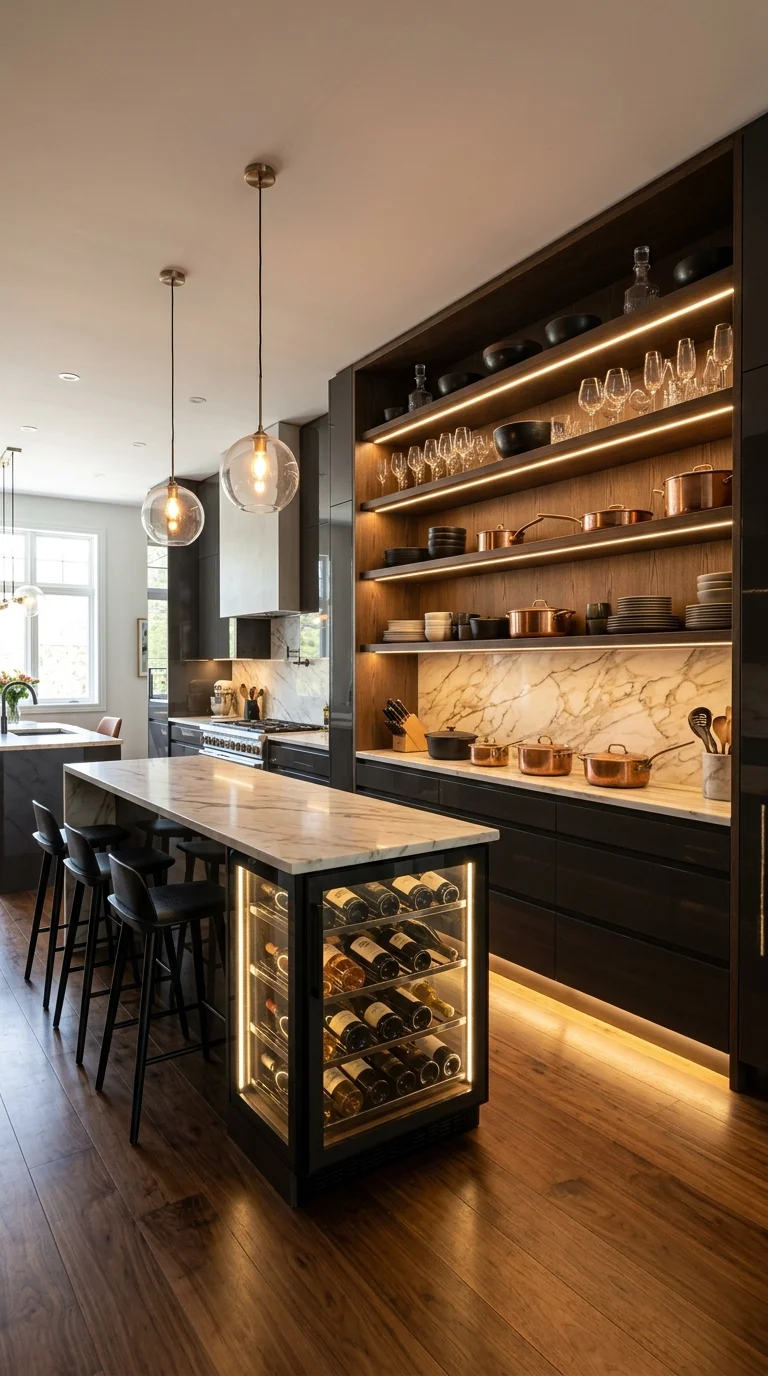
This isn’t a cabinet with doors at all — it’s fully open shelving paired with a refrigerated wine cooler built into the island itself, and that combination is what makes it stand apart from every enclosed pantry in this article. Nothing here is hidden; the copper cookware and stemware are the display.
Choose this direction if you enjoy having cookware on view and don’t mind dusting open shelves regularly — it’s a poor match for anyone who wants storage to disappear. It suits entertaining-focused kitchens with an island large enough to absorb a cooler without crowding the walkway, since choosing the right countertop material becomes especially important when that surface has to survive both cooking prep and bar service. The lighting is the strongest asset: a thin LED strip under each shelf edge makes copper and glass genuinely glow after dark. The tradeoff is exposure — everything here collects grease and dust faster than anything behind a door, and copper needs periodic polishing to keep that warm glow instead of dulling to brown. Skip the built-in cooler on a tighter budget and get most of the effect with under-shelf LED strips and a freestanding wine rack.
A Grid of Small Cubbies Instead of Long Open Shelves
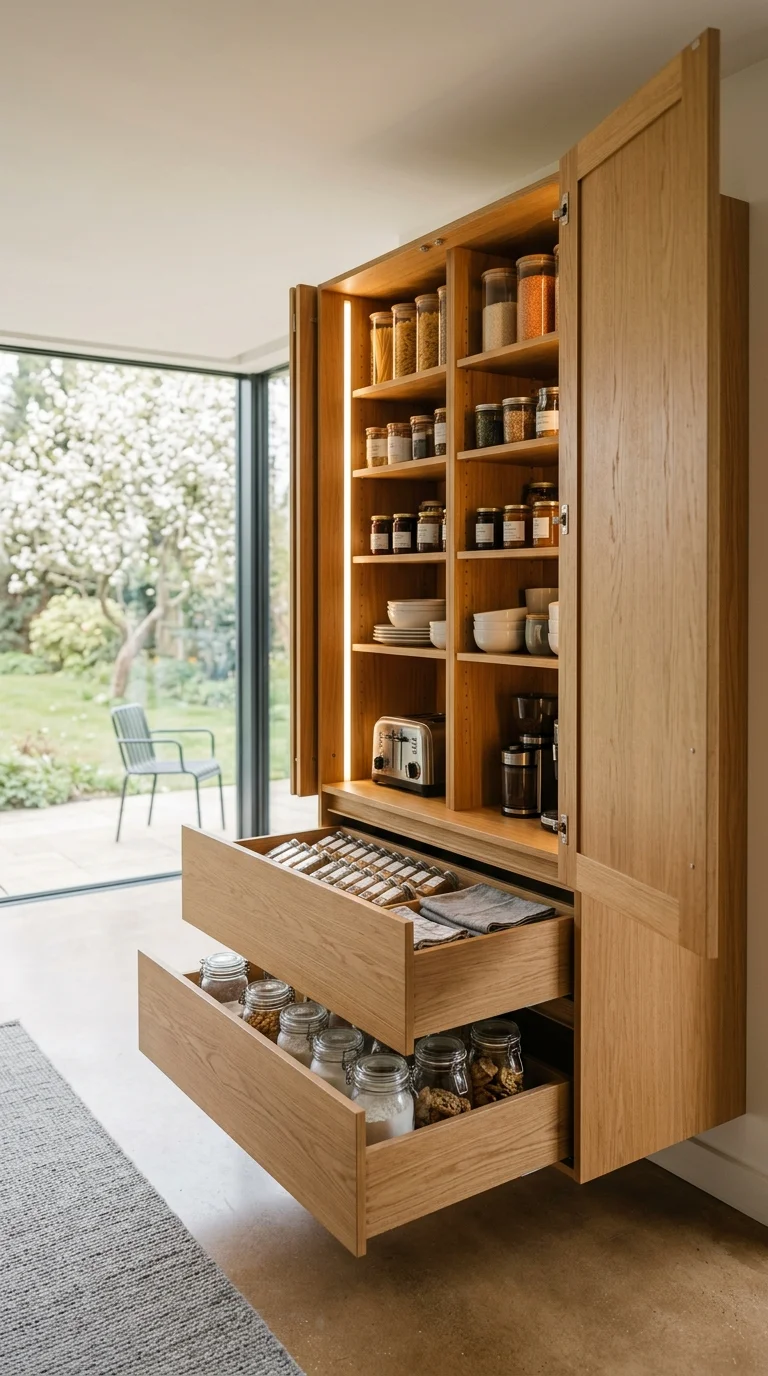
Where most pantries in this list use long horizontal shelves, this one is broken into a grid of individual square compartments — a layout choice that changes how you actually use the space, not just how it looks. Each cubby holds its own small category, so nothing has room to spread out or topple.
This suits someone who struggles to keep long shelves organized and does better with a forced structure limiting how much can pile up in one spot. It’s a strong option for bright, light-oak kitchens with a garden or window view nearby, since the pale wood reflects natural light rather than absorbing it. The same compartment logic used in well-planned walk-in closets translates surprisingly well here. The biggest advantage is that a grid this small makes it nearly impossible to lose track of what’s running low. The compromise is capacity: individual cubbies waste more shelf edge to dividers than open shelving does. The pull-out drawers below extend that same logic — spice jars sit flat and visible from above rather than lined up at eye level. A simplified budget version is a shallow shelf with inexpensive drawer-divider trays turned on their sides.
The Most Common Mistake With a Cubby Layout
- Sizing compartments before measuring your actual jars and boxes
- Using open cubbies for items that need airtight sealing
- Skipping labels because “you can see what’s inside” — until stock rotates
- Painting the interior a color too dark for the small compartments to read clearly
A Matte Black Pantry Built Around Wire Baskets
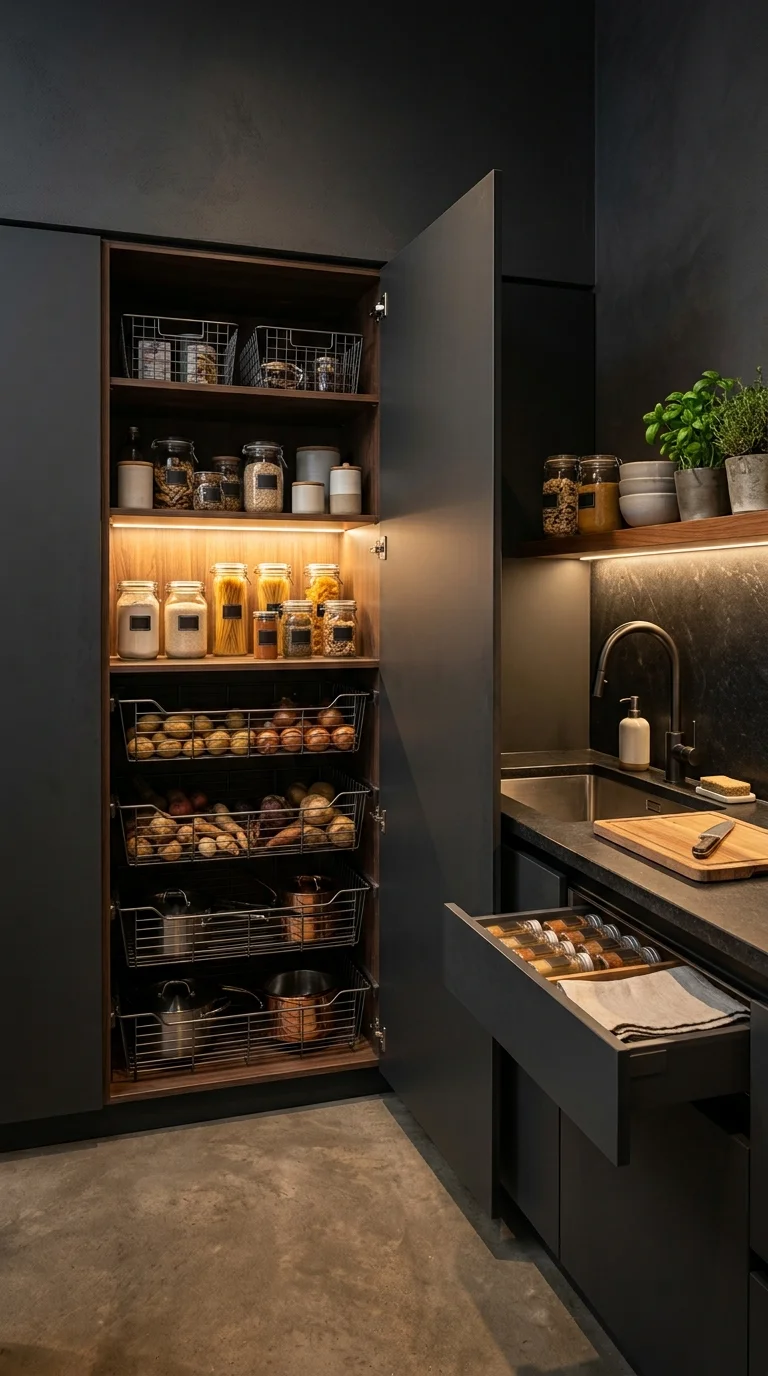
Every finish here is matte black — walls, cabinetry, countertops — which makes the wire mesh pull-out baskets the one element allowed to visually stand out. Those wire baskets aren’t just storage; against a black backdrop, they’re the entire personality of the room.
This is a bold, editorial choice best suited to a design-forward household comfortable with a moody kitchen long-term. It’s not the right pick for anyone leaning toward a bright, airy kitchen, since black surfaces show water spots and dust more visibly than lighter finishes. The wire baskets earn their place functionally, too — mesh sides let air circulate around onions and potatoes, extending how long produce stays good compared to a sealed drawer. If a full matte-black renovation feels ambitious, a maximalist kitchen doesn’t require going this dark to make a statement, and a single black pantry wall can deliver similar impact for less. Worth naming honestly: matte black scratches and shows fingerprints more than most cabinet colors, so this suits a household willing to wipe things down often.
A Refrigerated Cabinet With a Brass Lattice Front
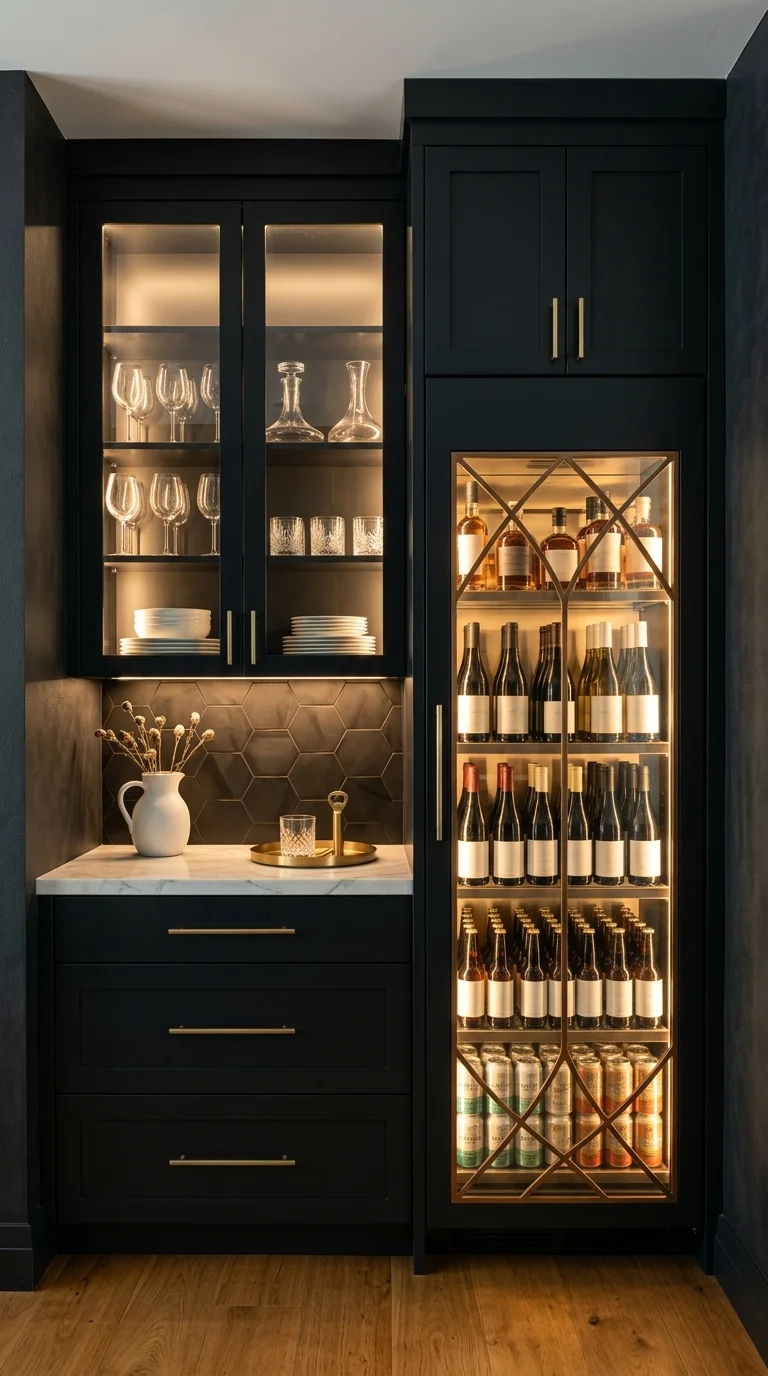
The decorative brass cross-hatch overlay on the glass refrigerator door is what makes this piece unmistakable — it turns a functional beverage fridge into something closer to a piece of furniture, paired with a hexagonal bronze-toned tile backsplash that few other kitchens in this set attempt.
Worth the Investment?
A built-in, glass-front beverage refrigerator with a custom brass overlay is one of the more expensive additions on this list, and it’s worth it specifically for households that entertain often enough to justify a dedicated, always-visible drinks display. For a household that rarely hosts, that budget is likely better spent elsewhere in the kitchen — the brass detailing and hexagon tile are what make this feel premium rather than the appliance itself. If entertaining is a regular part of your routine, this is one of the few upgrades on this list that pays back in actual daily use, not just resale appeal.
Anyone drawn to this look but not ready for a full refrigerated build-out should look at how a simpler home bar corner can deliver a similar sense of occasion — turning an underused corner into a proper entertaining space doesn’t require a refrigerated cabinet at all, just the right shelving and lighting choices.
Best Lighting: Warm interior LED behind the glass door, paired with a dimmable pendant or sconce above the counter to keep the metallic finishes from reading cold.
Open Shelves That Skip Doors Entirely
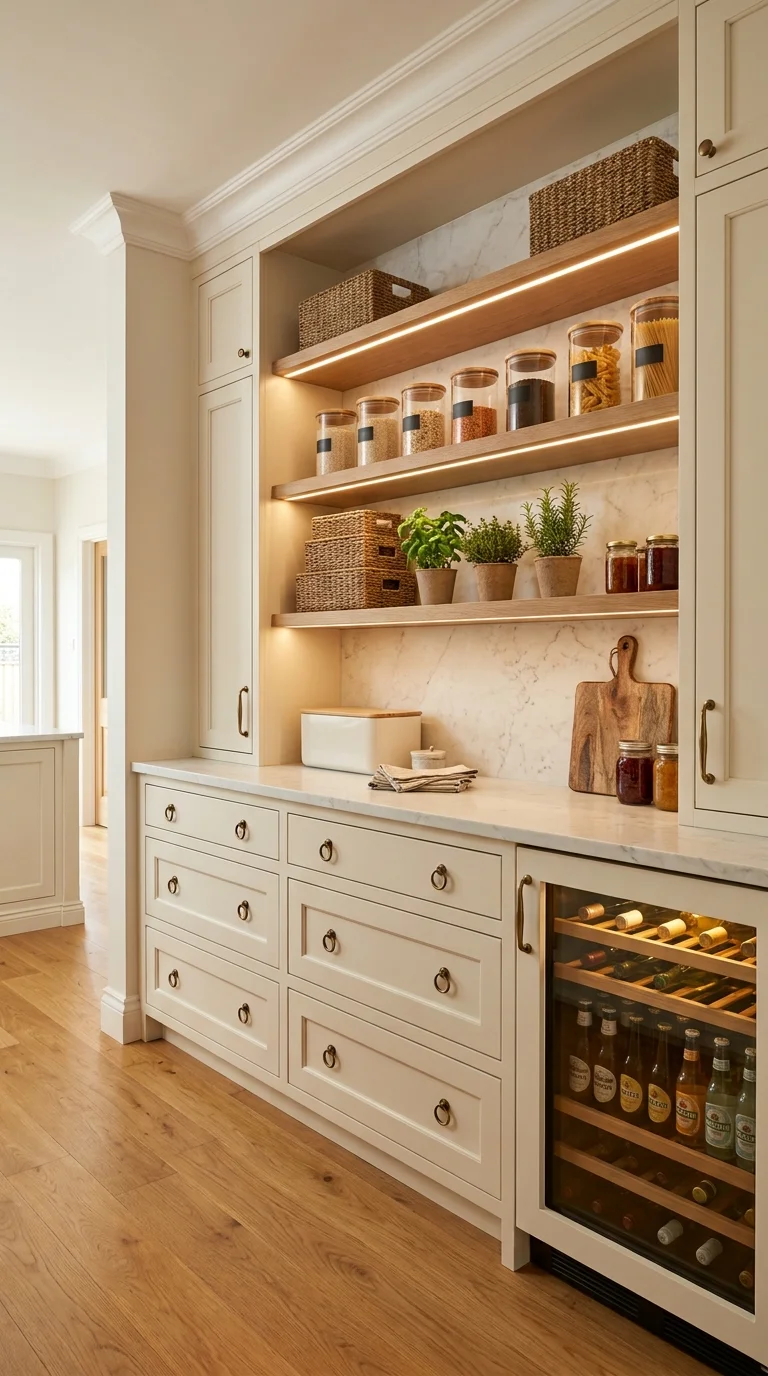
Unlike the closed cabinets elsewhere in this set, this storage wall has no doors at all — just floating shelves lit from underneath, set against a full marble slab backsplash, with a small beverage fridge tucked into the cabinetry below.
This suits a kitchen where the pantry contents themselves are attractive enough to double as decor — matching canisters, wicker baskets, a few potted herbs — and where dusting exposed surfaces regularly isn’t a bother. It’s a poor fit for anyone storing loose bags or mismatched packaging, since open shelving puts all of that on display. A small-footprint coffee or drinks bar shows how much function a compact appliance nook adds without needing full pantry depth. The strongest advantage is how airy the wall feels compared to a closed cabinet — cream tones, marble, and warm wood keep it feeling like part of the room rather than storage bolted on. The tradeoff is exposure to grease and steam, which settles faster than behind a door.
A Sliding Barn Door Instead of Hinged Cabinet Doors
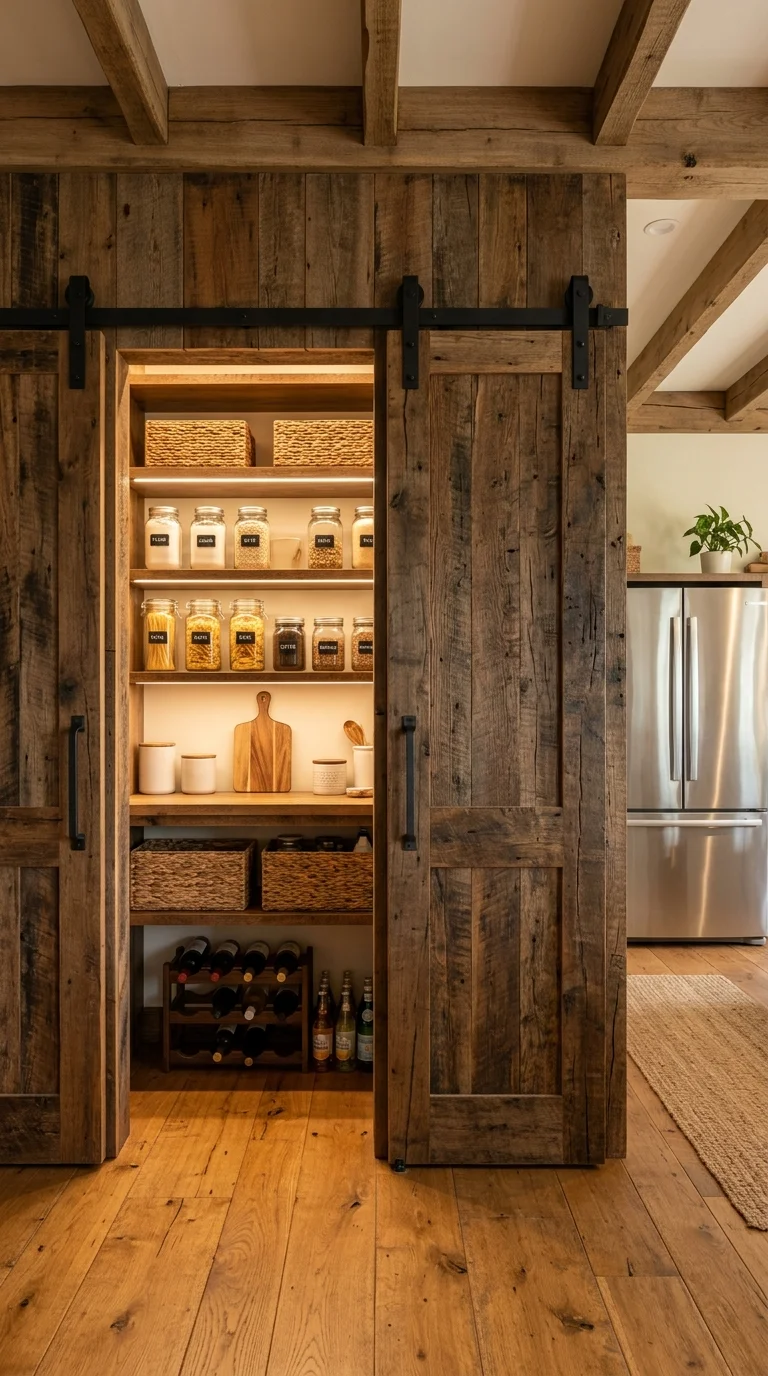
The sliding barn-door track is the single detail that sets this pantry apart — instead of hinged doors that swing into the kitchen floor space, reclaimed wood panels glide sideways on exposed black hardware, which also happens to fit the exposed-beam ceiling in the room beyond.
This is the right call for a kitchen tight on floor clearance, where a swinging door would compete with foot traffic near the stove or island. It’s also a natural fit for anyone committed to a farmhouse palette, since reclaimed wood this rough would look out of place against sleek modern cabinetry. If sage green cabinetry paired with natural wood tones is part of your plan elsewhere, this reclaimed-wood language extends naturally to a pantry entrance. The compromise: sliding doors need clear wall run on both sides of the opening, which a tight galley kitchen may not have.
Where a Barn-Door Pantry Falls Apart
- Installing the track without confirming wall clearance on both sides
- Mixing new “distressed” wood with genuinely reclaimed wood in the same doors
- Skipping a floor guide, which lets heavy doors swing and rattle
- Forgetting an interior light source since the doors block ambient kitchen light
A Cabinet Front That Disappears Into the Wall
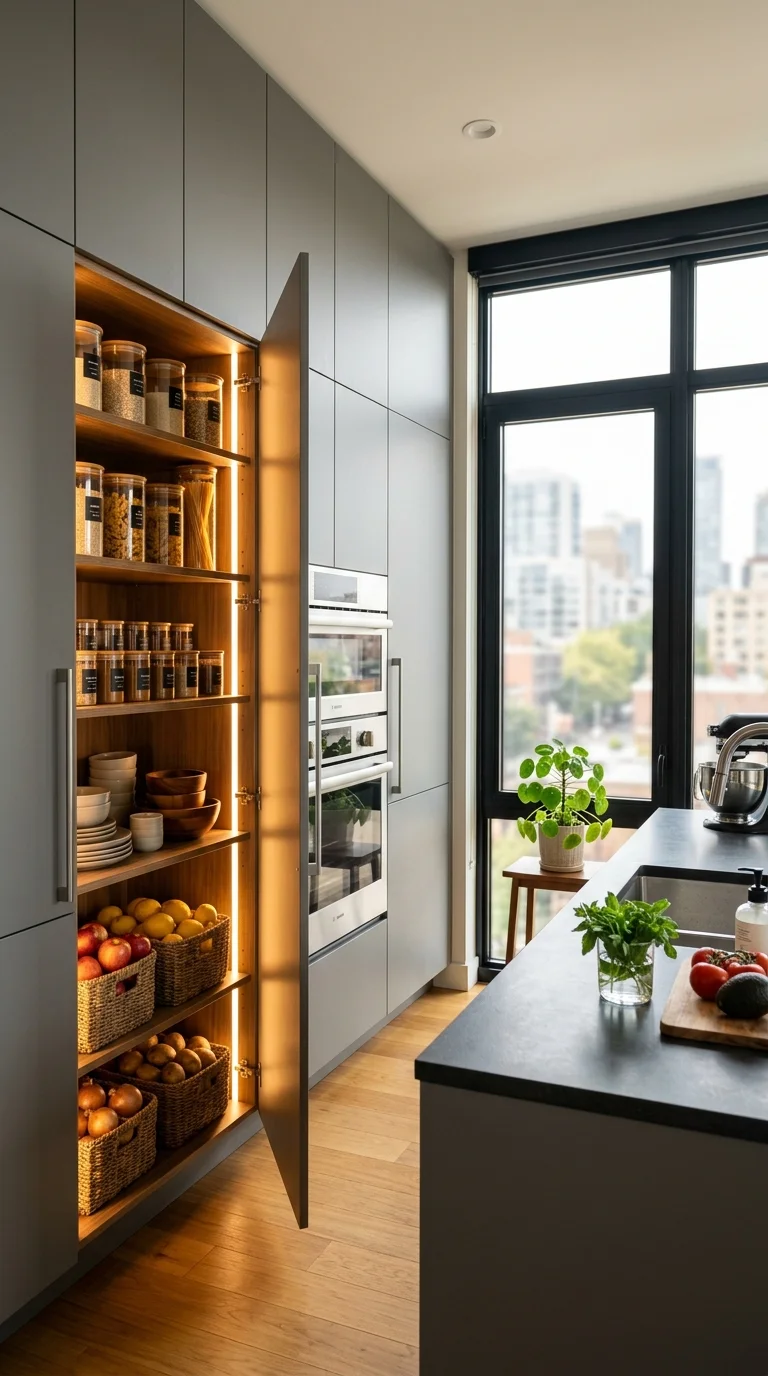
What makes this pantry different from every other one here is how hard it works to not look like a pantry at all — the door sits flush with a full wall of matching gray cabinetry, handle and all, so from a few feet away the storage is essentially invisible.
This is the strongest option for small or open-plan apartments where a visually “busy” wall would compete with the rest of the room — the flush front keeps it reading as one clean surface rather than a stack of separate cabinets. It particularly suits city apartments with a view worth protecting, since nothing pulls focus from a window like the skyline here. The advantage is purely spatial: a kitchen this streamlined feels larger than its actual footage. The compromise is that flush, handle-integrated cabinetry costs more per linear foot, since reveal gaps and hinges must be precision-fitted to disappear convincingly. A simplified rental-friendly version is slab-front cabinets in a single matching color, without the fully flush integration.
Recommended Materials: Matte lacquer or laminate slab fronts, integrated push-to-open hardware, walnut interior shelving
Main Colors: Warm Gray, Walnut, Soft White
An Antique Armoire Repurposed as a Pantry
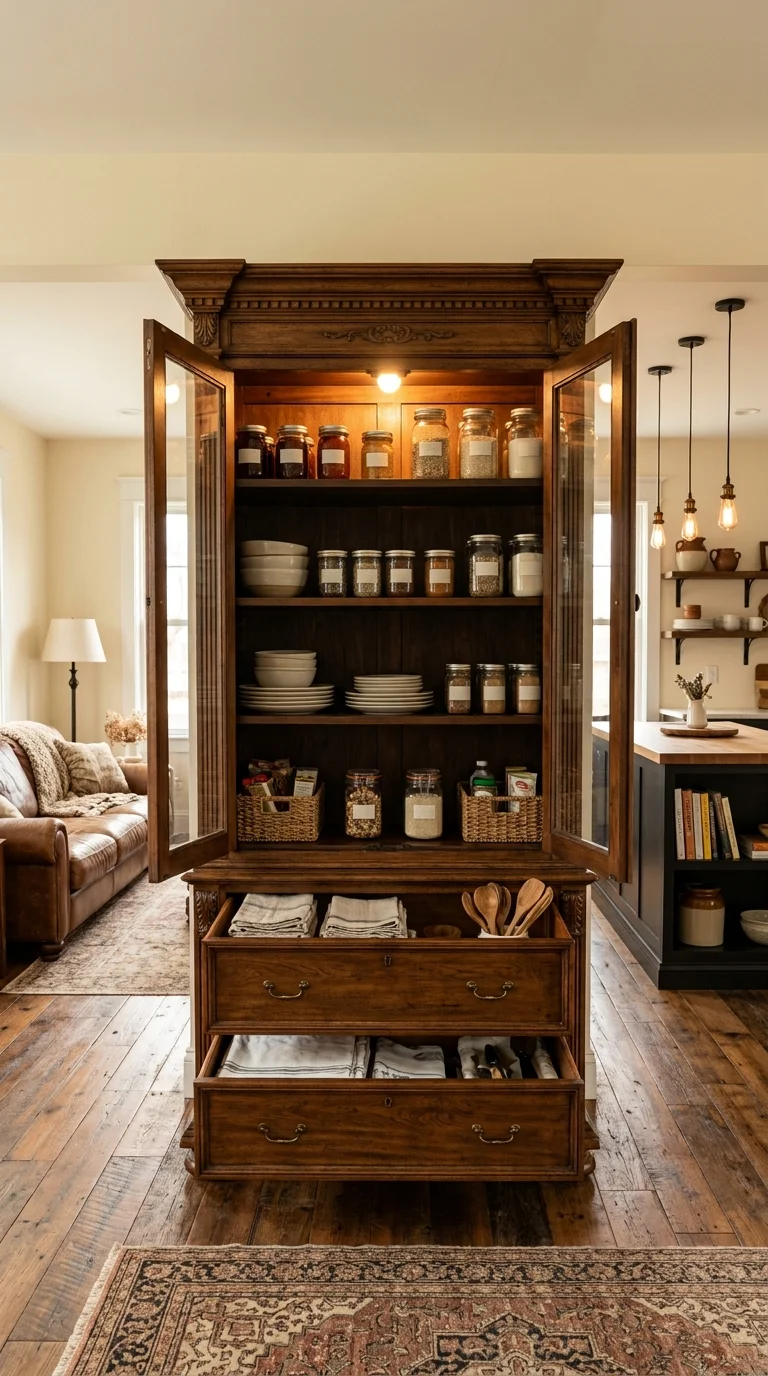
Every other pantry in this article is built in; this one is freestanding antique furniture — a carved wood armoire with glass doors and a scrolled crown, doing pantry duty in a farmhouse living space rather than inside the kitchen itself.
This idea belongs to anyone with an open floor plan where the kitchen and living area share sightlines, and who already owns (or can source secondhand) a piece of furniture with real character. It’s an excellent renter-friendly option, since nothing about it requires permanent installation. The strongest advantage is warmth: carved wood and glass-front doors give food storage a genuine sense of history that built-in cabinetry can’t fake. The compromise is capacity and climate control — an antique piece wasn’t engineered for kitchen humidity or heavy jar weight, so heavier items need reinforced shelf supports before loading in.
Keeping Any of These Pantries Working Once the Styling Is Done
- Recheck jar levels weekly, not just when something runs out mid-recipe, so refilling happens on your schedule rather than during dinner prep
- Wipe wire baskets and open shelves at least every two weeks, since produce and open storage collect dust and residue faster than closed cabinetry
- Test LED strips seasonally — under-shelf lighting run continuously in a warm kitchen has a shorter lifespan than most people expect
- Group by how often you reach for it, not just by food category, so the most-used staples sit at the front of whichever storage style you choose
Who Should Choose This Style?
- Best for homeowners who cook often enough that visible, organized storage genuinely speeds up daily prep
- Best for open-plan kitchens where pantry doors need to blend into a larger cabinetry wall rather than stand apart
- Best for households willing to maintain a labeling or jar system, since the payoff depends on upkeep
- Not ideal for anyone who wants zero-maintenance storage, since every version here — from open shelving to wire baskets — asks for some regular tidying
Budget Summary
| Budget | Expectation |
|---|---|
| Low | Drawer-organizer inserts, matching jars from a home store, plug-in LED puck lights |
| Medium | Custom shelf dividers, wire pull-out baskets, a small under-counter beverage fridge |
| Premium | Flush integrated cabinetry, reclaimed-wood barn doors, a refrigerated glass-front cabinet with brass detailing |
FAQ
How deep should a pantry cabinet be?
Most functional pantry cabinets run 12 to 16 inches deep for shelving that holds standard cans and jars without wasting space behind them; anything deeper tends to hide items at the back.
Is open shelving or a closed cabinet better for a pantry?
Open shelving suits kitchens where the stored items themselves look tidy and matched, while closed cabinets are the safer choice for anyone storing mismatched packaging or wanting dust and grease kept out of sight.
Do LED strip lights inside a pantry need a hardwired connection?
No — most under-shelf LED strips used in these builds run on low-voltage plug-in transformers or battery packs, which makes them realistic to add to an existing cabinet without an electrician.
Are wire pull-out baskets better than solid drawers for produce?
Wire baskets allow airflow around onions, potatoes, and other produce that needs to breathe, while solid drawers are better suited to packaged goods that don’t benefit from ventilation.
Can a repurposed piece of furniture really work as a full-time pantry?
Yes, as long as its shelves are reinforced for the weight of jars and canisters and it’s kept away from direct heat or humidity sources like a stove or dishwasher.
Conclusion
Ten pantries, ten different priorities — some built entirely around keeping storage invisible, others built to put wire baskets and copper pots on proud display. The real decision isn’t which one looks best in a photograph; it’s which trade-off actually fits how your kitchen gets used every day. Match the maintenance level to your actual habits, match the layout to how you shop and cook, and the rest of the styling choices tend to fall into place on their own.
Explore More
You may also enjoy:
- 10 Scandinavian Kitchens That Show What Minimalism Really Looks Like
- Red Kitchen Ideas That Bring Drama, Energy, and Personality Home
- Dark Academia Kitchen Layouts for Old Homes and New Builds
Written by the Aesthetic Life Team, focused on practical, livable interior design guidance drawn from real kitchen and storage layouts.


One Response