
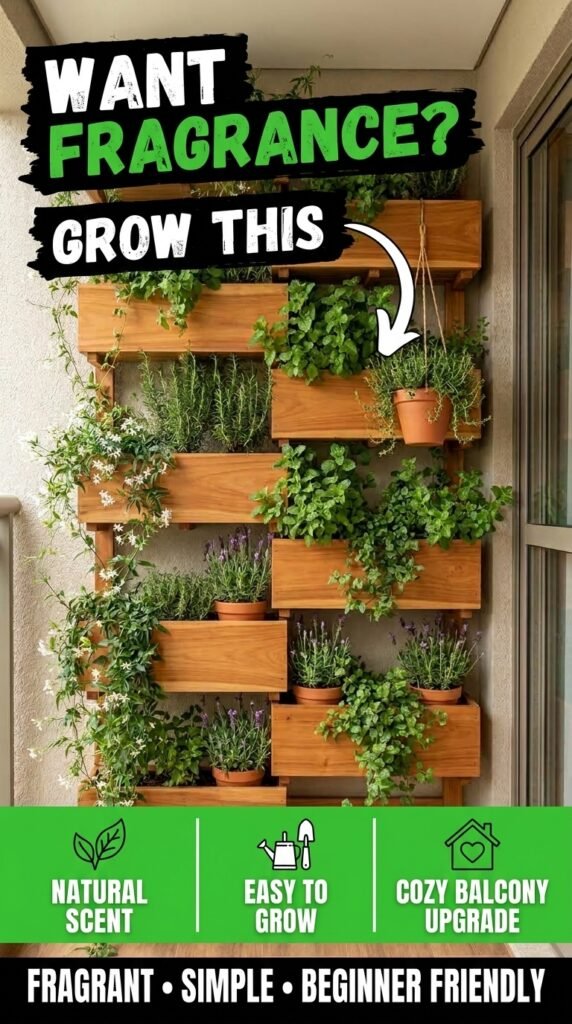
A balcony doesn’t need to be large to smell incredible. Some of the most fragrant outdoor spaces are the smallest ones, simply because scent has less room to disperse before it reaches you. The nine ideas below cover a real range — a single trained tree by a doorway, a cottage-style seating nook, railing boxes several floors up, a rooftop lounge, and even a wall-mounted vertical garden — so whatever your balcony’s size, sun exposure, or style, there’s a genuinely different direction to compare against your own space. Each idea is built around which plants, which containers, and which layout actually deliver fragrance at nose height, not just a pretty photo.
Quick Overview
| Style | Fragrant Balcony Garden |
| Best For | Small balconies, plant lovers, renters & owners |
| Budget | Low – High |
| Difficulty | Easy – Moderate |
| Maintenance Level | Medium |
A Single Wisteria Standard Framing a Doorway
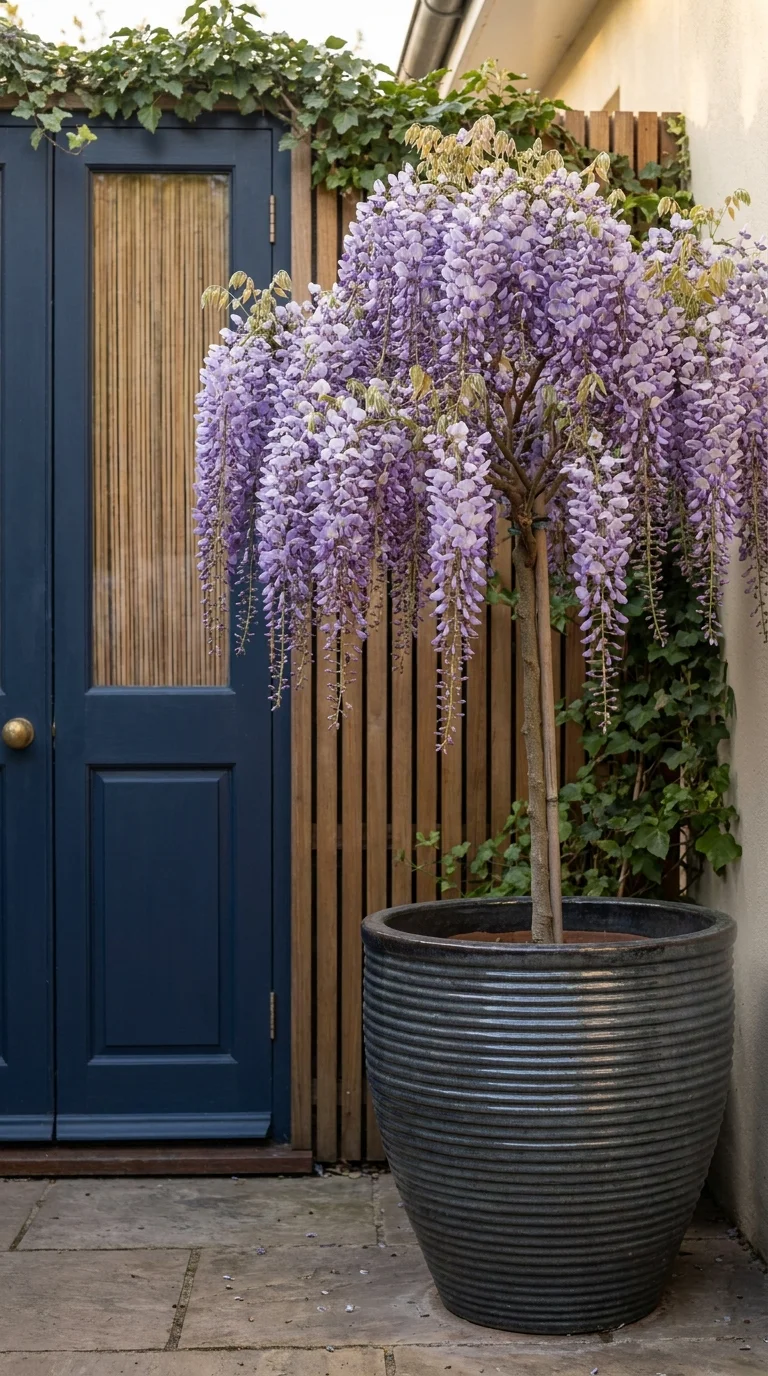
This idea works as a single, deliberate specimen rather than a collection. One flowering tree, trained as a standard and placed beside a doorway, turns an entrance into the most fragrant point of the whole home — every arrival and departure passes directly under the blooms. It suits narrow side passages, apartment entries, and any balcony where floor space is at a premium, because the plant grows upward and outward from one footprint rather than spreading across the floor. Homeowners drawn to this look tend to be patient by nature: a wisteria standard takes real years to fill out, and its late-spring bloom window is intense but short, so the reward is seasonal rather than constant. That trade-off is really the whole decision here — is a few spectacular weeks a year worth a permanent, slow-growing commitment, or would a longer-blooming option (like the jasmine-and-herb corner in the next section) suit a homeowner who wants scent for more of the year?
Recreating it starts with buying a pre-trained standard, not a young vine, since training the shape from scratch on a balcony can take a decade. The support stake buried inside the pot needs to be sturdy from day one — wisteria is heavy once mature, and a stake sized for a young plant will fail within a few seasons. Underneath the tree, the ivy climbing the fence panel and the trailing greenery along the top of the door frame aren’t decorative filler; they soften the hard lines of the door and slatted fence so the eye reads the whole corner as one green composition instead of “a tree, a door, and a fence” as three separate elements. For anyone working with a genuinely tight budget, a smaller flowering vine like clematis or a compact lilac in the same oversized pot gets a similar tree-in-a-pot presence without the decade-long wait or wisteria’s notoriously aggressive root system, which can crack an undersized container within a few growing seasons.
Why One Tree Beats a Dozen Small Pots Here
The pot is doing almost as much work as the tree. A wisteria trained into a standard (tree) form carries a huge, cascading canopy on a single thin trunk, so the container needs enough visual and physical weight to make that top-heavy shape look intentional rather than precarious. The ribbed black planter is oversized on purpose — its wide base reads as an anchor, which is what lets the flowers above it look abundant instead of unstable. Swap that pot for something narrow or shallow and the same tree would look like it’s about to tip over.
Recommended Materials
- Glazed ribbed ceramic or fiberglass planter
- Wisteria standard (grafted, tree-form)
- Cedar slat fence panel
- English ivy
- Natural stone or slate paving
Main Colors
- Lavender-Purple
- Charcoal Navy
- Warm Honey Wood
- Soft Cream Stucco
Best Lighting
Wisteria needs at least half a day of direct sun to bloom reliably — a spot that gets bright morning light with some afternoon shade, like this east-facing doorway, keeps the flowers from scorching while still triggering a strong bloom.
Maintenance
A grafted wisteria standard needs two hard prunings a year (midsummer and late winter) to stop it reverting to an unruly vine, plus repotting or root pruning every few years once it outgrows even a large container.
Where a Balcony Wisteria Tree Usually Goes Wrong
- Choosing a container too narrow for the mature canopy’s weight, causing the tree to lean or tip
- Skipping the stake upgrade as the trunk thickens, leaving the trunk to bend permanently
- Letting the vine revert to climbing habit by missing the summer prune
- Planting a seed-grown wisteria expecting quick blooms — most take 7–15 years to flower without grafting
A Cottage Nook Built From Layered Terracotta Pots
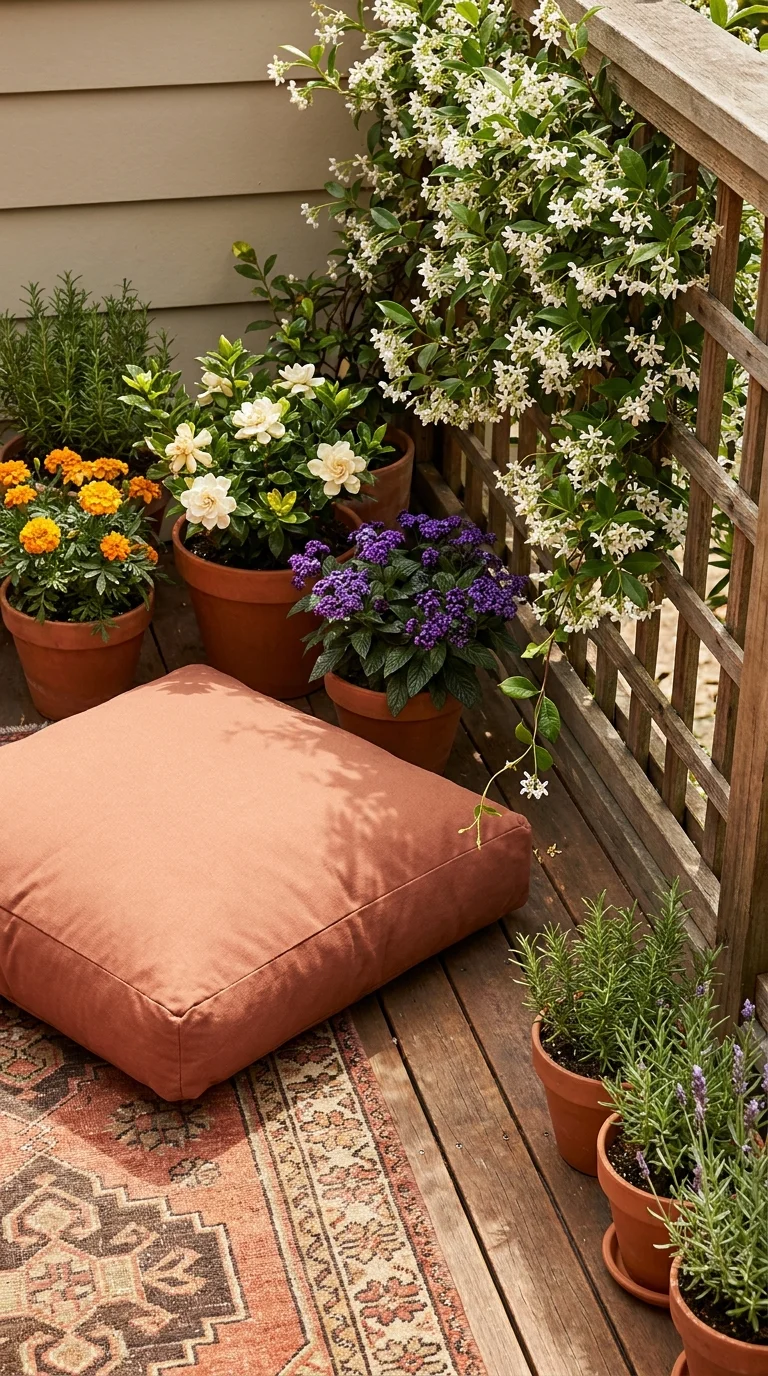
Rather than one statement plant, this idea clusters many small, fragrant pots around a single seating spot, so the person sitting on the floor cushion is genuinely surrounded by scent rather than just looking at it from across the room. It’s built for ground-level lounging, small patios, and homeowners who want to layer fragrances — rosemary’s sharp herbal note, gardenia’s heavy sweetness, and marigold’s peppery edge all sit within arm’s reach of each other, creating a more complex scent profile than any single plant could offer alone. This suits someone who enjoys hands-on gardening and doesn’t mind rearranging pots through the season, since some of these plants (gardenia especially) are fussier about light and water than a beginner might expect.
The star jasmine climbing the lattice behind the seating area is the piece doing the most long-term work, since it will eventually cover the trellis and turn the whole backdrop fragrant once established — everything at floor level is really building toward that vertical payoff. Achieving this on a budget means starting with young 4-inch nursery pots rather than mature plants and letting them fill their terracotta containers over a season or two; the visual density in this photo took real time to build, not a single shopping trip. The floor cushion and vintage-style rug matter more than they might first appear — without a defined seating surface, the pots read as storage rather than as a garden built around a place to sit. A common shortcut for smaller budgets is to drop the gardenia (which needs the most humidity and fussiest feeding of anything in this group) and lean on marigold, rosemary, and lavender instead, which forgive inconsistent care far better.
The Repeated Terracotta Is What Ties This Together
Every pot on this deck is the same warm terracotta, just in different sizes. That repetition is what keeps six or seven different plants — rosemary, gardenia, marigold, heliotrope, lavender — from reading as clutter. One material, many plants is a far more forgiving formula for a beginner than trying to coordinate glazed colors or mixed materials, since the terracotta unifies the group visually even when the bloom colors don’t.
Recommended Materials
- Terracotta pots (mixed sizes)
- Rattan or bamboo lattice trellis
- Star jasmine
- Canvas floor cushion
- Wool or cotton flatweave rug
Main Colors
- Terracotta Orange
- Sage Green
- Jasmine White
- Rust & Cream (rug)
Best Lighting
Full sun for the marigold, lavender, and rosemary at the front; the jasmine and gardenia toward the back tolerate a bit more afternoon shade, which this layout uses to its advantage.
Maintenance
This is the highest-upkeep idea on the list simply because of plant count — expect to check soil moisture on six or more individual pots rather than one large planter, since terracotta dries out faster than plastic or glazed ceramic.
Easy Ways to Get This Corner Wrong
- Crowding pots so tightly that airflow drops and mildew sets in on the gardenia
- Using identical pot sizes for plants with very different root systems
- Letting the jasmine outgrow the trellis before it’s properly trained onto it
- Placing the seating cushion where mature growth will eventually shade or brush against it
A High-Rise Railing Box Mixing Spikes and Cascades
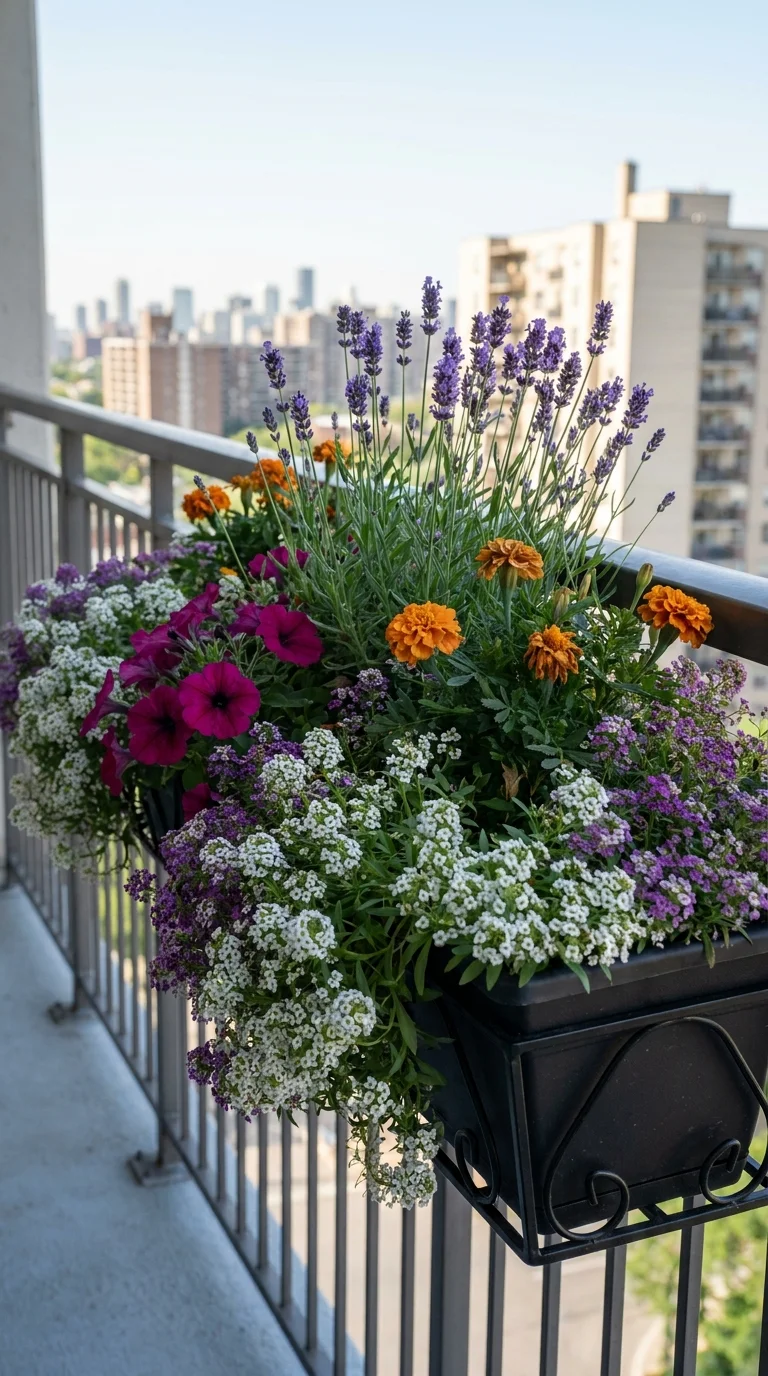
A single railing planter, viewed from many floors up, has to do more work than a ground-level bed — it’s often the only greenery visible against a hard skyline. This idea layers upright lavender, mounding marigold, trailing petunia, and a dense border of alyssum into one box, giving the eye height, midlevel color, and a soft cascading edge all in a footprint that’s often under two feet long. It’s suited to high-rise apartments, tight balconies with only railing space to plant in, and renters who need something entirely container-based. The alyssum along the front edge is doing quiet, important work: its low sweet scent sits at nose height for anyone leaning on the railing, while the taller lavender and marigold carry the visual color from a distance.
The biggest practical factor at this height is wind, which most ground-floor gardeners never have to think about — a box that would be perfectly stable in a backyard can dry out twice as fast on a windy 20th floor, and top-heavy plants are more likely to snap. Recreating this safely means checking the building’s balcony weight limits before filling a box with wet soil (a full planter this size, saturated, can weigh far more than it looks), and using brackets rated for the specific railing type rather than a generic clamp. On a smaller budget, alyssum and marigold alone — both cheap, fast-growing annuals — deliver a surprisingly full look without lavender’s slower establishment period or petunia’s need for regular deadheading to keep blooming.
What the Eye Catches First Against That Skyline
Against a plain sky and distant buildings, the eye goes straight to the upright lavender spikes before anything else — they’re the only vertical lines breaking a horizontal composition. That’s a deliberate contrast: everything else in the box (petunia, alyssum, marigold) mounds or cascades, so the lavender reads as the box’s “spine” even though it’s not the most colorful plant in the mix.
Recommended Materials
- Powder-coated iron railing planter box
- Lavender
- French marigold
- Trailing petunia
- Sweet alyssum
Main Colors
- Lavender Purple
- Magenta Pink
- Marigold Orange
- Alyssum White
Best Lighting
This box needs a genuinely full-sun exposure — six or more hours — since high-rise balconies often get more direct, unfiltered light than the same aspect would at street level, with little shade from surrounding buildings.
Maintenance
A mixed annual box like this needs deadheading every week or so to keep petunia and marigold blooming continuously through the season, plus more frequent watering than the same box would need at ground level.
Mistakes That Show Up Fast at This Height
- Overfilling one box with too many root systems competing for the same soil volume
- Using a bracket not rated for the specific railing thickness or material
- Grouping plants with different watering needs in a single box, so some rot while others wilt
- Underestimating wind exposure and losing top-heavy stems in the first storm
A Railing Lined With Matching Terracotta and a Wicker Chair
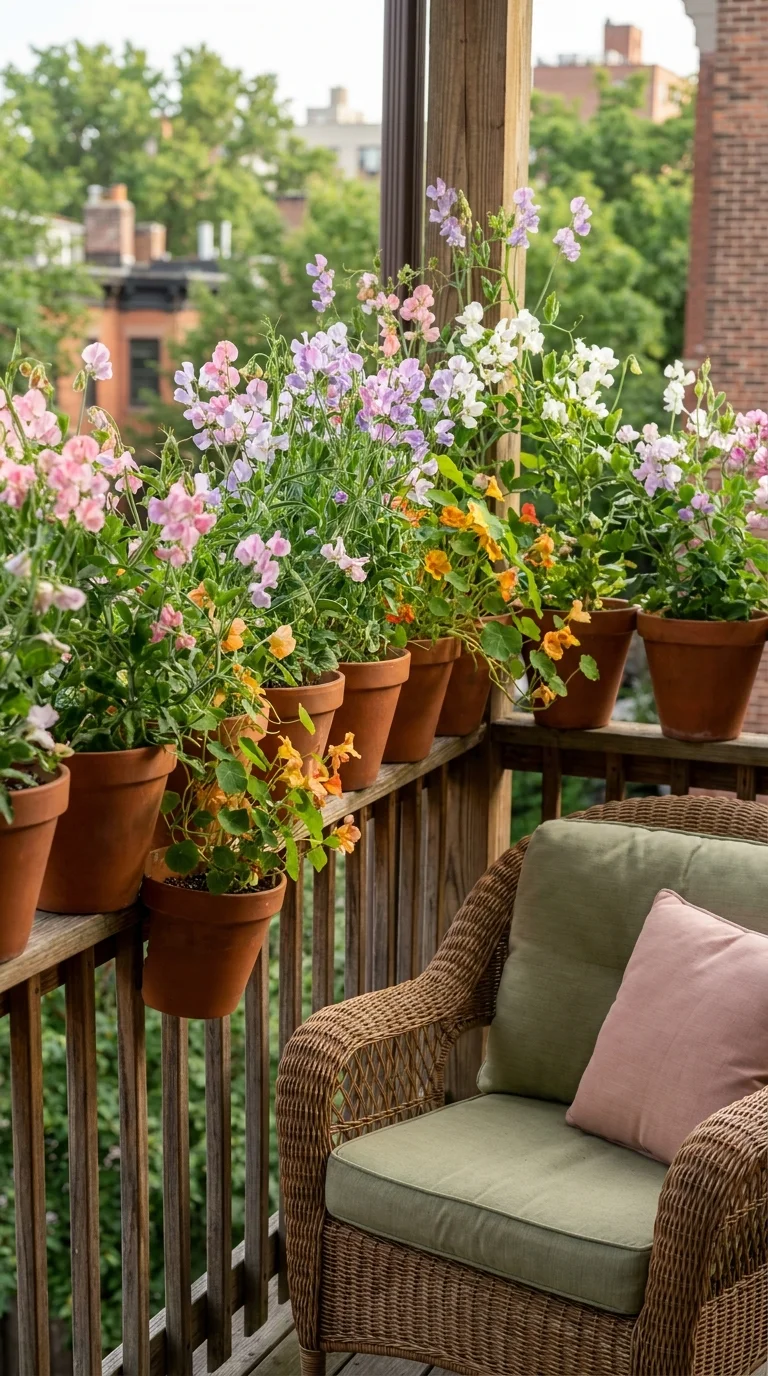
This idea turns a plain railing into a continuous plant corridor by lining up matching terracotta pots, then pairing that row with a single wicker chair so the balcony becomes somewhere to sit inside the display rather than just look at it. Climbing sweet peas provide height and a strong, old-fashioned fragrance, while low-growing nasturtium fills the gaps at pot level with its own peppery scent and edible flowers. It suits townhouse balconies, rowhouse porches, and anyone who wants a classic cottage feel without a full garden bed — the repetition of identical pots does the heavy lifting stylistically, so the plants themselves can be a looser, more informal mix.
Sweet peas need something to climb, and here that’s a simple support worked into each pot or shared along the railing — without it, the vines flop and the height this look depends on disappears within a few weeks. The cushion on the wicker chair matters more than it seems: it signals that this is a place to sit and linger, not just walk past, which reframes the whole planting as an experience rather than a view. Sweet peas are also a cool-season annual in most climates, meaning this exact look is seasonal — a homeowner recreating it needs to either replant twice a year or accept that the sweet pea display fades in hot summer months, at which point nasturtium (which tolerates more heat) can carry the fragrance and color alone. On a tighter budget, skip the wicker chair and matching cushion for a simple folding chair — the terracotta row and climbing vines carry most of the visual weight regardless of what’s sat on.
Why Terracotta Was the Right Call for This Row
Terracotta is porous, which sounds like a downside until it’s lined up in a repeating row like this — the material breathes and wicks excess moisture, which matters when a dozen pots sit in direct sun along a railing all day. Over a season, terracotta also weathers to a slightly lighter, chalkier tone, which actually suits this pastel sweet-pea-and-nasturtium palette better than a glossy glaze would; the pots age alongside the plants instead of looking static against them.
Recommended Materials
- Terracotta pots (matching)
- Sweet pea vine with support stakes
- Nasturtium
- Wicker armchair
- Outdoor cushions
Main Colors
- Pastel Pink
- Soft Lavender
- Nasturtium Orange & Yellow
- Warm Terracotta
Best Lighting
Morning sun with some afternoon relief suits sweet peas best, since they bloom more reliably and for longer in climates that don’t get scorching all-day heat.
Maintenance
Sweet peas need regular deadheading and consistent watering to keep flowering, and terracotta pots this size will need topping up with water daily in warm weather since the material itself pulls moisture from the soil.
What Trips People Up Recreating This Row
- Skipping a climbing support and letting sweet peas sprawl instead of climb
- Planting sweet peas in full, hot summer sun where they bloom briefly then collapse
- Mixing pot sizes that break the uniform row effect the terracotta relies on
- Forgetting nasturtium self-seeds aggressively and can crowd neighboring pots the following year
A Starter Table for Sorting a Fragrant Plant Palette
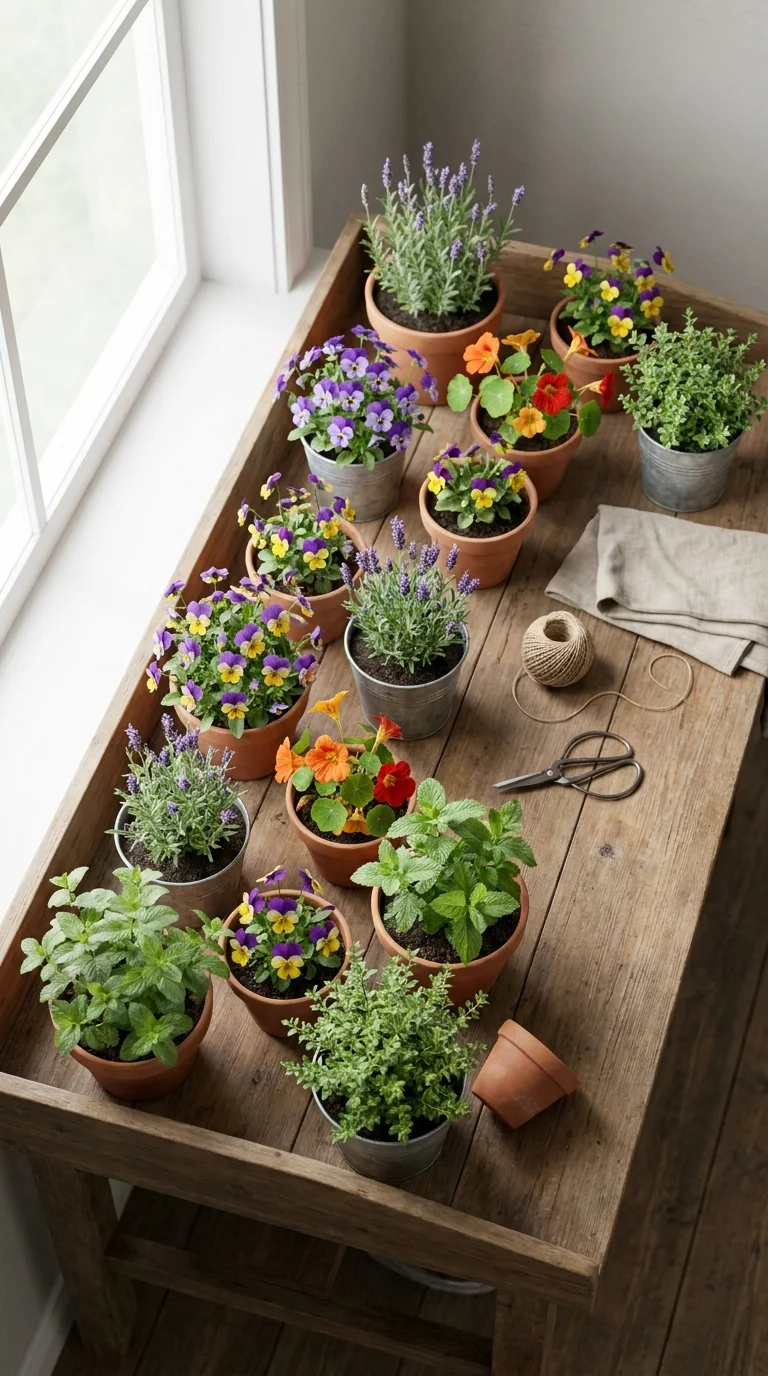
Before committing to a final balcony layout, this idea treats plant selection as its own project — a table by a bright window with a spread of young lavender, violas, nasturtium, mint, and thyme laid out to compare scent, color, and growth habit side by side. It answers a decision the other nine ideas all assume has already been made: which fragrant plants should actually go on this balcony in the first place? It suits first-time balcony gardeners, anyone converting an existing space to a fragrance-focused one, and people who’d rather test a palette in small pots than commit a whole railing or floor space to plants they haven’t lived with yet.
The value of this step is that lavender, mint, and thyme all smell strongly but very differently, and living with them at close range for a few weeks — brushing past them, watering them, noticing which ones actually get used or admired — reveals more than a plant tag ever will. Mint in particular is worth testing in isolation before committing it to a shared pot, since it spreads aggressively and will crowd out neighboring roots if planted directly alongside lavender or thyme in the same container. The galvanized metal pots mixed in with terracotta here aren’t just a style choice — metal heats up faster in full sun, which can stress delicate herb roots, so this table is effectively also testing which container material suits which plant before anything moves outdoors permanently. Twine and simple hand tools nearby are a reminder that this stage is about labeling and organizing as much as growing, since it’s easy to lose track of which viola is which once several trays start to blend together.
This Is a Planning Idea, Not a Finished Balcony
Every pot here is roughly the same young size — lavender, viola, nasturtium, mint, and thyme are all still small enough to move around and regroup before anything is planted into its final spot. That uniformity is deliberate: at this stage, the plants are being sorted and compared, not arranged for looks, which is exactly the step most fragrant-balcony projects skip past too quickly.
Recommended Materials
- Small terracotta pots
- Galvanized metal pots
- Lavender
- Viola / pansy
- Mint and thyme
Main Colors
- Terracotta Orange
- Galvanized Silver
- Lavender Purple
- Viola Yellow & Purple
Best Lighting
Bright indirect light near a window is enough for this short sorting phase, though most of these plants will need to move to direct sun once they’re transplanted to their final balcony spot.
Maintenance
Young plants at this stage need frequent, light watering rather than deep soaking, since small pots dry out quickly and overwatering seedlings is one of the fastest ways to lose them before they’re even planted outside.
Where This Planning Stage Usually Breaks Down
- Buying too many varieties at once without a plan for where each will eventually live
- Planting mint straight into a shared pot instead of testing it alone first
- Ignoring that metal containers heat up faster than terracotta in direct sun
- Skipping this comparison step entirely and regretting a scent combination later
Built-In Rooftop Planters Pairing Allium With Lavender
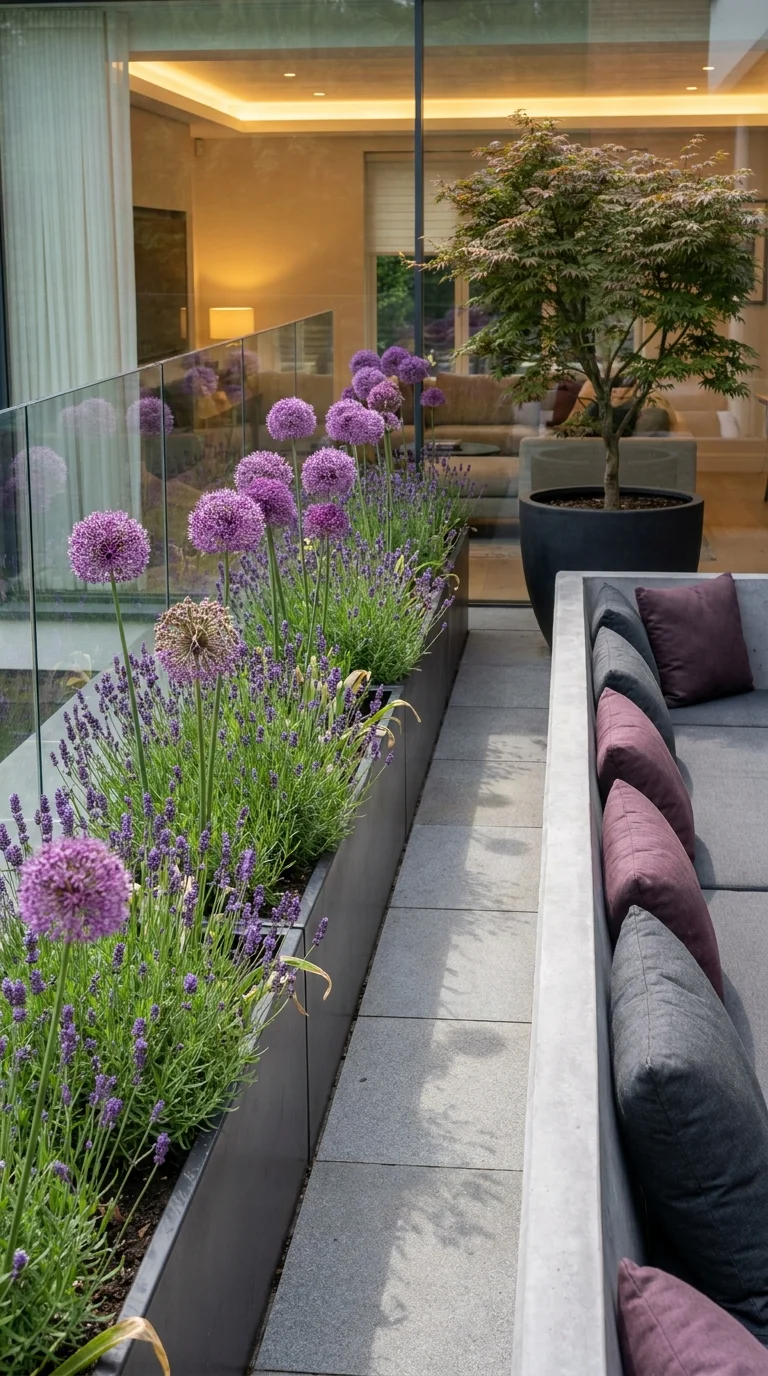
This idea integrates planting directly into a rooftop lounge’s architecture — long steel troughs built into a glass-railed terrace, filled with drifts of lavender punctuated by architectural allium, sitting beside a low-slung sectional and a potted Japanese maple. It’s aimed at rooftop terraces, new-build balconies with design budgets, and homeowners who want the planting to feel as considered as the furniture around it. Unlike the more casual, mixed-pot ideas earlier in this list, everything here is planned as one continuous composition: the trough runs the length of the seating area, so the fragrance and the lounging zone are the same footprint rather than separate areas.
Because the planters are structural rather than movable pots, drainage has to be engineered in from the start — a built-in trough without a proper drainage layer and outlet will waterlog in heavy rain and can eventually damage the roof membrane beneath it, which is a far more serious problem than an overwatered pot. Allium’s bloom window is brief compared to lavender’s much longer flowering period, so this planting is really designed around lavender doing the constant, fragrant work while allium provides a few dramatic weeks each year — worth knowing before assuming both will look and smell this way simultaneously for months on end. For a similar effect at a fraction of the cost, large freestanding planters along the same railing line achieve a comparable rhythm without the structural and drainage commitment of a built-in trough, though they won’t integrate into the architecture quite as seamlessly.
Spheres Against Drifts — a Scale Contrast Worth Copying
The allium’s perfectly round seed heads sit well above the soft, low mass of the lavender beneath them, and that height difference is what keeps a fairly formal planting from feeling flat. Lavender alone along a railing would read as a single texture; adding allium’s tall, geometric spheres breaks that texture at intervals, the way punctuation breaks up a long sentence.
Recommended Materials
- Powder-coated steel planter trough
- Lavender
- Allium
- Japanese maple (potted)
- Large-format concrete pavers
Main Colors
- Charcoal Steel
- Lavender Purple
- Plum & Grey (cushions)
- Deep Green
Best Lighting
A rooftop edge like this typically gets unobstructed full sun most of the day, which both lavender and allium need to bloom well and keep their scent concentrated rather than diluted by weak growth.
Maintenance
Lavender in a built-in trough should be pruned back hard after flowering to keep it compact and prevent woody, leggy growth, and allium bulbs should be lifted or thinned every few years as they multiply underground.
Worth the Investment?
Built-in planters cost meaningfully more than freestanding pots of the same size, mainly because of the structural drainage work involved — but for a rooftop that’s genuinely a long-term outdoor room rather than a temporary rental balcony, the seamless, permanent look is one of the few upgrades on this list that’s hard to replicate with off-the-shelf containers. For anyone renting or planning to move within a few years, that cost is very likely not worth it; large matching planters get you 80% of the visual effect for a fraction of the price and commitment.
Where Built-In Rooftop Planters Go Wrong
- Skipping a proper drainage layer, leading to waterlogging or roof membrane damage
- Spacing lavender too formally, which reduces the density that makes it smell strong up close
- Assuming allium blooms all season the way lavender does
- Choosing a planter material that clashes with the building’s existing railing or furniture finish
A Vertical Wood Wall Turning Height Into Growing Space
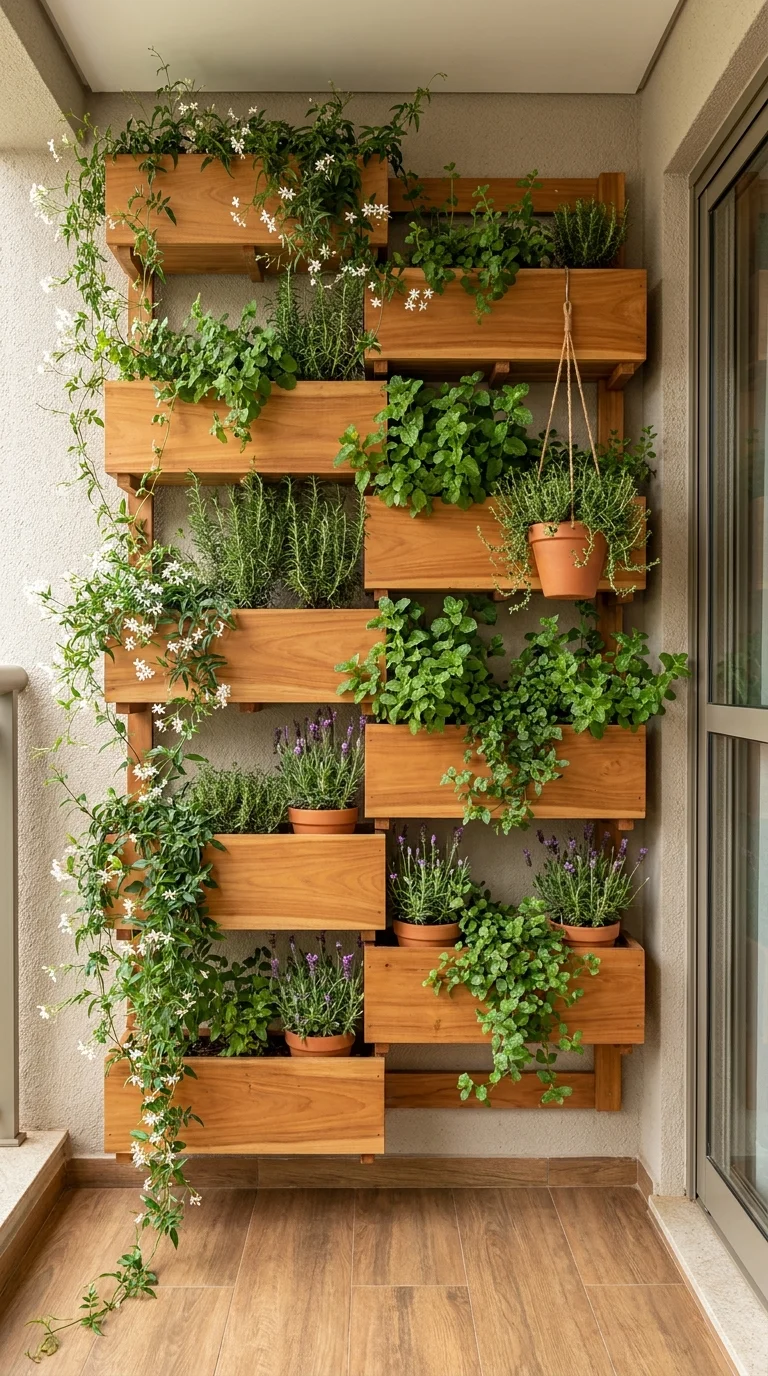
When floor space is the real constraint, this idea solves it by building upward instead — a wall-mounted ladder of wooden boxes staggered in two columns, packed with jasmine, rosemary, mint, thyme, and lavender, turning a single wall into the highest plant density of any idea on this list. It suits the smallest balconies of all: narrow city terraces, tiny Juliet balconies, and anyone with more wall than floor to work with. Because the boxes are staggered rather than stacked in a flat grid, each row gets some light even with plants above it, and the trailing jasmine at the top is left to spill down through the whole structure, tying every level together visually and, eventually, fragrantly.
The practical decision this idea forces is about wall type and mounting, which matters more here than for almost any other layout — a stucco or masonry wall can support this system with the right anchors, but a lightweight partition wall on some balconies cannot, and finding that out after installation is far more disruptive than checking beforehand. Water management is the other real consideration: with boxes stacked above each other, runoff and soil from upper rows will drip onto whatever’s below unless each box has proper drainage directed away from the row underneath, and unmanaged runoff will eventually stain the wall or flooring. Sun-loving plants like rosemary and lavender do best on the upper, more exposed rows, while mint and the trailing jasmine tolerate the slightly shadier lower boxes — getting that placement backward is one of the most common reasons a vertical herb wall underperforms compared to how it looks on day one.
Why the Repeated Boxes Are the Whole Idea
Stack the same honey-toned wood box eight times up a wall and it stops reading as a shelf — it becomes a structure, the way bricks stop looking like individual bricks once there are enough of them in a wall. That repetition is what lets jasmine, rosemary, mint, and lavender all live in the same vertical footprint without the wall looking like a mismatched collection of separate planters.
Recommended Materials
- Teak or cedar wall-mounted boxes
- Jasmine (trailing)
- Rosemary
- Mint and thyme
- Wood-look composite flooring
Main Colors
- Honey Wood Tone
- Deep Herb Green
- Jasmine White
- Warm Terracotta accents
Best Lighting
Upper rows get the most direct sun and suit rosemary and lavender; lower rows sit in partial shade for most of the day, which is exactly where mint and jasmine prefer to be.
Maintenance
A vertical wall like this needs checking row by row, since upper boxes dry out faster in direct sun while lower boxes can stay too wet from runoff — a single watering schedule for the whole wall usually under- or over-serves at least a few rows.
What Trips People Up on a Vertical Herb Wall
- Mounting a heavy, soil-filled system into a wall that can’t structurally support it
- Ignoring drainage direction, so runoff stains or damages the flooring below
- Placing sun-loving rosemary and lavender on the shadiest lower rows by mistake
- Letting mint spread into neighboring boxes through shared drainage or overflow
A Tiered Ladder Display That Cascades Color Forward
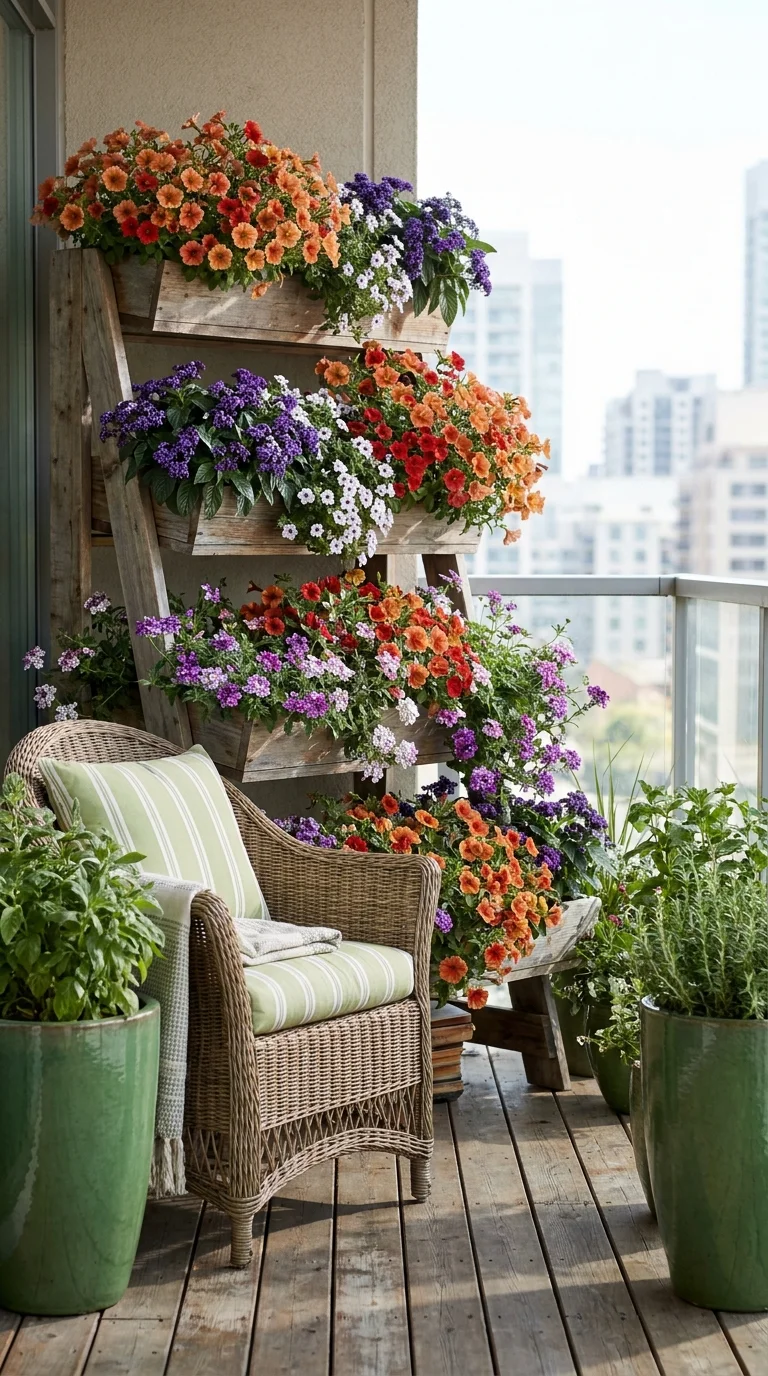
This idea uses a reclaimed-wood ladder frame, angled forward, to cascade petunia, verbena, and lantana toward a wicker lounge chair below — so the display and the seating spot are designed as one connected scene rather than a backdrop and a chair placed near it. It suits balconies where the seating area is the whole point, and where the plants exist to be looked at, sat beside, and brushed against rather than tended from a distance. The angled tiers also mean each row gets more light than a flat vertical stack would, since nothing sits directly above blocking the row below — one reason the color here reads as fuller and denser than a straight-shelf version of the same plant list.
Weight distribution is the real engineering question with an angled ladder frame like this: the forward lean puts more load on the front edge of each tier than a flat shelf would, so the frame itself needs to be genuinely sturdy and, ideally, anchored to the wall behind it rather than freestanding, especially once soil and mature root systems add real weight to the upper rows. Petunia, verbena, and lantana all have different watering needs — petunia wilts fast and recovers quickly once watered, while lantana tolerates real neglect — so grouping them by tier based on those differences, rather than by color alone, keeps the whole display healthier for longer. On a smaller budget, lantana alone across all three tiers delivers a similarly full, cascading look with dramatically less maintenance than the mixed version, since it tolerates heat, drought, and inconsistent watering far better than petunia does.
The Angle Does More Than a Straight Shelf Ever Could
Tilt a set of shelves forward instead of stacking them flat, and the eye is pulled down and outward toward the seating area instead of up toward the wall. That single angle change is why this display reads as a “living curtain” spilling toward the chair, rather than a plant shelf the chair happens to sit near — the same plants on a vertical wall system, like the previous idea, would create the opposite visual effect.
Recommended Materials
- Reclaimed wood ladder frame
- Petunia
- Verbena
- Lantana
- Glazed ceramic pots
- Wicker lounge chair
Main Colors
- Sunset Orange
- Verbena Purple
- Alyssum White
- Glazed Green (pots)
Best Lighting
Full sun across all tiers, since the forward angle means each row gets its own light exposure rather than shading the one below it — a real advantage over a flat vertical stack.
Maintenance
Petunia in particular needs regular deadheading to keep blooming through the season; lantana and verbena are considerably lower-maintenance and can go longer between grooming.
How This Cascading Display Usually Fails
- Building or buying a ladder frame too light for the eventual weight of mature, soil-filled pots
- Grouping plants by color instead of by water needs, so some rot while others dry out
- Skipping a wall anchor on a frame that leans forward under load
- Leaving petunia’s spent blooms unchecked, which slows new flowering across the whole display
A Hanging Terracotta Corridor Lined With Roses
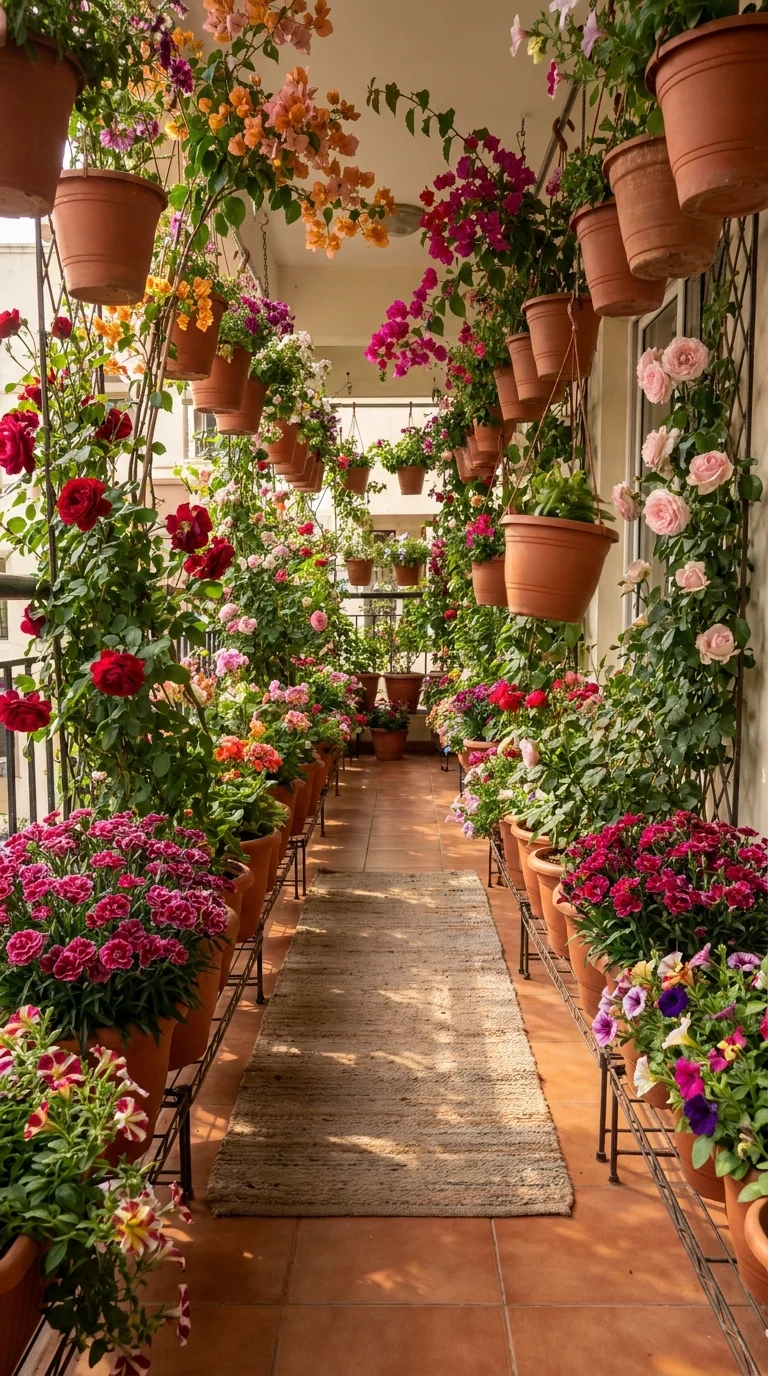
Rather than fragrance along one railing or in one corner, this idea wraps it around an entire walking path — dozens of hanging terracotta pots suspended overhead, packed with climbing roses, bougainvillea, and dianthus, so the corridor itself becomes the fragrant space rather than a room you pass to reach one. It suits long, narrow balconies or covered walkways, Mediterranean-style properties, and homeowners who want maximalist abundance rather than a curated few statement plants. Walking underneath is the entire point: scent drifts down from head height on both sides at once, which no railing box or floor-level cluster can replicate in quite the same way.
The overhead structure this depends on has to be engineered before a single pot goes up — a pergola frame or dedicated hanging rail rated for the combined weight of dozens of saturated terracotta pots, not a series of individual hooks screwed into whatever’s overhead. Roses and bougainvillea both need real sun to bloom this densely, so a corridor like this only works with genuine overhead light reaching most of its length; a shaded walkway would leave large stretches sparse compared to the sunnier ends. This is also the highest-cost, highest-commitment idea on the list simply through sheer plant count and structural requirements, and it rewards someone building toward it over several seasons rather than attempting to fill the whole corridor at once — a smaller version using ten or twelve pots along a shorter stretch, rather than the dozens shown here, captures the same walking-through-fragrance effect at a much more approachable scale.
How Terracotta Holds Up Overhead, Not Just at Floor Level
Most of the terracotta ideas on this list sit at floor or railing height, but here the pots are suspended overhead along the whole corridor, which changes what the material has to withstand — more direct sun exposure on all sides, faster drying, and the added stress of hanging weight on their rims. Terracotta’s rigidity and resistance to warping under that kind of sustained overhead load is a real reason it’s used here instead of lighter plastic, which can stretch and crack at the hanging point over time.
Recommended Materials
- Terracotta hanging pots
- Climbing rose
- Bougainvillea
- Dianthus
- Overhead pergola or hanging rail
- Woven runner rug
Main Colors
- Terracotta Orange
- Deep Rose Red
- Bougainvillea Magenta & Orange
- Soft Pink (dianthus)
Best Lighting
This layout needs strong, mostly unobstructed overhead sun along its full length — both roses and bougainvillea bloom noticeably less in shaded stretches, which shows up as visible gaps in a corridor this long.
Maintenance
Climbing roses need structured pruning and training along the overhead framework, and hanging terracotta pots this exposed will need watering more often than the same plants would at ground level, since wind and overhead sun dry them out faster.
The Most Common Mistakes in a Hanging Plant Corridor
- Hanging pots from individual hooks instead of a structure rated for the combined saturated weight
- Attempting the full-length version in one season instead of building it out gradually
- Underestimating how much shade reduces blooming in roses and bougainvillea
- Ignoring wind exposure overhead, which dries hanging terracotta out faster than floor-level pots
Keeping a Fragrant Balcony Weatherproof Through the Seasons
- Choose frost-resistant terracotta or fiberglass over cheap glazed ceramic in freeze-thaw climates, since standard glazed pots can crack when trapped moisture expands
- Group pots against a wall or under an overhang before storms, since wind is usually more damaging to balcony plants than rain
- Check drainage holes before every rainy season — a clogged pot in heavy, sustained rain will waterlog roots within days
- Bring or shelter tender climbers like jasmine and bougainvillea before the first frost, since a single hard freeze can kill growth that took a full season to establish
Who Should Choose This Style?
- Best for renters who want strong seasonal fragrance without any permanent structural changes
- Best for plant lovers who enjoy hands-on seasonal care, deadheading, and rearranging
- Best for rooftop or urban dwellers who want a scent-driven outdoor retreat within a small footprint
- Not ideal for anyone wanting a fully low-maintenance, walk-away balcony with no regular watering or pruning
Budget Summary
| Budget | Expectation |
|---|---|
| Low | Terracotta pots, marigold, alyssum, nasturtium, mint |
| Medium | Lavender, sweet peas, a wicker chair, a basic trellis |
| Premium | Mature wisteria standard, allium bulbs, custom steel troughs, a full vertical wall system |
Frequently Asked Questions
What are the best fragrant plants for a shaded balcony?
Most of the strongest-smelling balcony plants — lavender, roses, wisteria — need real sun to produce their scent, so a genuinely shaded balcony has fewer options. Mint, star jasmine, and sweet violet are among the more shade-tolerant fragrant choices, though even these bloom and smell more strongly with at least a few hours of direct or bright indirect light each day.
How much sun do most fragrant balcony plants need?
As a general guide, most of the plants covered here — lavender, roses, wisteria, jasmine, marigold — do best with at least four to six hours of direct sun, since fragrance is tied to a plant’s overall vigor and bloom production, both of which drop off noticeably in low light.
Can fragrant climbers like jasmine or wisteria damage railings or walls?
Wisteria in particular can, since its stems thicken and tighten around whatever they climb, potentially warping thin railings or wood over years. Jasmine is gentler, but any climber left unmanaged can work its way into small gaps in siding or masonry, so periodic checking and training onto a dedicated support is worth the effort.
Will fragrant balcony plants attract too many bees for a small space?
Fragrant flowering plants do attract pollinators, but on most balconies this is manageable — bees are generally focused on the flowers themselves and not interested in people nearby. Placing the most bee-attractive plants (lavender, alyssum) slightly away from a seating area, rather than directly around it, reduces close encounters if that’s a concern.
How do I keep fragrant balcony plants blooming for longer?
Regular deadheading is the single biggest factor for most annuals and many perennials here — removing spent blooms redirects the plant’s energy into producing new ones instead of setting seed. Consistent watering and an occasional balanced fertilizer through the growing season also extend the bloom window noticeably.
About the Author
Aesthetic Life Team — Our editorial team covers real, livable design ideas for small outdoor spaces, balconies, and gardens, with a focus on layouts and plant choices that hold up beyond the first season.
Conclusion
A fragrant balcony doesn’t come from one perfect plant — it comes from matching a layout, a container material, and a plant list to the actual light, space, and lifestyle of the person using it. Whether that means a single trained tree by a door, a cluster of terracotta pots around a floor cushion, or an entire wall turned into a vertical herb garden, the plants that will genuinely get smelled, touched, and enjoyed every day are the ones chosen with the space’s real constraints in mind, not just the prettiest photo in a search.
Explore More
You may also enjoy:

