Introduction
You finally found the perfect corner — that awkward, underused space by the window that nobody knew what to do with. You bought the chair. You added a throw blanket. And somehow, it still doesn’t feel like the reading nooks all over your Pinterest board.
Here’s the thing most guides won’t tell you: a reading nook isn’t about the furniture. It’s about scale, light, and restraint — three things that have almost nothing to do with how much you spend and everything to do with how the space is actually used.
Whether you’re working with 12 square feet in a rental or a full bay window in a house you own, the difference between a nook that gets used daily and one that becomes a laundry-pile magnet usually comes down to a handful of small, deliberate decisions.
These 9 spaces aren’t styled fantasies. Each one solves a real problem — bad lighting, awkward corners, zero storage — in a way you can actually borrow for your own home.
1. The Floor-to-Ceiling Library Nook
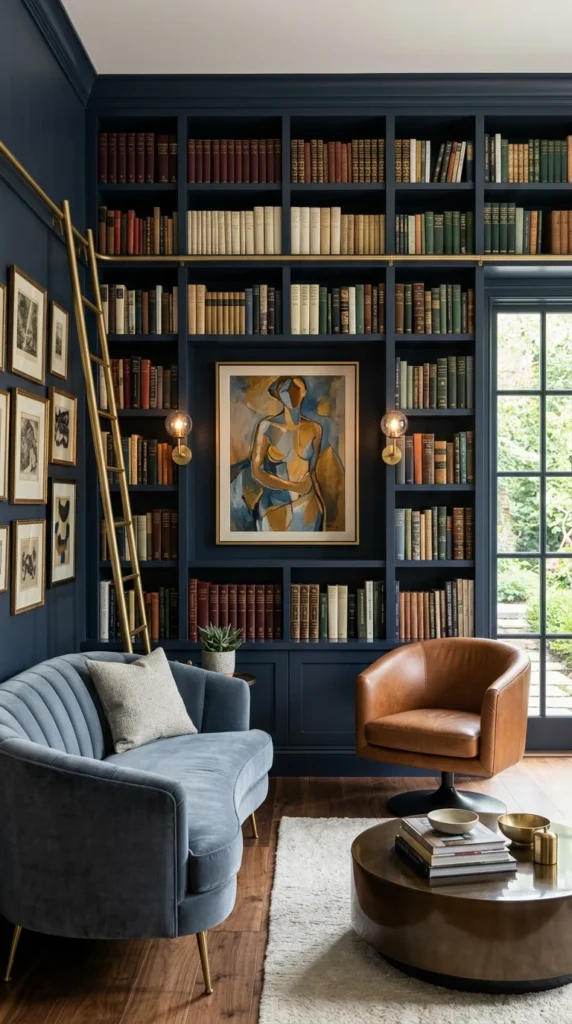
This is the kind of room that makes you want to own more books just to fill it. The navy shelving runs straight to the ceiling, and that brass rolling ladder isn’t just for show — in a room this tall, it’s the only realistic way to reach the top shelf without a step stool cluttering the corner. What actually makes this nook work, though, is restraint: one painting, symmetrical sconces, and a coffee table doing double duty as storage. That’s visual weight balance in action — the eye has one place to land instead of bouncing around a wall of spines.
The tradeoff is real, though. A wall of dark, saturated colour like this only works with strong natural light — that garden-facing window is doing more work here than the bookshelves are. Try this in a north-facing room with less glass, and it reads heavy instead of moody.
2. The Circular Bookshelf Window Seat
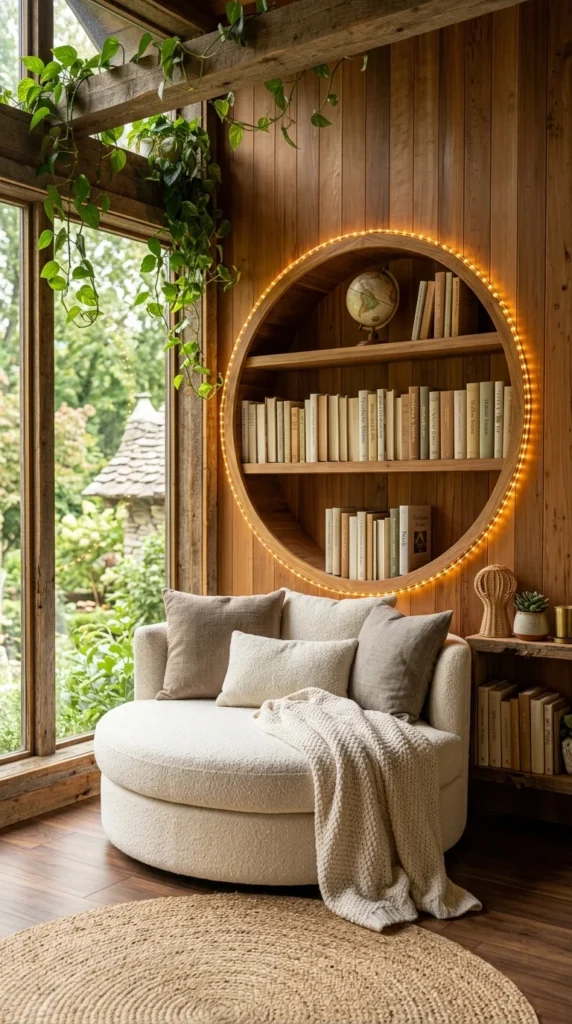
Where the first room leant on scale to make an impression, this one does the opposite — everything here is soft, round, and low to the ground. That circular bookshelf is the obvious showstopper, rimmed in warm LED strip lights, but honestly, the boucle daybed is doing the real work. Its shape echoes the circle behind it, which is why the whole corner feels intentional instead of accidental.
I’ll admit this is not a setup I’d trust in a small apartment. A round shelf this deep eats wall space a rectangular one wouldn’t, and unless you’re building it into panelling like this, it’s a custom job, not a weekend project. Renters can borrow the mood cheaply, though — a boucle chair, a knit throw, and a few strands of warm fairy lights get you 80% of the feeling without touching a single wall.
3. The Hanging Pod Chair
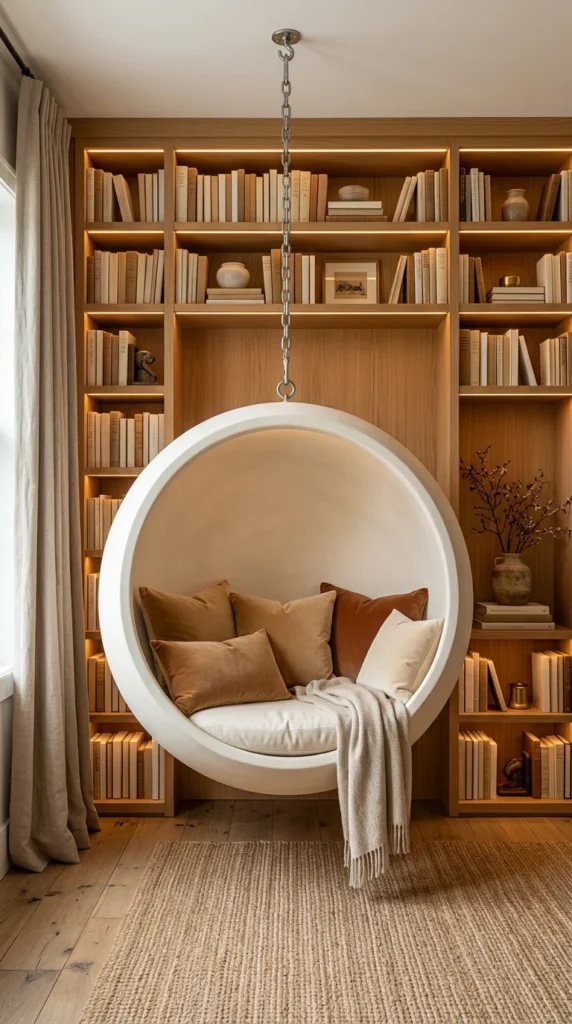
That is it. That is the whole idea: a suspended white pod, chained straight to the ceiling, sitting inside a wall of warm wood shelving. It should not work as well as it does. A hanging chair this size needs real ceiling structure behind it – not just any drywall, but a joist strong enough to hold the chain, the frame, and a full-grown adult swinging slightly with every page turn.
That’s the honest limitation before anything else: this is not a rental-friendly move, and it’s not a DIY afternoon either. But look at what it buys you. Unlike the round bookshelf in the previous space, this room uses backlighting instead of string lights, which gives the built-ins a cleaner, more architectural glow. The pod itself becomes the negative space — a pale, quiet shape against a busy backdrop of spines and warm oak.
4. The Arched Nook Built Into the Wall
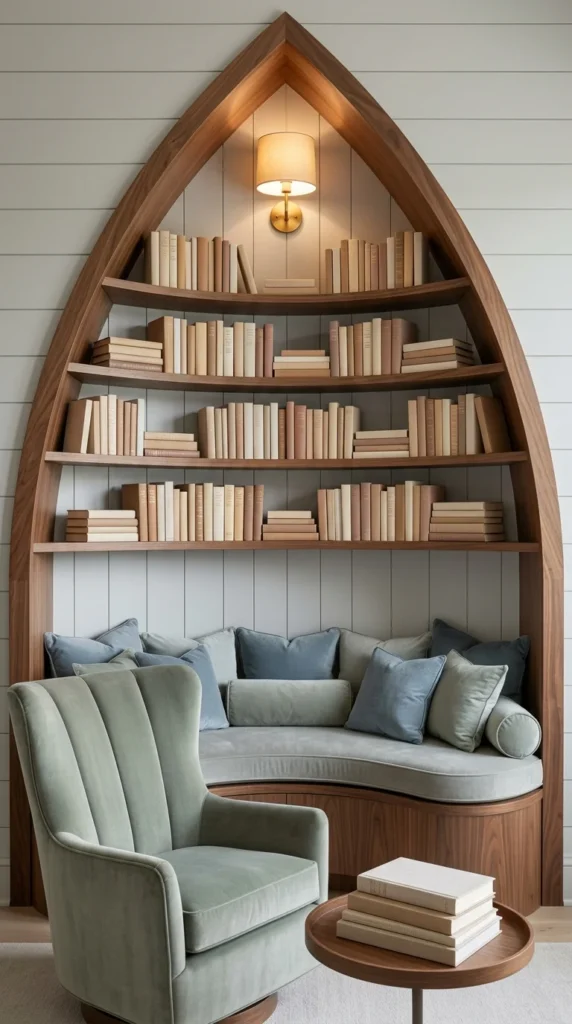
This one is architecture first, furniture second. The walnut frame arches into a peak, echoing a boat hull or a cathedral window, and it turns a flat wall into the actual focal point of the room. Four shelves, a single sconce at the top, and a curved built-in bench underneath — nothing here is improvised. The shiplap panelling around it keeps the frame from feeling too heavy against the lighter wall.
The bench is upholstered in dusty blue, and the wingback chair beside it is sage green. Neither colour competes with the walnut wood, which is why the whole thing reads as calm instead of busy.
Pro Tip: If you can’t build an arch, a single oversized arched mirror leaned against a plain wall borrows the same shape — and the same visual payoff — for a fraction of the cost.
5. The Sunken Platform Reading Corner
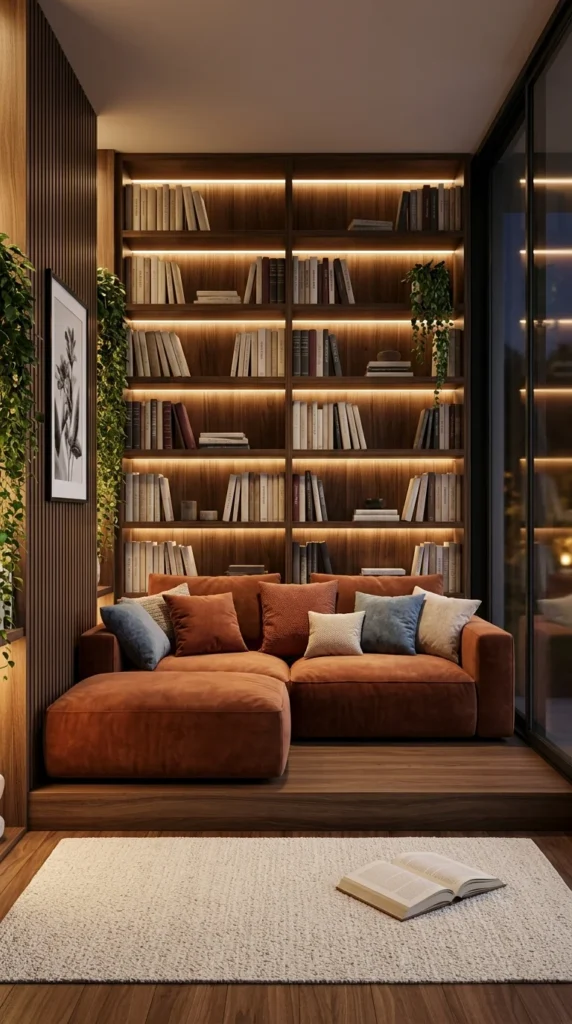
This nook uses a raised wood platform to separate itself from the rest of the room, and it works even though the space is small. The rust-orange sectional and ottoman fill nearly the whole footprint, but backlit shelving keeps the wall behind it from feeling like a solid, heavy block. Warm strip lighting runs behind each shelf, so the books themselves seem to glow instead of just sitting there.
This is one of the few nooks here that actually looks better at night than during the day. The floor-to-ceiling glass beside it means daylight would wash out that shelf lighting completely — so if you’re copying this, think about when you’ll actually use the space before you commit to it.
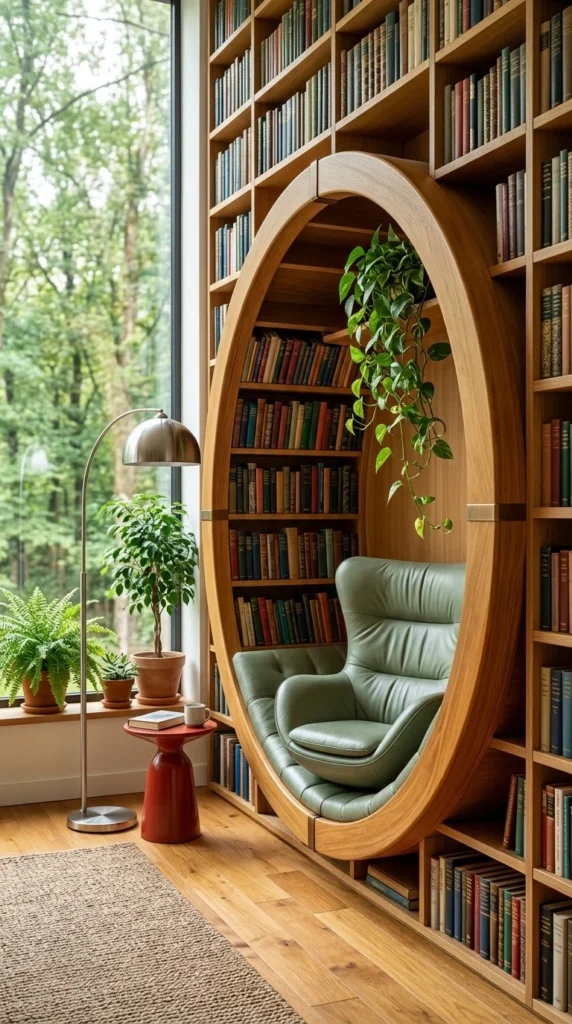
6. The Oval Cocoon Chair
Honestly, this is the nook I’d actually want. The oval cutout carves a leather chair straight into the shelving, and the trailing pothos vine gives the whole thing a slightly wild, unstyled feel that most of these spaces avoid. A red side table breaks up all that wood tone, and it’s a small choice that keeps the corner from reading as one long brown blur.
One thing worth flagging: that vine looks perfect in the photo, but a plant left to trail exactly where your head goes needs trimming every few weeks, or it starts brushing your face mid-chapter. Small price for the effect, but it’s the kind of maintenance reality that never makes it into the caption.
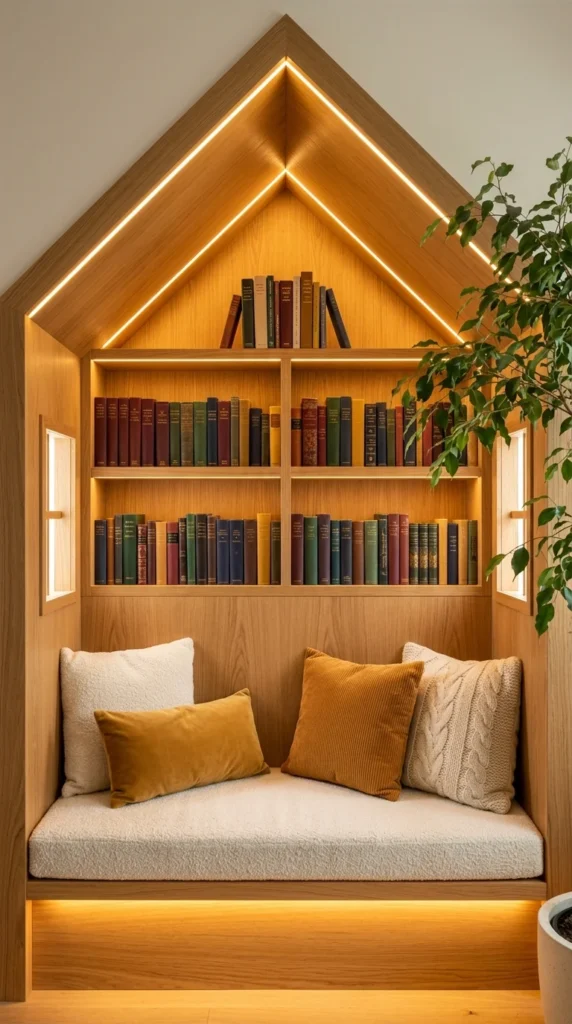
7. The Storybook House Nook
Why does a bookshelf shaped like a tiny house feel this charming instead of gimmicky? Probably because it doesn’t overdo it. The peaked roofline is the only “house” cue — everything else is just a well-built reading bench with warm mustard and cream pillows and a strip of under-seat lighting that gives the whole thing a soft glow at floor level.
There’s storage tucked into the two tiny “window” cutouts flanking the shelves, which is a nice detail for anyone short on space. And unlike the arched nook from earlier, which leant formal with walnut and jewel tones, this one goes almost playful — mustard, honey oak, cream boucle. It would suit a kid’s room or a reading corner just as easily as a living room.
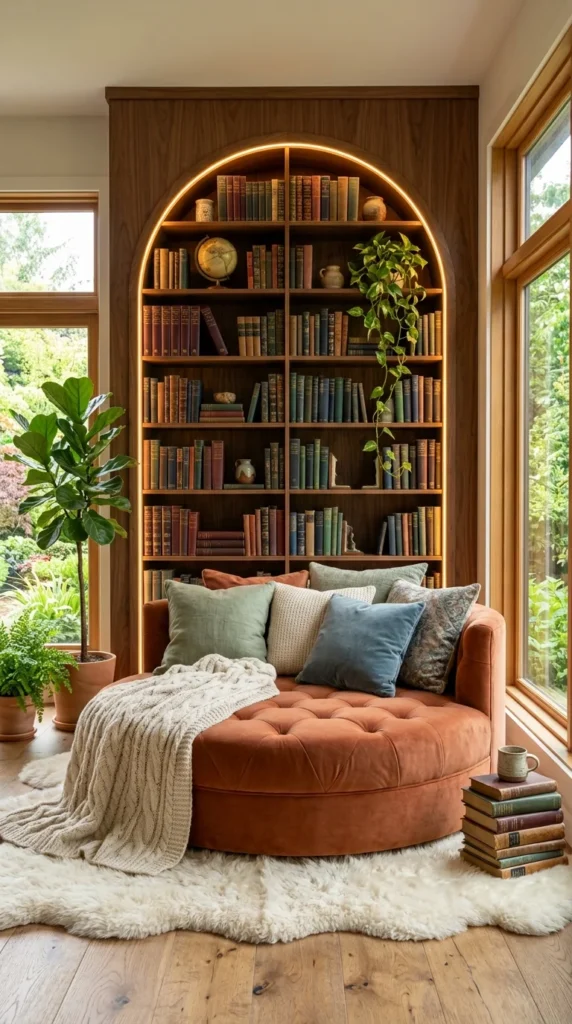
8. The Arched Shelf With a Round Daybed
Two windows flanking the shelf, a fiddle-leaf fig in the corner, and enough natural light to make the backlighting almost unnecessary during the day – this room has an advantage most reading nooks don’t get. The tufted round daybed picks up the same rust tone from the sunken platform nook earlier, but here it sits in a much brighter, plant-filled space instead of a moody night-lit one.
What I’d actually copy from this room isn’t the custom arched shelving — most people can’t build that into a wall. It’s the stack of books used as a side table next to the daybed. No extra furniture, no clutter, just books doing double duty. That’s the kind of small, low-cost move that makes a space feel lived-in rather than staged.
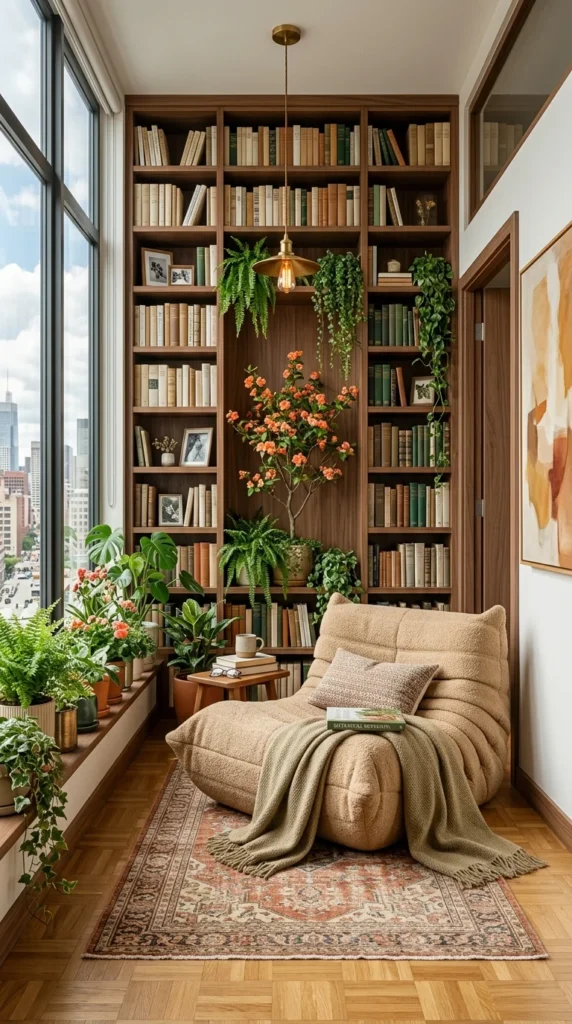
9. The High-Rise Plant-Filled Corner
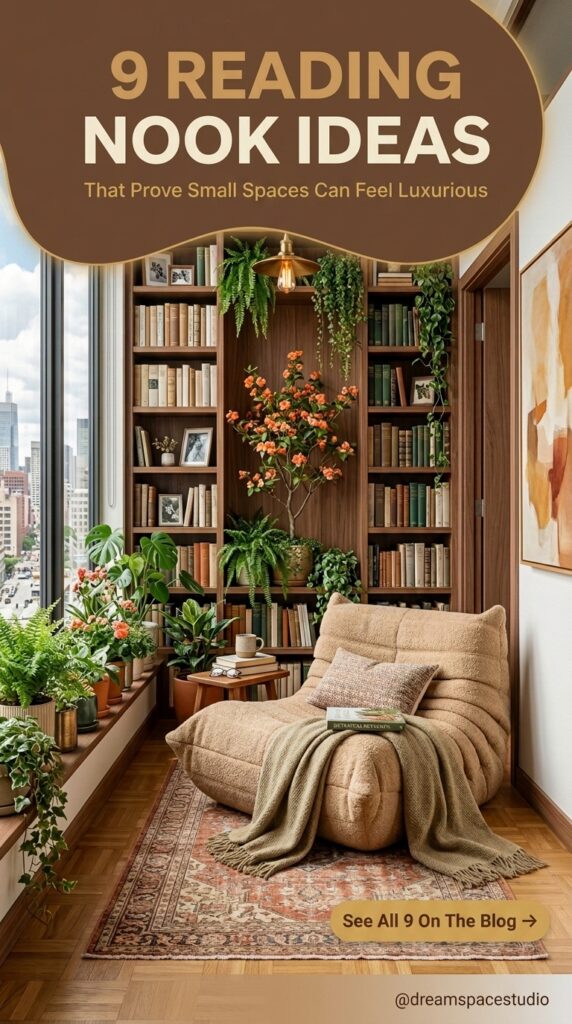
Nine floors up, a city skyline through floor-to-ceiling glass, and somehow this still feels like the cosiest room in the whole lineup. That’s the real lesson here — the Togo-style chair is soft and slouchy, almost the opposite of every structured bench and daybed before it, and the sheer volume of plants on the windowsill does more to warm the space than any wood tone could. A flowering tree fills the centre shelf gap where a person might expect a TV or a piece of art.
Most high-rise reading corners skip greenery because of light concerns, but this room proves west-facing glass can support it easily. The vintage rug adds the one pattern in an otherwise calm, leafy palette — and it’s the only nook in this list where the view outside competes with the shelf inside for your attention.
Conclusion
Look back at all nine of these corners, and one thing becomes obvious: not a single one relies on square footage. The hanging pod, the oval cutout, the storybook nook — they all work because someone made a deliberate decision about light, scale, or restraint, not because they had an unlimited budget or an extra room to spare.
The real insight worth taking with you is this: a reading nook succeeds or fails on one thing you almost never notice in photos — how the space feels after 20 minutes, not after the first glance. A stunning shelf means nothing if the chair hurts your back or the light gives you a headache by chapter three.
So before you copy any of these, ask yourself which corner in your own home already gets good light and quiet. That’s your starting point — not the Pinterest board. Everything else — the shelving, the lighting, the cushions — is just detail work layered on top of a spot that already wanted to be a reading nook.
FAQs
1. Do I need built-in shelving to create a reading nook like these? No. Built-ins look impressive, but a freestanding bookshelf placed to frame a chair gives you most of the same visual effect — and you can take it with you when you move.
2. What’s the most budget-friendly nook idea from this list? The plant-filled corner (Section 9). A cosy chair, a secondhand rug, and a windowsill of plants cost far less than any custom carpentry, and the effect is just as inviting.
3. Is a hanging chair or pod safe for renters? Usually not without permission. These need a structural ceiling anchor, which most leases won’t allow. A floor-based egg chair or a deep armchair gets you a similar cocooned feeling without touching the ceiling.