

A rug does more work in a bedroom than almost any other single piece. It sets the temperature of a room before anyone even notices the walls — softening hard flooring, framing the bed, and giving bare feet something better than cold wood or tile first thing in the morning. Yet it’s often the last thing picked, tacked on after the bed, the curtains, and the paint color are already settled.
That’s a missed opportunity. The right rug can pull a mismatched room together, add warmth to a space that feels sterile, or introduce the one bold decision a neutral bedroom has been missing. Below are ten different rug styles, pulled from ten very different bedrooms — different shapes, textures, colors, and price points — with a look at what makes each one work in its own space.
A Sculpted Wave Rug That Softens an All-Black Room
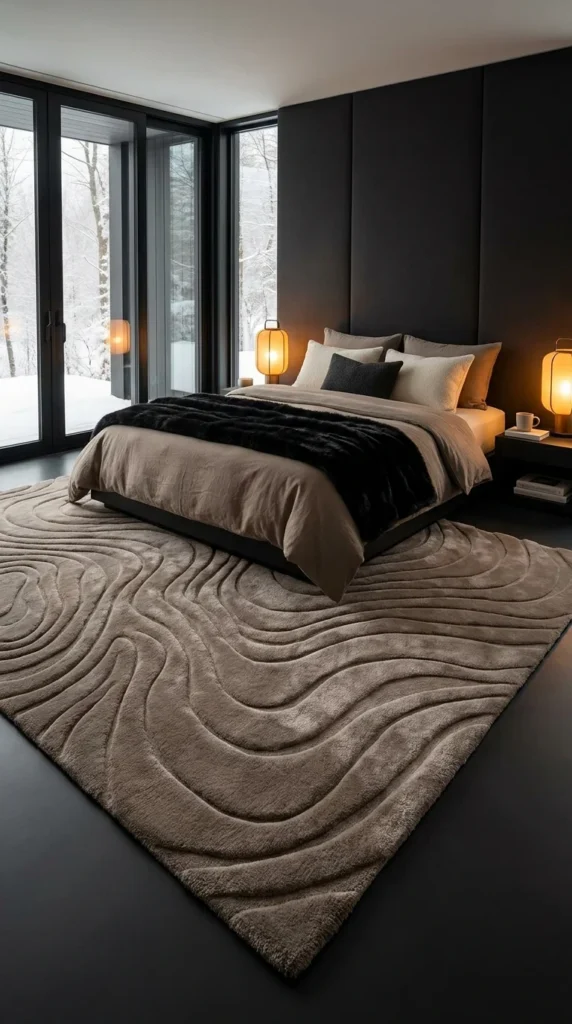
Dark, paneled walls and a snow-covered view outside give this bedroom a cool, almost architectural mood. The rug is what keeps it from tipping into cold. Its wave-carved texture catches the amber light from the bedside lanterns differently depending on the angle, so the surface never looks flat — even in a room built almost entirely around black and charcoal tones.
A high-pile, sculpted rug like this works because it adds dimension without adding color. The room already has enough visual weight in the dark paneling; a busy pattern underfoot would compete with it. Instead, the texture alone does the job, softening the transition between a hard floor and a heavily upholstered bed.
💡 Pro Tip
For carved or high-pile rugs like this one, vacuum in the direction of the pile at least once a week. Vacuuming against the grain flattens the sculpted texture over time and dulls the shadow effect that makes the pattern visible.
Geometric Color Blocking as the Room’s Only Bold Move
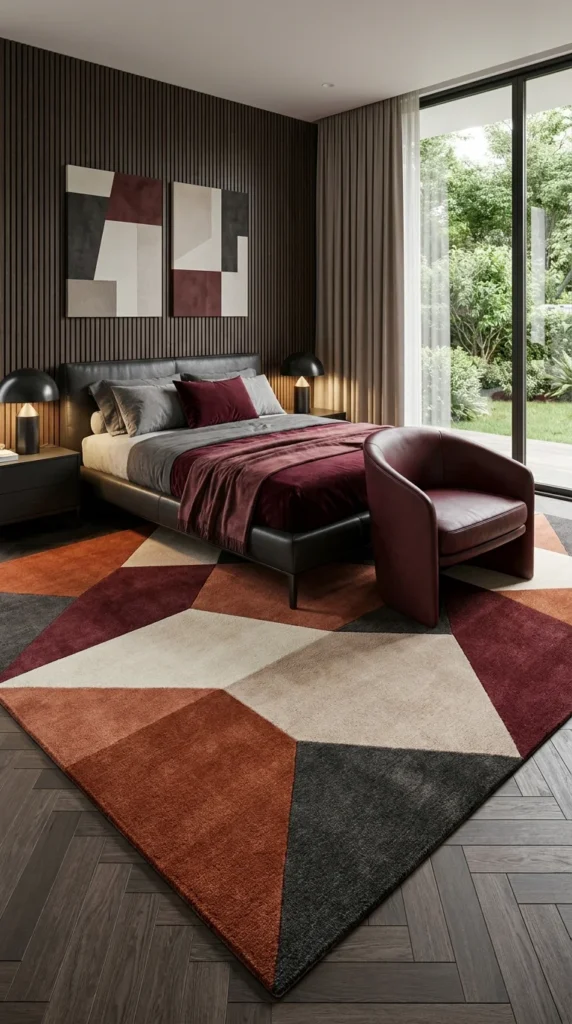
This bedroom leans dark and restrained — a wood-slat accent wall, black leather bed frame, herringbone flooring. Against that backdrop, the rug is the one place color gets to happen. Rust, burgundy, cream, and charcoal meet in large angular blocks, and because the shapes are so simple, the effect reads as confident rather than busy.
Large-scale geometric rugs suit rooms that already have strong material choices elsewhere. The herringbone floor and slatted wall both rely on repetition and clean lines, and the rug picks up that same logic instead of fighting it. A smaller, more intricate pattern in this same color palette would likely have gotten lost against the floor.
The takeaway for anyone trying this look: let the rug’s colors echo something already in the room — a headboard, an accent chair, a piece of art — so the boldness feels intentional instead of random.
The Rug That Turns a Traditional Bedroom Into Something Warmer
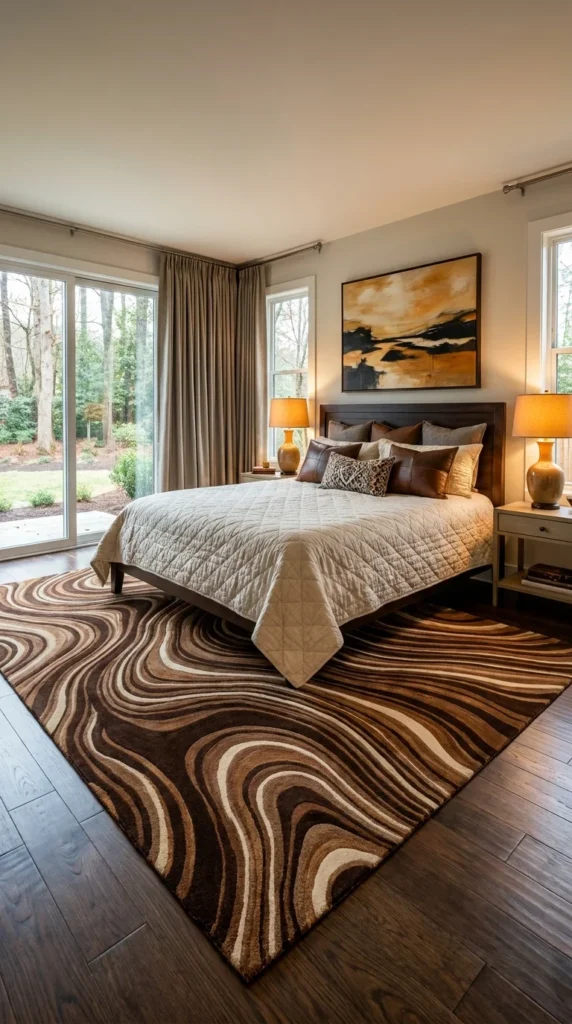
Swirling brown and cream tones move across this rug in a marbled pattern that softens an otherwise fairly classic bedroom. The quilted white bedspread, wood furniture, and abstract landscape art all sit comfortably in traditional territory — the rug is what keeps the room from feeling stiff.
⚠️ Warning
A common mistake with swirled or marbled rugs is matching them too closely to the wood floor tone. When the rug and floor sit in the same narrow brown range, the boundary between them disappears and the room loses definition. Aim for at least a few shades of contrast, or lean into cream and ivory tones within the pattern to create separation.
Patterned rugs with organic, flowing lines tend to soften rooms built on straight-edged furniture. The curves in the rug counterbalance the rectangular headboard and boxy nightstands, giving the eye somewhere to rest that isn’t a hard corner.
How a Round Woven Rug Anchors a Boho Corner
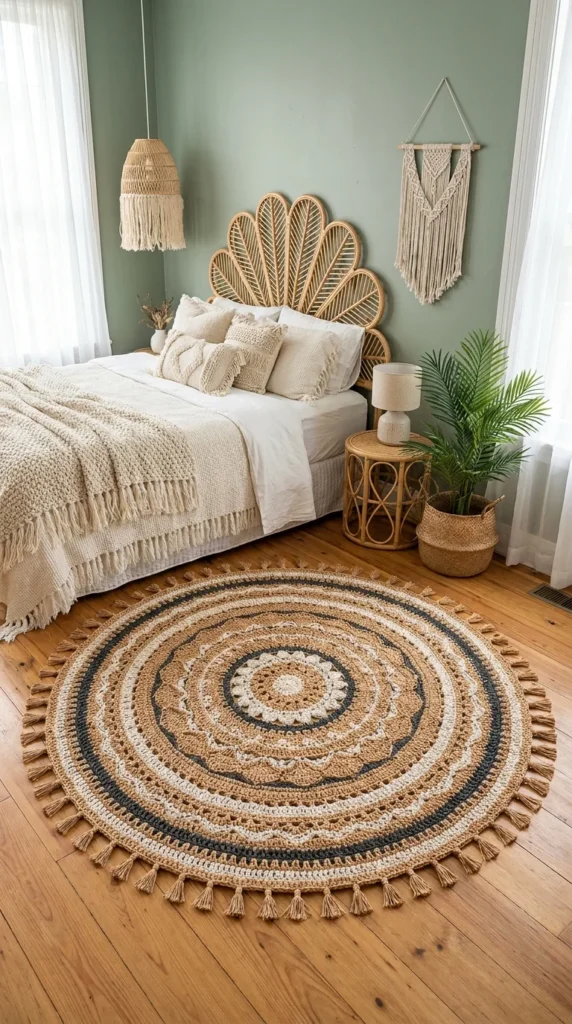
A round crochet rug with a tasseled edge sits at the foot of a rattan peacock headboard, surrounded by macrame and a sage green wall. The concentric rings in tan, cream, and slate give the rug a handmade, almost woven-basket quality that matches the natural materials used everywhere else in the room.
Materials That Belong in This Look
☐ Natural fiber rug — jute, cotton, or crochet-style construction ☐ Rattan or wicker furniture, at least one piece ☐ Woven textile wall art (macrame or wall hanging) ☐ A plant in a woven basket planter ☐ Warm, low lighting — avoid stark white bulbs
Round rugs work particularly well in boho-leaning rooms because they break up the straight lines of the bed and walls. Placed off-center near a reading corner or accent chair rather than centered under the bed, a round rug also helps define a secondary zone within the room instead of just repeating the bed’s footprint.
Soft Pink Against Steel and Glass — Why the Contrast Works
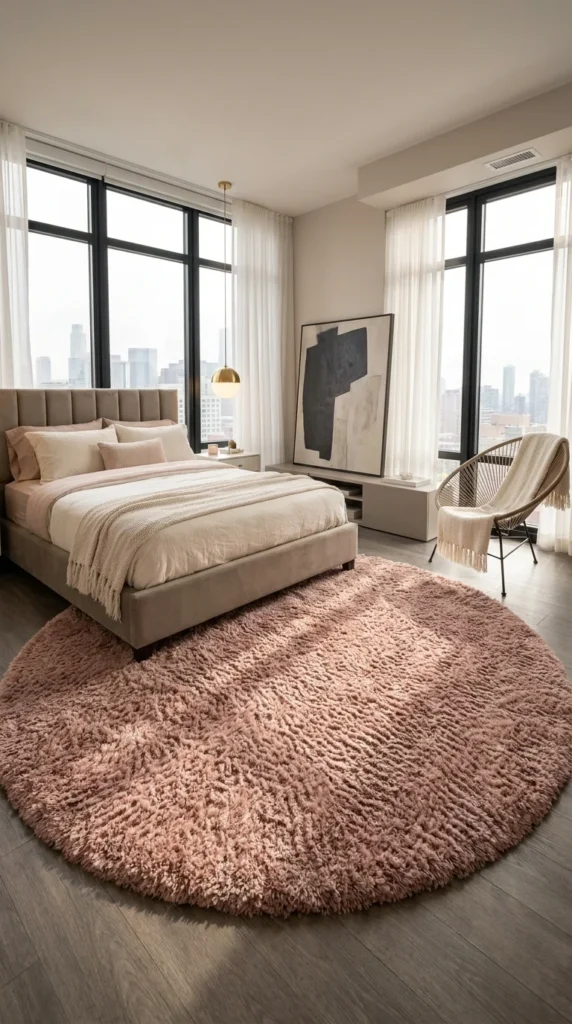
Floor-to-ceiling windows and a city skyline give this bedroom a sharp, modern edge. The round, deep-pile pink rug softens that edge considerably, introducing the only warm, tactile element in a space otherwise built from glass, steel window frames, and smooth upholstery.
📌 Important Note
Oversized round rugs like this one need real floor space to work — this only functions because the room has enough clearance on all sides for the circle to sit as its own shape rather than getting cut off by furniture. In a smaller bedroom, the same rug in a rectangular cut will usually fit more comfortably without losing the softness.
The color choice matters as much as the shape. A blush or dusty pink reads as calm rather than overtly feminine, which is why it holds its own in a room with such a strong architectural backdrop instead of feeling out of place.
Terracotta Tiles Underfoot: Bringing Color Into a Warm Bedroom
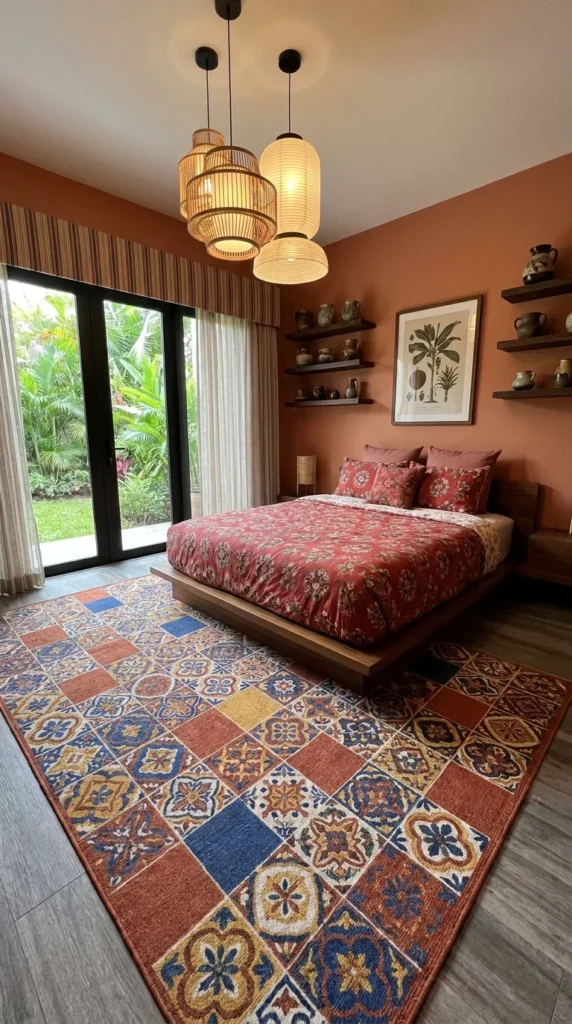
This rug mimics hand-painted Mediterranean tile work — small squares in terracotta, indigo, mustard, and cream arranged in a patchwork grid. Paired with warm clay-colored walls, patterned bedding, and rattan pendant lights, the rug reinforces a palette that already leans warm and saturated rather than introducing something new.
💡 Pro Tip
When working with a tile-pattern rug this busy, keep the bedding a single dominant color instead of adding a second bold print. This room’s floral bedspread works because it shares the rug’s red and gold tones — a competing pattern in a different color family would make the whole space feel chaotic instead of layered.
Tile-motif rugs suit bedrooms with garden or courtyard views, where the goal is an indoor-outdoor feel. The repetition in the pattern also makes a large room feel more grounded, since the eye has a consistent visual anchor across the whole floor.
An Organic Rug Shape That Breaks Every Straight Line in the Room
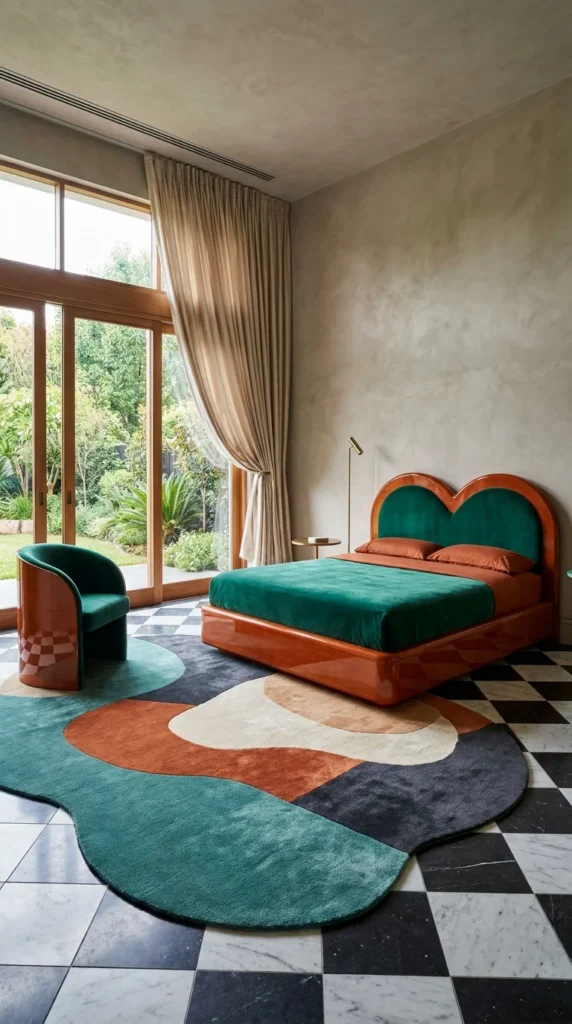
Instead of a rectangle or circle, this rug follows an irregular, cloud-like outline in green, terracotta, cream, and charcoal. Set against a black-and-white checkerboard floor and a heart-shaped headboard, the freeform edge keeps the whole room from feeling too graphic or gridded.
A rug shape this unconventional works specifically because everything else in the space commits to bold geometry — the checkerboard tile, the curved bed frame, the rounded velvet chair. If the surrounding furniture were plainer, an irregularly shaped rug might look like an odd choice rather than a deliberate one. The lesson here is about matching commitment level: a daring rug shape needs an equally daring room around it, or it risks looking accidental.
Color-blocked organic shapes like this also photograph well from above, which makes them a strong choice for anyone documenting a bedroom redesign for a portfolio or social feed.
What It Takes to Ground a Maximalist Bedroom With One Rug
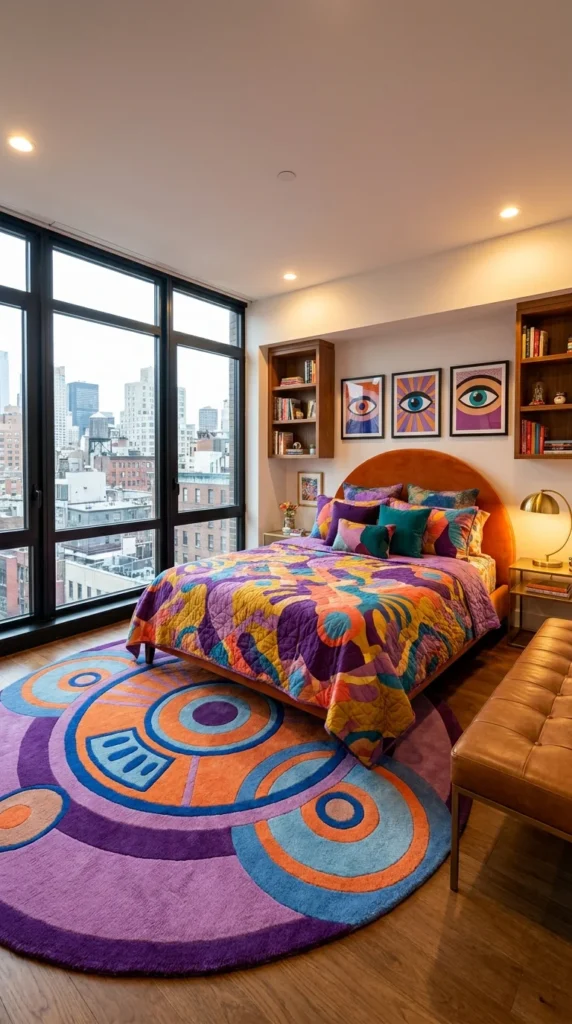
Concentric circles in purple, blue, and orange spiral across this round rug, sitting beneath a patchwork quilt and pop-art eye prints. In a bedroom this visually loud, the rug’s job isn’t to calm things down — it’s to hold the same energy without adding a completely new pattern language.
⚠️ Warning
The biggest risk in a maximalist room like this is layering too many different pattern types. This rug avoids that trap by sticking to circles and rings, which echo the round shapes already present in the artwork and pillows. Mixing in a floral or striped rug here would have pushed the room from bold into visually overwhelming.
For anyone attempting a similarly saturated look, picking one repeating shape — circles, stripes, chevrons — and carrying it across the rug, art, and textiles keeps a maximalist room feeling curated instead of cluttered.
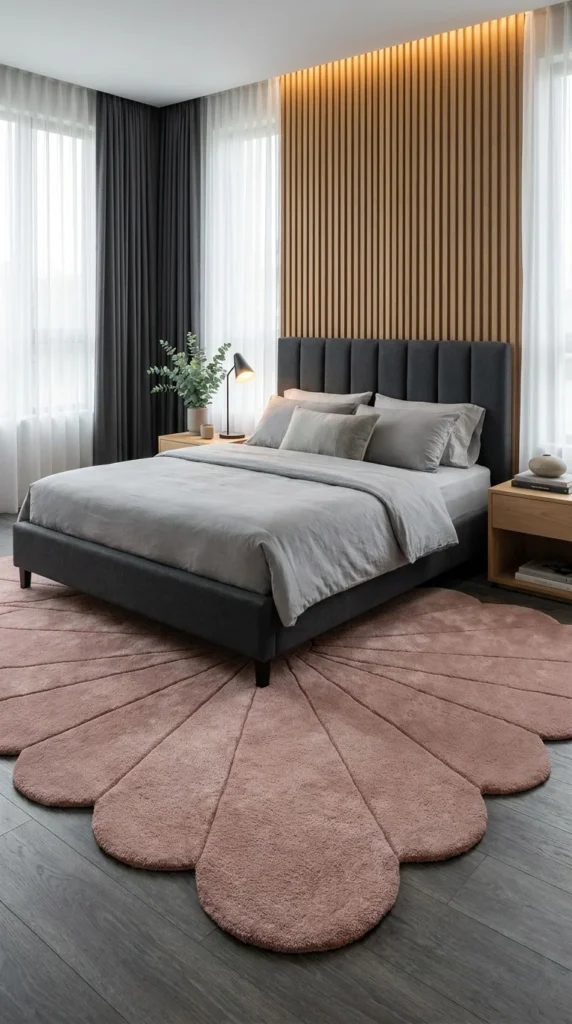
Petal-Shaped Softness Without Adding a Single Extra Pattern
Cut into overlapping scalloped petals, this blush pink rug brings shape-based interest to a bedroom that otherwise stays fairly restrained — a charcoal tufted headboard, warm wood slat wall, and soft gray bedding. There’s no competing pattern anywhere in the room; the visual interest comes entirely from the rug’s silhouette.
Before and After
❌ Before: A rectangular rug in this same soft pink would likely have read as a fairly standard, safe choice — pleasant, but unremarkable against the tufted headboard and wood paneling. ✅ After: Cutting the same color into a scalloped, flower-like shape turns it into the room’s focal point without changing the palette at all.
This is a useful approach for anyone who wants to keep a room’s color scheme minimal but still add personality: change the shape instead of the color or pattern.
Braided Texture That Grounds a Dark, Moody Bedroom
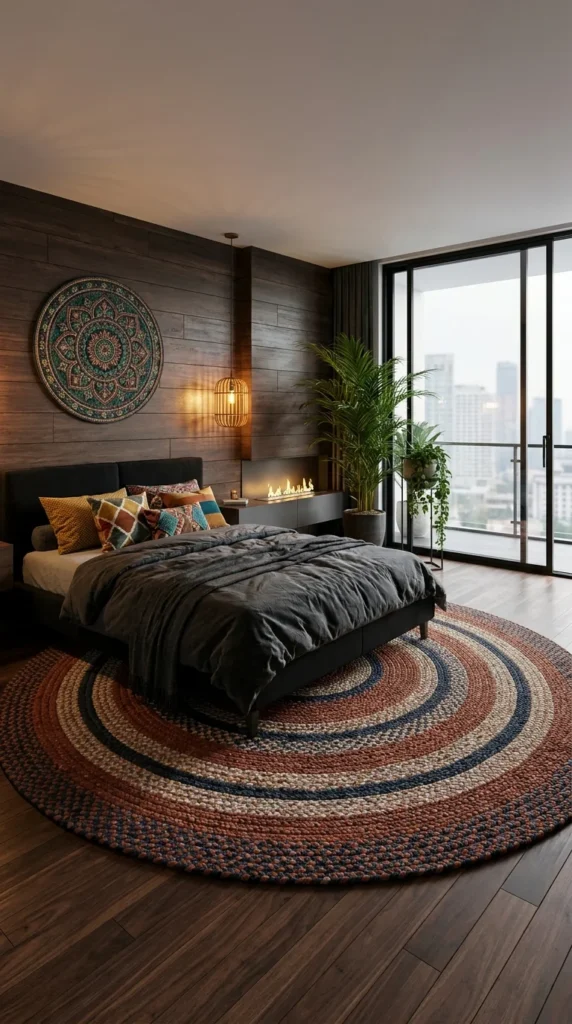
A round braided rug in rust, navy, and cream sits at the foot of a charcoal bed, set against dark wood-paneled walls, a mandala wall hanging, and a small built-in fireplace. The braided construction gives the floor a tactile, layered texture that keeps the room’s dark palette from feeling flat or heavy.
Braided rugs carry a slightly rustic, collected-over-time quality that suits bedrooms mixing multiple textures and eras — wood panelling, a modern fireplace insert, patterned throw pillows, and greenery all sit comfortably around it. The multicolour braid also does a practical job here: it hides foot traffic and shadows far better than a solid-colour rug would in a room lit mostly by warm, low lighting.
💡 Pro Tip
In rooms with a fireplace or heat source near the rug, choose a wool or wool-blend braided rug over synthetic fibres. Wool is naturally more heat- and flame-resistant, which matters more in a bedroom layout like this one than in a standard living space.
Final Thoughts
Ten rugs, ten completely different moods — but the same underlying idea shows up throughout: a rug is rarely just a floor covering. It’s often the piece doing the most to set a bedroom’s temperature, whether that means softening a stark modern space, grounding a maximalist one, or adding the single bold decision a neutral room has been missing. Before repainting a wall or buying new furniture, it’s worth asking what a different rug alone might change.
Frequently Asked Questions
How big should a bedroom rug be? As a general guide, a rug should extend at least 18–24 inches beyond the sides and foot of the bed. For a queen or king bed, that usually means a rug in the 8×10 or 9×12 range so the front legs of nightstands or a bench still land on the rug rather than the bare floor.
Should a rug go under the whole bed or just at the foot? Both work, depending on the room. A rug that extends under the front two-thirds of the bed creates a more grounded, cohesive look, while a smaller runner or round rug placed just at the foot works well in smaller bedrooms where a full-size rug would overwhelm the floor space.
What rug material is best for a bedroom? Wool and wool-blend rugs are a popular choice for bedrooms because they’re soft underfoot, naturally insulating, and reasonably resistant to wear. Synthetic options like polypropylene are more budget-friendly and easier to clean but tend to flatten faster in high-traffic spots like the walkway beside the bed.
Can two different rugs be layered in one bedroom? Yes—a smaller textured or patterned rug layered over a larger neutral jute or flatweave base is a common way to add depth without overwhelming a room. This works best when one of the two rugs stays fairly plain, so the layering reads as intentional rather than mismatched.
How often should a bedroom rug be cleaned? Vacuuming weekly is enough for most bedroom rugs, since they see less foot traffic and outdoor debris than rugs in entryways or living rooms. A deeper clean — professional or at-home shampooing — every 12 to 18 months is generally sufficient unless the rug is light-coloured or in a household with pets.

2 Responses