You have scrolled past enough pool photos to know the drill. Endless turquoise rectangles, the same kidney-shaped curve, and the same in-ground concrete everyone with a big enough yard and a big enough budget seems to have. If you have ever stood in your own backyard, tape measure in hand, wondering whether a real pool is even possible on a modest lot or a renter’s budget, you already know this frustration personally.
That is exactly where shipping container pools enter the conversation. What started as an industrial afterthought has quietly become one of the more practical answers to small-space swimming: a steel container, reinforced and repurposed, dropped into a yard without the excavation, the permits, or the price tag of a traditional build.
This is not a highlight reel of luxury installations. It is a walkthrough of ten real approaches — some clever, some flawed, all worth studying before you decide whether this idea belongs in your own backyard.
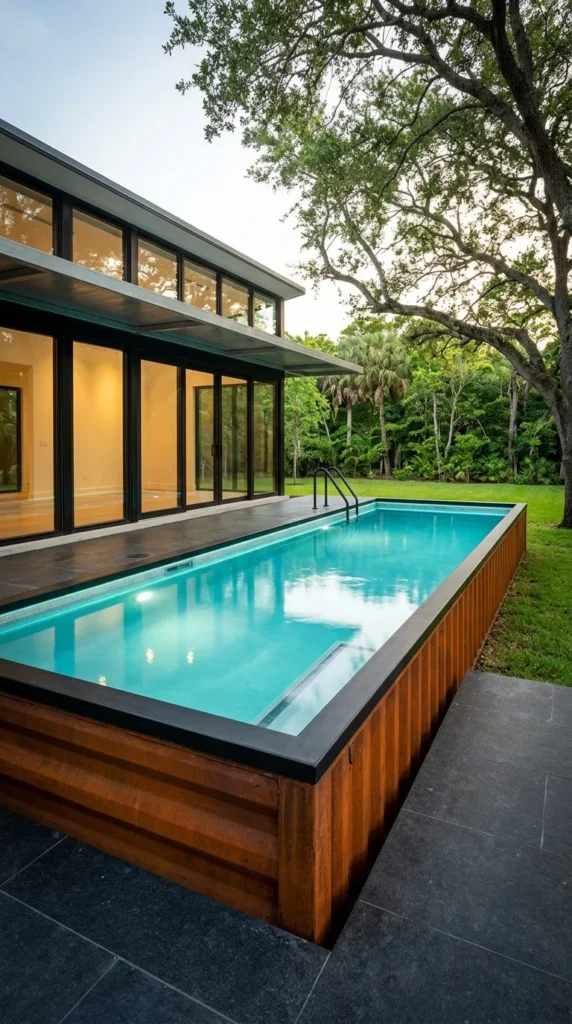
That reddish-brown finish running along the container’s exterior is corten steel, a metal that is engineered to rust on purpose and then stop, forming a stable skin that protects whatever sits beneath it. Most people assume weathering like this means neglect. Here, it is the opposite — a deliberate finish chosen because raw steel would have looked sterile against all that surrounding greenery. The pool itself sits mostly above ground, which keeps excavation minimal, and the narrow rectangular shape mirrors the clean horizontal lines of the glass house behind it. What is easy to miss on first glance is the small glass panel cut into the container’s side, just below the waterline, letting light and movement pass through in a way a solid concrete wall never could. It is a quiet detail. It changes how the whole structure reads.
2. Where the View Comes With a Price
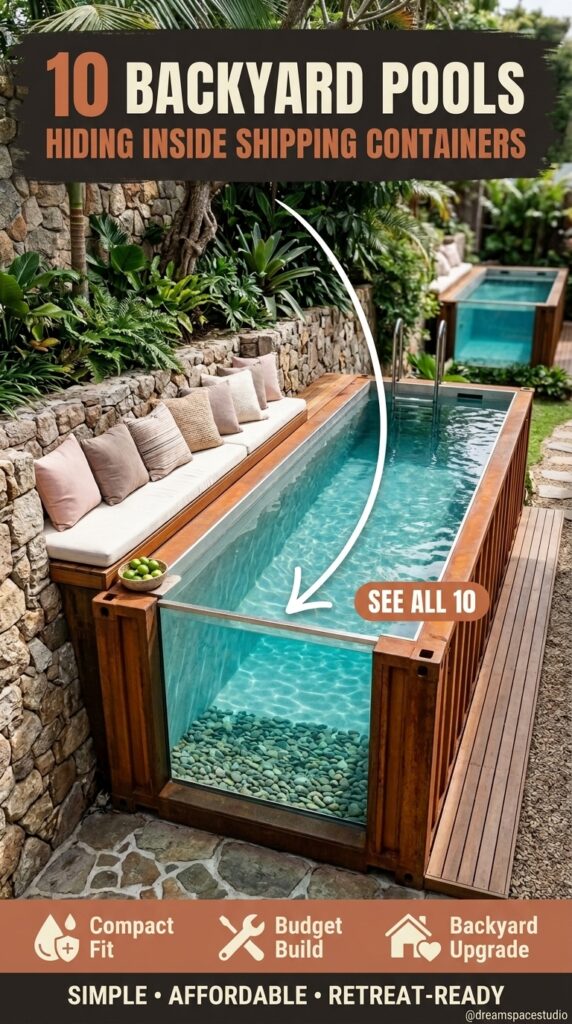
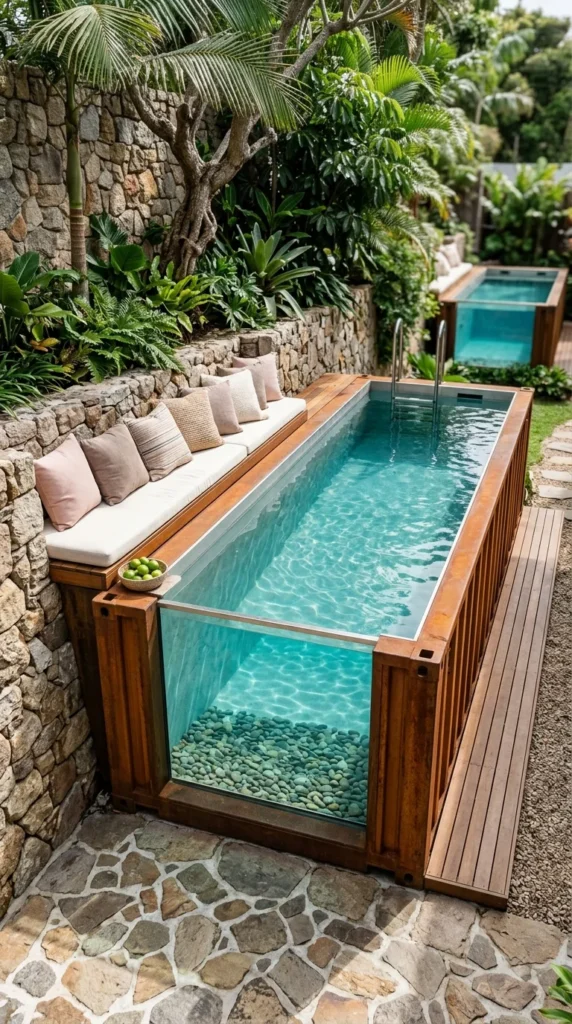
Full transparency on a pool wall sounds appealing until you consider what it actually asks of you. Here, the container’s glass panel reveals a bed of smooth river pebbles resting below the waterline, which looks striking from the terraced seating above but means every bit of algae, every water spot, and every mineral streak becomes visible from the outside too. That is the tradeoff nobody photographs. What this design gets right, though, is the built-in bench running along the stone retaining wall — cushions and all — turning the pool deck into an actual gathering spot rather than just a place to swim and leave. The staggered layout, with a second container pool visible further down the slope, repeats the module without repeating the experience, since each one sits at a slightly different level along the hillside. Maintaining that glass clarity, though, is a weekly job most owners underestimate going in.
Pro Tip: Corten steel needs airflow underneath to weather correctly — a container pool sealed flush against solid ground can trap moisture and rust unevenly instead of forming that protective patina.
3. A Second Container, Doing Quieter Work
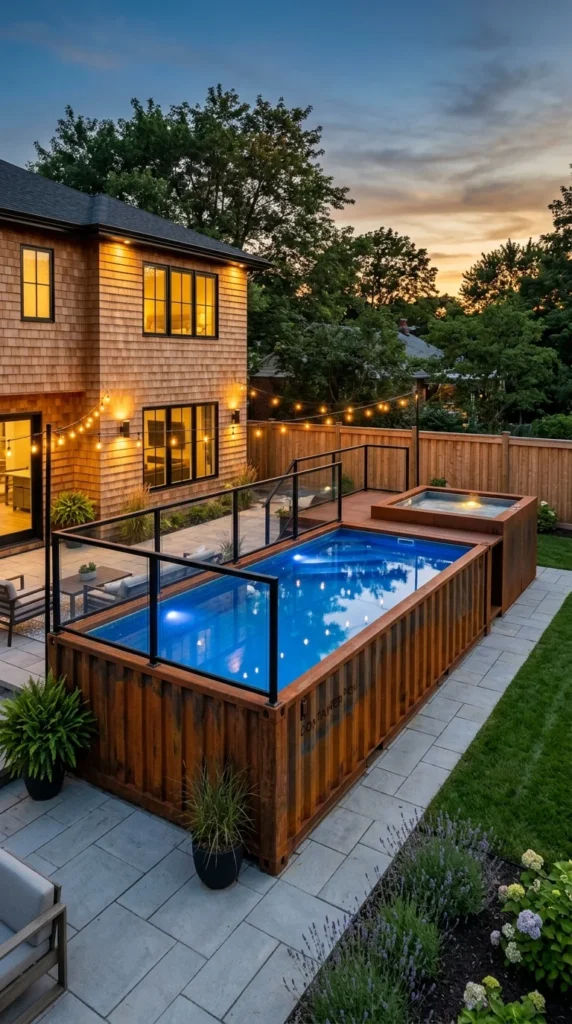
Honestly, this is the setup that sells the whole idea best, and it has nothing to do with the pool itself. Look at the smaller container tucked beside it, fitted out as a raised spa — same rust-toned steel, same proportions, just scaled down and finished with a still, glowing surface instead of a swimming lane. Pairing two containers this way turns one material choice into two completely different functions, which is a smarter use of budget than building a separate hot tub structure from scratch. The glass safety railing running around the pool’s edge is doing real work too, not just design work — most municipalities require a barrier at this height, and here it doubles as an unobstructed view towards the string-lit patio. What nobody puts in the caption is that the container’s visible seams and stencilled lettering near the base are left exposed on purpose, a small reminder of what the structure used to be before it held water at all.
4. A Pool Built to Share a Deck With a Cabin
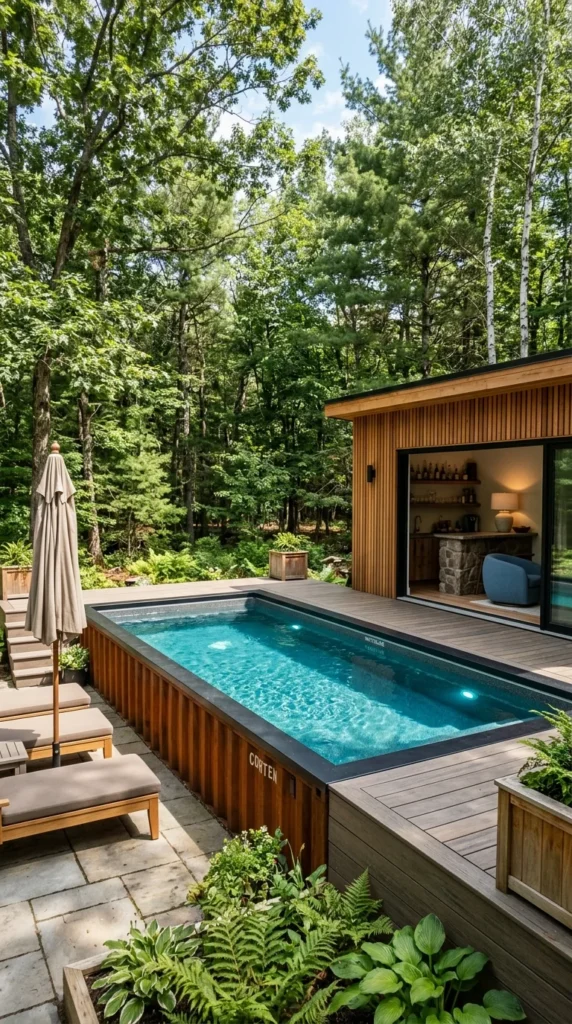
This one keeps things simple. A single container pool sits flush against a wood deck, with a small guest cabin positioned close enough that the pool almost reads as an extension of the building itself. The deck material continues in the same tone right up to the pool’s edge, so there is no visual seam between “structure” and “landscape” – just one continuous surface. Sliding glass doors open the cabin’s interior directly toward the water, meaning someone inside could watch the pool without stepping outside at all. The surrounding forest does the rest of the work here; there is no elaborate hardscaping competing for attention, just tall pines and a stone retaining wall holding the slope in place. Lounge chairs and a folded umbrella sit close by, suggesting this space is built for staying rather than just swimming through it. Not every container pool needs a dramatic setting to work. Sometimes the setting is simply the woods around it.
5. Personally, I Would Question the Scale Before Anything Else
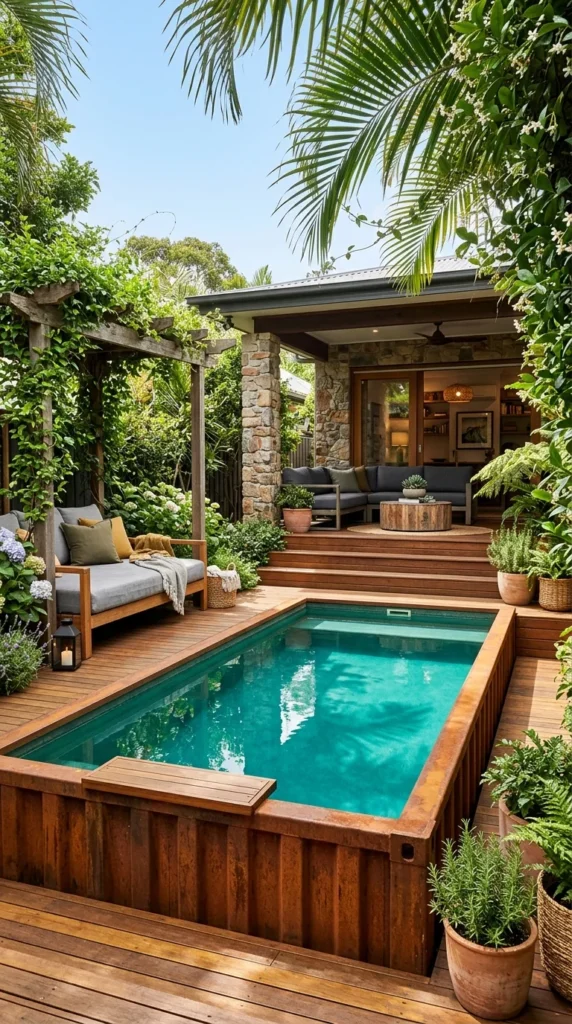
Personally, I would hesitate before assuming a pool this compact suits every household — it clearly works here, tucked into a lush, plant-heavy corner where privacy matters more than lap distance, but it is closer to a plunge pool than a swimming pool in the traditional sense. That distinction matters more than it looks in photos. The small fold-down bench built into the container’s side is a smart touch, giving swimmers a place to sit half-submerged without needing separate pool steps, and the rusted steel exterior blends surprisingly well against the timber decking and stone pillars behind it. A pergola draped in climbing vines shades the lounge seating just steps away, which softens the industrial edge of the container itself. This is a setup built for quiet mornings, not laps before work. Anyone expecting real swimming distance here will be disappointed within the first few strokes.
Pro Tip: Before choosing a glass viewing panel, check your region’s algae growth rate. Warmer climates mean weekly cleaning, not monthly, to keep that underwater view actually visible.
6. Where Ambition Outpaces the Average Backyard
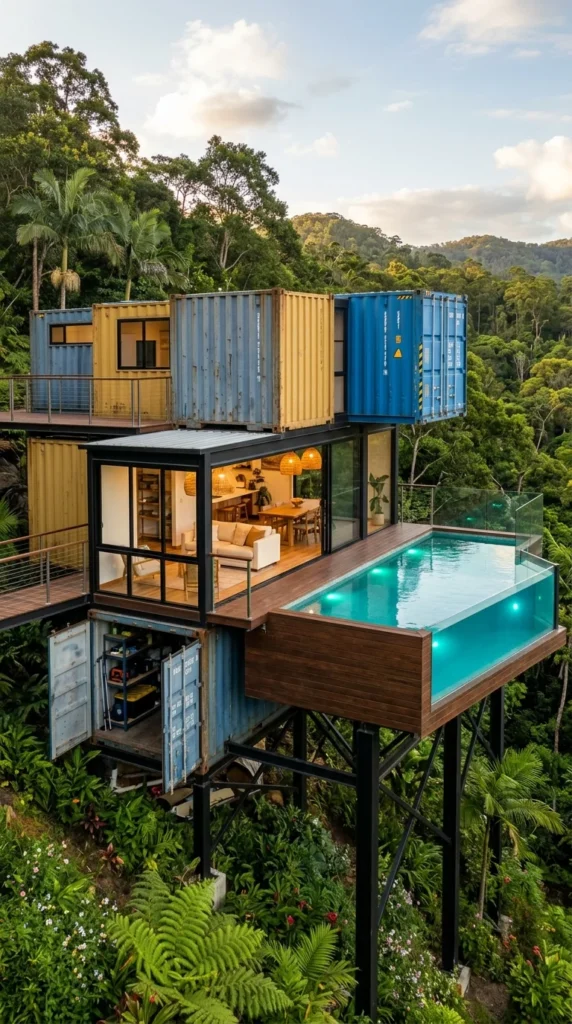
Before anything else, this one needs a caveat: almost nothing here is realistic for a typical home, and that is worth saying outright rather than dressing it up. A full multi-container structure cantilevered on steel stilts above a hillside, complete with a glass-walled pool suspended over open jungle, requires structural engineering far beyond what a residential contractor handles on a weekend project. What it does demonstrate well, though, is how full-height glass on a pool’s exterior wall turns swimming into something closer to floating above the landscape than being contained by it. The mismatched container colours — mustard yellow beside faded blue — read as intentional rather than accidental, since uniform paint would have flattened the whole assemblage into something far less interesting. This is aspirational architecture, not a backyard blueprint. Most readers will take the glass-wall idea and leave the stilts behind.
7. A Courtyard Pool That Skips the Resort Look Entirely
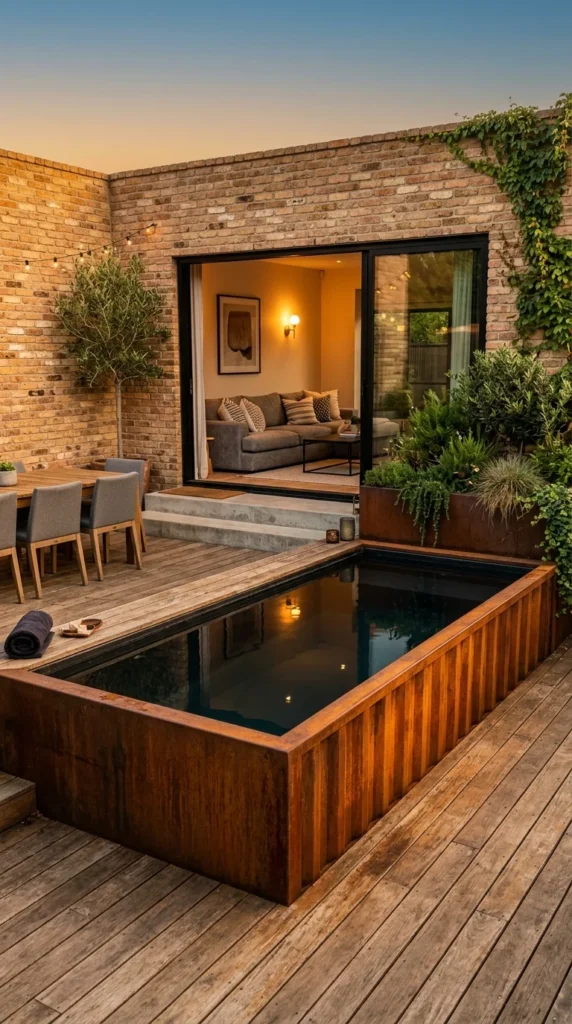
There is no attempt at a tropical backdrop here, and that absence is exactly the point. A brick courtyard, string lights, and a small dining setup surround this container pool instead, placing it firmly in city or suburban territory rather than anywhere trying to resemble a getaway. The water reads almost black in the evening light, reflecting the warm interior glow spilling out from the sliding doors behind it. That reflection is doing more visual work than the pool’s actual colour, honestly — daylight would show a much more ordinary blue underneath. A rolled towel and small tray sit casually at the pool’s edge, suggesting a space used often rather than staged for a single photo. The wood decking runs level right up to the container’s rusted base, with no railing separating the two, which keeps the whole footprint compact and works specifically because the drop into the water is shallow enough not to require one.
Pro Tip: Painted containers eventually need recoating, but bare Corten never does — factor that difference into which finish suits how much upkeep you actually want long-term.
8. Indoors Changes Everything About How This Reads
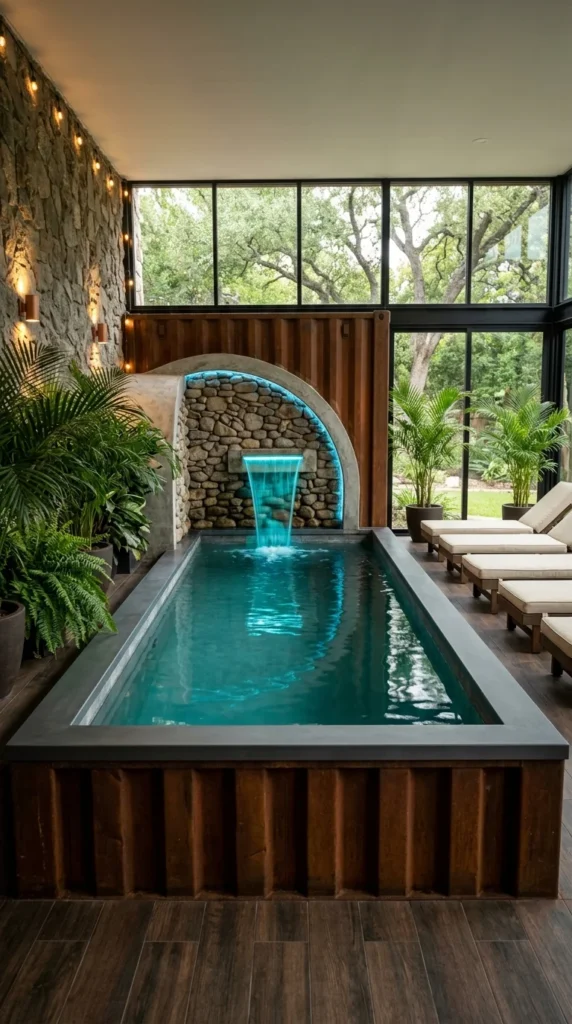
What happens when you take this same container pool concept and move it entirely indoors? The rust-toned steel exterior stays consistent with every outdoor version already covered, but here it sits beneath floor-to-ceiling glazing that erases the line between inside and the wooded yard beyond it. The centrepiece is a small LED-lit waterfall built into an arched stone niche, cut directly into what looks like the container’s end wall — a detail that would be far riskier to attempt on an unsheltered pool exposed to weather. Unlike the courtyard version discussed earlier, this space depends entirely on year-round climate control rather than seasonal use, which is a real cost most people underestimate before committing to an indoor build. Lounge chairs line one side; stone cladding softens the container’s industrial edge on the other. A pool this small rarely needs a diving board. It needs exactly this kind of quiet, and it gets it.
9. The One Painted Choice That Breaks From Every Other Design Shown Here
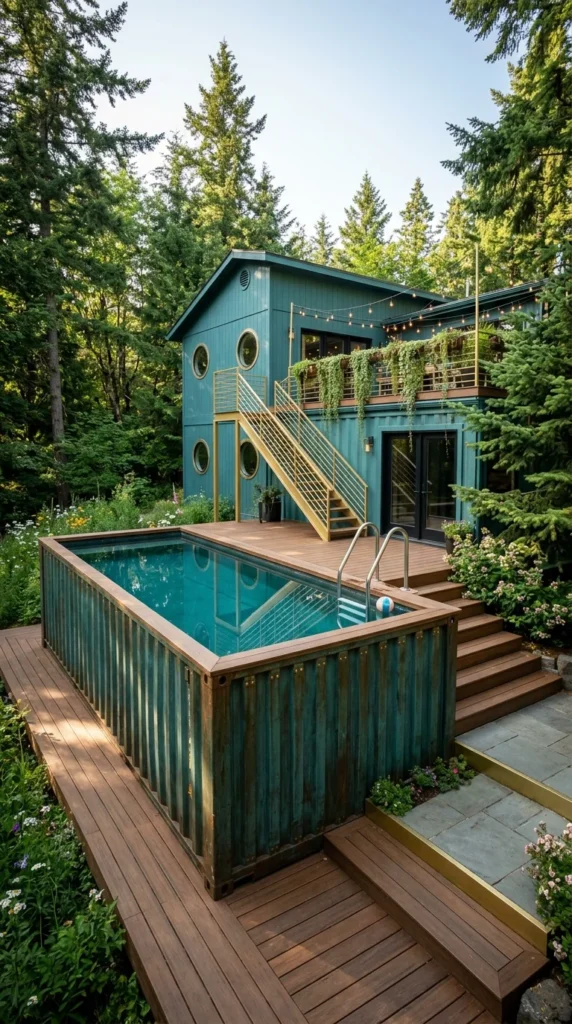
Every other container pool in this list left the steel’s natural weathering exposed. This one did not, and the difference is worth sitting with. A deep teal-green finish covers both the pool and the two-storey cabin behind it, matching the surrounding pines so closely that the whole structure nearly disappears into the treeline at a glance. Brass-toned stair railings and porthole windows cut into the siding are the only elements pulling attention away from that colour match, giving the build a slightly nautical character without anyone needing to say the word out loud. A stray beach ball floating near the ladder does more to signal actual use than any styling choice could. Compared to the corten-steel builds throughout this list, painted steel like this needs recoating eventually, since paint fades in ways natural rust patina simply does not. Ten containers, ten very different personalities. This is the one that commits hardest to blending in rather than standing out.
10. What Does a Rooftop Actually Ask for a Pool Like This?
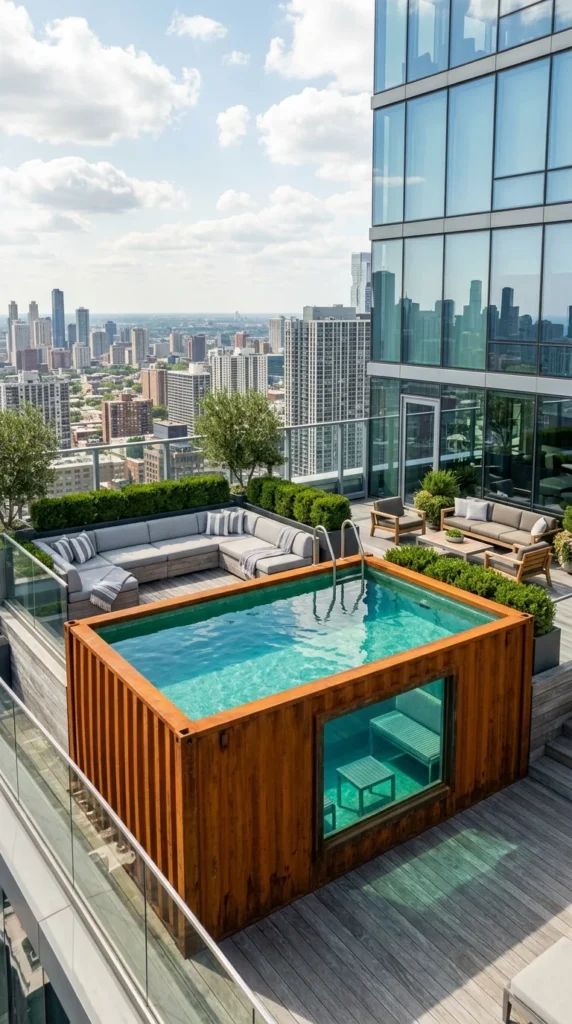
Can a shipping container really sit forty stories above a city street without the building underneath noticing the weight? That is the first question worth asking here, and the honest answer is that it depends entirely on structural engineering decided long before the pool ever arrives – not something a rooftop deck owner can simply improvise. Set against a Chicago skyline, this container pool includes a submerged glass viewing window on one side, letting anyone lounging on the built-in bench below peer directly into the water from a dry seat. It is a genuinely clever use of vertical space in a location where floor area is the scarcest resource of all. Sectional seating and potted trees soften the deck’s otherwise hard, glass-and-steel surroundings. Rooftop installations like this remain the exception, not the rule, mostly because so few buildings are engineered to carry them at all.
Conclusion
What ten containers make clear, taken together, is that this is never really about the steel itself. The material stays consistent from build to build. What changes is everything surrounding it — a stone wall, a forest, a rooftop skyline, a single coat of paint — and that surrounding choice does more to define the final result than the container ever does alone. A shipping container gives a homeowner a fixed, honest starting shape. What gets built around it is where the real decision-making happens. If there is one thing worth carrying away from this list, it is that the container is never the design. It is just the frame that everything else gets to react against.
Frequently Asked Questions
Is a container pool cheaper than a traditional in-ground pool? In many cases, yes, mainly because excavation costs drop significantly when a container arrives already shaped and structurally sound. That said, savings depend heavily on site prep, delivery distance, and whether the container needs sandblasting or additional reinforcement before it can safely hold water — so it is worth getting a few real quotes rather than assuming the savings are automatic.
How long does corten steel actually last as a pool wall? Corten steel is designed to form a protective rust layer that slows further corrosion, and many installations hold up well for years when properly sealed on the water-facing side. Longevity still depends on climate, water chemistry, and how consistently the interior coating is maintained, so it tends to reward regular upkeep rather than a one-time installation.
Can a container pool be installed on a rental property? This depends entirely on the property owner and local permitting rules, since a container pool is often semi-permanent rather than fully portable once plumbing and structural support are involved. Renters considering this route generally need written approval first, and it is worth checking whether the container can be relocated later if the lease ends.