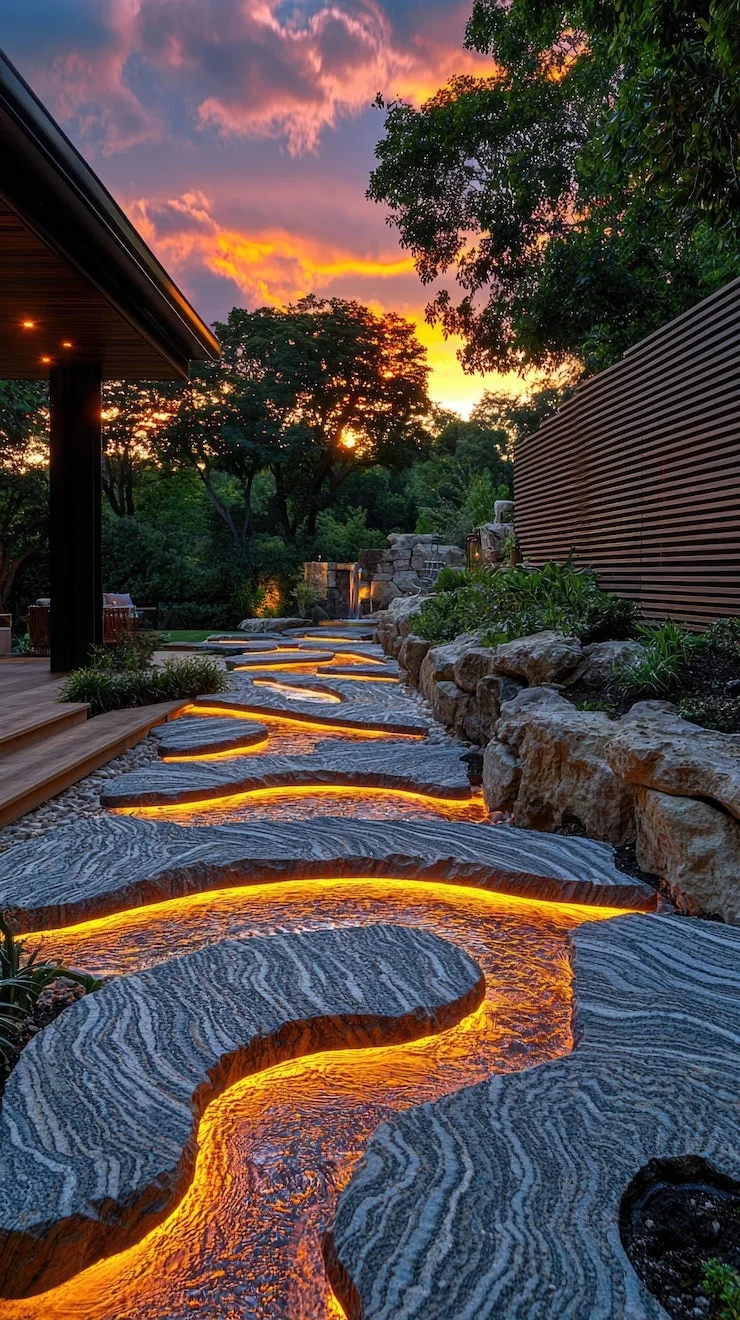
Introduction
Your front yard deserves better than boring concrete.
Let’s be honest. Most of us walk past our walkways every single day without feeling anything. No spark. No pride. Just… meh.
But here’s the truth:
🏡 Your walkway isn’t just a path — it’s the first hello your home gives to the world.
💡 It sets the mood. Romantic. Modern. Cozy. Wild.
🌿 It tells a story before anyone even knocks on your door.
The problem? We think walkways are purely functional. Walk from A to B. Done.
The reality? They’re emotional design opportunities hiding in plain sight.
Today, I’m sharing 15 walkway ideas that will make you stop, stare, and fall back in love with your front yard. From rustic charm to sleek modern vibes — these aren’t just paths.
They’re experiences.
Ready? Let’s walk. 🚶♀️✨
Designs ideas
🌙 1. Illuminated Stone Steps That Whisper “Come Home”
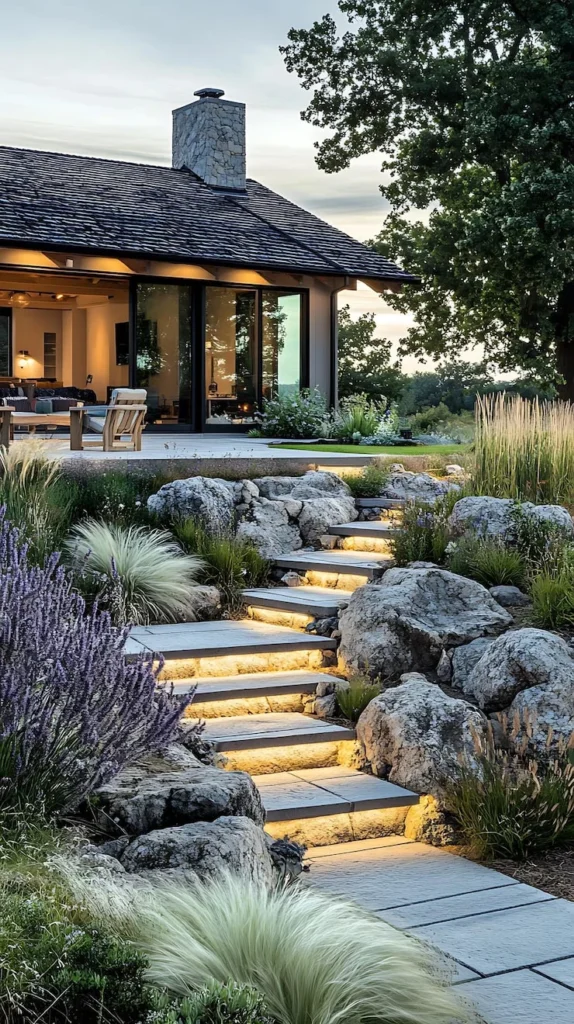
This isn’t just a walkway. It’s a glowing invitation.
Picture this: dusk settles in. The sky fades to lavender. And your pathway? It lights up like a runway to paradise.
This design marries modern concrete slabs with soft golden LED underlighting. Each step glows from beneath, creating a warm, magical effect that feels both luxurious and safe. The large natural boulders flanking each side? They ground the space. Literally. They add organic texture, making the sleek stone feel earthy rather than cold.
Here’s why it works:
The contrast is everything. Smooth vs. rough. Light vs. shadow. Modern vs. natural. You get drama without trying too hard.
The lavender and ornamental grasses soften the edges. They sway. They breathe. They make the whole scene feel alive — not sterile.
Who is this for?
Anyone who wants their home to feel like a five-star retreat the moment they pull into the driveway. This works beautifully on sloped yards or hillside properties where steps are necessary anyway.
How to recreate it:
Start with large-format concrete pavers (18×18 or bigger). Install low-voltage LED strip lighting underneath each step. Use landscape adhesive or small risers to create the gap for light. Then frame with chunky fieldstone boulders and wispy grasses, such as Mexican feather grass or blue fescue.
Pro Tip: Use warm white LEDs (2700K–3000K) — not cool white. You want cozy, not clinical. ✨
🌿 2. Tropical Jungle Path With Water Reflections That Feel Like Bali
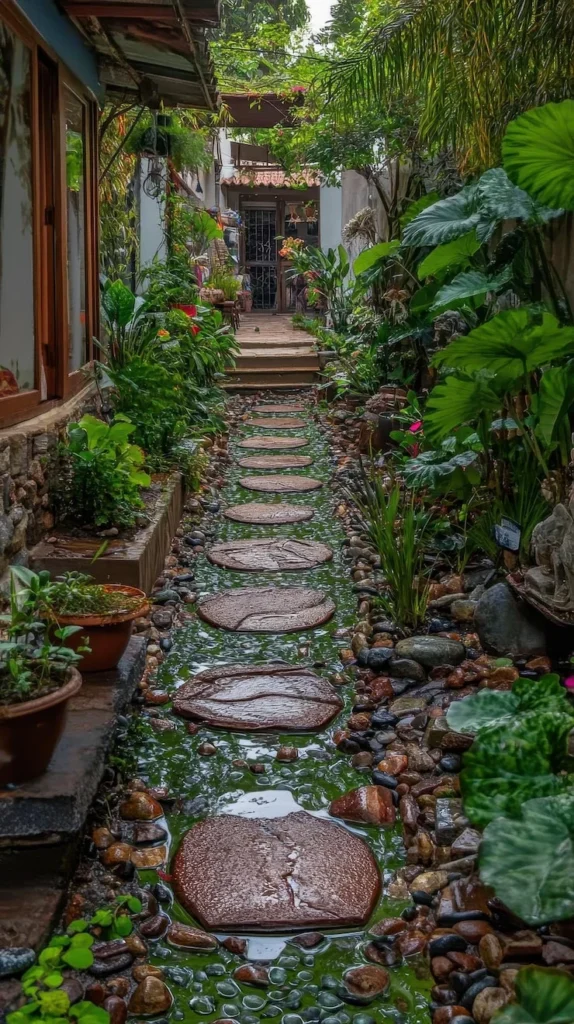
Close your eyes. Hear that? It’s the soft trickle of water beneath your feet.
This walkway doesn’t just connect spaces — it transports you. Straight to a hidden courtyard in Bali or a secret garden in Costa Rica. And you didn’t even leave your side yard.
The magic here? Oversized round stepping stones are placed directly into a shallow water feature filled with smooth river rocks. The stones sit just above the waterline, creating reflections that shimmer with every step. The lush tropical plants — elephant ears, palms, ferns — crowd in from both sides like they’re trying to reclaim the path. It’s wild. Intentional. Alive.
Here’s why it works:
The wetness changes everything. It cools the air. It reflects light. It adds sound. You’re not just walking — you’re experiencing.
The tight, narrow layout makes it feel intimate and secretive. Like you’re discovering something special every time you walk through.
Who is this for?
Anyone craving an escape vibe in their own backyard. Perfect for side yards, courtyards, or spaces between buildings where you want maximum drama in minimal square footage.
How to recreate it:
Dig a shallow trench (2–4 inches deep). Line it with pond liner. Fill with river rock and add a small recirculating pump for gentle water flow. Place large round concrete stepping stones (16–20 inches wide) on small risers. Then go wild with tropical plants — the bigger the leaves, the better.
Quick Tip: This works in any climate if you use cold-hardy “tropical-looking” plants like hostas, colocasia, or ornamental grasses. Fake it till you make it. 🌴💧
🔥 3. Lava Flow Walkway That Glows Like Molten Fire
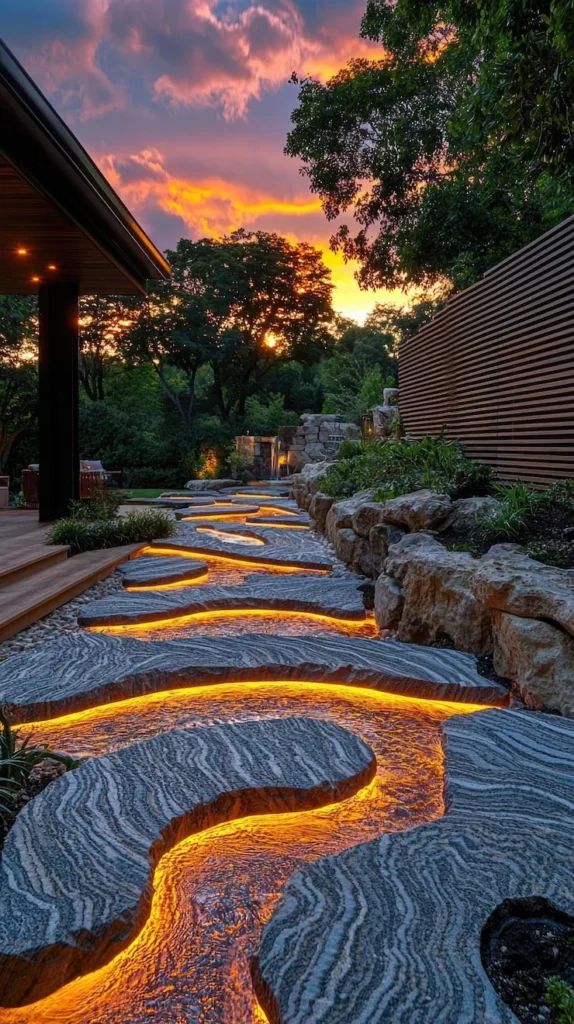
Stop scrolling. Just… look at this.
This walkway doesn’t whisper. It roars. Like actual lava carving through volcanic rock at sunset.
The design uses large, organically shaped dark stone slabs with dramatic swirling patterns that mimic natural geology. But here’s the genius: between each slab runs a glowing amber LED channel that looks like liquid fire. The effect? You’re literally walking on cooled lava with molten rivers still flowing beneath your feet.
Here’s why it works:
The contrast is primal. Dark, textured stone against blazing golden light. It taps into something ancient in us — fire, warmth, danger, beauty.
The organic shapes make it feel natural, not manufactured. No straight lines. No perfect edges. Just raw, flowing forms.
The massive boulders flanking the sides? They complete the volcanic landscape illusion. This isn’t a path. It’s a statement.
Who is this for?
Bold homeowners who want their outdoor space to feel like art. This works especially well in modern or contemporary homes where drama is part of the design language.
How to recreate it:
Use dark slate or basalt pavers with natural striations (or textured concrete stained dark). Cut irregular, flowing shapes. Install waterproof LED rope lighting (amber or warm orange, 2000K) in routed channels between stones. Seal with clear epoxy resin for durability. Add crushed stone or pea gravel around edges, then frame with large weathered boulders.
Pro Tip: Install a dimmer switch. You want full drama at night, but a subtle glow at dusk. Control the vibe. 🌋✨
🌱 4. Zen Garden Stepping Stones That Calm Your Soul Instantly
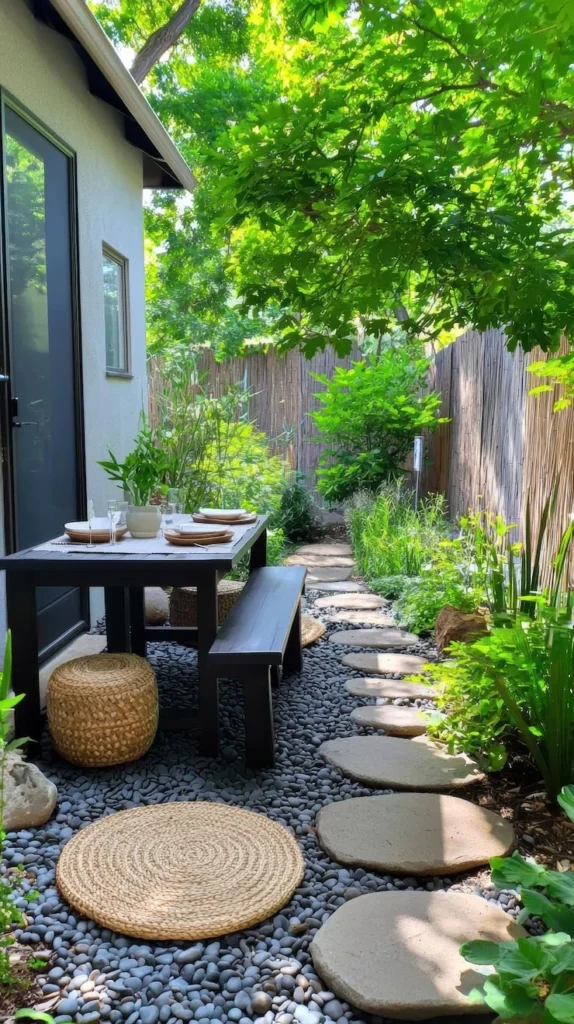
Take a breath. This is what peace looks like.
This walkway isn’t rushing you anywhere. It’s asking you to slow down. To notice the dappled sunlight. To hear the crunch of river rock under your shoes. To feel present.
The design features large, round natural stone pavers spaced generously apart across a bed of smooth gray river rock. The spacing is intentional — you can’t rush. You must step mindfully. Each stone is like a pause button in your day. The bamboo privacy fence creates an enclosed, protected feeling. The lush greenery overhead filters golden-green light. It’s a private sanctuary hiding in plain sight.
Here’s why it works:
The simplicity is the luxury. No lights. No fuss. Just stone, rock, and green. It feels honest.
The organic round shapes soften everything. Nothing harsh. Nothing sharp. Just curves and nature.
The neutral palette — gray stone, charcoal rock, natural wood — lets the vibrant green plants steal the show.
Who is this for?
Anyone craving a calm retreat vibe. Perfect for side yards, meditation gardens, or tight spaces between buildings where you want maximum serenity in minimal footage.
How to recreate it:
Lay down landscape fabric to prevent weeds. Spread 2–3 inches of smooth river rock (2–4 inch diameter, gray or mixed earth tones). Place large round flagstone pavers (18–24 inches wide) at comfortable walking intervals. Edge with low-maintenance plants like hostas, ferns, or ornamental grasses. Add a bamboo fence for privacy.
Quick Tip: Space stones 18–22 inches apart for a natural walking rhythm. Too close feels cramped. Too far feels awkward. Test it by walking before you commit. 🧘♀️🍃
🏛️ 5. Classic European Garden Path With Sculptural Elegance
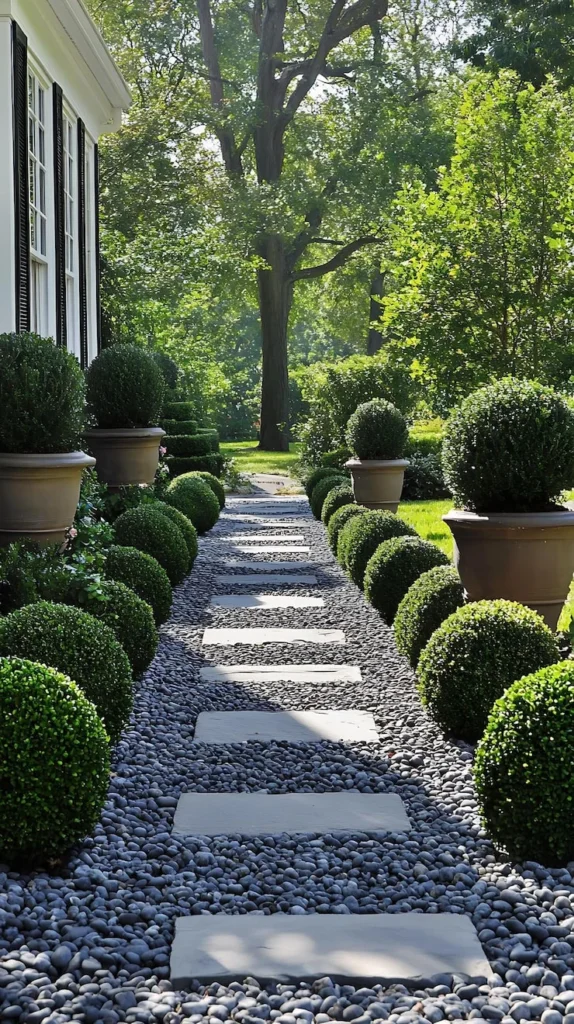
This is timeless sophistication — the kind that never goes out of style.
Imagine stepping out of a white colonial home into a pathway that feels like it belongs in the gardens of Versailles. Formal. Refined. But not stuffy. The light filters through ancient trees. The manicured boxwood spheres stand like green sentinels guiding your way. Everything whispers elegance.
The design uses crisp rectangular concrete pavers laid in a clean linear rhythm across a sea of dark charcoal river rock. The contrast is striking — light stone against dark stone. The perfectly pruned boxwood topiaries (both ground-planted and in elegant planters) create architectural structure. It’s symmetrical without being rigid. Formal without feeling cold.
Here’s why it works:
The repetition creates visual harmony. Stone, rock, green sphere. Stone, rock, green sphere. Your eye follows the rhythm effortlessly.
The monochromatic palette (white house, gray stone, deep green foliage) feels sophisticated and restful. No visual chaos. Just clean, confident design.
The mature trees overhead add organic softness to the formal structure below. Nature and design shaking hands.
Who is this for?
Homeowners who love traditional elegance with low-maintenance appeal. Perfect for colonial, farmhouse, or European-style homes where curb appeal means something polished and timeless.
How to recreate it:
Install large rectangular concrete pavers (24×36 inches work beautifully) spaced evenly. Fill gaps with Mexican beach pebbles or black river rock (1–3 inch diameter). Line the path with boxwood shrubs (Buxus varieties) trimmed into spheres or domes. Add matching planters for symmetry.
Pro Tip: Boxwood requires trimming 2–3 times per year to maintain shape. Can’t commit? Use pre-formed topiary frames or substitute with dwarf Alberta spruce for a similar structure. 🌳✨
🌾 6. Curved Desert-Mod Path With Sleek Steel Edging
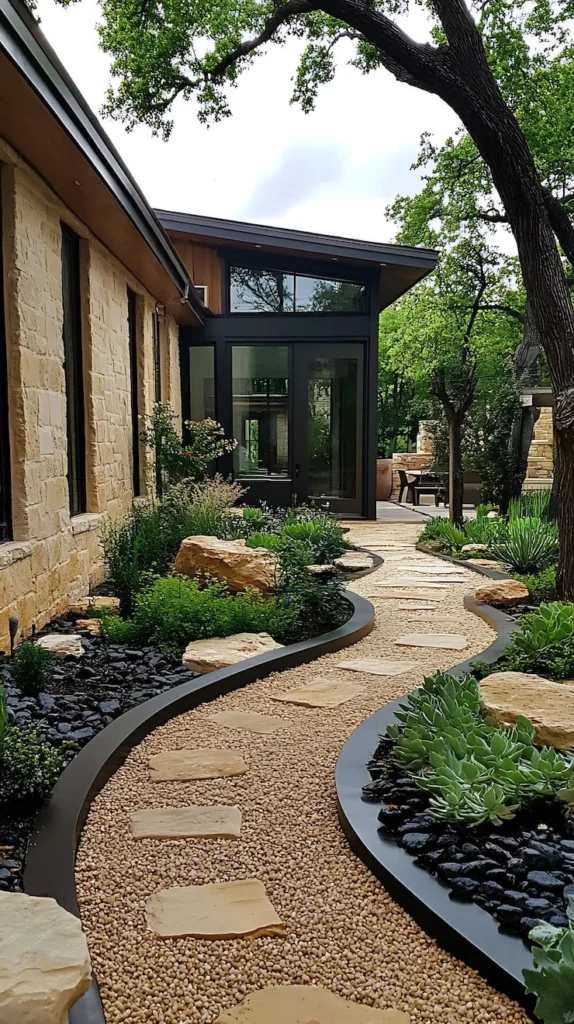
This walkway moves like a river — and it’s absolutely mesmerizing.
Forget straight lines. This design flows. It curves. It breathes. The gentle S-curve pulls your eye forward, inviting you to follow. The modern steel edging creates crisp, confident boundaries that contrast beautifully against the organic chaos of nature. It’s the perfect marriage of structure and softness.
The palette is earthy and warm: tan pea gravel as the base, irregular flagstone pavers in sandy tones, and black polished river rock in the planting beds. The contrast between the creamy gravel and dark rock is a chef’s kiss. Add in native succulents, grasses, and limestone boulders, and you’ve got a walkway that feels both desert-inspired and thoroughly modern.
Here’s why it works:
The curves make a small space feel bigger. Your eye travels the path, extending the visual journey.
The sleek metal edging (likely Cor-Ten steel or powder-coated aluminum) keeps everything tidy while looking ultra-contemporary. No fuss. No weeds creeping over.
The mix of textures — smooth gravel, rough stone, soft plants, hard steel — creates layered interest that never gets boring.
Who is this for?
Modern homeowners who want low-maintenance sophistication. Perfect for arid climates, xeriscape designs, or anyone craving that clean California-desert aesthetic.
How to recreate it:
Install flexible steel landscape edging (4–6 inches tall) in gentle curves. Fill with decomposed granite or pea gravel (¼ inch). Lay irregular flagstone pieces at walking intervals. Edge with black lava rock in planting beds. Add drought-tolerant plants like agave, sedum, or ornamental grasses.
Quick Tip: Wet the gravel slightly and tamp it down before placing stones. It’ll lock everything in place and prevent shifting. 🌵✨
🍃 7. Japanese-Inspired Moss Garden With Floating Stone Islands
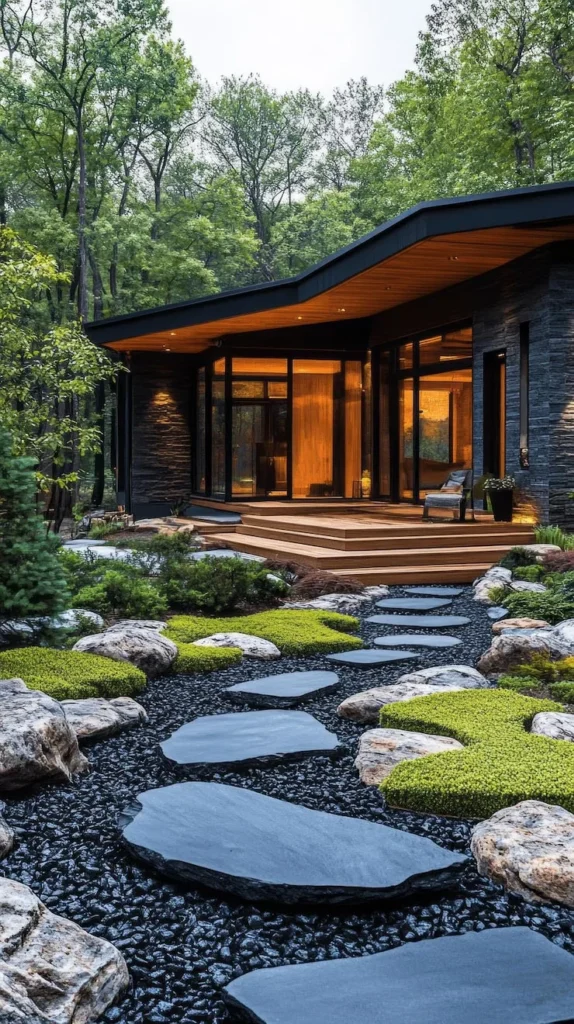
This isn’t a walkway. It’s a meditation in motion.
You’re looking at pure Japanese garden philosophy translated into a modern forest setting. The design uses large, irregular slate stepping stones that appear to float across a sea of glossy black pebbles. But here’s the magic: nestled between the stones are lush mounds of bright green moss and weathered gray boulders that look like they’ve been there for centuries.
The effect? You’re walking through a living painting. Each step is intentional. Each view is composed. The contrast between the dark stone base and vibrant moss cushions creates visual drama that’s somehow both energizing and calming at once.
Here’s why it works:
The asymmetrical balance feels natural, not designed. Nothing is perfectly centered, yet everything feels right.
The color blocking — black rock, green moss, gray stone — creates a graphic quality that photographs like art but feels organic in person.
The varied heights (flat stones, raised moss, chunky boulders) add three-dimensional interest. Your eye moves up and down, not just forward.
Who is this for?
Design lovers who want a gallery-worthy front yard that also connects deeply with nature. Perfect for wooded lots or homes with modern architecture that honors natural materials.
How to recreate it:
Excavate 3–4 inches. Lay landscape fabric. Spread black polished pebbles (1–2 inches). Place large irregular slate slabs as stepping stones. Create raised “islands” with soil mounds, then plant with Scotch moss or Irish moss. Add weathered fieldstone boulders for structure.
Pro Tip: Moss needs shade and moisture to thrive. This works best under a tree canopy or on the north side of homes. In full sun? Substitute with low sedums or creeping thyme. 🌿✨
🏺 8. Tropical Oasis Path With Mixed River Rock and Bold Planters
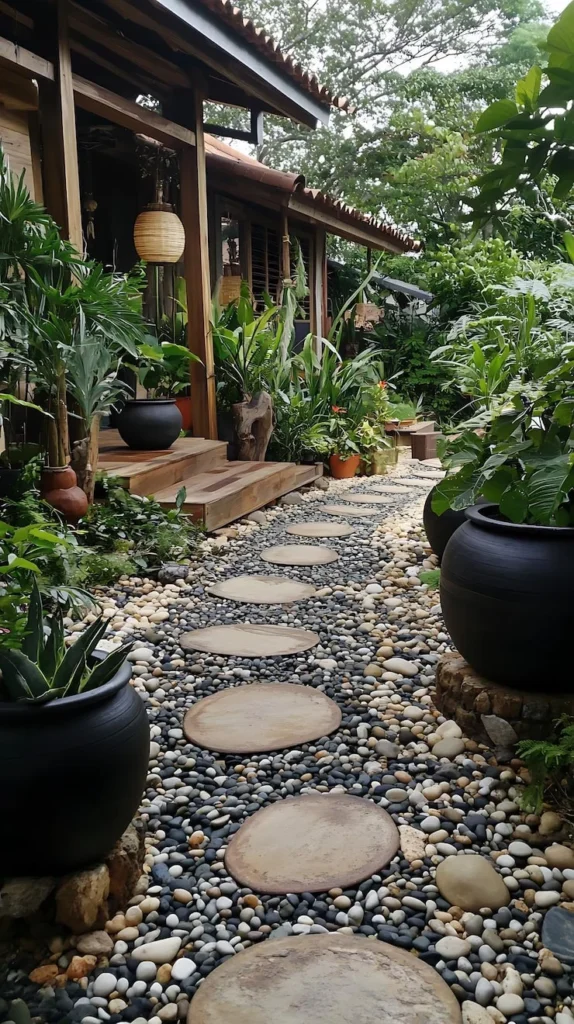
Welcome to your personal Thai villa — no passport required.
This walkway screams tropical escape. The kind of space where you half-expect to hear a waterfall in the distance and smell lemongrass in the air. It’s lush. It’s layered. It’s unapologetically abundant.
The design uses perfectly round concrete stepping stones (wood-grain texture, beautifully weathered) set into a mixed river rock base that blends gray, tan, and cream tones. But what makes this sing? The oversized black ceramic planters flanking the path are like sculptural guardians. They’re filled with dramatic tropical foliage — palms, dracaena, banana leaves — that create a green tunnel effect. Every step feels like you’re walking deeper into a jungle sanctuary.
Here’s why it works:
The mix of rock sizes (small pebbles to large stones) creates a natural-looking texture that mimics a riverbed. It feels discovered, not installed.
The bold black planters provide visual weight and contrast. They anchor the wild greenery and tie into the dark wood architecture.
The curve of the path disappears into the foliage, creating mystery. You can’t see where it ends — you have to follow it.
Who is this for?
Plant lovers and tropical dreamers who want an immersive escape experience. Perfect for side yards, courtyards, or any narrow space that needs big personality.
How to recreate it:
Lay landscape fabric. Spread a mix of river rock in varying sizes (½ inch to 3 inches, natural earth tones). Place round concrete pavers (16–18 inches) at walking intervals. Add large ceramic or resin planters (20+ inches) filled with tropical or tropical-looking plants. Layer heights and textures for depth.
Quick Tip: Can’t do real tropicals? Use hardy look-alikes: cannas, elephant ears, ornamental grasses, or hostas. The vibe matters more than botanical accuracy. 🌴✨
💧 9. Zen Water Garden Path With Reflecting Pool Stones
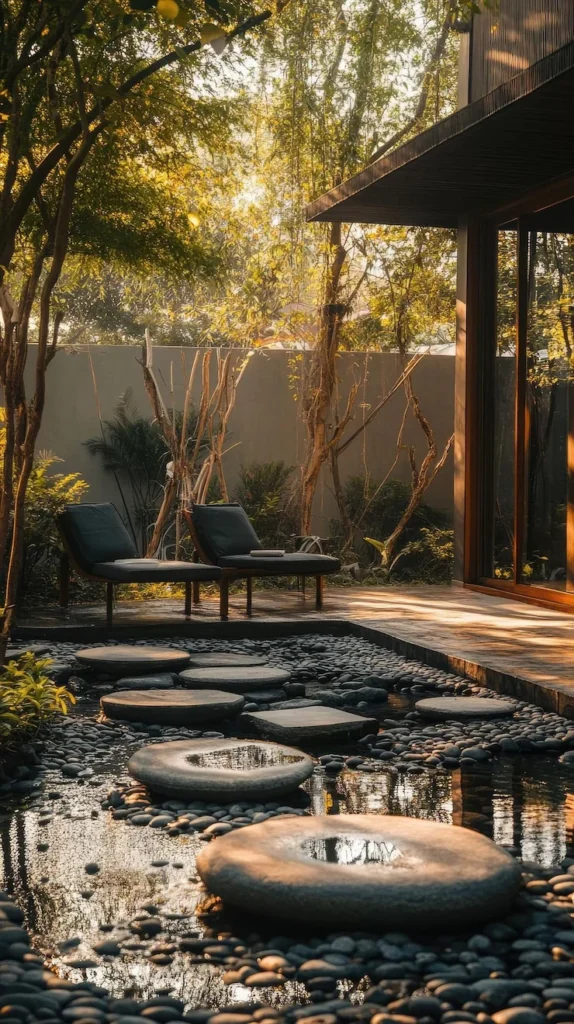
This is what luxury sounds like — the gentle ripple of water beneath your feet.
Imagine walking across a pathway where each step hovers above a tranquil reflecting pool. The golden hour light dances on the water’s surface. The smooth stones mirror the sky. The whole scene feels like something from a high-end spa resort — except it’s your backyard.
The design features large, round basin-shaped stepping stones set into a shallow water feature filled with dark river rock. Each stone has a subtle concave center that captures water, creating miniature reflecting pools. The water level sits just below the stone surfaces, allowing you to walk across while seeing your reflection in each step. The modern architecture, sculptural driftwood, and minimalist plantings complete the serene aesthetic.
Here’s why it works:
The water element transforms everything. It cools the air, reflects light, adds movement, and creates that soothing trickle sound that calms your nervous system instantly.
The dark stone base makes the water look deeper and more mysterious than it actually is. It’s all about visual drama.
The golden hour lighting captured here isn’t an accident — this design is meant to be experienced at sunrise and sunset when the reflections are most magical.
Who is this for?
Zen seekers and luxury lovers who want a resort-quality experience at home. Perfect for modern courtyards, meditation gardens, or anywhere you need a daily dose of tranquility.
How to recreate it:
Create a shallow basin (3–4 inches deep) with pond liner. Fill with black polished pebbles (1–2 inches). Install a small recirculating pump. Place large round basalt or concrete stones (20–24 inches) with natural bowls or carved basins as steppers. Maintain water level just below stone surfaces. Add uplighting for nighttime magic.
Pro Tip: Use a UV clarifier in your pump system to keep water crystal clear. Cloudy water ruins the reflection effect. Clean stones monthly. ✨🌊
🎋 10. Karesansui Zen Garden With Raked Gravel Waves
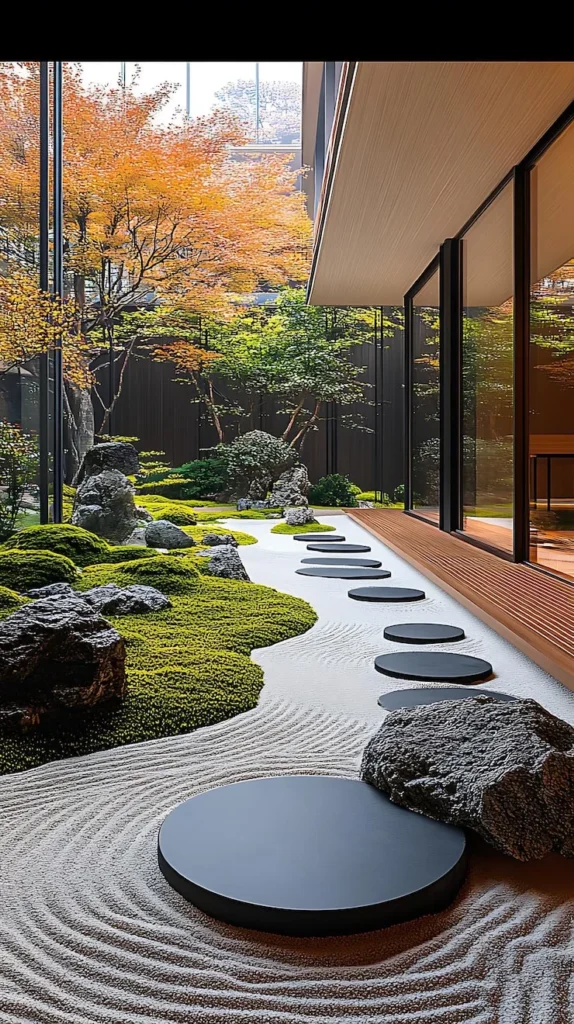
This isn’t a walkway. This is art you walk through.
Welcome to the pinnacle of Japanese garden design — the karesansui, or dry landscape garden. Every element here is deliberate. Every curve is meditation. The perfectly raked white gravel creates concentric ripples around each smooth black stepping stone, mimicking water flowing around islands. It’s mesmerizing. Contemplative. Pure visual poetry.
The vibrant green moss mounds contrast dramatically against the pale gravel, while weathered boulders and a brilliant orange Japanese maple provide organic counterpoints to the geometric precision. The modern glass architecture frames it all like a living painting you can step into.
Here’s why it works:
The raked patterns aren’t decorative — they’re symbolic. In Zen philosophy, they represent flowing water, waves, or the journey of life. Walking this path becomes a mindfulness practice.
The monochromatic stepping stones create a visual rhythm without competing with the dramatic scenery. They disappear and reveal themselves simultaneously.
The autumn foliage adds seasonal magic. This garden transforms with every season, but fall? Chef’s kiss.
Who is this for?
Design purists and spiritual seekers who understand that less is more. Perfect for modern homes with courtyards or anyone creating a dedicated meditation space.
How to recreate it:
Excavate 4–6 inches. Install landscape fabric. Spread white decomposed granite or crushed marble (⅛ to ¼ inch). Place large round slate or basalt stones (18–24 inches) as steppers. Use a specialized zen rake to create concentric patterns. Add moss-covered mounds (or use low sedum), weathered boulders, and a statement tree.
Pro Tip: Rake patterns weekly — it’s part of the meditation. The impermanence is the point. Each ranking is a new creation. 🧘♂️✨
🌿 11. Urban Jungle Corridor With Cascading Green Walls
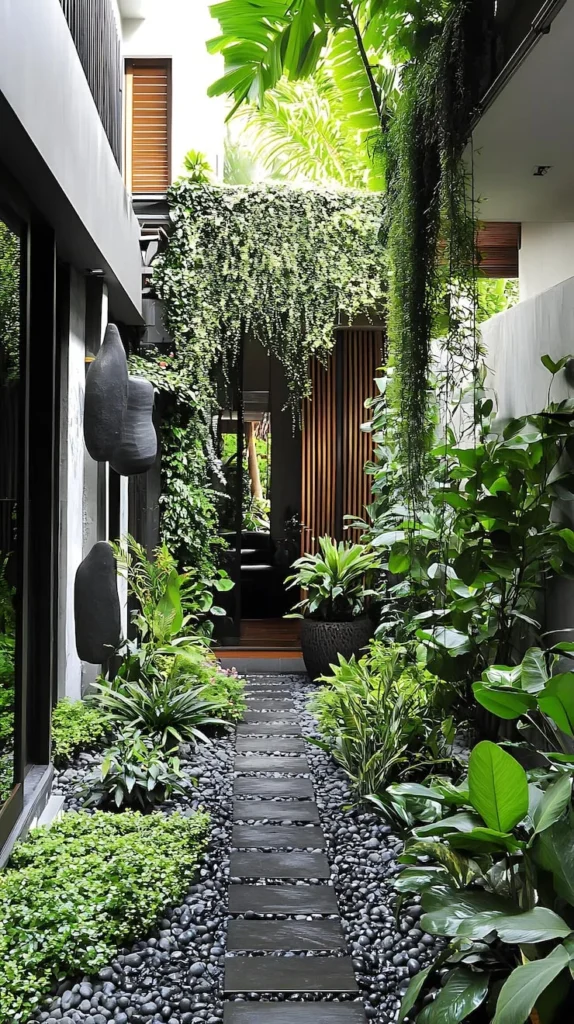
This is what happens when nature reclaims modern architecture — and it’s spectacular.
You’re walking through a narrow passageway that feels like a secret tropical alley in the middle of a contemporary home. The walls are alive — literally. Cascading vines drip from above like green waterfalls. Living walls climb vertical surfaces. The air feels different here — cooler, fresher, more alive. This isn’t just a pathway. It’s an oxygen-rich sanctuary carved between buildings.
The walkway uses sleek rectangular dark pavers (likely slate or porcelain) spaced evenly across a bed of black river rock. But the real stars? The explosive greenery — elephant ears, philodendrons, ferns, trailing pothos, and banana leaves creates a multi-layered jungle canopy. Overhead, natural light filters through a transparent roof section, creating that magical dappled sunlight effect.
Here’s why it works:
The vertical layering maximizes green impact in minimal square footage. When you can’t go wide, go UP.
The dark materials (black stone, charcoal pavers, deep shadows) make the vibrant greens pop with incredible intensity. It’s pure contrast magic.
The narrow corridor forces you to move slowly and look up, down, and around. You notice everything — which is exactly the point.
Who is this for?
Urban dwellers and plant obsessives who refuse to sacrifice nature for modern living. Perfect for narrow side yards, breezeway connections, or courtyard passages.
How to recreate it:
Install rectangular porcelain or slate pavers (12×24 inches) over black polished pebbles (1–2 inches). Add vertical trellis systems or modular living wall panels on side walls. Plant trailing vines overhead. Fill the ground level with shade-loving tropicals in pots and beds. Add subtle uplighting for nighttime drama.
Pro Tip: Use a drip irrigation system with timers for the vertical gardens. Hand-watering gets old fast. Automate the maintenance, maximize the wow. 🌱✨
🌙 12. Curved Garden Path Lit Like a Starlit Evening
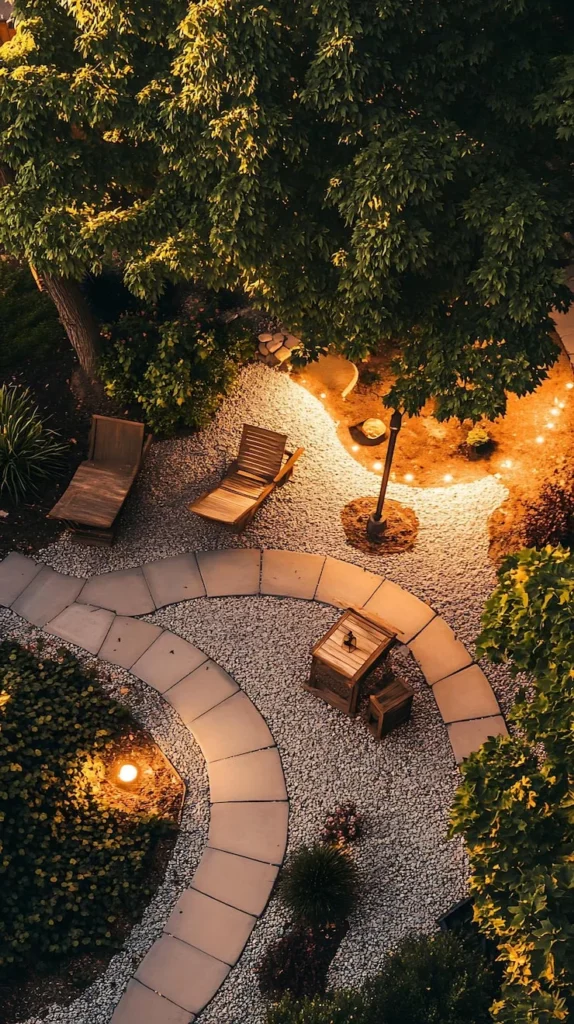
This is romance in landscape form — pure and simple.
From above, this walkway looks like a golden ribbon winding through the night. The gentle S-curve creates a sense of journey and discovery. The warm golden lighting — strategically placed along the edges and beneath the tree canopy — transforms an ordinary path into an enchanted evening escape. It’s the kind of space that makes you want to pour a glass of wine and just… wander.
The design features curved terracotta or sandstone pavers arranged in a sweeping arc across a base of light-colored pea gravel. The wide, generous curves create natural pause points where you can place seating (notice the teak loungers and side table). The layered lighting — path lights, tree uplights, and ambient glow — makes this space usable and magical after dark.
Here’s why it works:
The curves slow you down. They create mystery. You can’t see the entire path at once, so you have to explore. It’s garden storytelling.
The warm lighting (2700K or lower) creates an inviting, intimate atmosphere. Cool white would kill the magic instantly.
The aerial perspective shows how thoughtfully designed curves create multiple destination zones within one pathway. It’s not just Point A to Point B — it’s an experience with chapters.
Who is this for?
Romantics and entertainers who want their outdoor space to feel like a boutique resort after sunset. Perfect for larger yards where you have room to let pathways meander.
How to recreate it:
Mark your curve with a garden hose — adjust until it feels natural. Excavate and lay curved pavers (fan patterns or custom-cut rectangular stones). Fill gaps with ⅜-inch pea gravel in tan or buff tones. Install low-voltage LED path lights every 6–8 feet along edges. Add uplights at tree bases and accent lights in planting beds.
Pro Tip: Use a mix of lighting heights and intensities. Path lights for safety, uplights for drama, and accent lights for plants. Layer the light like you’d layer a painting. 🌟✨
🏞️ 13. Rainforest Waterfall Steps That Sound Like Paradise
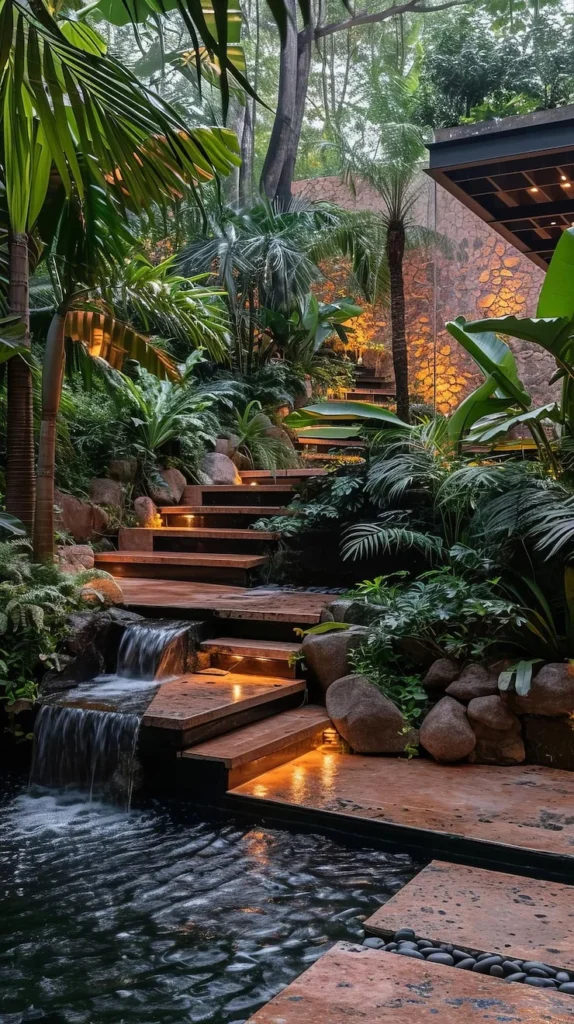
Stop. Listen. Do you hear that?
The gentle cascade of water flows beneath each step. The rustle of palm fronds overhead. The evening chorus of the jungle coming alive. This isn’t a walkway — it’s a full sensory experience that transports you straight to a luxury eco-resort hidden deep in the Costa Rican rainforest.
The design features floating hardwood steps (likely teak or ipe) that traverse a multi-level water feature with actual cascading waterfalls. Each step is edged with integrated LED strip lighting that glows amber against the rich wood grain. The sides are lined with massive boulders and an explosion of tropical foliage — palms, philodendrons, ferns, and banana plants creating an impenetrable green wall. The illuminated stone wall backdrop adds architectural drama.
Here’s why it works:
The sound is everything. Moving water doesn’t just look beautiful — it creates white noise that drowns out the world and centers your mind.
The floating steps over active water create a sense of adventure. You’re not just walking — you’re crossing something. It engages your attention completely.
The warm lighting reflecting off water and wet wood creates a golden glow that feels impossibly luxurious. This is what $10 million homes look like at dusk.
Who is this for?
Bold visionaries with bigger budgets who want a once-in-a-lifetime outdoor space. Perfect for sloped properties where you’re building stairs anyway — why not make them legendary?
How to recreate it:
This requires professional installation. Build a multi-tiered pond system with recirculating pumps. Construct cantilevered wood steps (2-inch thick hardwood planks) anchored to a hidden steel frame. Install waterproof LED strips under step edges. Frame with natural boulders and lush tropical plants. Add underwater uplights for nighttime magic.
Pro Tip: Use marine-grade wood and stainless steel hardware. Water and wood can be enemies — choose materials that will outlast you. And budget for a good pump system — multiple waterfalls need serious flow. 💧🌴
🏡 Conclusion: Your Walkway, Your Welcome Home Moment
So there you have it. Fourteen walkway designs that prove one thing beyond doubt:
Your front yard deserves to make you smile.
We started with glowing stone steps and tropical water paths. We wandered through Zen gardens and lava flows. We crossed waterfall stairs and desert curves. And somewhere along the way, I hope you felt it — that little spark of “I want this.”
Here’s the truth: A walkway isn’t just about getting from the driveway to the front door. It’s about how you feel during those ten seconds. Do you feel rushed? Bored? Or do you feel seen, welcomed, and at home?
The best walkways tell stories. They slow you down. They make guests say, “Wow, look at this.” They turn everyday moments into small celebrations.
You don’t need a massive budget or a landscape architect (though both help). You need vision. You need to look at that boring concrete slab and imagine what could be there instead. Glowing lights. Trickling water. Lush moss. Dramatic curves. Whatever speaks to your soul.
Start small if you need to. Add lighting to existing stones. Plant something bold along the edges. Swap out boring gravel for something with texture. Every improvement counts.
Your front yard is the first hello and the last goodbye every single day. Make it worth the walk.
Now go outside and look at your walkway with fresh eyes. What story do you want it to tell? 🌿✨
Thank you for walking this journey with me. May your path always lead you home. 🏡💛
❓ FAQs: Your Walkway Questions, Answered
What’s the best material for a low-maintenance walkway?
Concrete pavers or porcelain tiles win this race hands down.
Here’s why: They don’t shift like gravel. They don’t need sealing like natural stone. They don’t rot like wood. Weeds can’t push through if installed properly with landscape fabric underneath.
Pro maintenance tip: Sweep occasionally, spray with a hose, maybe power wash once a year. That’s it. Compare that to wood (needs staining every 2–3 years) or gravel (needs raking and replenishing) — and the choice is clear.
Runner-up? Decomposed granite. It compacts beautifully, drains well, and only needs occasional top-dressing.
. Can I install pathway lighting myself, or do I need an electrician?
You can absolutely DIY — and you should! Most modern pathway lighting uses low-voltage LED systems (12V) that are safe, affordable, and plug into a regular outdoor outlet with a transformer.
What you’ll need:
- Low-voltage LED path light kit ($100–$300)
- Outdoor-rated transformer with timer
- Shovel for burying wire (or hide it under mulch/gravel)
No electrician required unless you want hardwired 120V lighting (which is overkill for most residential paths). Solar lights are even easier but less reliable — batteries die, brightness fades. Low-voltage is the sweet spot.
Quick tip: Bury wire 2–3 inches deep and use waterproof wire connectors. Test everything before you fill in the trench!
. How do I stop weeds from growing between my pavers?
Weeds are annoying, but totally preventable with the right prep work.
The secret formula:
- Landscape fabric underneath everything (blocks weeds from below)
- Polymeric sand between pavers (hardens when wet, creates a weed barrier)
- Proper base (4–6 inches of compacted gravel for drainage)
Already have weeds? Pull them, then fill joints with polymeric sand and mist with water to activate. It hardens like weak concrete and chokes out future growth.
Natural alternative: Spray white vinegar (20% acidity) on sunny days. It burns weeds on contact. Reapply as needed. Not as permanent as polymeric sand, but effective and chemical-free.
. What spacing should I use between stepping stones?
18 to 22 inches apart (center to center) is the magic range for most adults.
Here’s the science: The average human stride is about 24–30 inches, but you naturally shorten your step when navigating uneven terrain. Too close (under 16 inches) feels cramped and awkward. Too far (over 24 inches) forces uncomfortable lunges.
Test before you commit: Lay stones loosely, then walk the path several times. Adjust until it feels natural. Have a family member test it too — everyone’s stride differs slightly.
Pro tip for curves: Slightly reduce spacing on the inside of curves (16–18 inches) and increase on the outside (20–24 inches) to match the natural walking line. Your body will thank you. 🚶♀️✨Retry